
Table for Six

Table for Six or Two or One!

Estimated reading time: 1 minute, 12 seconds
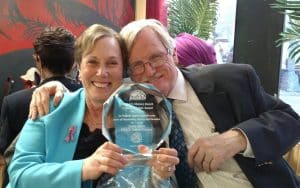
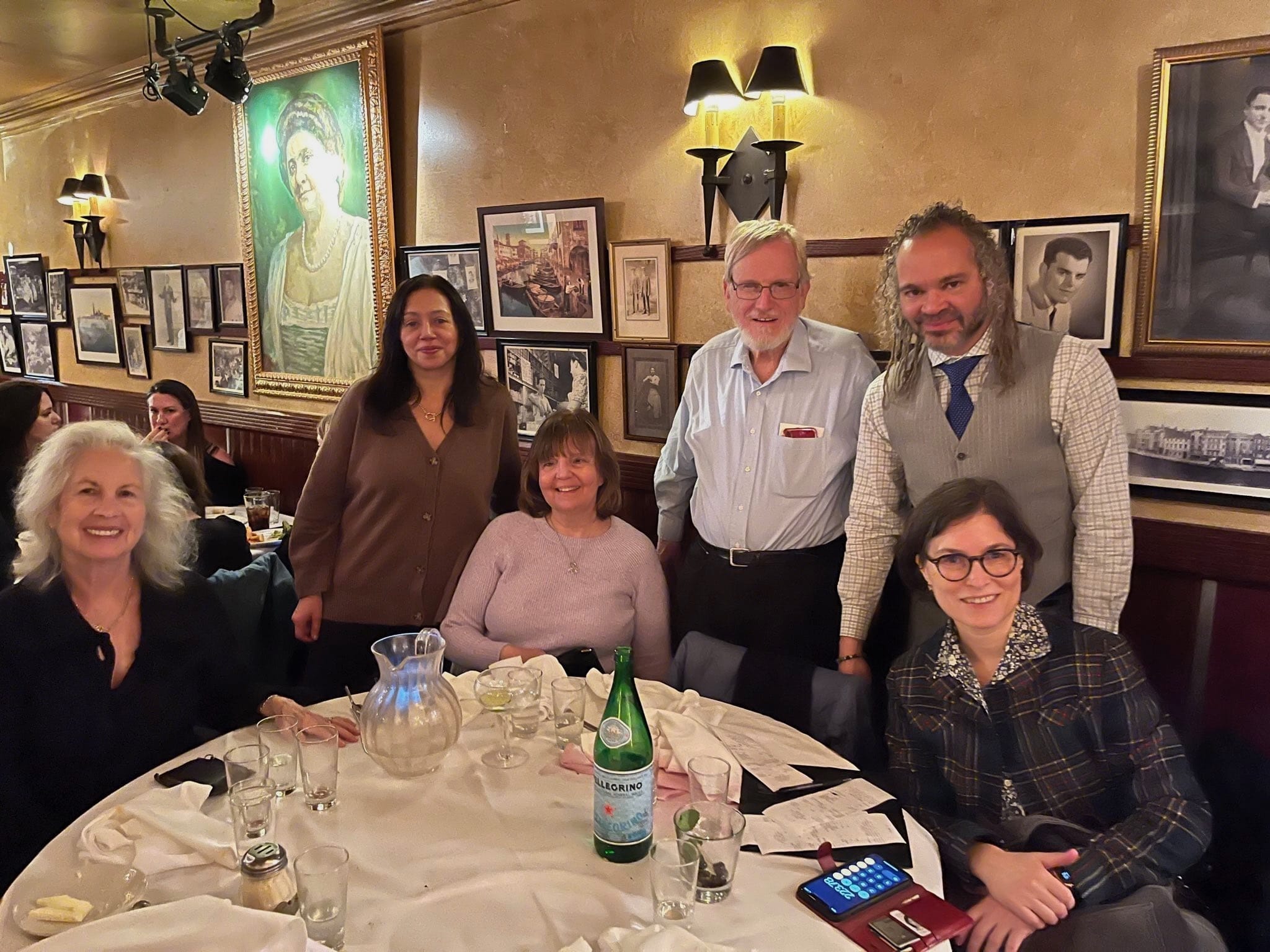
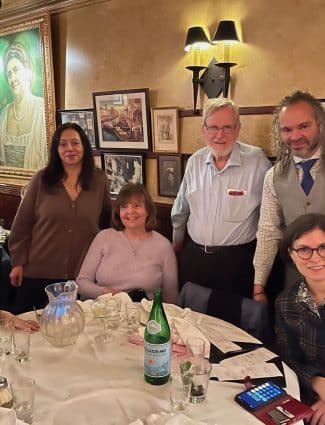
Last night, I had dinner with five widows, and in the morning, I had breakfast in a booth with a friend.

Tonight I might dine alone as it is Cranford’s Winter Restaurant Week.

Of course, if I dine at Ambeli Greek Taverna, my favorite local dining room, I am confident for a few moments that the owner and my friend Chris will join me for a few moments.

One of the concerns I hear from my fellow widows is the awkwardness of dining alone.

Even when Jan was alive, I often dined alone while away on business.

Dining alone is not as fun as when Jan sat across the table from me.

I will continue to dine with fellow widows, friends, and by myself.

But I will never truly dine alone as Jan will always be with me!

Her love for me and my love for her will never die!


The Jan Lilien Education Fund sponsors ongoing sustainability and environmental awareness programs. Gifts made this month; I will match dollar-for-dollar. All donations are tax-deductible.

Subscribe

Contact Us

I receive a commission when you buy a book or product using a link on this page. Thank you for supporting Sharing Jan’s Love blog.



Living Alone as Best I Can!

The day Jan died, I wasn't sure how long I would live.

I still do not know, but none of us knows how many days we will live.

A good friend called the morning after the love of my life died to offer his sympathy and support.

He said, "You are resilient, and that will help you on your journey. You will survive despite the pain you feel today."

At that moment, I was unconvinced of his opinion.

But over time, my resilience has rebounded.

1 comment add your comment

Share your thoughts and ideas

This site uses Akismet to reduce spam. Learn how your comment data is processed.

The Jan Lilien Education Fund!

Table for Six
×
Trouble the Saints

Read: January 2022

Get this book

Trouble the Saints

by Alaya Dawn Johnson

Trouble the Saints by Alaya Dawn Johnson is one of NPR’s Books We Love from 2020. The dangerous magic of The Night Circus meets the powerful historical exploration of The Underground Railroad in this timely and unsettling novel, set against the darkly glamorous backdrop of New York City at the dawn of WWII. Amidst the whir of city life, a girl from Harlem is drawn into the glittering underworld of Manhattan, where she’s hired to use her knives to strike fear amongst its most dangerous denizens.

The book is written in three sections with different protagonists and voices. Phyllis, or Pea as her friends call her, is a black assassin for a white mob boss narrates the first section of the book. Her saint’s hands are the ability to use knives to commit murder. She can also pass as white as Phyllis, but she is a black woman from Harlem as Pea. The section she narrates is difficult at first to follow as she attempts to deal with the consequences of her actions. Can the past ever be the past?

Dev, Indian and Phyllis’s lover, narrates the second section. He is an undercover cop who protects her and helps her free herself from the mob boss. This section is located in the Hudson Valley and highlights the tensions before the war between whites and non-whites.

The third protagonist, Tamara, narrates this section. The war separates Phyllis and Dev. Phyllis is pregnant, and Dev and Tamara’s love interest are serving in the military. This section brings together the threads and reminds us that the past is never the past.

As Goodreads summarizes the book,

But the ghosts from her past are always by her side—and history has appeared on her doorstep to threaten the people she loves most.

Can one woman ever sacrifice enough to save an entire community?

Trouble the Saints is a dazzling, daring novel—a magical love story, a compelling chronicle of interracial tension, and an altogether brilliant and deeply American saga.

I recommend this book and encourage all readers to read it to the end.

Subscribe

Contact Us

When you buy a book or product using a link on this page, I receive a commission. Thank you for supporting Sharing Jan’s Love blog.

×
The Human Stain: A Novel

Read: September 2024

Get this book

The Human Stain: A Novel

by Philip Roth

Today, I started reading The Human Stain: A Novel by Philip Roth. This book is considered a masterpiece and has earned its place among The New York Times’ 100 Best Books of the 21st Century. The story takes place in 1998, a significant year marked by a presidential impeachment that affected the entire nation. In a peaceful New England town, the respected classics professor Coleman Silk is forced into retirement due to false accusations of racism by his colleagues.

This accusation triggers a series of events that bring to light shocking revelations about Coleman, revelations that carry a profound societal significance. Coleman Silk harbors a secret, a secret that is not about his affair with Faunia Farley, a woman half his age with a troubled past, or the alleged racism that led to his downfall at the college where he was once a respected dean. It’s not even about misogyny, despite Professor Delphine Roux’s attempts to portray him as such. Coleman’s true secret, a secret he has guarded for fifty years from everyone in his life, including his wife, children, colleagues, and friends, is a defining aspect of his character and his relationships.

The Human Stain is a compelling portrayal of 1990s America, a time of clashing moralities and ideological divisions. Through public denunciations and rituals of purification, it delves into how the nation’s destiny and the ‘human stain’ that marks human nature shape the lives of postwar Americans. This potent and captivating novel is a fitting continuation of Philip Roth‘s earlier works, each set in a distinct historical period.

×
Discontent

Read: October 2025

Get this book

Discontent: A Novel

by Beatriz Serrano

Discontent” by Beatriz Serrano is a bold and darkly humorous novel that follows a young woman whose carefully constructed office persona starts to unravel when she is compelled to attend her company’s annual retreat. On the surface, Marisa’s life appears enviable. She lives in a beautiful apartment in the heart of Madrid, has a charming neighbor who often spends time with her, and has quickly ascended the ranks at a successful advertising agency.

And yet she’s drowning in a dark hole of existential dread induced by the banality of corporate life. Marisa hates her job and everyone at it. She spends her working hours locked in her office, hiding from her coworkers, bingeing on YouTube videos, and getting high on tranquilizers. When she has the time, she escapes to her favorite museum where she contemplates the meaning of life while staring at Hieronymus Bosch paintings, or tries to get hit by a car so she can go on disability.

However, Marisa’s dubious success, which is primarily built on lies and work she has stolen from others, is in danger of being exposed when she’s forced to attend her company’s team-building retreat. Isolated in the Segovia forests, haunted by the deeply buried memory of a former coworker, and surrounded by psychopathic bosses, overzealous coworkers, flirty retreat staff, and an excess of drugs, Marisa finds herself acting on her wildest impulses. She is pushed to the brink of a complete spiral.


Beatriz Serrano is a striking new voice in international literature. A writer and journalist who has written for publications such as BuzzFeed, Vanity Fair, GQ, Harper’s Bazaar, El País, SModa, and Vogue. Along with writer Guillermo Alonso, she currently co-directs the podcast “Arsenic Caviar“, which won the Ondas Prize for best conversational podcast. Discontent is her first novel. She lives in Madrid.


Discover your next favorite book and dive into a world of curated, exciting reads by purchasing through my links. You’ll have access to a diverse selection of books that I’ve personally vetted to ensure quality and enjoyment. Additionally, by supporting these selections, you’ll help me continue to provide you with more personalized recommendations. I earn a small commission from your purchase, which allows me to buy and share even more books with you. Your support truly makes a difference!


×
How the Word is Passed

Read: December 2021

Get this book

How the Word Is Passed: A Reckoning with the History of Slavery Across America

by Clint Smith

How the Word Is Passed: A Reckoning with the History of Slavery Across America by Clint Smith. This book was a gift from my son Jon. The New York Times selected How the Word is Passed as one of the best books published this year. Beginning in his hometown of New Orleans, Clint Smith leads the reader on an unforgettable tour of monuments and landmarks—those that are honest about the past and those that are not—that offer an intergenerational story of how slavery has been central in shaping our nation’s collective history, and ourselves.

How the Word is Passed is one of the best books I have read in 2021. I had read an excerpt in The Atlantic on the Whitney Plantation, one of the only former plantations devoted to preserving the experience of the enslaved people whose lives and work sustained it. Like most of us, I had placed the book on my to-read list, where it remained lost in the cobwebs. Fortunately, my son Jon purchased the book for me.

Secondly, the book rekindled my long-lost dream of being an American Studies professor. As soon as Jan and I met, I dropped plans to leave Brooklyn and start graduate school in the fall of 1974. I made that decision primarily because of how much I loved Jan. But it was also partly that I did not have a clear vision of what my life would be like as a professor. The book provided clear examples of people like Yvonne Holden at The Whitney Plantation redefining history to be more accurate and inclusive. I probably could not have done as well as she did, but I can now see that it might have resulted in a career for me that could have been impactful.

Goodreads provides this overview for those who still need to be convinced to read this book.

It is the story of the Monticello Plantation in Virginia, the estate where Thomas Jefferson wrote letters espousing the urgent need for liberty while enslaving over 400 people on the premises. It is the story of the Whitney Plantation, one of the only former plantations devoted to preserving the experience of the enslaved people whose lives and work sustained it. It is the story of Angola Prison in Louisiana, a former plantation named for the country from which most of its enslaved people arrived and which has since become one of the most gruesome maximum-security prisons in the world. And it is the story of Blandford Cemetery, the final resting place of tens of thousands of Confederate soldiers.

In a deeply researched and transporting exploration of the legacy of slavery and its imprint on centuries of American history, How the Word Is Passed illustrates how some of our country’s most essential stories are hidden in plain view-whether in places we might drive by on our way to work, holidays such as Juneteenth, or entire neighborhoods—like downtown Manhattan—on which the brutal history of the trade in enslaved men, women and children has been deeply imprinted.

Informed by scholarship and brought alive by the story of people living today, Clint Smith’s debut work of nonfiction is a landmark work of reflection and insight that offers a new understanding of the hopeful role that memory and history can play in understanding our country.

How the Word is Passed is one of the best books I have read this year and many prior ones. I encourage you to read it and share your comments.

Subscribe

Contact Us

When you buy a book or product using a link on this page, I receive a commission. Thank you for supporting Sharing Jan’s Love blog.

×
Welcome Home, Stranger: A Novel

Read: January 2024

Get this book

Welcome Home, Stranger: A Novel

by Kate Christensen

Today, I began reading “Welcome Home, Stranger: A Novel” by Kate Christensen. The book tells the story of a woman in her fifties who returns home to Maine after her mother’s passing. The novel explores themes of grief, love, growing older, and family complexities. It raises the question: Can you ever honestly go back home?

Rachel is an environmental journalist living in Washington, DC. She has been estranged from her working-class family in New England for many years. Having gone through a divorce and being childless in her middle age, Rachel is a truly independent spirit who has experienced a lot of pain. She feels like her life is falling apart and is struggling to cope with big and small challenges. However, her life takes a different turn when she gets a call to return home for her mother’s funeral.

Then, everything falls apart.

Rachel is surrounded by a cast of characters who are sometimes comical, sometimes heartbreakingly earnest. Her sister is an arriviste, her brother-in-law is an alcoholic, and the love of her life has recently married her sister’s best friend. Rachel must face her past and come to terms with the sorrow she has long buried. She must also confront the ghost of her mother, who, for better or worse, made her the woman she is today.

Lively, witty, and painfully familiar, this sophisticated and emotionally resonant novel from the author of The Great Man holds a mirror up to modern life as it considers the way some of us must carry on now.


The Jan Lilien Education Fund sponsors ongoing sustainability and environmental awareness programs. Gifts made this month; I will match dollar-for-dollar. All donations are tax-deductible.

Subscribe

Contact Us

I receive a commission when you buy a book or product using a link on this page. Thank you for supporting Sharing Jan’s Love blog.


×
Sarah's Key

Read: January 2022

Get this book

Sarah’s Key

by Tatiana de Rosnay

Sarah’s Key by Tatiana de Rosnay is the untold story of the roundup of the Jews in Paris in July 1942. The novel focuses on how the French were complicit in rounding up thousands of Jews in 1942. It is also a reminder that we can never allow another genocide. I finished this book the day before Holocaust Remembrance Day, January 27, the date on which the Auschwitz-Birkenau concentration and death camp complex was liberated in 1945.

Ten-year-old Sarah is brutally arrested with her family in the Vel’ d’Hiv’ roundup, the most notorious act of French collaboration with the Nazis. But before the police come to take them, Sarah locks her younger brother, Michel, in their favorite hiding place, a cupboard in the family’s apartment. She keeps the key, thinking she will be back within a few hours.

Paris, May 2002: On Vel’ d’Hiv’s sixtieth anniversary, Julia Jarmond, an American journalist, is asked by her Paris-based American magazine to write an article about this black day in France’s past. Julia has lived in Paris for nearly twenty-five years and married a Frenchman, and she is shocked both by her ignorance about the event and the silence that still surrounds it.

The twin narratives of Sarah and Julia hold the first two-thirds of the book together and make it a page-turner. Sarah’s memory reminds us during the final third of the book and ensures that the complete story of the Vel’ d’Hiv’ roundup and its lasting impact are told.

As Goodreads describes the novel,

In the course of her investigation, she stumbles onto a trail of long-hidden family secrets that connects her to Sarah. Julia finds herself compelled to retrace the girl’s ordeal, from the terrible days spent shut in at the Vel’ d’Hiv’ to the camps and beyond. As she probes into Sarah’s past, she begins to question her own place in France and to reevaluate her marriage and her life.

Writing about the fate of her country with a pitiless clarity, Tatiana de Rosnay offers us a brilliantly subtle, compelling portrait of France under occupation and reveals the taboos and denial surrounding this painful episode in French history.

I highly recommend the book.

Subscribe

Contact Us

When you buy a book or product using a link on this page, I receive a commission. Thank you for supporting Sharing Jan’s Love blog.

×