New Book: Life After Life

Estimated reading time: 0 minutes, 0 seconds
Life After Life

Life After Life

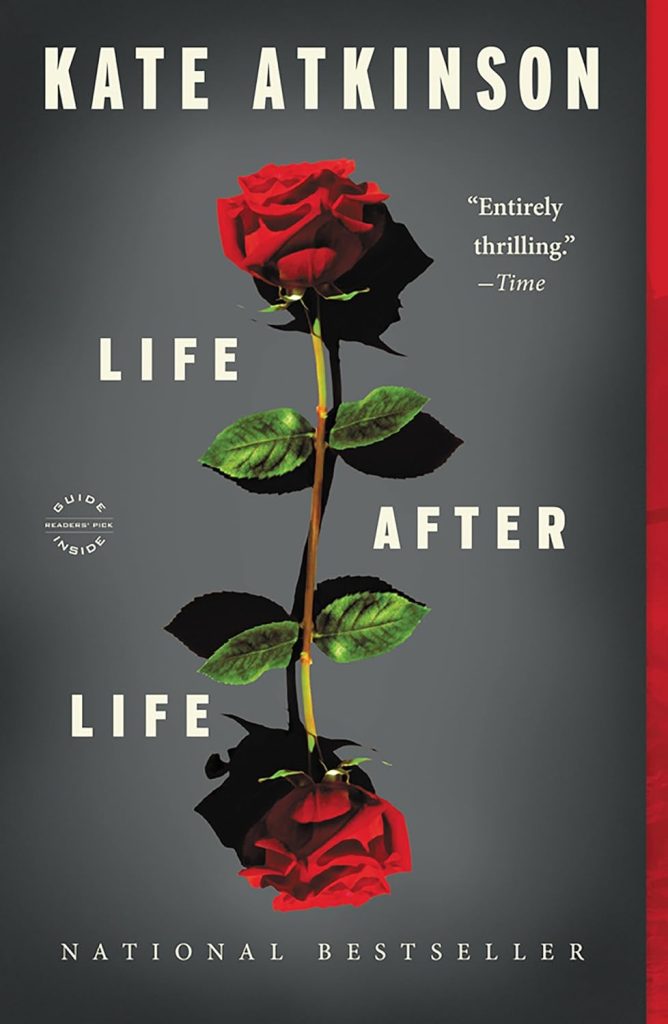
Today, I embarked on the journey of Kate Atkinson's 'Life After Life,' a novel that has secured its place among The New York Times 100 Best Books of the Century. The book presents a unique and thought-provoking premise: What if you could live multiple lives until you found the perfect one? With its darkly comic, startlingly poignant, and utterly original narrative, it's a testament to Kate Atkinson's unparalleled storytelling prowess.

Read book review Get this book All books

Share your thoughts and ideas

This site uses Akismet to reduce spam. Learn how your comment data is processed.

The Jan Lilien Education Fund!

Life After Life

Read: August 2024

Get this book

Life After Life

by Kate Atkinson

Today, I embarked on the journey of Kate Atkinson‘s ‘Life After Life,’ a novel that has secured its place among The New York Times 100 Best Books of the Century. The book presents a unique and thought-provoking premise: What if you could live multiple lives until you found the perfect one? With its darkly comic, startlingly poignant, and utterly original narrative, it’s a testament to Kate Atkinson‘s unparalleled storytelling prowess.

The story unfolds in a unique narrative structure, beginning on a cold and snowy night in 1910 when Ursula Todd is born to an English banker and his wife. She dies before drawing her first breath. However, on that same night, Ursula Todd is born again, lets out a loud cry, and starts a life that will be pretty unusual. As she grows up, she also dies repeatedly in various ways while the young century moves inexorably toward its second cataclysmic world war.

Could Ursula’s seemingly endless life be the key to altering the world’s inevitable destiny? The prospect is both thrilling and hopeful. Yet, the question lingers – if she possesses this power, will she choose to wield it?

×
Aftermirth

Read: August 2022

Get this book

Aftermirth by Hillary Jordan

by Hillary Jordan

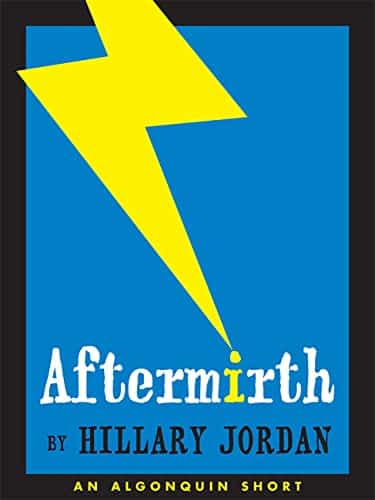
Aftermirth by Hillary Jordan is a book about grief as the two protagonists take a road trip that is a darkly funny journey of healing that takes them deep into the heart of their suffering and others, and then beyond it, to a place of peace and laughter. I had just finished reading When She Woke by Ms. Jordan and having enjoyed that book, reading a second one by the same author seemed reasonable.

When I selected this short novel to read, I questioned if it was a good choice for me.

I found it easier to read and, in some ways, helpful. It was like meeting fellow widows from my Zoom grief groups in person at Camp Widow. The ability to laugh about our loss and cry openly is essential to meeting fellow benefits.

Michael Larssen, the narrator, raised a question I have not and still do not want to consider. What if I am still alive, Jan was a great love but is not the love of my life?

“You can’t know that he was the love of your life, and do you know why? Because guess what, you aren’t dead yet. You may feel dead right now, and believe me I’ve been there, but the fact is, until you’re lying under a tombstone of your own you can’t be sure about anything. You could prick your finger on one of your roses tomorrow, and as you’re climbing the stairs to get a Band-Aid, you trip over one of the pugs and tumble to your death. Or you could meet a man in the checkout line at the grocery store–hell, you could meet a woman even and fall madly in love with her and end up with six kids and twenty grandkids. Michael looks over at Elena, then back at George. You just don’t know, George. That’s the thing. None of us does.”— Aftermirth (Kindle Single) by Hillary Jordan

Despite my anxiety about considering this disturbing question, I highly recommend Aftermirth by Hillary Jordan.

The Goodreads summary provides an overview.

I stopped being funny the day my wife was electrocuted by her underwire bra.” So begins “Aftermirth,” a dark comedy that explores the absurdity of death through the eyes of thirty-one-year-old comedian, writer, and actor Michael Larssen. What is funny to the rest of the world is devastating to Michael, who loves his wife deeply, exceptionally her bright, rippling, abandoned laughter, which captivated him from the first time he heard it. In the aftermath of her death, he loses his sense of humor and his career.

Then, after two years of mourning her, he sees an article in the paper about a factory worker named Julio Santiago who fell into a giant vat of dough and was kneaded to death. For reasons Michael doesn’t understand, he decides to go to the man’s wake. There he meets and bonds with Julio’s twenty-nine-year-old daughter Elena, a law student who is reeling from her father’s unexpected and preposterous death.

Three months later, she calls him out of the blue and suggests that the two of them drive to North Carolina to speak with another survivor like themselves Elena has found on the Internet. Their road trip is a darkly funny journey of healing that takes them deep into the heart of their grief and others and then beyond it to a place of peace and laughter.


The Jan Lilien Education Fund sponsors ongoing sustainability and environmental awareness programs. All donations are tax-deductible.

Subscribe

Contact Us

I receive a commission when you buy a book or product using a link on this page. Thank you for supporting Sharing Jan’s Love blog.

×
What Kind of Paradise

Read: July 2025

Get this book

What Kind of Paradise: A Novel

by Janelle Brown

What Kind of Paradise is a captivating and suspenseful novel by bestselling author Janelle Brown. It follows a young woman on her quest to understand self-identity. The story boldly explores complex themes, including the relationships between parents and children, the balance between nature and technology, the tension between innocence and knowledge, the losses we experience in our past, and our aspirations for the future.

This unforgettable narrative delves into what shapes us as individuals. The first thing you have to understand is that my father was my entire world, says Jane, the narrator.

Growing up in an isolated cabin in Montana in the mid-1990s, Jane knows only the world that she and her father live in: the woodstove that heats their home, the vegetable garden where they try to eke out a subsistence, the books of nineteenth-century philosophy that her father gives her to read instead of going to school. Her father is elusive about their pasts, giving Jane little beyond the fact that they once lived in the Bay Area and that her mother died in a car accident, the crash propelling him to move Jane off the grid to raise her in a Walden-esque utopia.

As Jane becomes a teenager, she begins to push against the boundaries of her restricted world. She begs to accompany her father on his occasional trips away from the cabin. But when Jane realizes that her devotion to her father has made her an accomplice to a horrific crime, she flees Montana to the only place she knows to look for answers about her mysterious past and her mother’s death: San Francisco. It is a city amid a seismic change, where her quest to understand herself will force her to reckon with both the possibilities and the perils of the fledgling internet, and where she will come to question everything she values.


Janelle Brown is the New York Times bestselling author of I’ll Be You, Pretty Things, Watch Me Disappear, All We Ever Wanted Was Everything, and This Is Where We Live. An essayist and journalist, she has written for Vogue, The New York Times, Elle, Wired, Self, Los Angeles Times, Salon, and more. She lives in Los Angeles with her husband and their two children.


When you purchase a book through one of my links, I earn a small commission that helps support my passion for reading. This contribution allows me to buy even more books to share with you, creating an incredible cycle of discovering great reads together! Your support truly makes a difference!

Enjoy a limited-time offer of 20% off your next book purchase at Bookshop.org!


×
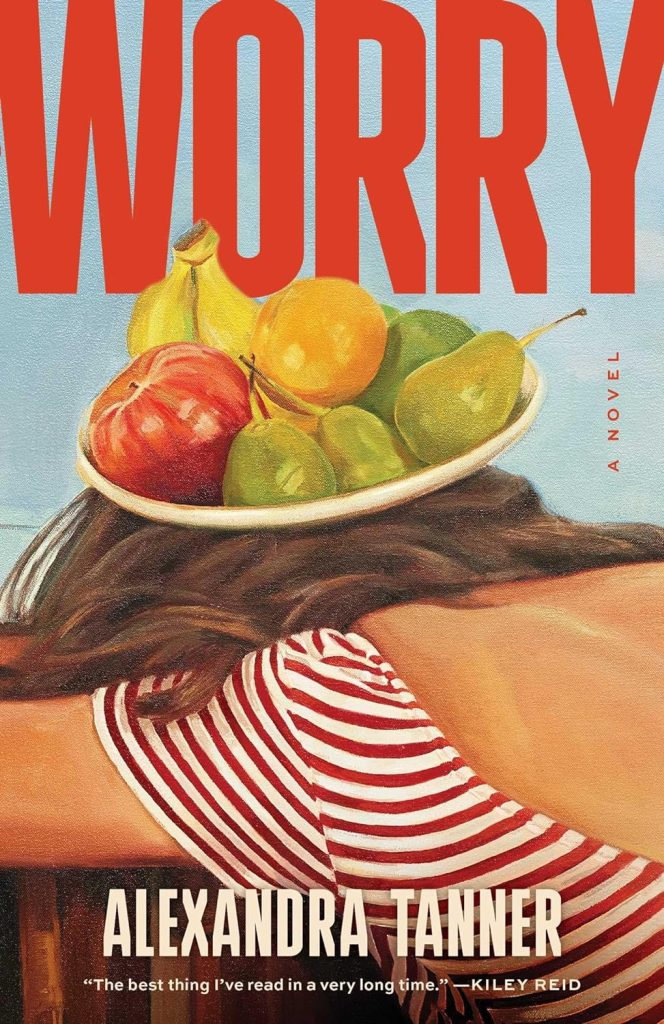
Worry: A Novel

Read: May 2024

Get this book

Worry: A Novel

by Alexandra Tanner

Today, I began reading Alexandra Tanner‘s debut novel, Worry: A Novel. The New Yorker praised it as “dryly witty,” The New York Times Book Review called it “fabulously revealing.” The story follows two siblings-turned-roommates who try to navigate an absurd world on the verge of calamity. It explores existentialism and sisterhood in a Seinfeldian style.

In March 2019, Jules Gold, a 28-year-old woman, felt anxious, frustrated with her art, and addicted to the internet. She lives alone in the apartment she used to share with her ex-fiancé. Her younger sister Poppy unexpectedly comes to stay with her indefinitely. Poppy, who attempted suicide a year and a half ago, is looking for work and purpose in Brooklyn. Meanwhile, Jules spends her days scrolling through the feeds of Mormon mommy bloggers and waiting for something to happen in her life.

Poppy’s hives, which she has had since childhood, flare up again. Jules has health problems with her uterus. Poppy adopts a poorly behaved-rescue dog named Amy Klobuchar. Poppy’s mother, who recently became a devout Messianic Jew, starts believing in the same deep-state conspiracy theories as Jules’ online mommies. Jules half-heartedly tries to find the source of her ennui and cruelly blames Poppy for not being a good enough friend, writer, or sister. As the year progresses and a new decade approaches, a disastrous trip back to Florida forces Jules and Poppy to question their futures and whether they want to spend them together or apart.

Worry is a darkly funny and deadpan portrayal of two sisters struggling through anxiety and uncertainty in America. A bold new voice in contemporary fiction writes it.

×
Working

Read: October 2019

Get this book

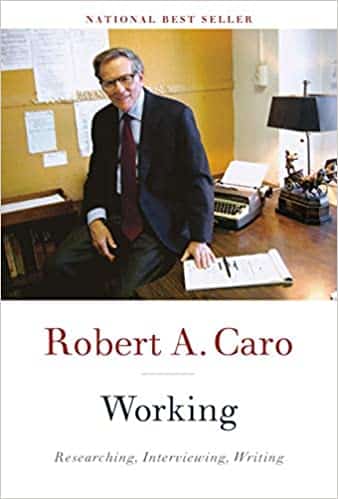
Working

by Robert A. Caro

Working by Robert A. Caro is a book of evocatively written essays on his life and work. Among the many valuable words of wisdom is his case that one needs to look at every piece of information, not just what we know when we begin. Far too often, people jump to conclusions without having learned all of the facts.

He describes what it was like to interview the mighty Robert Moses and to begin discovering the extent of the political power Moses wielded; the combination of discouragement and exhilaration he felt confronting the vast holdings of the Lyndon B. Johnson Library in Austin, Texas; his encounters with witnesses, including longtime residents wrenchingly displaced by the construction of Moses’ Cross-Bronx Expressway and Lady Bird Johnson acknowledging the beauty and influence of one of LBJ‘s mistresses. He gratefully remembers how, after years of working in solitude, he found a writers’ community at the New York Public Library, and details the ways he goes about planning and composing his books.

Caro recalls the moments at which he came to understand that he wanted to write not just about the men who wielded power but about the people and the politics that were shaped by that power. And he talks about the importance to him of the writing itself, of how he tries to infuse it with a sense of place and mood to bring characters and situations to life on the page. Taken together, these reminiscences–some previously published, some written expressly for this book–bring into focus the passion, the wry self-deprecation, and the integrity with which this brilliant historian has always approached his work.

I found this one of the best books I have read and recommend it to all readers.

Subscribe

Contact Us

×
Evergreen

Read: October 2022

Get this book

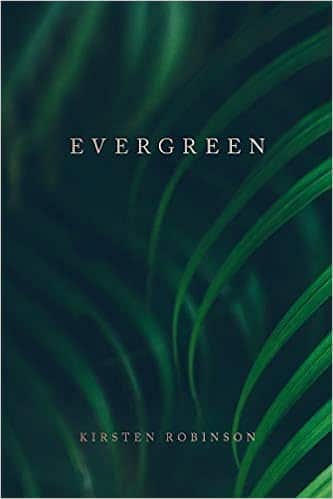
Evergreen by Kirsten Robinson

by Kirsten Robinson

Evergreen by Kirsten Robinson is a tribute to the enduring resilience of human nature as we cycle through times of light and darkness, much like nature itself. In her debut book, Kirsten Robinson (@NakedWriting) lays her heart bare in a raw, relatable, and inspirational way to describe the journey of growth born out of finding beauty in breakage and love after loss.

Albeit a cliche, the book jumped off the shelf and into my hands when I saw it in Hickory & Hill General Store in Cranford.

This artfully honest collection embodies and expands upon the poetry and prose Robinson began writing under the famous social media pseudonym Naked Writing.

I highly recommend this book and intend to keep it at my bedside for a pick-me-up.

Although I have only started reading the poems, I want to share two that resonated with me.

The first one is on giving thanks.

Give thanks for all
that is good and beautiful;
the gifts you carry
people who lift you up
your big, big love
faith and trust that your life
is unfolding as it should

Give thanks for all
that has been difficult and hard;
trials tribulations tears
tests of self strength fears
all of the unknowns and days
that broke you

Without the darkness
you would not have
learned to appreciate the light

A second one on bravery.

Bravery
is not about standing tall
after you’ve climbed up
the top of a mountain

Bravery
is looking
fear
heartache
rejection
terror
loss
death
in the eye
and saying, “no,
not today”

Bravery
is standing back up
after you’ve been brought down
to your knees


The Jan Lilien Education Fund sponsors ongoing sustainability and environmental awareness programs. Gifts made this month; I will match dollar-for-dollar. All donations are tax-deductible.

Subscribe

Contact Us

I receive a commission when you buy a book or product using a link on this page. Thank you for supporting Sharing Jan’s Love.

×
How the Word is Passed

Read: December 2021

Get this book

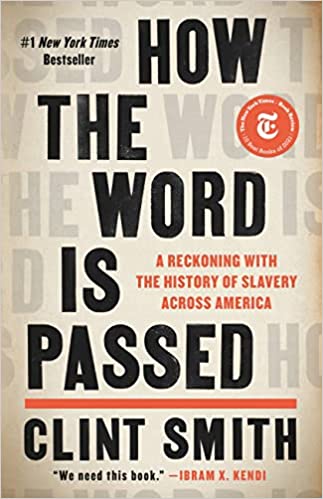
How the Word Is Passed: A Reckoning with the History of Slavery Across America

by Clint Smith

How the Word Is Passed: A Reckoning with the History of Slavery Across America by Clint Smith. This book was a gift from my son Jon. The New York Times selected How the Word is Passed as one of the best books published this year. Beginning in his hometown of New Orleans, Clint Smith leads the reader on an unforgettable tour of monuments and landmarks—those that are honest about the past and those that are not—that offer an intergenerational story of how slavery has been central in shaping our nation’s collective history, and ourselves.

How the Word is Passed is one of the best books I have read in 2021. I had read an excerpt in The Atlantic on the Whitney Plantation, one of the only former plantations devoted to preserving the experience of the enslaved people whose lives and work sustained it. Like most of us, I had placed the book on my to-read list, where it remained lost in the cobwebs. Fortunately, my son Jon purchased the book for me.

Secondly, the book rekindled my long-lost dream of being an American Studies professor. As soon as Jan and I met, I dropped plans to leave Brooklyn and start graduate school in the fall of 1974. I made that decision primarily because of how much I loved Jan. But it was also partly that I did not have a clear vision of what my life would be like as a professor. The book provided clear examples of people like Yvonne Holden at The Whitney Plantation redefining history to be more accurate and inclusive. I probably could not have done as well as she did, but I can now see that it might have resulted in a career for me that could have been impactful.

Goodreads provides this overview for those who still need to be convinced to read this book.

It is the story of the Monticello Plantation in Virginia, the estate where Thomas Jefferson wrote letters espousing the urgent need for liberty while enslaving over 400 people on the premises. It is the story of the Whitney Plantation, one of the only former plantations devoted to preserving the experience of the enslaved people whose lives and work sustained it. It is the story of Angola Prison in Louisiana, a former plantation named for the country from which most of its enslaved people arrived and which has since become one of the most gruesome maximum-security prisons in the world. And it is the story of Blandford Cemetery, the final resting place of tens of thousands of Confederate soldiers.

In a deeply researched and transporting exploration of the legacy of slavery and its imprint on centuries of American history, How the Word Is Passed illustrates how some of our country’s most essential stories are hidden in plain view-whether in places we might drive by on our way to work, holidays such as Juneteenth, or entire neighborhoods—like downtown Manhattan—on which the brutal history of the trade in enslaved men, women and children has been deeply imprinted.

Informed by scholarship and brought alive by the story of people living today, Clint Smith’s debut work of nonfiction is a landmark work of reflection and insight that offers a new understanding of the hopeful role that memory and history can play in understanding our country.

How the Word is Passed is one of the best books I have read this year and many prior ones. I encourage you to read it and share your comments.

Subscribe

Contact Us

When you buy a book or product using a link on this page, I receive a commission. Thank you for supporting Sharing Jan’s Love blog.

×