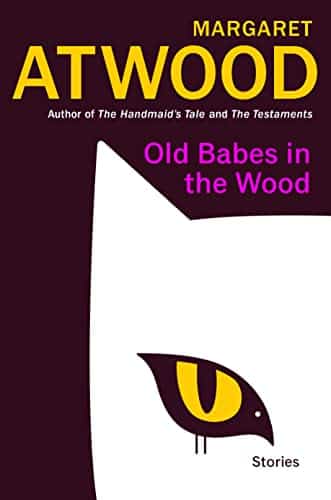

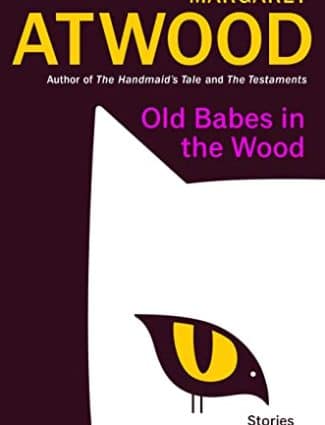
Old Babes in the Wood: Stories

I’m OK and Still Married

If Love Never Dies, Does Marriage Ever End?

Estimated reading time: 1 minute, 24 seconds
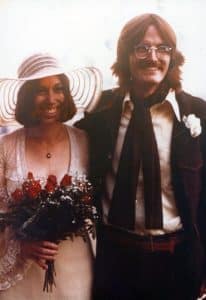
After my wife Jan passed away, someone told me I couldn’t find a new partner if I continued wearing my wedding ring. This comment took me aback, and I didn’t want to explain that I was still married because I was afraid that others would think I was crazy for still being attached to my late wife.

This exchange brought to mind Margaret Atwood‘s “Widow” story, where the character Nell experiences a similar situation. Atwood notes in the preface that widows are often viewed as wealthy and vulnerable.

In the story, Nell is asked if she is dating, which she takes as a joke but isn’t sure if it was meant that way. Nell answered sternly, “I’m a widow. Tig just died.” She decided to let it go as “geriatric flirting.”

The man responds, “So, you’re hunting?”

Since Jan’s passing, I’ve prioritized living life to the fullest and positively impacting the world. I have yet to consider finding a new partner or getting married again, and I’m not actively looking for one. While some people may choose to date after losing a partner, I prefer to honor Jan’s memory by focusing on my journey with purpose and passion.


The Jan Lilien Education Fund sponsors ongoing sustainability and environmental awareness programs. Gifts made this month; I will match dollar-for-dollar. All donations are tax-deductible.

Subscribe

Contact Us

I receive a commission when you buy a book or product using a link on this page. Thank you for supporting Sharing Jan’s Love blog.


Widow Time is Non-Linear

As much as it might have appeared that I was in a dark tunnel after Jan died, I was not and am not now. There is indeed no defined end to the grief journey.

We all must learn how to live without our loved ones. The one I have chosen may not work for anyone else.

Because of how time-warped, Nell was confident that "Tig isn't exactly gone."

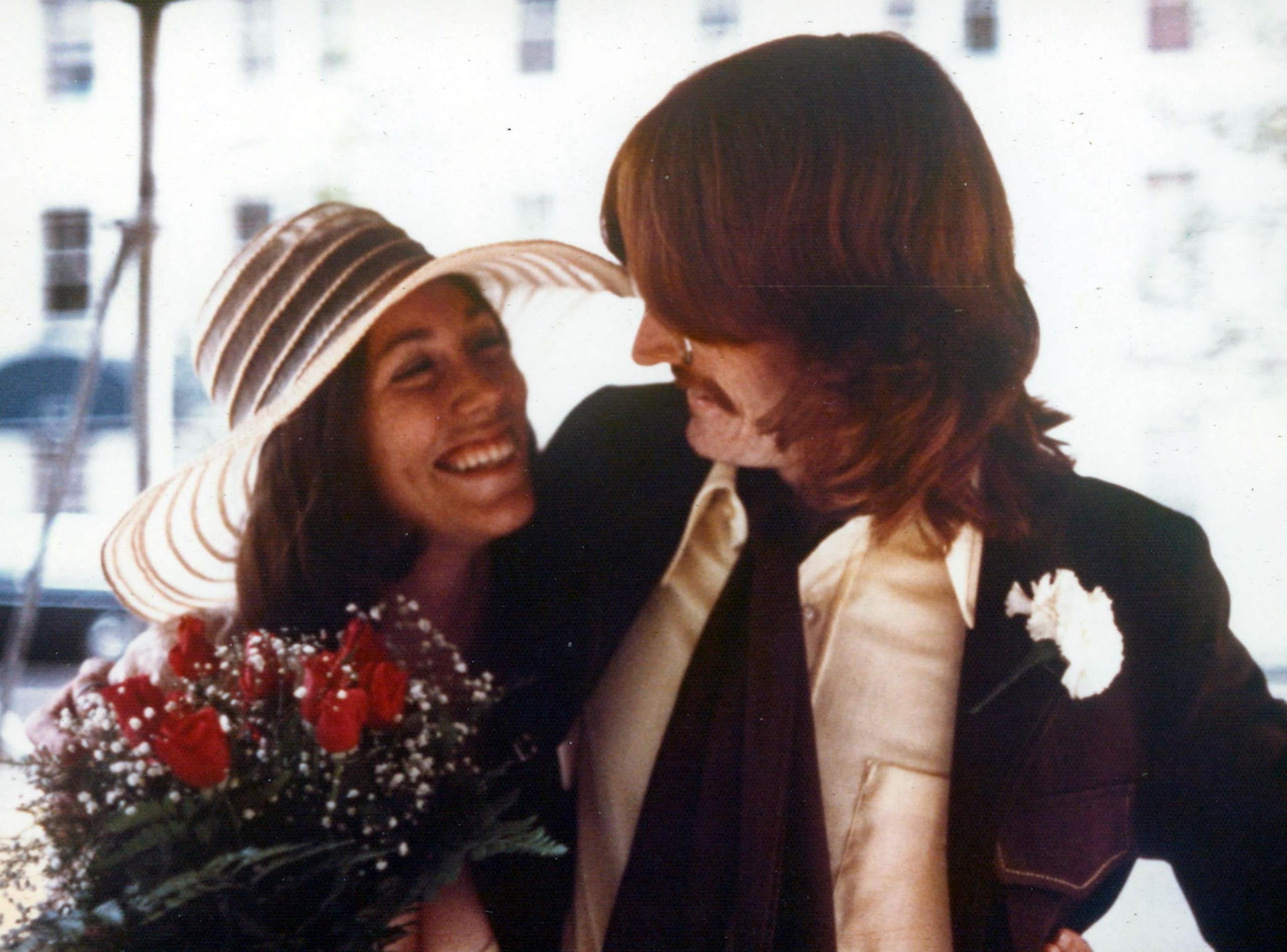
When I write about how Jan and I met and married, I think the same way Nell feels about Tig. Jan is not exactly gone, and I know she is still with me and always will be with me.

Grief has been an outstanding teacher, and it has taught me to live life fully.

Share your thoughts and ideas

This site uses Akismet to reduce spam. Learn how your comment data is processed.

The Jan Lilien Education Fund!

Old Babes in the Wood: Stories
×
Palaver

Read: November 2025

Get this book

Palaver: A Novel

by Bryan Washington

Written with subtle humor and warmth, Bryan Washington‘s Palaver weaves together the past and present across Houston, Jamaica, and Japan. This intricate story explores themes of family, love, and the beauty of coexistence. A finalist for the National Book Award for Fiction, this novel is a life-affirming tale about family, healing, and the ways we learn to love, showcasing the talent of the award-winning Bryan Washington.

In Tokyo, a young man works as an English tutor and spends his nights out with friends at a gay bar. He is involved in a sexual relationship with a married man. Although he has formed a chosen family in Japan, he and his mother, who resides in Houston, are estranged from each other. Her preference for his troubled, homophobic brother, Chris, ultimately pushed him to leave home. Then, in the weeks leading up to Christmas—ten years after they last saw each other—his mother arrives uninvited at his doorstep.

With only the son’s cat, Taro, to mediate, the two clash immediately. The mother struggles with memories of her youth in Jamaica and her complicated relationship with her brother, as she attempts to reconcile her good intentions with past mistakes. Meanwhile, the son grapples with the challenge of forgiveness. However, as life takes unexpected turns—leading the mother to form a tentative friendship with a local bistro owner and the son to connect with a new patron at the bar cautiously—they begin to see each other more clearly.

Through shared meals, conversations, and an eventful trip to Nara, both mother and son try to determine where “home” truly is and whether they can find it in one another.


Bryan Washington is the author of the story collection Lot and the novels Memorial and Family Meal. He is a National Book Award 5 Under 35 Honoree. He has won several prestigious awards, including the Dylan Thomas Prize, the NYPL Young Lions Fiction Award, the Ernest J. Gaines Award, two Lambda Literary Awards, and an O. Henry Prize.

Washington has also been a finalist for various awards, such as the National Book Critics Circle Award for Fiction, the Aspen Words Literary Prize, the Center for Fiction First Novel Prize, the Andrew Carnegie Medal of Excellence, and the James Tait Black Prize. The New York Times referred to his writing as among the 25 Most Influential Works of Postwar Queer Literature, and he was a columnist for the New York Times Magazine.

As a frequent contributor to The New Yorker and The New York Times, his writing has appeared in other notable publications, including Granta, The New York Times Magazine, New York, Time, GQ, and Esquire, among others. He lives in Tokyo.


Discover your next favorite book and dive into a world of curated, exciting reads by purchasing through my links. You’ll have access to a diverse selection of books that I’ve personally vetted to ensure quality and enjoyment. Additionally, by supporting these selections, you’ll help me continue to provide you with more personalized recommendations. I earn a small commission from your purchase, which allows me to buy and share even more books with you. Your support truly makes a difference!


×
Orbital

Read: December 2023

Get this book

Orbital: A Novel

by Samantha Harvey

Today, I started reading “Orbital” by Samantha Harvey. “Orbital” is a slender novel with epic power that captures a single day in the lives of six women and men hurtling through space. The author’s prose is poetic and impossible to put aside. Watching the Earth through the eyes of space travelers is refreshing. If I finish reading it by Sunday, it will be the 78th book I’ve read this year or the first one of 2024.

They are not going towards the moon or the vast unknown but are orbiting our planet. These astronauts and cosmonauts come from various countries, including America, Russia, Italy, Britain, and Japan. They are selected for one of the last space station missions before the program is dismantled. They have left their lives behind to travel over seventeen thousand miles an hour as the earth reels below.

Throughout the book, we catch glimpses of their earthly lives through brief communications with their families, photos, and talismans. We watch them whip up dehydrated meals, float in gravity-free sleep, and exercise in regimented routines to prevent their muscles from atrophying. We also witness them form bonds that will stand between them and utter solitude. Most importantly, we are with them as they behold and record their silent blue planet. Their experiences of sixteen sunrises and sunsets and the bright, blinking constellations of the galaxy are breathtakingly beautiful and surprisingly intimate. Additionally, we get to see the marks of civilization far below, encrusted on the planet on which we live.

It is a profound, contemplative, and gorgeous book that eloquently meditates on space. Moreover, it is a moving elegy reflecting our humanity, environment, and planet.


The Jan Lilien Education Fund sponsors ongoing sustainability and environmental awareness programs. For gifts made this month, I will match dollar for dollar. All donations are tax-deductible.

Subscribe

Contact Us

I receive a commission when you buy a book or product using a link on this page. Thank you for supporting Sharing Jan’s Love blog.


×
The Ferryman: A Novel

Read: May 2023

Get this book

The Ferryman: A Novel

by Justin Cronin

The novel, “The Ferryman,” by Justin Cronin, is set in the beautiful archipelago of Prospera. People lead long and fulfilling lives in this society until their forearm monitors drop below 10%. Then, they retire to the Nursery. Their memories are wiped clean, and they start a new life as sixteen-year-olds.

Although the book was recently published, I hesitated to read it due to the unsettling notion of having my memories wiped clean. However, my curiosity got the best of me, and I’m glad it did. Proctor Bennett, the protagonist, works as a ferryman, assisting people through retirement. But things worsen when Proctor starts dreaming, which is impossible in Prospera, and his monitor percentage rapidly decreases. Are these dreams fragments of a past that they cannot recall?

Amidst all this, rumors about the Arrivalists, who oppose the societal structure, and even the Support Staff, who keep Prospera functioning, are questioning their roles. Proctor finds himself caught up in a more significant cause than expected and sets out to uncover the truth.

Without giving away too much, things are not always what they seem in Prospera.

As a widow, I found this line particularly poignant: “That loss was love’s accounting, its unit of measure, as a foot was made of inches, a yard was made of feet.

I thoroughly enjoyed reading this book; it kept me engaged and excited, and my Kindle was my go-to device for reading it. I highly recommend this novel.


The Jan Lilien Education Fund sponsors ongoing sustainability and environmental awareness programs. Gifts made this month; I will match dollar-for-dollar. All donations are tax-deductible.

Subscribe

Contact Us

I receive a commission when you buy a book or product using a link on this page. Thank you for supporting Sharing Jan’s Love blog.


×
The Compound

Read: July 2025

Get this book

The Compound: A Novel

by Aisling Rawle

Addictive and prescient, The Compound by Aisling Rawle, is an explosive debut from a prominent new voice in fiction. This gripping novel, set in a remote desert compound, will linger in your mind long after the game ends. It’s a story of survival, competition, and the human spirit, making it a must-read for any fiction enthusiast. Lily—a bored, beautiful twenty-something—wakes up on The Compound, alongside nineteen other contestants competing on a massively popular reality show.

For Lily to emerge victorious, she must outlast her housemates and stay in The Compound the longest. Her journey is filled with challenges, from competing for luxury rewards like champagne and lipstick to securing communal necessities for their new home, including food, appliances, and even a front door.


Aisling Rawle was born in 1998 and raised in County Leitrim in the West of Ireland. She now lives in Dublin. The Compound is her first book.


When you purchase a book through one of my links, I earn a small commission that helps support my passion for reading. This contribution allows me to buy even more books to share with you, creating an incredible cycle of discovering great reads together! Your support truly makes a difference!

Enjoy a limited-time offer of 20% off your next book purchase at Bookshop.org!


×
Invisible Child

Read: December 2021

Get this book

Invisible Child: Poverty, Survival & Hope in an American City

by Andrea Elliott

Invisible Child: Poverty, Survival & Hope in an American City by Andrea Elliott was a gift from my son Jon. The New York Times selected “Invisible Child” as one of the best books published this year. It is indeed one of the top books on my all-time list.

GoodReads summary provides a good overview,

The riveting, unforgettable story of a girl whose indomitable spirit is tested by homelessness, poverty, and racism in an unequal America—from Pulitzer Prize-winning journalist Andrea Elliott of The New York Times

Invisible Child follows eight dramatic years in the life of Dasani Coates, a child with imagination as soaring as the skyscrapers near her Brooklyn homeless shelter. Born at the turn of a new century, Dasani is named for the bottled water that comes to symbolize Brooklyn’s gentrification and the shared aspirations of a divided city. As Dasani grows up, moving with her tight-knit family from shelter to shelter, this story goes back to trace the passage of Dasani’s ancestors from slavery to the Great Migration north. When Dasani comes of age, New York City’s homeless crisis explodes as the chasm deepens between rich and poor.

In the shadows of this new Gilded Age, Dasani must lead her seven siblings through a thicket of problems: hunger, parental drug addiction, violence, housing instability, segregated schools, and the constant monitoring of the child-protection system. When, at age thirteen, Dasani enrolls at a boarding school in Pennsylvania, her loyalties are tested like never before. As she learns to “code switch” between the culture she left behind and the norms of her new town, Dasani starts to feel like a stranger in both places. Ultimately, she faces an impossible question: What if leaving poverty means abandoning the family you love?

By turns heartbreaking and revelatory, provocative and inspiring, Invisible Child tells an astonishing story about the power of resilience, the importance of family, and the cost of inequality. Based on nearly a decade of reporting, this book vividly illuminates some of the most critical issues in contemporary America through the life of one remarkable girl.

Jan and I were involved and knew that child poverty and homelessness needed repair. In addition, Jan lived on Washington Park across from Ft. Greene Park in 1974-75. We knew the neighborhood where much of the book’s story takes place. 

Before meeting Jan in 1973, I was both a community/tenant organizer and a youth worker. In the latter role, I made weekly hostel trips for eight to ten young boys from East Williamsburg during 1973. The trips were the first the boys had ever been outside of their neighborhood.

Many of them had imaginations like Dasani. They also had her instinct to fight. One of my first tasks was to check for any weapons.

Decades later, when I would see any of them, now adults, they would ask when we were going on another trip. I wish I had met Jan when I made those trips. She would have helped me improve them and document the impact. If I could re-write history, I would have her join me as the second adult on the hostel trips.

After that summer, it was clear my primary skills were as a community/tenant organizer. Over the next few years, my work focused on creating affordable and supportive housing.

Jan and I did meaningful work that made a difference, yet the need for a permanent solution to the crisis remains. The book highlights the crucial role of resilience, the importance of family, and the cost of inequality. As a nation, we cannot undermine those values by breaking up families, impeding resilience, and maintaining racial and economic inequality. 

The current debate in Washington over the Build Back Better legislation needs to focus not on how much we spend but on its impact on children and families

David Brooks, a conservative commentator, has supported these expenditures for what they can do to address this country’s cultural and economic crisis. 

These packages say to the struggling parents and the warehouse workers: I see you. Your work has dignity. You are paving your way. You are at the center of our national vision.

This is how you fortify a compelling moral identity, which is what all of us need if we’re going to be able to look in the mirror with self-respect. This is the cultural transformation that good policy can sometimes achieve. Statecraft is soulcraft.

If you can only read one book this year, this is the one to read. Child poverty, homelessness, and inequality impact all of us. Ending child poverty and homelessness will make us a healthier and more inclusive nation. It is time for a compelling moral call to action!

Subscribe

Contact Us

When you buy a book or product using a link on this page, I receive a commission. Thank you for supporting Sharing Jan’s Love blog.

×
The Rest Is Memory: A Novel

Read: January 2025

Get this book

The Rest Is Memory: A Novel

by Lily Tuck

Today, I dove into “The Rest Is Memory: A Novel” by Lily Tuck, and it’s already leaving a powerful impression. This poignant tale follows a young Catholic girl’s harrowing journey to Auschwitz, woven in a captivating Rashomon-style narrative showcasing Tuck’s brilliance as a storyteller. Esquire has rightly placed it on their list of Best Books for Fall 2024, and I can see why.

In Tuck‘s skilled hands, “The Rest Is Memory” transforms into an unforgettable piece of historical reclamation, breathing life into an innocent soul who has long been remembered only through a haunting triptych of photographs. It’s a journey that promises to linger in my thoughts long after I’ve turned the last page.

In this mesmerizing novel by Lily Tuck, we first glimpse fourteen-year-old Czeslawa riding on the back of a boy’s motorcycle. Tuck imagines Czeslawa’s upbringing in a small Polish village before her world imploded in late 1942. Stripped of her modest belongings, she arrives at Auschwitz shorn and bearing the tattoo number 26947. Shortly after, she is photographed. Three months later, she is dead.

How did this happen to an ordinary Polish citizen? This is the question Tuck grapples with in this haunting narrative, which frames Czeslawa’s story within the tragic context of the six million Poles who perished during the German occupation. A decade before writing The Rest Is Memory“, Tuck read an obituary of the photographer Wilhelm Brasse, who took over 40,000 pictures of Auschwitz prisoners—including three of Czeslawa Kwoka, a Catholic girl from rural southeastern Poland. Tuck cut out these photos and kept them, determined to learn more about Czeslawa. However, she could only gather the barest facts: the village she came from, the transport she was on, that she was accompanied by her mother and neighbors, her tattoo number, and the date of her death. Tuck crafts a remarkable kaleidoscope of imagination from this scant evidence, something only our greatest novelists can achieve.

Susanna Moore described the novel as “Beautifully written, all the while instilling a sense of horror.” Tuck’s language swirls around the reader, yet no word is out of place. The subtly rotating images tumble forth, accelerating as we learn about Czeslawa’s tragic time in Auschwitz, as well as the lives of real individuals, including the brutal Commandant Rudolf Höss, his unconscionable wife Hedwig, psychiatrist and child rescuer Janusz Korczak, and the sharp Polish short story writer Tadeusz Borowski. Although we know Czeslawa’s fate, we must keep turning the pages, thoroughly captivated by Tuck’s nearly otherworldly prose.


When you purchase a book through one of my links, I earn a small commission that helps support my passion for reading. This contribution allows me to buy even more books to share with you, creating an incredible cycle of discovering great reads together! Your support truly makes a difference!


×