
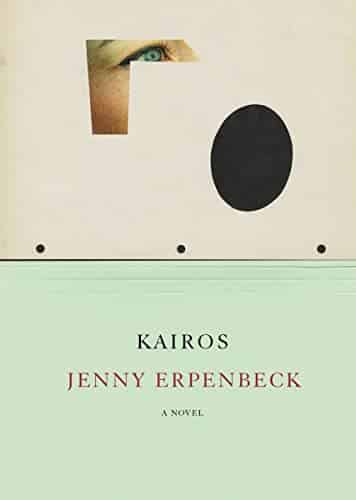
Kairos by Jenny Erpenbeck

Estimated reading time: 1 minute, 36 seconds

I’ve recently delved into the captivating novel Kairos by Jenny Erpenbeck, which has left a lasting impression on me. The book tells the story of a young woman named Katharina who falls in love with a married writer named Hans, whom she met in East Berlin during the late 1980s. The historical context of Germany’s reunification is already an intriguing topic, but the addition of a love story made this book a must-read.

As their intense and complicated relationship plays out against the backdrop of a declining GDR, the novel offers a unique perspective on the tumultuous period following the country’s dissolution in 1989. Erpenbeck’s writing style is unmistakable, and her sweeping portrayal of the two lovers’ journey is truly remarkable. We witness Katharina’s growth as she tries to reconcile the reality of her lousy romance with the disappearance of an entire world and its ideologies.

The Times Literary Supplement has praised Erpenbeck’s ability to capture the weight of history and the influence of cultural and subjective memory on individual identity. Her work acknowledges the complexity of the human experience and the nuances of historical events.

Jenny Erpenbeck is an epic storyteller and a highly respected voice in contemporary German literature. Her translator, Michael Hofmann, has described Kairos as a great post-Unification novel, and his translation has been praised for being both faithful to the original text and beautifully written. I highly recommend this book to anyone seeking a thought-provoking and engaging read.


The Jan Lilien Education Fund sponsors ongoing sustainability and environmental awareness programs. Gifts made this month; I will match dollar-for-dollar. All donations are tax-deductible.

Subscribe

Contact Us

I receive a commission when you buy a book or product using a link on this page. Thank you for supporting Sharing Jan’s Love blog.


The Jan Lilien Education Fund!

The Swimmers: A Novel

Read: October 2022

Get this book

The Swimmers: A Novel

by Julie Otsuka

The Swimmers: A Novel by Julie Otsuka is a novel about what happens to a group of obsessed recreational swimmers when a crack appears at the bottom of their local pool. This searing, intimate story of mothers and daughters—and the sorrows of implacable loss—is the most commanding and unforgettable work yet from a modern master. I highly recommend The Swimmers: A Novel by Julie Otsuka.

The novel was a page-turner from the first to the last page. It had been on my to-read list for months, and I am happy to start reading The Swimmers: A Novel by Julie Otsuka

Memory loss is a frightening situation for anyone. Ms. Otuska writes powerfully and eloquently about Alice’s loss of her memory. I felt as if it was one of my loved ones.

The Goodreads summary provides an overview,

The swimmers are unknown to one another except through their private routines (slow lane, medium lane, fast lane) and the solace each takes in their morning or afternoon laps. But when a crack appears at the bottom of the pool, they are cast out into an unforgiving world without comfort or relief.

One of these swimmers is Alice, who is slowly losing her memory. The pool was a final stand against the darkness of her encroaching dementia for Alice. Without the fellowship of other swimmers and the routine of her daily laps, she is plunged into dislocation and chaos, swept into memories of her childhood and the Japanese American incarceration camp where she spent the war. Alice’s estranged daughter, reentering her mother’s life too late, witnesses her stark and devastating decline.


The Jan Lilien Education Fund sponsors ongoing sustainability and environmental awareness programs. Gifts made this month; I will match dollar-for-dollar. All donations are tax-deductible.

Subscribe

Contact Us

I receive a commission when you buy a book or product using a link on this page. Thank you for supporting Sharing Jan’sJan’s Love blog.

×
A Small Sacrifice for an Enormous Happiness

Read: April 2023

Get this book

A Small Sacrifice for an Enormous Happiness

by Jai Chakrabarti

I recently discovered an excellent short story collection called A Small Sacrifice for an Enormous Happiness: Stories by Jai Chakrabarti. This author won the National Jewish Book Award for debut fiction with his novel A Play for the End of the World, and it is clear that his talent extends to the short story form as well.

The stories in this collection follow men and women as they navigate transformations and familial bonds across countries and cultures. Each story is unique and captivating, but the one that struck me was the title story about a closeted gay man in 1980s Kolkata who seeks to have a child with his lover’s wife. Chakrabarti’s skill as a storyteller is on full display in this story and throughout the collection.

I highly recommend A Small Sacrifice for an Enormous Happiness: Stories if you want a book exploring love and family’s complexities in uncertain times. Each story is a masterful exploration of what it means to cultivate a family across borders, religions, and races. I look forward to reading more by Jai Chakrabarti in the future.

The Goodreads summary provides an overview,

In the fourteen masterful stories of this collection, Jai Chakrabarti crosses continents and cultures to explore what it means to cultivate a family across borders, religions, and races today.

In the title story, a closeted gay man in 1980s Kolkata seeks to have a child with his lover’s wife. An Indian widow, engaged to a Jewish man, struggles to balance her cultural identity with the rituals and traditions of her newfound family. An American musician travels to see his guru for the final time—and makes a promise he cannot keep. A young woman from an Indian village arrives in Brooklyn to care for the toddler of a biracial couple. And a mystical agent is sent by a mother to solve her son’s domestic problems.

Throughout, the characters’ most vulnerable desires shape life-altering decisions as they seek to balance their needs against those of the people they hold closest.


The Jan Lilien Education Fund sponsors ongoing sustainability and environmental awareness programs. Gifts made this month; I will match dollar-for-dollar. All donations are tax-deductible.

Subscribe

Contact Us

I receive a commission when you buy a book or product using a link on this page. Thank you for supporting Sharing Jan’s Love blog.


×
Sarah's Key

Read: January 2022

Get this book

Sarah’s Key

by Tatiana de Rosnay

Sarah’s Key by Tatiana de Rosnay is the untold story of the roundup of the Jews in Paris in July 1942. The novel focuses on how the French were complicit in rounding up thousands of Jews in 1942. It is also a reminder that we can never allow another genocide. I finished this book the day before Holocaust Remembrance Day, January 27, the date on which the Auschwitz-Birkenau concentration and death camp complex was liberated in 1945.

Ten-year-old Sarah is brutally arrested with her family in the Vel’ d’Hiv’ roundup, the most notorious act of French collaboration with the Nazis. But before the police come to take them, Sarah locks her younger brother, Michel, in their favorite hiding place, a cupboard in the family’s apartment. She keeps the key, thinking she will be back within a few hours.

Paris, May 2002: On Vel’ d’Hiv’s sixtieth anniversary, Julia Jarmond, an American journalist, is asked by her Paris-based American magazine to write an article about this black day in France’s past. Julia has lived in Paris for nearly twenty-five years and married a Frenchman, and she is shocked both by her ignorance about the event and the silence that still surrounds it.

The twin narratives of Sarah and Julia hold the first two-thirds of the book together and make it a page-turner. Sarah’s memory reminds us during the final third of the book and ensures that the complete story of the Vel’ d’Hiv’ roundup and its lasting impact are told.

As Goodreads describes the novel,

In the course of her investigation, she stumbles onto a trail of long-hidden family secrets that connects her to Sarah. Julia finds herself compelled to retrace the girl’s ordeal, from the terrible days spent shut in at the Vel’ d’Hiv’ to the camps and beyond. As she probes into Sarah’s past, she begins to question her own place in France and to reevaluate her marriage and her life.

Writing about the fate of her country with a pitiless clarity, Tatiana de Rosnay offers us a brilliantly subtle, compelling portrait of France under occupation and reveals the taboos and denial surrounding this painful episode in French history.

I highly recommend the book.

Subscribe

Contact Us

When you buy a book or product using a link on this page, I receive a commission. Thank you for supporting Sharing Jan’s Love blog.

×
My Friend, I Care

Read: August 2021

Get this book

My Friend, I Care: The Grief Experience

by Barbara Karnes RN

My journey from the Island of Grief back to the Land of Love is long and arduous. Friends, especially those who have also lost a loved one, are the guideposts on this journey. One of these friends, Sue Gramacy, sent this book to me during the early phases of my grief journey.

My Friend, I Care: The Grief Experience may be one of the shortest books I have ever read, but it is also one that has been most helpful. Barbara Karnes, RN, provides a concise understanding of grief, and she includes a list of dos and don’ts that are very helpful to someone who has recently lost the love of their life.

She provides a compelling explanation of the new life that we all must strive to achieve.

Our inability to further enjoy life does not measure our loss. The quality of our relationship with the person who has died is found in our strength, our resilience and our ability to create a new and meaningful life.

The endpoint of my journey is a new and meaningful life. This book has helped remind me that it is an achievable goal.

Subscribe

Contact Us

×
The Letter Carrier

Read: July 2025

Get this book

The Letter Carrier: A Novel

by Francesca Giannone

In the bestselling novel that has captivated readers in Italy, The Letter Carrier by Francesca Giannone depicts a small town in southern Italy that reflects the experiences of many others. It portrays the lives of women and men—husbands and wives, fathers and sons, mothers and daughters—as they strive to navigate the world while remaining true to their hearts. The Letter Carrier explores the universal theme of connection and examines the consequences that arise when those connections occur at the wrong time.

Salento, Italy, June 1934: A coach stops in the main square of Lizzanello, a tight-knit village where everyone knows each other. A couple gets off: The man, Carlo, a Southerner, is happy to be back home after a long time away; the woman, Anna—his wife—is a Northerner. Carlo’s brother is there to meet them, and he, along with everyone else, can’t help but notice that Anna is as beautiful as a Greek statue.

But Anna is not like the other wives. She doesn’t gossip or attend church. She reads books no one else has ever heard of, exploring ideas that some find threatening. She even wears pants, just like a man, and thinks a woman should have rights, just like a man.

There aren’t many options for a woman with Anna’s sensibilities, so when she learns that the post office is hiring, she leaps at the opportunity. A female letter carrier? It is unthinkable! But Anna passes the postal exam and soon becomes the invisible thread connecting the town as she delivers letters between clandestine lovers, families waiting to hear news of loved ones away at war, and even helps those who can’t read.

Letters connect people, conveying both information and emotion. But for some in Lizzanello, letters are too little and too late.


Francesca Giannone holds a degree in communication science and studied at the CSC, the oldest film school in Europe, located in Rome. She has published several short stories in literary magazines, both in print and online. Currently, Giannone resides in Milan, but her heart remains in her hometown of Lizzanello, a seaside town in the Salento region of Italy. She hopes to return there to live one day.


Elettra Pauletto translated The Letter Carrier. After earning her MFA from Columbia University, she has split her time between writing about her experiences in Africa—specifically in the Democratic Republic of the Congo, Rwanda, and Senegal—and translating fiction and nonfiction works from Italian and French into English. In both her writing and translations, she heavily relies on her background as a former political risk analyst who covered Sub-Saharan Africa, the Middle East, and Europe.


When you purchase a book through one of my links, I earn a small commission that helps support my passion for reading. This contribution allows me to buy even more books to share with you, creating an incredible cycle of discovering great reads together! Your support truly makes a difference!

Enjoy a limited-time offer of 20% off your next book purchase at Bookshop.org!


×
The Heat Will Kill You First

Read: July 2023

Get this book

The Heat Will Kill You First

by Jeff Goodell

I recently started reading “The Heat Will Kill You First” by Jeff Goodell, which delves into the extreme ways our planet is already changing. The book explores how spring is arriving earlier and fall is arriving later and how this will impact our food supply and disease outbreaks. As I have stated in my Action Alert: EPA’s Carbon Rule, the time to act is now.

The book also predicts the consequences of summer days in cities like Chicago and Boston, reaching temperatures as high as 110°F. Goodell explains that heat waves are used only to affect the most vulnerable people, but as they become more intense and familiar, they will affect everyone.

It is becoming increasingly clear that the world is facing a new reality. In California, wildfires are now seasonal, while the Northeast is experiencing less and less snow each winter. Meanwhile, the Arctic and Antarctic ice sheets are melting alarmingly. Heat is the primary threat that is driving all other impacts of the climate crisis. As temperatures rise, it exposes weaknesses in our governments, politics, economy, and values.

The basic science is straightforward: If we stop burning fossil fuels tomorrow, the global temperature will also stop rising. However, if we wait for 50 years to stop burning them, the temperature will continue to rise, making parts of our planet uninhabitable. The responsibility to act is in our hands. The hotter it gets, the more our underlying issues will surface and expand.

Jeff Goodell has been an award-winning journalist in the field of environmental reporting for several decades. His latest book explains how extreme heat will cause significant changes in the world. The book is an excellent blend of scientific insights and on-the-ground storytelling, and Goodell explores some of the most significant questions surrounding the topic. He reveals that extreme heat is a force we have yet to comprehend fully.


The Jan Lilien Education Fund sponsors ongoing sustainability and environmental awareness programs. Gifts made this month; I will match dollar-for-dollar. All donations are tax-deductible.

Subscribe

Contact Us

I receive a commission when you buy a book or product using a link on this page. Thank you for supporting Sharing Jan’s Love blog.


×