
Jan's First  Yahrtzeit

Grieving and Living in the Light of the Yahrzeit Candle!

The Fourth Yahrzeit Illuminates the Darkness!

Estimated reading time: 2 minutes, 43 seconds

Last week, I shared a heartfelt moment with my friend Chris. I mentioned that it had been four years since my loss and that I was still standing, still here. The words tumbled out before I had a chance to weigh them, and as soon as they left my lips, I felt a twinge of discomfort. Calling my experience through grief merely “being alive” seemed to gloss over something much deeper—a richer truth that warranted more than just a surface-level description.
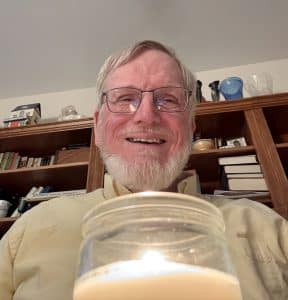
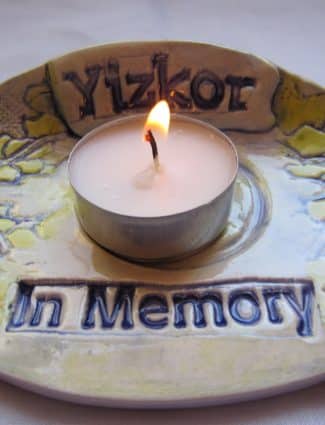
The Fourth Yahrzeit Illuminates the Darkness!At sunset, standing before the yahrzeit candle, the anniversary of a death in my Jewish faith, I recognized how hollow that sentiment truly was. I have listened to my emotions, embraced them, and welcomed new friends and ideas. I have bravely stepped into a future that I sometimes feared —a future now filled with hope and inspiration.

Throughout this journey, I have poured my blood, sweat, tears, and limited resources into helping others. The support and connection I found in my community have been instrumental in my healing. While some friends believe I am a better person now, all I know is that I am not the same person I was four years ago.

I remember crying when I lit a yahrzeit candle for the first time in memory of my wife. Yet, I found comfort in the knowledge that not having met her would have brought me more pain than losing her after almost five decades. On the second anniversary of her passing, I returned home late from Washington, D.C., where I had participated in the Religious Action Center of Reform Judaism’s Power of Purpose Campaign, a task I knew she would have wanted me to undertake. The candle lighting felt anticlimactic. Last year, the candle flickering in the darkness danced like a choreographed performance, reminiscent of the dots and dashes of Morse Code, sending me encoded memories like a secret message from the past.

This year, after completing a meaningful trifecta of love in tribute to my wife, I was uncertain about what to expect.

  • The trifecta included participating in the Big Climb, a charity event for cancer research that involved climbing twenty-six stories just two days after what would have been her birthday.
  • I also organized a community packing event with Bridges and Calvary Lutheran Church in Cranford for our unhoused neighbors on the fourth anniversary of her passing, and
  • I walked for 1,461 consecutive days, marking the fourth anniversary of her funeral. These acts were about remembering my wife and spreading love and kindness in the world, which she always believed in.

As I recited the prayers and lit my Yahrzeit Memorial Lamp, the flame flickering in the darkness of my home resembled a captivating indoor laser show, illuminating the space and chasing away the shadows. It served as a luminous reminder that the warmth of a first kiss holds more significance than any farewell. Love, in its purest form, is a powerful and transformative energy that transcends the boundaries of life and death, guiding me through the darkest moments of grief. Although our loved ones may be physically absent, it is comforting to know they continue to live on in the love we share, the memories we cherish, and the new experiences we create.

Shalom, Love, and Hope! Amen!
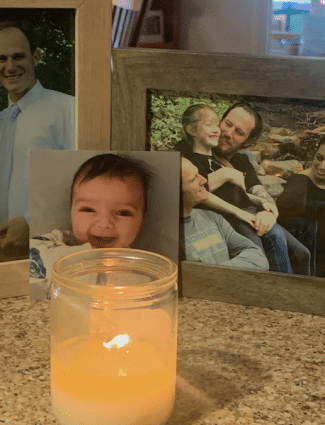
A Dancing Yahrzeit Candle

Rituals matter as much in the modern world as ever in human history. The annual Yahrzeits have helped me find peace, solace, and a way to live without Jan. When I sat down, I felt closer to God than ever.

Share your thoughts and ideas

This site uses Akismet to reduce spam. Learn how your comment data is processed.

The Jan Lilien Education Fund!

Jan's First  Yahrtzeit
×
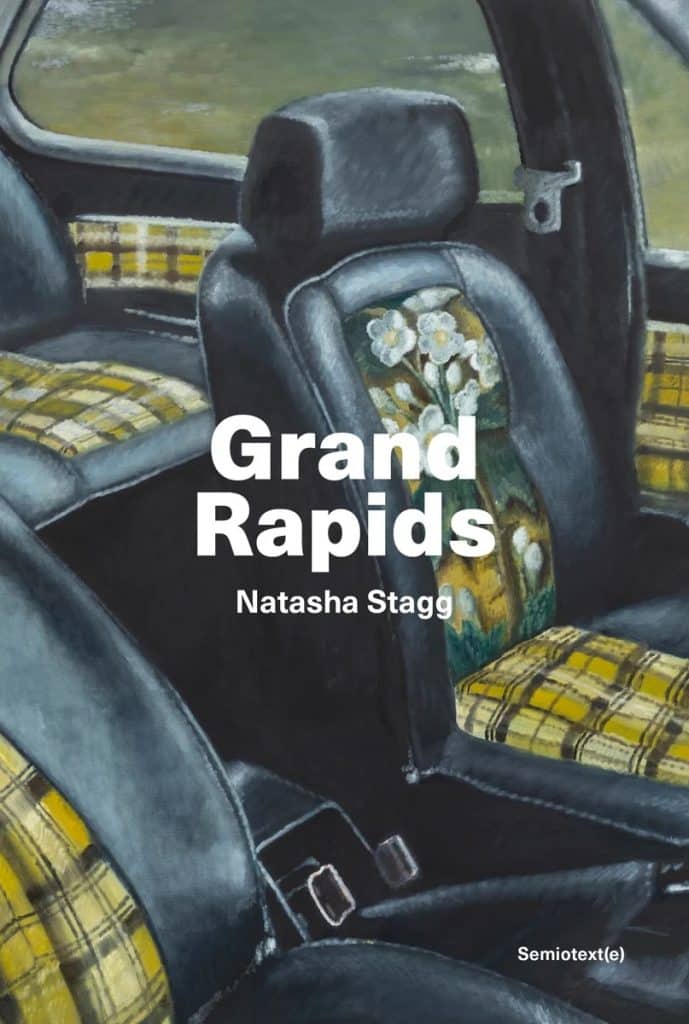
Grand Rapids: A Novel

Read: January 2026

Get this book

Grand Rapids: A Novel

by Natasha Stagg

Natasha Stagg‘s “Grand Rapids” is a coming-of-age story set in the Michigan suburbs in the early 2000s. Alexander Calder’s public sculpture, “La Grande Vitesse”, installed alongside the Grand River in downtown Grand Rapids, has become a symbol of the city. Tess moved there from Ypsilanti, Michigan, in 2001—the same year her mother passed away, marking the beginning of a time when everything felt like it was moving in slow motion for her.

Thrust into adolescence nearly rudderless, fifteen-year-old Tess is intoxicated, angsty, and sexually awake. A decade later, inspired by diary entries and TV reruns, she remembers this summer in the suburbs as the one that redefined her. Its echoes of death are frozen in time, like the waves represented in Calder’s sculpture or the concrete steps leading down to the churning river. She sees Grand Rapids as a collection of architecture and emblems, another home to which she cannot return.


Natasha Stagg is the author of Surveys: A Novel (2016), Sleeveless: Fashion, Image, Media, New York 2011–2019 (2019), and Artless: Stories 2019–2023 (2023). She lives in New York City.


Discover your next favorite book and dive into a world of curated, exciting reads by purchasing through my links. You’ll have access to a diverse selection of books that I’ve personally vetted to ensure quality and enjoyment. Additionally, by supporting these selections, you’ll help me continue to provide you with more personalized recommendations. I earn a small commission from your purchase, which allows me to buy and share even more books with you. Your support truly makes a difference!


×
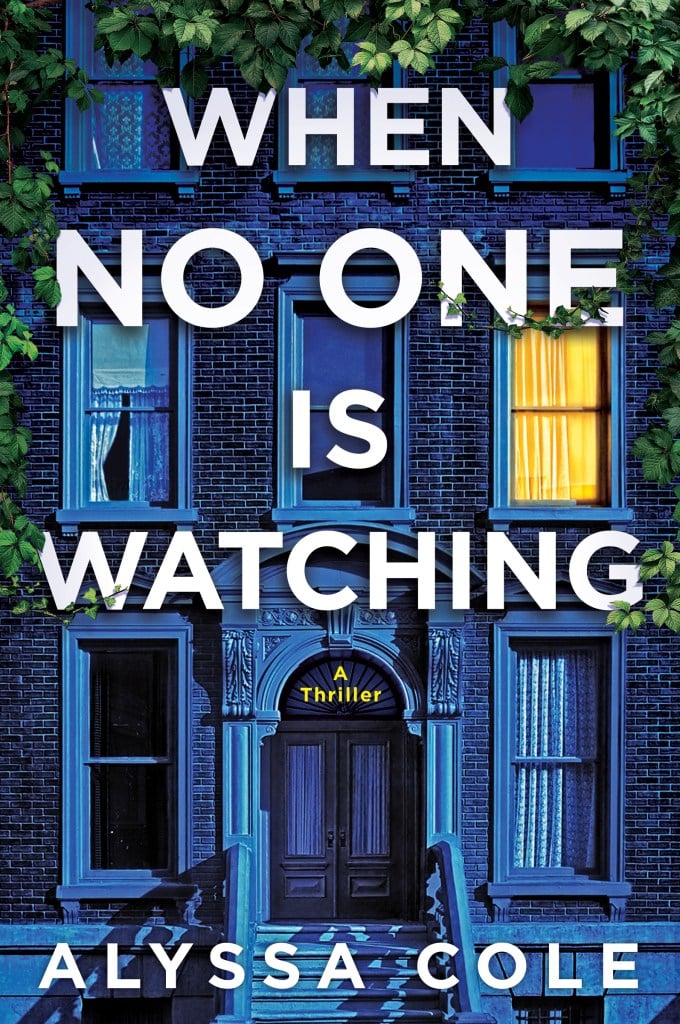
When No One is Watching

Read: February 2022

Get this book

When No One is Watching

by Alyssa Cole

When No One Is Watching by Alyssa Cole is a novel where the gentrification of a Brooklyn neighborhood takes on a sinister new meaning.

Sydney Green is Brooklyn-born and raised, but her beloved neighborhood seems to change every time she blinks. Condos are sprouting like weeds, FOR SALE signs are popping up overnight, and the neighbors she’s known all her life are disappearing. To hold onto her community’s past and present, Sydney channels her frustration into a walking tour and finds an unlikely and unwanted assistant in one of the new arrivals to the block—her neighbor Theo.

But Sydney and Theo’s deep dive into history quickly becomes a dizzying descent into paranoia and fear. After all, their neighbors may not have moved to the suburbs, and the push to revitalize the community may be more deadly than advertised.

When does coincidence become a conspiracy? Where do people go when gentrification pushes them out? Can Sydney and Theo trust each other—or themselves—long enough to find out before they too disappear?

Having lived in Brooklyn and seen the impacts of gentrification, redlining, and other practices, I found this book one that I truly enjoyed. The book will provide a detailed history lesson if you are like Theo and have no thought of these issues.

I enjoyed the visit to Weeksville, as I have been there on several professional occasions. The history of that community needs to be told.

I recommend this book.

Subscribe

Contact Us

When you buy a book or product using a link on this page, I receive a commission. Thank you for supporting Sharing Jan’s Love blog.

×
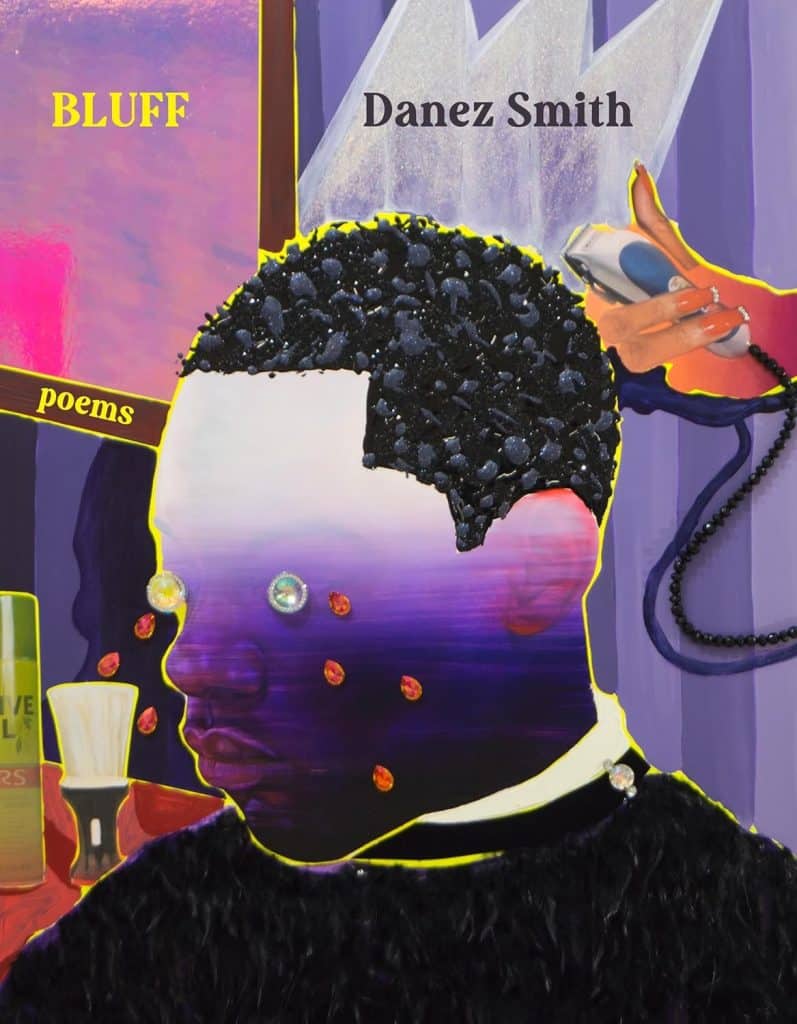
Bluff: Poems

Read: December 2024

Get this book

Bluff: Poems

by Danez Smith

Today, I began reading Bluff: Poems by Danez Smith, which was selected as one of The New York Times 100 Notable Books of 2024. This collection emerged after two years of artistic silence, during which the world slowed due to the COVID-19 pandemic, and Minneapolis became the epicenter of protests following the murder of George Floyd. In Bluff, Danez Smith powerfully reflects on their role and responsibilities as a poet and their connection to their hometown of the Twin Cities.

This book addresses the awakening from violence, guilt, shame, and critical pessimism to a sense of wonder, envisioning how we might strive for a new existence in a world that seems to be descending into desolate futures.

Smith infuses these poems with a startling urgency; their questions demand a new language, deep self-scrutiny, and virtuosic textual shapes. A series of ars poetica gives way to “anti-poetica” and “ars America,” implicating poetry in collusion with unchecked capitalism. A photographic collage builds across a sequence, illustrating the consequences of America’s acceptance of mass shootings. Additionally, a brilliant long poem—part map, part annotation, part visual argument—offers the history of Saint Paul’s vibrant Rondo neighborhood before and after officials decided to route an interstate directly through it.

Bluff is a manifesto of artistic resilience, even when time feels fleeting and the places we hold dear—both given and created—are in turmoil. In this powerful collection, Smith turns to honesty, hope, rage, and imagination to envision possible futures.


When you purchase a book through one of my links, I earn a small commission that helps support my passion for reading. This contribution allows me to buy even more books to share with you, creating an incredible cycle of discovering great reads together! Your support truly makes a difference!


×
20 Under 40

Read: January 2019

Get this book

20 Under 40 Fiction

by Various Writers Under 40

Short Stories that Will Define the Future of American Letters

The New Yorker’s collection of short stories – 20 Under 40 – is a collection of twenty writers “whose work will help define the future of American letters.”

Some of these I had read in The New Yorker and others I had missed. Either way, they were a pleasure to read.

As The New Yorker wrote,

The range of voices is extraordinary. There is the lyrical realism of Nell Freudenberger, Philipp Meyer, C. E. Morgan, and Salvatore Scibona; the satirical comedy of Joshua Ferris and Gary Shteyngart; and the genre-bending tales of Jonathan Safran Foer, Nicole Krauss, and Téa Obreht. David Bezmozgis and Dinaw Mengestu offer clear-eyed portraits of immigration and identity; Sarah Shun-lien Bynum, ZZ Packer, and Wells Tower offer voice-driven, idiosyncratic narratives. Then there are the haunting sociopolitical stories of Chimamanda Ngozi Adichie, Daniel Alarcón, and Yiyun Li, and the metaphysical fantasies of Chris Adrian, Rivka Galchen, and Karen Russell.

Each of these writers reminds us why we read. And each is aiming for greatness: fighting to get and to hold our attention in a culture that is flooded with words, sounds, and pictures; fighting to surprise, to entertain, to teach, and to move not only us but generations of readers to come. A landmark collection, 20 Under 40 stands as a testament to the vitality of fiction today.

I recommend this collection of short stories.

Subscribe

Contact Us

×
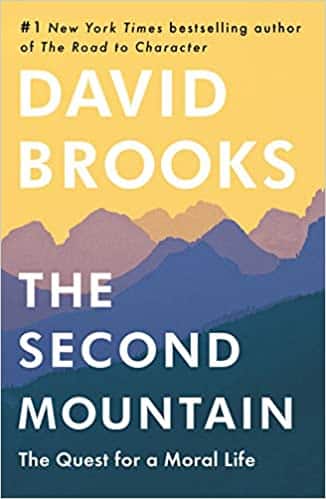
The Second Mountain: The Quest for a Moral Life

Read: May 2019

Get this book

The Second Mountain: The Quest for a Moral Life

by David Brooks

The Second Mountain: The Quest for a Moral Life by David Brooks is a book I often recommend. Mr. Brooks writes about the first mountain that most people climb. The book challenges the reader to “live for a cause greater than themselves.”

It is about “to be a success, make your mark, experience personal happiness.” Even when they reach the top of the mountain, most people find they are unhappy. The climb to the summit has become unsatisfying.

On the second mountain, life moves from self-centered to other-centered.” Life becomes interdependent, not independent; it becomes a life of commitment, not about us.

Mr. Brooks “explores the four commitments that define a life of meaning and purpose: to a spouse and family, to a vocation, to a philosophy or faith, and to a community.

We live in a society, Brooks argues, that celebrates freedom, that tells us to be true to ourselves, at the expense of surrendering to a cause, rooting ourselves in a neighborhood, binding ourselves to others by social solidarity and love. We have taken individualism to the extreme—and in the process we have torn the social fabric in a thousand different ways.

When I read The Second Mountain, it became clear that Jan and I never even attempted to climb the first mountain. We were constantly climbing the second mountain.

We had chosen to do work that repaired the world; we both had a faith community and lived in a community.

All we were missing as far as commitments when we met was each other. Our love for each other provided the missing link and allowed us to climb to the top of the second mountain.


The Jan Lilien Education Fund sponsors ongoing sustainability and environmental awareness programs. Gifts made this month; I will match dollar-for-dollar. All donations are tax-deductible.

Subscribe

Contact Us

I receive a commission when you buy a book or product using a link on this page. Thank you for supporting Sharing Jan’s Love blog.

×
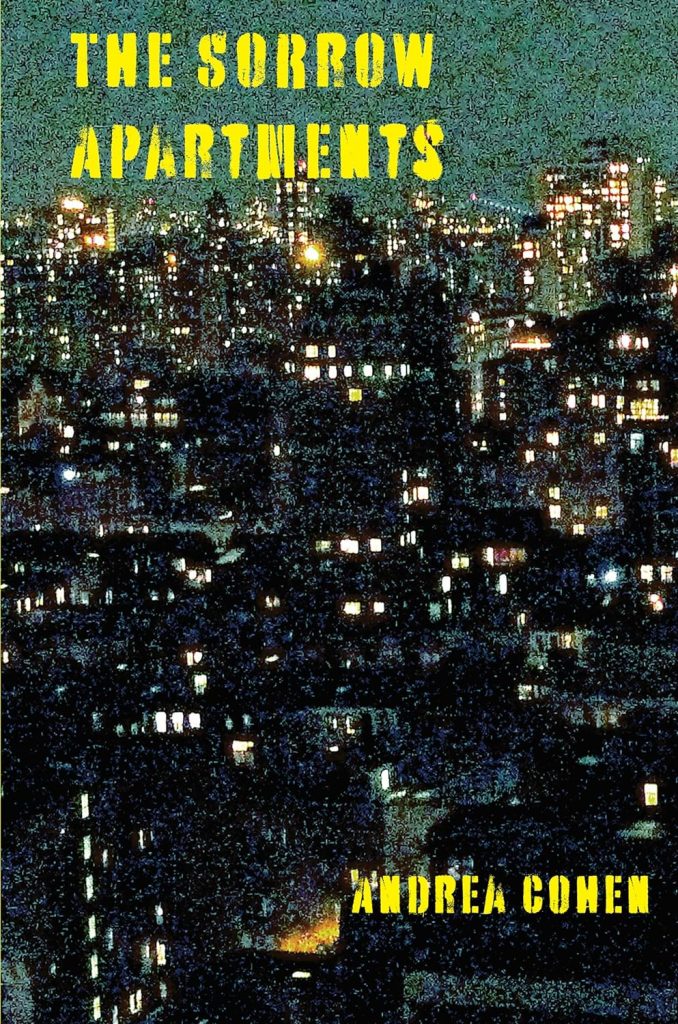
The Sorrow Apartments

Read: June 2024

Get this book

The Sorrow Apartments

by Andrea Cohen

Today, I explored “The Sorrow Apartments,” the eighth collection of poems by poet Andrea Cohen. Renowned poet Christian Wiman accurately describes Cohen’s work as a “cumulative force,” showcasing her deep attention, genuine intelligence, and soul. Cohen’s distinctive talents are featured in this collection, complemented by her characteristic sly humor, unwavering conciseness, and surprising moments of profound wisdom.

It’s astonishing how swiftly Cohen transports us:

Bunker

What would I
think, coming

up after
my world

had evaporated?
I’d wish

I were water.

The Sorrow Apartments house a collection of sparse and haunting poetry, each piece a captivating narrative of mystery, grief, and awe. These poems transport us not just across time but also through a spectrum of emotions. Cohen’s unique approach to illumination is evident in “Acapulco,” where an unanticipated companion muses, “as men tend to, / the stars comprising Orion’s belt — / as if it were the lustrous sparks and not / the leveling dark that connects us.” For a poet often deemed unfashionable, Cohen’s work proves that unfashionable can be beautiful.

×