Call The Midwife

Call The Midwife Solo

Estimated reading time: 0 minutes, 36 seconds

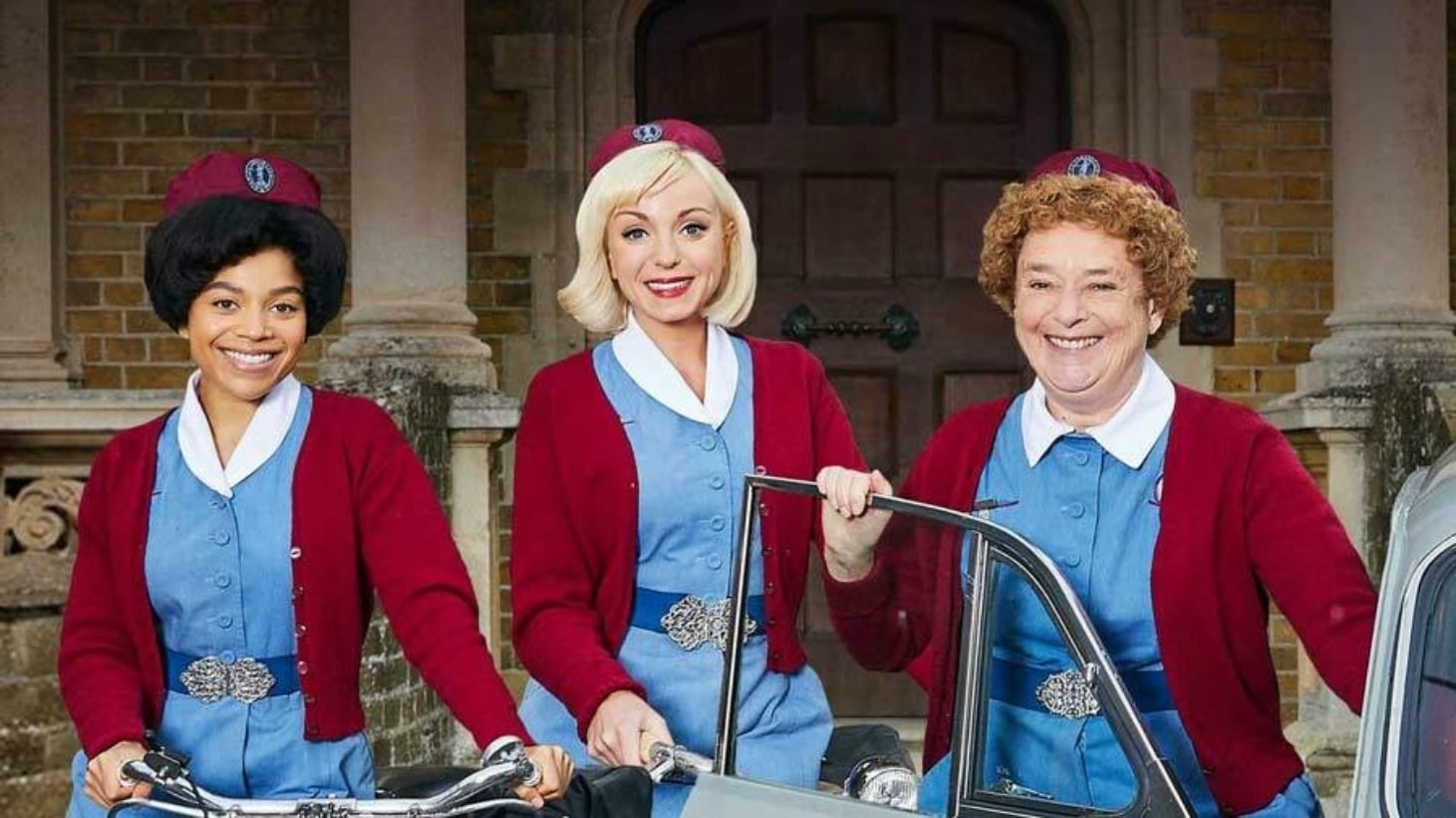
Watching the tenth season of Call the Midwife without Jan is like walking in the snow without shoes, doable but not enjoyable. We watched the first nine seasons together, and we bonded with the characters and watched them grow and evolve.

This season may be one of the best, with the women’s rights movement having more impact.

I have watched five episodes. I wish Jan were with me so we could discuss the plot twists. Alas, she is not in the chair next to me, and they will never be the same without the love of my life.

Subscribe

Contact Us

Share your thoughts and ideas

This site uses Akismet to reduce spam. Learn how your comment data is processed.

The Jan Lilien Education Fund!

Call The Midwife
×
Roses, in the Mouth of a Lion

Read: January 2023

Get this book

Roses, in the Mouth of a Lion

by Bushra Rehman

Roses, in the Mouth of a Lion by Bushra Rehman is a book I encouraged friends to read before I finished reading it. I highly recommend this page-turner novel, which is punctuated by both joy and loss, full of ’80s music and beloved books. Roses, in the Mouth of a Lion is a must-read coming-of-age story of Razia Mirza, a girl struggling to reconcile her heritage and faith with her desire to be true to herself.

Razia Mirza, the protagonist, leaps off the page or screen. Bushra Rehman describes Corona with prose that is vibrant and clear-eyed. When I lived in Brooklyn, I had, on a few occasions, meetings in Corona a decade before the novel’s setting. Reading the book made me remember that time and place and understand intuitively the world that Razia was struggling to reconcile.

Razia’s choice between her heart and her family is one I will not reveal. However, the novel defines the conflicts between the Pakistani-American community and the love that Razia and Anglea experience in clear prose, and the reader can easily accept various resolutions.

The choice that Rasia makes left me desiring to know what happens next. I have added Bushra Rehman to my favorite authors and plan to read more of her novels.

I had this novel on my list for the last month but could not get to it until now. I wish I had read it sooner. It is the eighth book I have read in 2023.

The Goodreads summary provides an overview,

Razia Mirza grows up amid the wild grape vines and backyard sunflowers of Corona, Queens, with her best friend, Saima, by her side. Razia’s heart is broken when a family rift drives the girls apart. She finds solace in Taslima, a new girl in her close-knit Pakistani-American community. They embark on a series of small rebellions: listening to scandalous music, wearing miniskirts, and cutting school to explore the city.

When Razia is accepted to Stuyvesant, a prestigious high school in Manhattan, the gulf between the person she is and the daughter her parents want her to be, widens. At Stuyvesant, Razia meets Angela and is attracted to her in a way that blossoms into a new understanding. When an Aunty discovers their relationship in the community, Razia must choose between her family and her future.


The Jan Lilien Education Fund sponsors ongoing sustainability and environmental awareness programs. Gifts made this month; I will match dollar-for-dollar. All donations are tax-deductible.

Subscribe

Contact Us

I receive a commission when you buy a book or product using a link on this page. Thank you for supporting Sharing Jan’s Love blog.


×
1944: FDR and the Year That Changed History

Read: October 2019

Get this book

1944: FDR and the Year That Changed History

by Jay Winik

1944: FDR and the Year That Changed History by Jay Winik is a book that I had put off reading several times. When I finally did read it, I could not remember why I had not read it sooner. Had I gone to graduate school and become a professor, it might have been the type of book I might write, and I certainly would have had on my list of books for my classes. 

As The NY Times wrote, “Jay Winik brings to life in gripping detail the year 1944, which determined the outcome of World War II and put more pressure than any other on an ailing yet determined President Roosevelt.” Reading a book about events five years before my birth that transformed the world I live in becomes an easy page-turner.

It was not inevitable that World War II would end as it did or that it would even end well. Nineteen forty-four was a year that could have stymied the Allies and cemented Hitler’s waning power. Instead it saved those democracies – but with a fateful cost. Now, in a superbly told story, Jay Winik, the acclaimed author of April 1865 and The Great Upheaval, captures the epic images and extraordinary history as never before.

1944 witnessed a series of titanic events: FDR at the pinnacle of his wartime leadership as well as his reelection, the planning of Operation Overlord with Churchill and Stalin, the unprecedented D-Day invasion, the liberation of Paris, and the horrific Battle of the Bulge, and the tumultuous conferences that finally shaped the coming peace. But on the way, millions of more lives were still at stake as President Roosevelt was exposed to mounting evidence of the most grotesque crime in history, the Final Solution. Just as the Allies were landing in Normandy, the Nazis were accelerating the killing of millions of European Jews.

Winik shows how escalating pressures fell on an all but dying Roosevelt, whose rapidly deteriorating health was a closely guarded secret. Here then, as with D-Day, was a momentous decision for the president. Was winning the war the best way to rescue the Jews? Was a rescue even possible? Or would it get in the way of defeating Hitler? In a year when even the most audacious undertakings were within the world’s reach, including the liberation of Europe, one challenge – saving Europe’s Jews – seemed to remain beyond Roosevelt’s grasp.

I recommend this book.

Subscribe

Contact Us

×
The Last White Man

Read: August 2022

Get this book

The Last White Man: A Novel

by Mohsin Hamid

The Last White Man by Mohsin Hamid is a story of love, loss, and rediscovery in a time of unsettling change. One morning, Anders, the novel’s protagonist,  wakes to find that his skin has turned dark, his reflection a stranger to him. At first, he tells only Oona, an old friend, newly a lover. Soon, reports of similar occurrences surface across the land.

In Mohsin Hamid’s “lyrical and urgent” prose (O Magazine), The Last White Man powerfully uplifts our capacity for empathy and the transcendence over bigotry, fear, and anger it can achieve.

I highly recommend this book. It was a page-turner that kept me thinking about love, loss, and rediscovery. All three are subjects close to my heart since Jan’s death.

I decided to read the book after hearing an interview with the author on All of It on WNYC.

The Goodreads summary provides a good overview,

One morning, Anders wakes to find that his skin has turned dark, his reflection a stranger to him. At first he tells only Oona, an old friend, newly a lover. Soon, reports of similar occurrences surface across the land. Some see in the transformations the long-dreaded overturning of an established order, to be resisted to a bitter end. In many, like Anders’s father and Oona’s mother, a sense of profound loss wars with profound love. As the bond between Anders and Oona deepens, change takes on a different shading: a chance to see one another, face to face, anew.

Hamid’s The Last White Man invites us to envision a future – our future – that dares to reimagine who we think we are, and how we might yet be together.


The Jan Lilien Education Fund sponsors ongoing sustainability and environmental awareness programs. Gifts made this month; I will match dollar-for-dollar. All donations are tax-deductible.

Subscribe

Contact Us

I receive a commission when you buy a book or product using a link on this page. Thank you for supporting Sharing Jan’s Love blog.

×
Lincoln in the Bardo: A Novel

Read: August 2024

Get this book

Lincoln in the Bardo: A Novel

by George Saunders

My journey with “Lincoln in the Bardo: A Novel” by George Saunders began with recognition as one of The New York Times’ 100 Best Books of the Century. As I turned its pages, I was immersed in its profound exploration of living and loving in the face of inevitable endings. The book, which struck a personal chord with me after a loss, is a testament to Saunders’ storytelling prowess and a must-read for those interested in Abraham Lincoln.

February 1862. The Civil War is less than one year old. The fighting has begun in earnest, and the nation has already realized it is in for a long, bloody struggle. Meanwhile, President Lincoln’s beloved eleven-year-old son, Willie, lies upstairs in the White House, gravely ill. In a matter of days, despite predictions of a recovery, Willie dies and is laid to rest in a Georgetown cemetery. “My poor boy, he was too good for this earth,” the president says at the time. “God has called him home.” Newspapers report that a grief-stricken Lincoln returns, alone, to the crypt several times to hold his boy’s body.

From a seed of historical truth, George Saunders weaves an unforgettable tale of familial love and loss that transcends its realistic, historical framework. The story takes a daring leap into a realm that is hilarious and terrifyingly supernatural. Willie Lincoln’s journey in a strange purgatory, where ghosts mingle, gripe, commiserate, quarrel, and enact bizarre acts of penance, is a testament to Saunders’ imaginative prowess. The monumental struggle over young Willie’s soul in this transitional state, known as the bardo in the Tibetan tradition, is a narrative that will leave you spellbound.

Lincoln in the Bardo is an astonishing feat of imagination and a bold step forward from one of his generation’s most important and influential writers. Formally daring, generous in spirit, and deeply concerned with matters of the heart, it is a testament to fiction’s ability to speak honestly and powerfully about the things that matter to us. Saunders has invented a thrilling new form that deploys a kaleidoscopic, theatrical panorama of voices to ask a timeless, profound question: How do we live and love when we know everything we love must end?


George Saunders is the author of thirteen books, including the novel Lincoln in the Bardo, which won the Booker Prize, and five collections of stories, including Tenth of December, which was a finalist for the National Book Award, and the recent collection Liberation Day (selected by former President Obama as one of his ten favorite books of 2022).

Three of Saunders’s books—Pastoralia, Tenth of December, and Lincoln in the Bardo—were chosen for The New York Times’s list of the 100 Best Books of the 21st Century. Saunders hosts the popular Story Club on Substack, which grew out of his book, A Swim in a Pond in the Rain. In 2013, he was named one of Time’s 100 Most Influential People. He teaches in the creative writing program at Syracuse University.


Discover your next favorite book and dive into a world of curated, exciting reads by purchasing through my links. You’ll have access to a diverse selection of books that I’ve personally vetted to ensure quality and enjoyment. Additionally, by supporting these selections, you’ll help me continue to provide you with more personalized recommendations. I earn a small commission from your purchase, which allows me to buy and share even more books with you. Your support truly makes a difference!


×
Misinterpretation

Read: August 2025

Get this book

Misinterpretation: A Novel

by Ledia Xhoga

Ledia Xhoga‘s debut novel, Misinterpretation, is a reflective and engaging work longlisted for the 2025 Booker Prize. The novel delves into the darker legacies of family and country, exploring the tension between compassion and self-preservation. Additionally, it won the 2024 New York City Book Award for a first book, a prestigious recognition in the literary world. It was a finalist for the 2024 Center for Fiction First Novel Prize.

Set in present-day New York City, the story follows an Albanian interpreter who reluctantly agrees to work with Alfred, a Kosovar torture survivor, during his therapy sessions. Despite her husband’s warnings, she becomes increasingly entangled in her clients’ struggles. Alfred’s nightmares unearth her own buried memories, and an impulsive attempt to help a Kurdish poet leads to a risky encounter and a reckless plan. The emotional journey of the protagonist will surely resonate with you.

As a series of ill-fated decisions jeopardize the narrator’s marriage and mental health, she takes a spontaneous trip to reunite with her mother in Albania. This trip is a fascinating exploration of the contrast between her life in the United States and her roots back home. Upon returning, she must confront the consequences of her actions and question what is real and what is not.


Ledia Xhoga, the author of Misinterpretation, is an Albanian-American fiction writer and playwright. Her personal experiences and cultural background have deeply influenced her writing. Before earning an MFA in fiction from Texas State University, she worked in publishing in New York City. Her writing, which often explores themes of identity and belonging, has been featured in various journals, including Intrepid Times, Hobart, and KGB Magazine. Originally from Tirana, Albania, she now lives with her family in Brooklyn and the Catskills.


When you purchase a book through one of my links, I earn a small commission that helps support my passion for reading. This contribution allows me to buy even more books to share with you, creating an incredible cycle of discovering great reads together! Your support truly makes a difference!

Enjoy a limited-time offer of 20% off your next book purchase at Bookshop.org!


×
Reunion: A Novel

Read: June 2024

Get this book

Reunion: A Novel

by Elise Juska

Today, I immersed myself in the distinct world of Reunion: A Novel by Elise Juska. This enthralling narrative, crafted by the esteemed author of The Blessings, transports us alongside three middle-aged friends as they live during a college reunion in coastal Maine. Reunion, my forty-eighth read this year and my 250th since January 15, 2019, stands out for its compelling storytelling.

It’s June 2021, and three old college friends are heading to New England for the twenty-fifth reunion that was delayed the year before. Hope, a stay-at-home mom, is desperate to return to her beloved campus, a reprieve from her tense marriage and the stresses of pandemic parenting. Adam hesitates to leave his rustic but secluded life with his wife and young sons. Single mother Polly hasn’t been back to campus in more than twenty years and has no interest in returning—but changes her mind when her struggling teenage son suggests a road trip.

Yet, the reunion takes an unforeseen path, shattering their preconceptions. Hope, renowned for her sunny outlook, is forced to confront the harsh realities of her life and the fractures in her friendships. Adam embarks on a journey of self-discovery, reigniting the spirit of his carefree contrast to his current responsibilities. A single mother, Polly is compelled to face the shadows of her past,  youth, and a stark, long-kept secret. As the weekend takes a dramatic turn, all three are pushed to confront their past and its implications for the future, leading to profound personal transformation.

Beautifully observed and insightful, Reunion is a page-turning novel about the highs and lows of friendship from a writer at the height of her powers. Elise Juska’s skill in portraying the intricate dynamics of friendship will leave you intrigued and wanting more.

×