New Book: A Game Called Dead

Estimated reading time: 0 minutes, 0 seconds
A Game Called Dead

A Game Called Dead

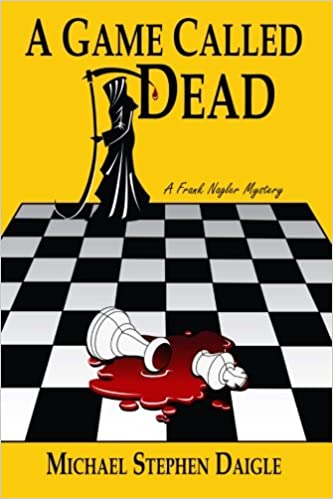
A Game Called Dead by Michael Stephen Daigle is the second of the Frank Nagler series. Having read the fourth one - The Red Hand, I recently read the first one and thought this was an excellent time to read the second in this impressive deceptive series.

Read book review Get this book All books

Share your thoughts and ideas

This site uses Akismet to reduce spam. Learn how your comment data is processed.

The Jan Lilien Education Fund!

A Game Called Dead

Read: November 2021

Get this book

A Game Called Dead

by Michael Stephen Daigle

A Game Called Dead by Michael Stephen Daigle is the sequel to “The Swamps of Jersey,” the first Frank Nagler Mystery. Having read the fourth one – The Red Hand, I recently read the first one and thought this was an excellent time to read the second in this impressive deceptive series.

Reading the Frank Nagler Mysteries is rare when this reviewer knows the author. Mr. Daigle wrote this is the overview of A Game Called Dead.

Nagler is called to investigate the brutal attack on two women at the local college. It begins a tale of urban terror, which seems to be directed at Nagler and his associates.

The story introduces the mysterious terrorist #ARMEGEDDON, who taunted the police from cyberspace.

The story also digs deeper into Nagler’s past, especially the old Charlie Adams serial-killer case, and his relationship with Lauren Fox, who played a crucial role in exposing the political corruption in “Swamps.” She is back and steps into the front of Nagler’s life.

The story also introduced Harriet Waddley-Jones, a college dean, Nagler’s nemesis, and later ally.

Each book is a challenge to write a “better” book. In this case, I wanted tighter, faster action to develop a theme and flow to help carry the story. Sound and the description of sound are keys.

I also wanted Nagler to confront aspects of his past. Can he reconcile them, or will they always haunt him?

This reviewer’s opinion was a more substantial plot than the first book in the Frank Nagler Mysteries. Like all good mysteries, the suspense built page by page, and I figured out who the villain was late in the novel.

The one part that was difficult for me to read was the ending and the potential reigniting of the relationship with Lauren Fox. Having lost Jan, my wife, this year, I am aware of Frank Nagler’s pain in the first book about losing his wife. Ms. Fox only appeared in The Swamps of Jersey as a lost friend. I understand that some widows need to find love again to feel happy, which is not what I need or am seeking. The next book may provide some difficult moments on this topic, but I look forward to reading the next Frank Nagler Mystery.

Subscribe

Contact Us

When you buy a book or product using a link on this page, I receive a commission. Thank you for supporting Sharing Jan’s Love blog.

×
Us Fools

Read: November 2024

Get this book

Us Fools: A Novel

by Nora Lange

Today, I embarked on the journey of Us Fools by Nora Lange. This poignant and personal American narrative is about two remarkable sisters who, against all odds, come of age during the Midwestern farm crisis of the 1980s. In her debut novel, Nora Lange has crafted a lively, ambitious, and heart-wrenching portrait of two unique sisters determined to persevere despite the harsh realities of capitalism and their circumstances. After a pivotal national election, this seemed like the perfect book to read.

Joanne and Bernadette Fareown, born and raised on a family farm in rural Illinois, are deeply impacted by their parents’ tumultuous relationship and mounting financial debt, haunted by the unsettling history of the women in their family. Left to fend for themselves, the sisters delve into Greek mythology, feminism, and Virginia Woolf. As they grapple with these trying circumstances, they must devise unique coping mechanisms and question the validity of the American Dream. At the same time, the rest of the nation disregards their struggling community.

Jo and Bernie’s imaginative efforts to escape their parents’ harsh realities ultimately fall short, prompting the family to relocate to Chicago. There, Joanne—free-spirited, reckless, and struggling to manage her inner turmoil—rebels in increasingly desperate ways. After undergoing her most significant breakdown yet, Jo goes into exile in Deadhorse, Alaska. Bernadette takes it upon herself to apply everything she has learned from her sister to rekindle a sense of hope in a failing world.

×
Small Things Like These

Read: July 2024

Get this book

Small Things Like These

by Claire Keegan

Today, I read “Small Things Like These” by Claire Keegan, one of the New York Times’s 100 Best Books of the 21st Century, and the seventeenth book I have read from that list. “Small Things Like These” is award-winning author Claire Keegan‘s landmark new novel, a tale of one man’s courage and a remarkable portrait of love and family.

The story is set in 1985 in a small Irish town. During the weeks leading up to Christmas, Bill Furlong, a coal merchant and family man, faces his busiest season. Early one morning, while delivering an order to the local convent, Bill makes a discovery that forces him to confront his past and the complicit silences of a town controlled by the church.

I found this short but well-written novel very impactful. The following quote explains the powerful impact of the need for meaning and purpose in our lives, as Furlong walks in the snow after taking action to bring home a young girl from a Magdalen laundry. How often can we ignore the small things like these and still look ourselves in the mirror?

“As they carried on along and met more people Furlong did and did not know, he found himself asking was there any point in being alive without helping one another? Was it possible to carry on along through all the years, the decades, through an entire life, without once being brave enough to go against what was there and yet call yourself a Christian, and face yourself in the mirror?”

As an international bestseller, ‘Small Things Like These‘ is a profoundly moving story of hope and quiet heroism. It’s a narrative that will make you admire the characters and stir your empathy, all crafted by one of our most critically acclaimed and iconic writers. The characters in the story are so relatable that you will feel understood and deeply invested in their journey.


Discover your next favorite book and dive into a world of curated, exciting reads by purchasing through my links. You’ll have access to a diverse selection of books that I’ve personally vetted to ensure quality and enjoyment. Supporting these selections not only helps me continue providing you with personalized recommendations but also ensures you get access to meaningful stories that enrich your life. Your support truly makes a difference in helping me share more books and insights with you!


×
Invisible Child

Read: December 2021

Get this book

Invisible Child: Poverty, Survival & Hope in an American City

by Andrea Elliott

Invisible Child: Poverty, Survival & Hope in an American City by Andrea Elliott was a gift from my son Jon. The New York Times selected “Invisible Child” as one of the best books published this year. It is indeed one of the top books on my all-time list.

GoodReads summary provides a good overview,

The riveting, unforgettable story of a girl whose indomitable spirit is tested by homelessness, poverty, and racism in an unequal America—from Pulitzer Prize-winning journalist Andrea Elliott of The New York Times

Invisible Child follows eight dramatic years in the life of Dasani Coates, a child with imagination as soaring as the skyscrapers near her Brooklyn homeless shelter. Born at the turn of a new century, Dasani is named for the bottled water that comes to symbolize Brooklyn’s gentrification and the shared aspirations of a divided city. As Dasani grows up, moving with her tight-knit family from shelter to shelter, this story goes back to trace the passage of Dasani’s ancestors from slavery to the Great Migration north. When Dasani comes of age, New York City’s homeless crisis explodes as the chasm deepens between rich and poor.

In the shadows of this new Gilded Age, Dasani must lead her seven siblings through a thicket of problems: hunger, parental drug addiction, violence, housing instability, segregated schools, and the constant monitoring of the child-protection system. When, at age thirteen, Dasani enrolls at a boarding school in Pennsylvania, her loyalties are tested like never before. As she learns to “code switch” between the culture she left behind and the norms of her new town, Dasani starts to feel like a stranger in both places. Ultimately, she faces an impossible question: What if leaving poverty means abandoning the family you love?

By turns heartbreaking and revelatory, provocative and inspiring, Invisible Child tells an astonishing story about the power of resilience, the importance of family, and the cost of inequality. Based on nearly a decade of reporting, this book vividly illuminates some of the most critical issues in contemporary America through the life of one remarkable girl.

Jan and I were involved and knew that child poverty and homelessness needed repair. In addition, Jan lived on Washington Park across from Ft. Greene Park in 1974-75. We knew the neighborhood where much of the book’s story takes place. 

Before meeting Jan in 1973, I was both a community/tenant organizer and a youth worker. In the latter role, I made weekly hostel trips for eight to ten young boys from East Williamsburg during 1973. The trips were the first the boys had ever been outside of their neighborhood.

Many of them had imaginations like Dasani. They also had her instinct to fight. One of my first tasks was to check for any weapons.

Decades later, when I would see any of them, now adults, they would ask when we were going on another trip. I wish I had met Jan when I made those trips. She would have helped me improve them and document the impact. If I could re-write history, I would have her join me as the second adult on the hostel trips.

After that summer, it was clear my primary skills were as a community/tenant organizer. Over the next few years, my work focused on creating affordable and supportive housing.

Jan and I did meaningful work that made a difference, yet the need for a permanent solution to the crisis remains. The book highlights the crucial role of resilience, the importance of family, and the cost of inequality. As a nation, we cannot undermine those values by breaking up families, impeding resilience, and maintaining racial and economic inequality. 

The current debate in Washington over the Build Back Better legislation needs to focus not on how much we spend but on its impact on children and families

David Brooks, a conservative commentator, has supported these expenditures for what they can do to address this country’s cultural and economic crisis. 

These packages say to the struggling parents and the warehouse workers: I see you. Your work has dignity. You are paving your way. You are at the center of our national vision.

This is how you fortify a compelling moral identity, which is what all of us need if we’re going to be able to look in the mirror with self-respect. This is the cultural transformation that good policy can sometimes achieve. Statecraft is soulcraft.

If you can only read one book this year, this is the one to read. Child poverty, homelessness, and inequality impact all of us. Ending child poverty and homelessness will make us a healthier and more inclusive nation. It is time for a compelling moral call to action!

Subscribe

Contact Us

When you buy a book or product using a link on this page, I receive a commission. Thank you for supporting Sharing Jan’s Love blog.

×
How to Read a Book: A Novel

Read: May 2024

Get this book

How to Read a Book: A Novel

by Monica Wood

I started reading Monica Wood‘s “How to Read a Book: A Novel” today. It’s a heartfelt and uplifting story about a chance encounter at a bookstore—the novel delves into themes of redemption, unlikely friendships, and the life-changing power of sharing stories. With Monica Wood’s characteristic heart, wit, grace, and understanding, the novel illuminates the decisions that shape a life and the kindnesses that make life meaningful.

The story revolves around three characters: Violet Powell, a twenty-two-year-old from rural Abbott Falls, Maine, who is being released from prison after serving twenty-two months for a drunk-driving crash that killed a local kindergarten teacher; Harriet Larson, a retired English teacher who runs the prison book club and is facing the prospect of an empty nest; and Frank Daigle, a retired machinist who is struggling to come to terms with the complexities of his marriage to the woman Violet killed.

Their lives unexpectedly intersect one morning in a bookstore in Portland, Maine. Violet buys the novel she read in the prison book club before her release, Harriet selects the following title for the remaining women, and Frank fulfills his duties as the store handyman. Their encounters set off a chain of events that will profoundly change them.

How to Read a Book is a candid and hopeful story about releasing guilt, embracing second chances, and the profound impact of books on our lives.

×
Weather

Read: March 2022

Get this book

Weather: A Novel

by Jenny Offil

Weather: A Novel by Jenny Offil was a book that I was confused and uncertain if I wanted to finish for the first few pages. I am delighted that I did, and I highly recommend this book. Its brief diary-like dispatches about life in our time when we sense that we may all be doomed to a climate catastrophe made this a book I truly enjoyed reading. The subtext of the rise of right-wing strongmen in the USA and abroad adds to the crisis her dispatches describe.

Her Obligatory Note of Hope challenges all of us to engage in solutions instead of accepting doom.

How can we contribute to the common good? There are people all over the world trying to answer these questions. In big ways but also in small ways. In grand leaps but also in fits and starts.

I always thought it was ridiculous to try and fight for social change when I couldn’t even get my own house in order. How could a meat-eating, plane-flying, march-hating person like me ever find a place in the climate justice movement? But then I started to read about all the different ways ordinary people were refusing to give into fatalism and were exploring the possibilities of what they could do, what they might fight for in this half-ruined world of ours.

There were saints among these accidental activists, but also stone-cold hypocrites like me. Slowly, I began to see collective action as the antidote to my dithering and despair.

There’s a way in for everyone. Aren’t you tired of all this fear and dread?

Goodreads provides an overview of the book if you are not yet convinced to read it.

 Lizzie Benson is a very relatable woman who slid into her job as a librarian without a traditional degree. But this gives her a vantage point from which to practice her other calling: a fake shrink. She has tended to her God-haunted mother and her recovering addict brother for years. They have both stabilized for the moment, but Lizzie has little chance to spend her new free time with her husband and son before her old mentor, Sylvia Liller, proposes. She wants to hire Lizzie to answer the mail she receives: left-wingers worried about climate change and right-wingers concerned about the decline of western civilization. Sylvia has become famous for her prescient podcast, Hell and High Water, and wants to hire Lizzie to answer the mail she receives: from left-wingers worried about climate change and right wingers worried about the decline of western civilization.

As Lizzie dives into this polarized world, she begins to wonder what it means to keep tending your own garden once you’ve seen the flames beyond its walls. When her brother becomes a father and Sylvia a recluse, Lizzie is forced to address the limits of her own experience. But she still tries to save everyone, using everything she’s learned about empathy and despair, conscience and collusion, floundering the library stacks her years of wa.. And all the while the voices of the city keep floating in—funny, disturbing, and increasingly mad.

Register to Attend Celebrate Jan Day

Subscribe

Contact Us

When you buy a book or product using a link on this page, I receive a commission. Thank you for supporting Sharing Jan’s Love blog.

×
When We Cease to Understand the World

Read: September 2024

Get this book

When We Cease to Understand the World

by Benjamín Labatut

Today, I began reading When We Cease to Understand the World by Benjamín Labatut, translated by Adrian Nathan West. This book, listed on The New York Times 100 Best Books of the 21st Century, promises to be thought-provoking as it delves into the intricate connections between scientific and mathematical discovery, madness, and destruction.

In a world where scientific advancements often involve ethical dilemmas and societal implications, this book offers a unique perspective on the lives of scientists who have shaped our understanding of the world. Fritz Haber, Alexander Grothendieck, Werner Heisenberg, and Erwin Schrödinger are some of the luminaries whose troubled lives Benjamín Labatut deeply explores in his fictional examination. Labatut shows how these scientists and thinkers grappled with profound questions of existence, experiencing strokes of unparalleled genius, alienating friends and lovers, and descending into isolation and insanity. Their discoveries, some of which significantly improved human life, while others led to chaos and unimaginable suffering, continue to shape our world.

With a breakneck pace and a wealth of disturbing detail, Labatut uses fiction’s imaginative resources to tell the stories of the scientists and mathematicians who expanded our notions of the possible.

×