
Ducks
Estimated reading time: 0 minutes, 0 seconds
Subscribe to Sharing Jan's Love Newsletter!
by Sharon Brous
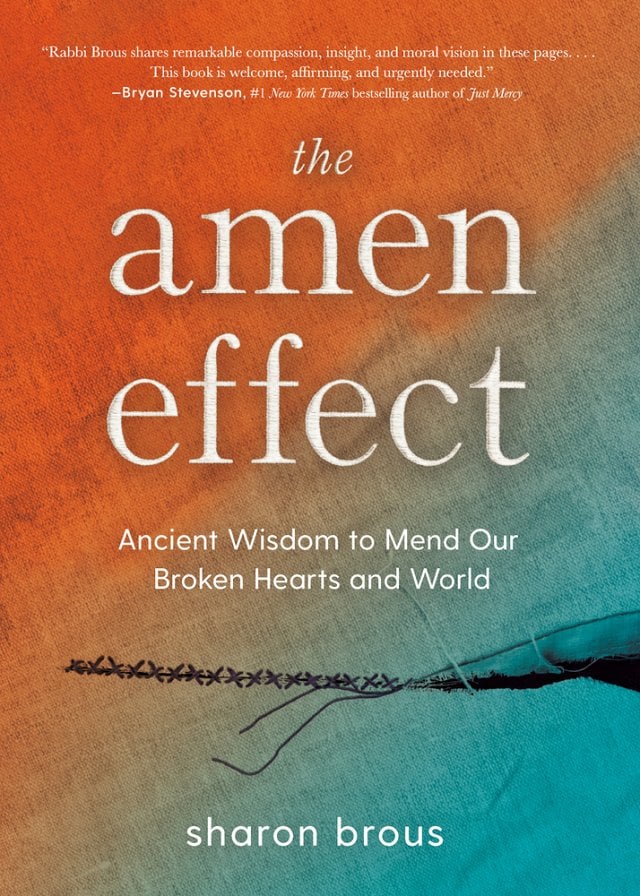
Sharon Brous, a prominent American rabbi, argues in The Amen Effect: Ancient Wisdom to Heal Our Hearts and Mend Our Broken World that the essential spiritual work of our time—though instinctual and often countercultural—focuses on connecting through celebration, sorrow, and solidarity. We must support one another in times of joy and pain, embracing vulnerability and possibility, nurturing relationships with shared purposes, and creating communities centered on care.
From one of our country’s most prominent rabbis comes this inspiring book about the power of community, based on one of her most impactful sermons. What will it take to mend our broken hearts and rebuild our society in a time of loneliness, isolation, social rupture, and alienation?
Brous contends that honoring our most basic human instinct—the yearning for authentic connection—is the way to reawaken our shared humanity and begin the healing process. This kind of sacred presence is captured by the word amen, a powerful ancient idea that we affirm the fullness of one another’s experience by demonstrating, in body and word: “I see you. You are not alone.”
An acclaimed preacher and storyteller, Brous pairs heart-driven anecdotes from her experience building and pastoring to a leading-edge faith community over the past two decades with ancient Jewish wisdom and contemporary science. The result is a clarion call: the sense of belonging engendered by our genuine presence is both a social and biological need, as well as a moral and spiritual necessity.
With original insights and practical tools, The Amen Effect translates foundational ideas into simple practices that connect us to our better angels, offering a blueprint for a more meaningful life and a more connected and caring world.
As she writes in the preface, after listing the joys and pains of life, weddings, births, and death,
It’s in these times that I feel the weight of the work, the privilege of being alive, the blessing of being so close to such raw beauty and pain. It’s there that I have learned the power of saying ‘Amen‘ to one another’s grief and joy, sorrow and celebration with our very presence. Of bearing witness to profound suffering and protesting injustice with our very presence. Of comforting and consoling, surviving and thriving with our very presence. What I’ve learned, during the years, is the meaning of sacred companionship. I have seen, in ways subtle and pronounced, a longing to connect with others who can help hold the pain, a need to share what we’ve learned in the trenches, and a desire to give, even when we ourselves have barely caught our breath. And I have seen how knowing that we’re not alone can both heighten our joy and help us endure unimaginable hardship.
Click here to read about my experience listening to Rabbi Brous at the Kol Tzedek Speakers Series at Temple Emanu-El in Westfield.
Sharon Brous is the senior and founding rabbi of IKAR, a leading-edge Jewish community based in Los Angeles, and the author of The Amen Effect: Ancient Wisdom to Heal Our Hearts and Mend Our Broken World, a national bestseller.
In 2013, Brous blessed President Obama and Vice President Biden at the Inaugural National Prayer Service, and in 2021, returned to bless President Biden and Vice President Harris and then led the White House Passover Seder 2021 and the Hanukkah candle lighting with the Vice President and Second Gentleman in 2023. She was ranked as the number one most influential Rabbi in America by Newsweek/The Daily Beast. She has also been recognized by The Forward and the Jerusalem Post as one of the most influential Jews alive today. Her work has appeared in prominent publications, including The New York Times, The Los Angeles Times, and The Washington Post. Additionally, her TED talk, “Reclaiming Religion,” has been viewed by over 1.5 million people.
Brous is part of the inaugural cohort of Auburn Seminary’s Senior Fellows program, which brings together top faith leaders working on the frontlines for justice. She sits on the faculty of REBOOT and serves on the International Council of the New Israel Fund, as well as the national steering committee for the Poor People’s Campaign.
A Columbia University graduate (holding both undergraduate and M.A. degrees in Human Rights), she was ordained by the Jewish Theological Seminary and resides in Los Angeles with her husband and children.
When you purchase a book through one of my links, I earn a small commission that helps support my passion for reading. This contribution allows me to buy even more books to share with you, creating an incredible cycle of discovering great reads together! Your support truly makes a difference!
by Joyce Carol Oates
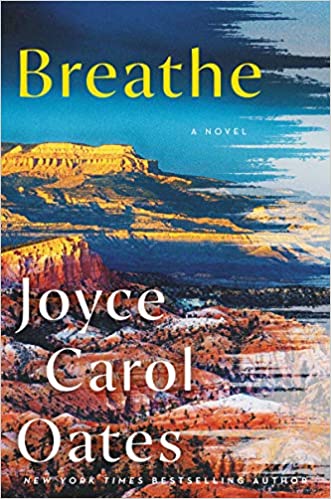
 Reading Breathe by Joyce Carol Oates was a book I knew I needed to read once Jan was diagnosed. Although the book might trigger negative memories, I finally read Breathe. It was what I needed to read at this point in my journey.
Ms. Oates wrote the book in 2019 after her husband, Charlie Gross, died. The novel is a story of love, loss, and loneliness, topics that I write about on this blog. I needed to read the book both for my mental health and for the readers of Sharing Jan’s Love.
The protagonist, Michaela, loses her husband while they are on a sabbatical in New Mexico. Her husband, Gerard, writes a book and teaches a class on memories. Jan and I never considered relocating before her illness, but this book convinced me that it would have aggravated my grief journey.
One of the parallels I observed while reading the novel is the similarity between Gerard’s reluctance to let family, friends, and co-workers know of his illness. Jan shared that reluctance in the early days, but I convinced her that the only chance of beating cancer was with the help of family and friends.
This dialogue could easily be one that Jan and I had.
Of course you want to summon his family—his (adult) children—but quickly, he says no.
Still waiting.
But – When?
Just not yet.
He is not an alarmist. (You are the alarmist.)
The novel is written in two parts – The Vigil and the Post-Mortem.
The opening paragraphs set the tone.
A Hand is gripping yours. Warm, dry hand gripping your slippery, humid hand.
Whoever it is urging you – Breathe!
Leaning over you begging you – Breathe!
As one mourning the death of the love of his life, I found several phrases in the book helpful in understanding what I have gone through and will continue to confront.
Among them is grief-vise, which I have written about in this stream.
In the grip of the grief vise, all that you will do, all that you even imagine doing, will require many times more effort.. Hardly daring to breathe for the grief-vise will tighten around your chest, squeezing the very air out of your lungs.
In the early stages of grief, the vise was strangling me. Breathing was impossible, and weeping was constant at times.
Michaela struggles with her grief. Seeing her husband every time she sees a man alone, even if they are older or younger than he was. I know I have felt Jan’s presence and still expect her to walk into our apartment.
Her struggles with a grief counselor and overly helpful friends are an experience I have not had but are familiar to those suffering from losing a loved one.
The last chapters are ones in which time becomes confusing and chaotic. At times, I was uncertain about which were real or imagined. The end, like all good novels, was ambiguous.
These are some of the other phrases I have found useful and will include in posts.
What you love most, that you will lose. The price of your love is your loss.
I recommend this book to all readers, even those struggling with grief.
When you buy a book or product using a link on this page, I receive a commission. Thank you for supporting Sharing Jan’s Love blog.
by Deb Olin Unferth
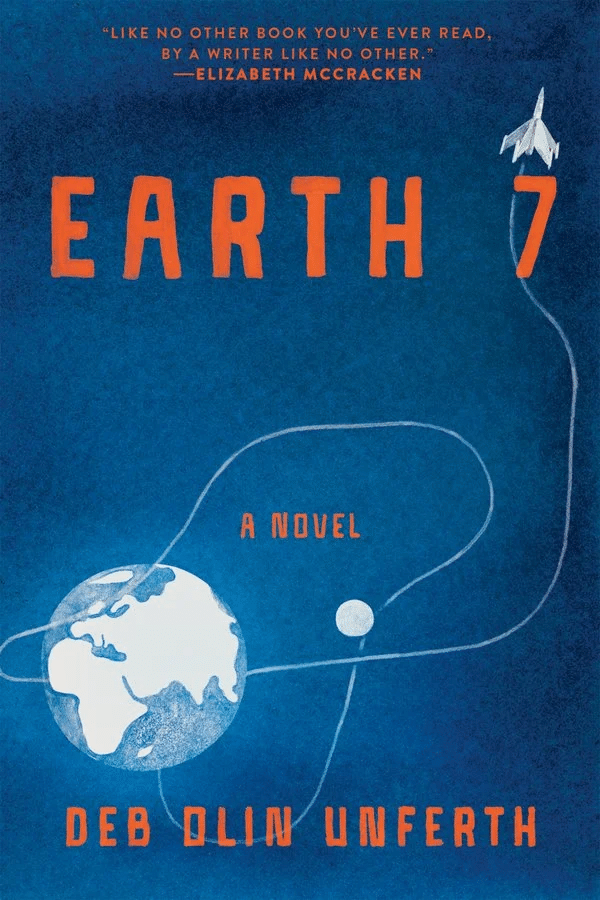
An end-of-the-world love story, Earth 7 is filled with both pathos and humor, exploring what aspects of our planet can still be cherished. Unfortunately, the tale of planet Earth is disheartening; it has been diminished to little more than a lump of burnt coal. However, as Deb Olin Unferth demonstrates in her latest electrifying novel, life and love can endure even in the most unexpected and inhospitable circumstances.
Two women meet on a beach of artificial sand. One was raised in a pod in the ocean, and the other may or may not be a robot. Their love—or any love—seems so unlikely. Earth is severely depopulated. Some people have given up, gone off to Mars. Others pursue eternal life as digital code. And yet others, like Dylan and Melanie, are holdouts—and some of those holdouts are constructing a vast molecular collection in hopes that a future person may be alive to make a new Earth. Foolhardy? Misguided? Quixotic? Probably. But what can a human (or a robot) do?
By the end of Unferth’s wild, poetic, revelatory, and slyly philosophical novel, the reader has traveled to the very edges of the cosmos as a “soul globule” and between grains of sand as a microscopic tardigrade. A slim book tackling big questions (is all matter conscious? will we tech ourselves into salvation, or out of existence?), Earth 7 is a poignant inquiry into death, mourning, and indefatigable life, the most exhilarating work to date by one of our most original and beloved writers.
Deb Olin Unferth is the author of six books, including Barn 8 and Wait Till You See Me Dance. She has received a Guggenheim Fellowship and three Pushcart Prizes and was a finalist for the National Book Critics Circle Award. Her work has appeared in Granta, Harper’s, McSweeney’s, and The Paris Review.
Discover your next favorite book and explore curated, exciting reads by purchasing through my links. Your support truly helps me share more meaningful stories and insights with you, enriching your reading journey.
by Jenny Offil
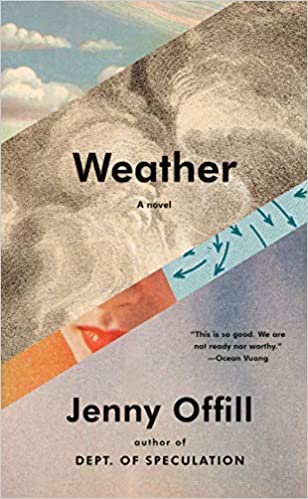
Weather: A Novel by Jenny Offil was a book that I was confused and uncertain if I wanted to finish for the first few pages. I am delighted that I did, and I highly recommend this book. Its brief diary-like dispatches about life in our time when we sense that we may all be doomed to a climate catastrophe made this a book I truly enjoyed reading. The subtext of the rise of right-wing strongmen in the USA and abroad adds to the crisis her dispatches describe.
Her Obligatory Note of Hope challenges all of us to engage in solutions instead of accepting doom.
How can we contribute to the common good? There are people all over the world trying to answer these questions. In big ways but also in small ways. In grand leaps but also in fits and starts.
I always thought it was ridiculous to try and fight for social change when I couldn’t even get my own house in order. How could a meat-eating, plane-flying, march-hating person like me ever find a place in the climate justice movement? But then I started to read about all the different ways ordinary people were refusing to give into fatalism and were exploring the possibilities of what they could do, what they might fight for in this half-ruined world of ours.
There were saints among these accidental activists, but also stone-cold hypocrites like me. Slowly, I began to see collective action as the antidote to my dithering and despair.
There’s a way in for everyone. Aren’t you tired of all this fear and dread?
Goodreads provides an overview of the book if you are not yet convinced to read it.
Lizzie Benson is a very relatable woman who slid into her job as a librarian without a traditional degree. But this gives her a vantage point from which to practice her other calling: a fake shrink. She has tended to her God-haunted mother and her recovering addict brother for years. They have both stabilized for the moment, but Lizzie has little chance to spend her new free time with her husband and son before her old mentor, Sylvia Liller, proposes. She wants to hire Lizzie to answer the mail she receives: left-wingers worried about climate change and right-wingers concerned about the decline of western civilization. Sylvia has become famous for her prescient podcast, Hell and High Water, and wants to hire Lizzie to answer the mail she receives: from left-wingers worried about climate change and right wingers worried about the decline of western civilization.
As Lizzie dives into this polarized world, she begins to wonder what it means to keep tending your own garden once you’ve seen the flames beyond its walls. When her brother becomes a father and Sylvia a recluse, Lizzie is forced to address the limits of her own experience. But she still tries to save everyone, using everything she’s learned about empathy and despair, conscience and collusion, floundering the library stacks her years of wa.. And all the while the voices of the city keep floating in—funny, disturbing, and increasingly mad.
When you buy a book or product using a link on this page, I receive a commission. Thank you for supporting Sharing Jan’s Love blog.
by Joanne B. Freeman
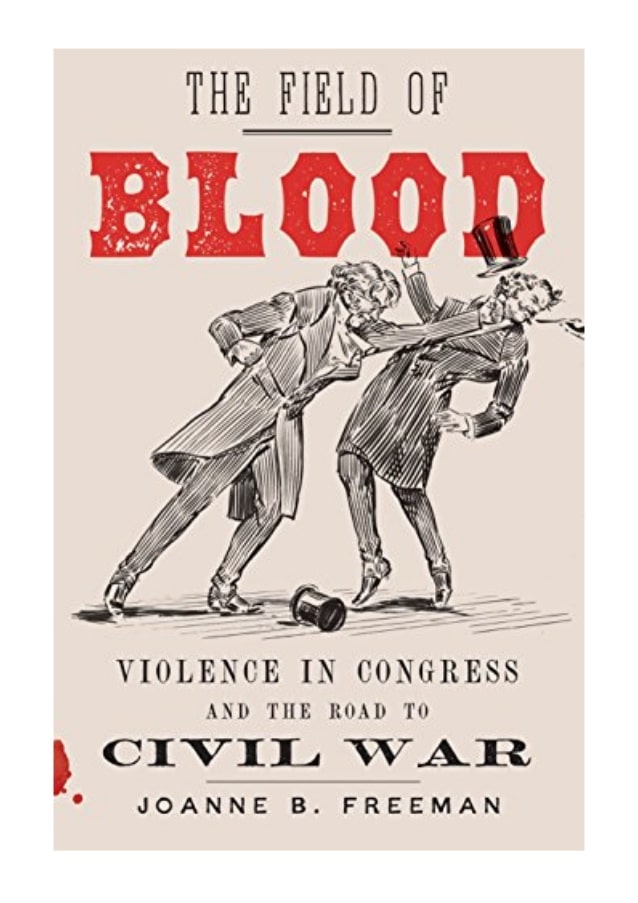
The Field of Blood: Violence in Congress and the Road to Civil War by Joanne B. Freeman, Professor of History and American Studies at Yale University, is a must-read in our hyper-partisan times. The partisanship and divisiveness of the period before the Civil War have many parallels to our time, and the difference is the violence of the Civil War era. Professor Freeman recovers the long-lost story of physical violence on the floor of the U.S. Congress.
She can do this by first source materials from Benjamin Brown French. He was never elected to office but was an acquaintance of twelve consecutive presidents, from Andrew Jackson to Ulysses S. Grant. In addition, he maintained a diary for forty years that highlighted the violence and his and the nation’s political transformation.
During much of this period, he was the Clerk in the House. His diary documents the violence that did not get covered by the press. Legislative sessions included mortal threats, canings, flipped desks, and all-out slugfests. When debate broke down, members of Congress drew pistols and waved Bowie knives. One representative even killed another in a duel. Many were beaten and bullied in an attempt to intimidate them into compliance, particularly on the issue of slavery.
The Field of Blood is one of four books I purchased after my first One Day University class.
by Jess Walter
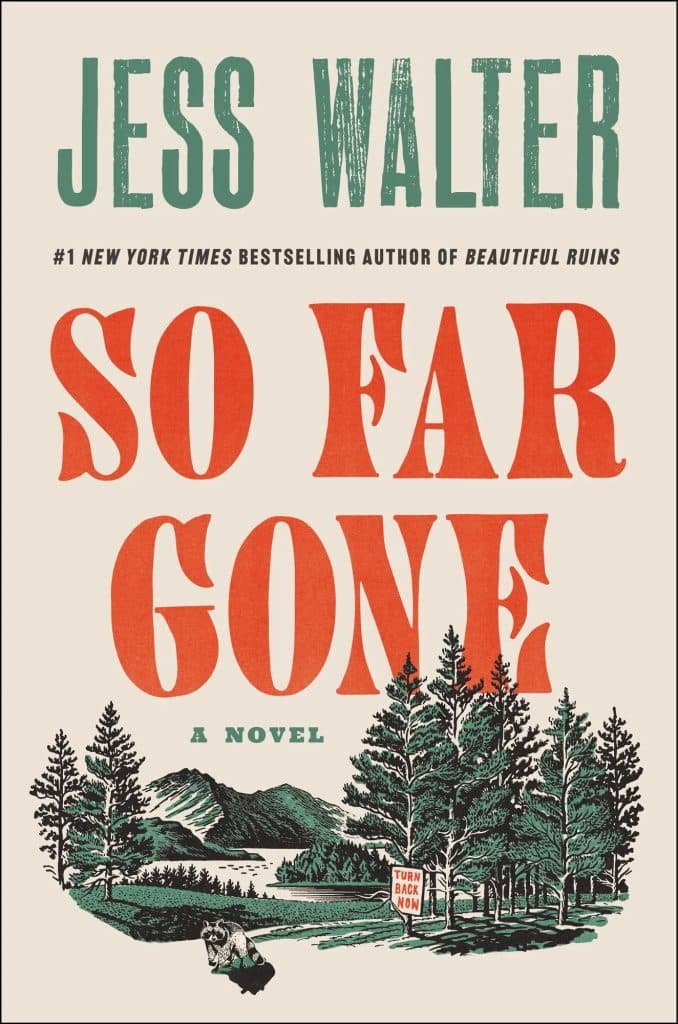
For the week before Father’s Day, I read So Far Gone by Jess Walter, a hilarious, empathetic, and brilliantly provocative adventure through life in modern America about a reclusive journalist forced back into the world to rescue his kidnapped grandchildren. Is this gripping tale of a grandfather’s love and determination the perfect read for the upcoming Father’s Day?
Rhys Kinnick, a character who has truly gone off the grid, provides a humorous twist to the story. At Thanksgiving a few years back, a fed-up Rhys punched his conspiracy theorist son-in-law in the mouth, chucked his smartphone out a car window, and fled for a cabin in the woods with no one around except a pack of hungry raccoons.
Now, Kinnick’s old life is about to land right back on his crumbling doorstep. Can this failed husband and father, a man with no internet and a car that barely runs, reemerge into a broken world to track down his missing daughter and save his sweet, precocious grandchildren from the members of a dangerous militia?
With the help of his caustic ex-girlfriend, a bipolar retired detective, and his only friend (who happens to be furious with him), Kinnick, a man who is struggling with his past and his present, heads off on a wild journey through cultural lunacy and the rubble of a life he thought he’d left behind. According to the Philadelphia Inquirer, So Far Gone is a rollicking, razor-sharp, and moving road trip through a fractured nation from a writer who has been called “a genius of the modern American moment.”
Jess Walter is the author of seven previous novels, including the bestsellers The Cold Millions and Beautiful Ruins, the National Book Award Finalist The Zero, and Citizen Vince, winner of the Edgar Award for best novel. His short fiction, collected in The Angel of Rome and We Live in Water, has won the O. Henry Prize and the Pushcart Prize and appeared three times in Best American Short Stories. He lives in his hometown of Spokane, Washington.
When you purchase a book through one of my links, I earn a small commission that helps support my passion for reading. This contribution allows me to buy even more books to share with you, creating an incredible cycle of discovering great reads together! Your support truly makes a difference!
Enjoy a limited-time offer of 20% off your next book purchase at Bookshop.org!