
Chess Story: A Novella

Estimated reading time: 1 minute, 41 seconds

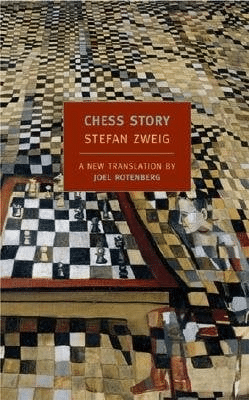
Chess Story,” also known as “The Royal Game,” is the final work of Austrian author Stefan Zweig. He completed it while in exile in Brazil and sent it to his American publisher just days before his suicide in 1942. This story is unique as it is the only one in which Zweig directly examines Nazism, portraying it through his characteristic focus on psychological themes.

The narrative follows travelers aboard a ship bound for Buenos Aires, where they encounter an arrogant, unfriendly world chess champion. Attempting to challenge him, they find themselves thoroughly defeated. However, a mysterious passenger steps forward to offer them advice, dramatically shifting their fortunes. The story delves into how this enigmatic figure acquired his extraordinary chess skills and the personal toll that it entailed.

This new translation of “Chess Story” highlights the work’s distinctive blend of high suspense and poignant reflection.


Stefan Zweig (1881–1942), novelist, biographer, poet, and translator, was born in Vienna into a wealthy Austrian Jewish family. During the 1930s, he was one of the best-selling writers in Europe and was among the most translated German-language writers before the Second World War. With the rise of Nazism, he moved from Salzburg to London (taking British citizenship), to New York, and finally to Brazil, where he committed suicide with his wife. New York Review Books has published Zweig’s novels The Post-Office Girl and Beware of Pity, as well as the novella Chess Story.

Peter Gay was Director of the Center for Scholars and Writers at the New York Public Library. He wrote Schnitzler’s Century: The Making of Middle-Class Culture, 1815–1914.


Discover your next favorite book and dive into a world of curated, exciting reads by purchasing through my links. You’ll have access to a diverse selection of books I’ve personally vetted for quality and enjoyment. Supporting these selections not only helps me continue to provide you with personalized recommendations but also ensures you have access to meaningful stories that enrich your life. Your support truly makes a difference in helping me share more books and insights with you!


The Jan Lilien Education Fund!

Grand Rapids: A Novel

Read: January 2026

Get this book

Grand Rapids: A Novel

by Natasha Stagg

Natasha Stagg‘s “Grand Rapids” is a coming-of-age story set in the Michigan suburbs in the early 2000s. Alexander Calder’s public sculpture, “La Grande Vitesse”, installed alongside the Grand River in downtown Grand Rapids, has become a symbol of the city. Tess moved there from Ypsilanti, Michigan, in 2001—the same year her mother passed away, marking the beginning of a time when everything felt like it was moving in slow motion for her.

Thrust into adolescence nearly rudderless, fifteen-year-old Tess is intoxicated, angsty, and sexually awake. A decade later, inspired by diary entries and TV reruns, she remembers this summer in the suburbs as the one that redefined her. Its echoes of death are frozen in time, like the waves represented in Calder’s sculpture or the concrete steps leading down to the churning river. She sees Grand Rapids as a collection of architecture and emblems, another home to which she cannot return.


Natasha Stagg is the author of Surveys: A Novel (2016), Sleeveless: Fashion, Image, Media, New York 2011–2019 (2019), and Artless: Stories 2019–2023 (2023). She lives in New York City.


Discover your next favorite book and dive into a world of curated, exciting reads by purchasing through my links. You’ll have access to a diverse selection of books that I’ve personally vetted to ensure quality and enjoyment. Additionally, by supporting these selections, you’ll help me continue to provide you with more personalized recommendations. I earn a small commission from your purchase, which allows me to buy and share even more books with you. Your support truly makes a difference!


×
Victory City: A Novel

Read: February 2023

Get this book

Victory City: A Novel

by Salman Rushdie

Victory City: A Novel by Salman Rushdie is an epic tale of a woman who breathes a fantastical empire into existence, only to be consumed by it over the centuries from the transcendent imagination of Booker Prize-winning, internationally bestselling author Salman Rushdie. It is well written and was a page-turner from page one to the end. I highly recommend this novel and encourage everyone to read it.

Brilliantly styled as a translation of an ancient epic, this is a saga of love, adventure, and myth that is a testament to storytelling’s power. After witnessing her mother’s death, the grief-stricken Pampa Kampana becomes a vessel for the goddess Parvati, who begins to speak out of the girl’s mouth. I was hooked when Pampa Kampana provided the seeds that created Victory City out of thin air.

David Remnick’s interview with Salman Rushdie in The New Yorker provided background I would have missed.

“The first kings of Vijayanagara announced, quite seriously, that they were descended from the moon,” Rushdie said. “So when these kings, Harihara and Bukka, announce that they’re members of the lunar dynasty, they’re associating themselves with those great heroes. It’s like saying, ‘I’ve descended from the same family as Achilles.’ Or Agamemnon. And so I thought, Well, if you could say that, I can say anything.”

Above all, the book is buoyed by the character of Pampa Kampana, who, Rushdie says, “just showed up in my head” and gave him his story, his sense of direction. Rushdie’s pleasure in writing the novel was in “world building” and, at the same time, writing about a character building that world: “It’s me doing it, but it’s also her doing it.” The pleasure is infectious. “Victory City” is an immensely enjoyable novel. It is also an affirmation. At the end, with the great city in ruins, what is left is not the storyteller but her words:

I, Pampa Kampana, am the author of this book.
I have lived to see an empire rise and fall.
How are they remembered now, these kings, these queens?
They exist now only in words . . .
I myself am nothing now. All that remains is this city of words.
Words are the only victors.

The Goodreads summary provides a brief overview,

In the wake of an insignificant battle between two long-forgotten kingdoms in fourteenth-century southern India, a nine-year-old girl has a divine encounter that will change the course of history. After witnessing her mother’s death, the grief-stricken Pampa Kampana becomes a vessel for the goddess Parvati, who begins to speak out of the girl’s mouth. Granting her powers beyond Pampa Kampana’s comprehension, the goddess tells her that she will be instrumental in the rise of a great city called Bisnaga–literally victory city–the wonder of the world.

Over the next two hundred and fifty years, Pampa Kampana’s life becomes deeply interwoven with Bisnaga’s, from its literal sowing out of a bag of magic seeds to its tragic ruination in the most human of ways: the hubris of those in power. Whispering Bisnaga and its citizens into existence, Pampa Kampana attempts to make good on Parvati’s task: giving women equal agency in a patriarchal world. But all stories have a way of getting away from their creator, and Bisnaga is no exception. As years pass, rulers come and go, battles are won and lost, and allegiances shift, the very fabric of Bisnaga becomes an ever more complex tapestry–with Pampa Kampana at its center.


The Jan Lilien Education Fund sponsors ongoing sustainability and environmental awareness programs. Gifts made this month; I will match dollar-for-dollar. All donations are tax-deductible.

Subscribe

Contact Us

I receive a commission when you buy a book or product using a link on this page. Thank you for supporting Sharing Jan’s Love blog.


×
Conjure Women

Read: November 2021

Get this book

Conjure Women: A Novel

by Afia Atakora

Conjure Women by Afia Atakora is about a mother and her daughter with a shared talent for healing—and for the conjuring of curses — at the heart of this dazzling first novel. Conjure Women takes place before, during, and after the Civil War. The book is structured around three-time frames; Slaverytime, Freddomtime, and Wartime.

Having grown up in the South and heard far too many stories about the Lost Cause, it was a joy to read a book narrated by two African-American women. The third leading character is the daughter o the owner of the plantation. At the end of the war, she was hidden away for six years and was unaware the South had surrendered.

Conjure Women is a sweeping story that brings the world of the South before and after the Civil War vividly to life. Spanning eras and generations, it tells of the lives of three unforgettable women: Miss May Belle, a wise healing woman; her precocious and observant daughter Rue, who is reluctant to follow in her mother’s footsteps as a midwife; and their master’s daughter Varina. The secrets and bonds among these women and their community come to a head at the beginning of a war and at the birth of an accursed child, who sets the townspeople alight with fear and a spreading superstition that threatens their newly won, tenuous freedom.

Magnificently written, brilliantly researched, and richly imagined, Conjure Women moves back and forth in time to tell the haunting story of Rue, Varina, and May Belle, their passions and friendships, and the lengths they will go to save themselves and those they love.

Since Jan died, I have read many books that I know she enjoyed. We both enjoyed Call the Midwife, and this book focused on birthing and mothering. Although conjuring was their medical care and not the type practiced in poplar by the Midwives, we would both have enjoyed the book.

Conjure Women also raises questions about the meaning of freedom. For example, Rue chooses not to leave the former plantation after the Klan attacks despite being free.

I recommend this book and look forward to reading more from Afia Atakora.

Subscribe

Contact Us

When you buy a book or product using a link on this page, I receive a commission. Thank you for supporting Sharing Jan’s Love blog.

×
Great Expectations: A Novel

Read: March 2024

Get this book

Great Expectations: A Novel

by Vinson Cunningham

Today, I began reading “Great Expectations: A Novel” by Vinson Cunningham, a staff writer and theatre critic at The New Yorker. David, the protagonist, had seen the Senator speak a few times before my life got caught up, however distantly, with his. Still, the first time I can remember paying real attention was when he delivered the speech announcing his run for the Presidency.

Upon hearing the Senator from Illinois speak, David experiences conflicting emotions. He is fascinated by the Senator’s idealistic language yet ponders the balance between maintaining solid beliefs and making the necessary compromises to become America’s first Black president.

The book Great Expectations narrates David’s experience working for eighteen months on a Senator’s presidential campaign. During his journey, David encounters diverse individuals who raise questions about history, art, race, religion, and fatherhood. These inquiries prompt David to introspect his life and identity as a young Black man and father living in America.

Meditating on politics, religion, family, and coming-of-age, Great Expectations is a novel of ideas and emotional resonance, introducing a prominent new writer.

×
Other People's Fun

Read: November 2025

Get this book

Other People’s Fun

by Harriet Lane

Other People’s Fun” by Harriet Lane is an engaging, thought-provoking novel that explores modern life, including the small lies we tell our neighbors, friends, families, and even ourselves, as well as the distorted reality of social media. Known for her signature blend of creeping unease and keen observation, Lane’s page-turner delves into our deep desire for others to truly see us as we are—and the consequences that arise when that happens.

“I look. I can’t stop looking. That’s the deal, isn’t it? We all know that’s how it works. If someone wants to be seen–and oh, how they want to be seen–then someone has to watch.”

Ruth is alone, unnoticed, and at a loss: her marriage has ended, her daughter is leaving home, and her job is leading nowhere.

But luckily, Sookie is back in her life, the vivid, self-assured Sookie who never spared time for Ruth when they were teenagers, but who now seems to want to be friends. But as Ruth becomes entangled in Sookie’s life, she realizes that everything is not as Instagrammable as Sookie would have her believe. As the truth about Sookie becomes clearer, so too does the choice Ruth will have to make.


Harriet Lane has experience as an editor and staff writer for Tatler and the Observer. She has contributed articles to The Guardian, Vogue, and The New York Times. Additionally, she is the author of two novels, Alys, Always, and Her. Lane resides in North London.


Discover your next favorite book and dive into a world of curated, exciting reads by purchasing through my links. You’ll have access to a diverse selection of books that I’ve personally vetted to ensure quality and enjoyment. Additionally, by supporting these selections, you’ll help me continue to provide you with more personalized recommendations. I earn a small commission from your purchase, which allows me to buy and share even more books with you. Your support truly makes a difference!


×
Lincoln in the Bardo: A Novel

Read: August 2024

Get this book

Lincoln in the Bardo: A Novel

by George Saunders

My journey with “Lincoln in the Bardo: A Novel” by George Saunders began with recognition as one of The New York Times’ 100 Best Books of the Century. As I turned its pages, I was immersed in its profound exploration of living and loving in the face of inevitable endings. The book, which struck a personal chord with me after a loss, is a testament to Saunders’ storytelling prowess and a must-read for those interested in Abraham Lincoln.

February 1862. The Civil War is less than one year old. The fighting has begun in earnest, and the nation has already realized it is in for a long, bloody struggle. Meanwhile, President Lincoln’s beloved eleven-year-old son, Willie, lies upstairs in the White House, gravely ill. In a matter of days, despite predictions of a recovery, Willie dies and is laid to rest in a Georgetown cemetery. “My poor boy, he was too good for this earth,” the president says at the time. “God has called him home.” Newspapers report that a grief-stricken Lincoln returns, alone, to the crypt several times to hold his boy’s body.

From a seed of historical truth, George Saunders weaves an unforgettable tale of familial love and loss that transcends its realistic, historical framework. The story takes a daring leap into a realm that is hilarious and terrifyingly supernatural. Willie Lincoln’s journey in a strange purgatory, where ghosts mingle, gripe, commiserate, quarrel, and enact bizarre acts of penance, is a testament to Saunders’ imaginative prowess. The monumental struggle over young Willie’s soul in this transitional state, known as the bardo in the Tibetan tradition, is a narrative that will leave you spellbound.

Lincoln in the Bardo is an astonishing feat of imagination and a bold step forward from one of his generation’s most important and influential writers. Formally daring, generous in spirit, and deeply concerned with matters of the heart, it is a testament to fiction’s ability to speak honestly and powerfully about the things that matter to us. Saunders has invented a thrilling new form that deploys a kaleidoscopic, theatrical panorama of voices to ask a timeless, profound question: How do we live and love when we know everything we love must end?


George Saunders is the author of thirteen books, including the novel Lincoln in the Bardo, which won the Booker Prize, and five collections of stories, including Tenth of December, which was a finalist for the National Book Award, and the recent collection Liberation Day (selected by former President Obama as one of his ten favorite books of 2022).

Three of Saunders’s books—Pastoralia, Tenth of December, and Lincoln in the Bardo—were chosen for The New York Times’s list of the 100 Best Books of the 21st Century. Saunders hosts the popular Story Club on Substack, which grew out of his book, A Swim in a Pond in the Rain. In 2013, he was named one of Time’s 100 Most Influential People. He teaches in the creative writing program at Syracuse University.


Discover your next favorite book and dive into a world of curated, exciting reads by purchasing through my links. You’ll have access to a diverse selection of books that I’ve personally vetted to ensure quality and enjoyment. Additionally, by supporting these selections, you’ll help me continue to provide you with more personalized recommendations. I earn a small commission from your purchase, which allows me to buy and share even more books with you. Your support truly makes a difference!


×