New Book: Trip: A Novel

Estimated reading time: 0 minutes, 0 seconds
Trip: A Novel

Trip: A Novel

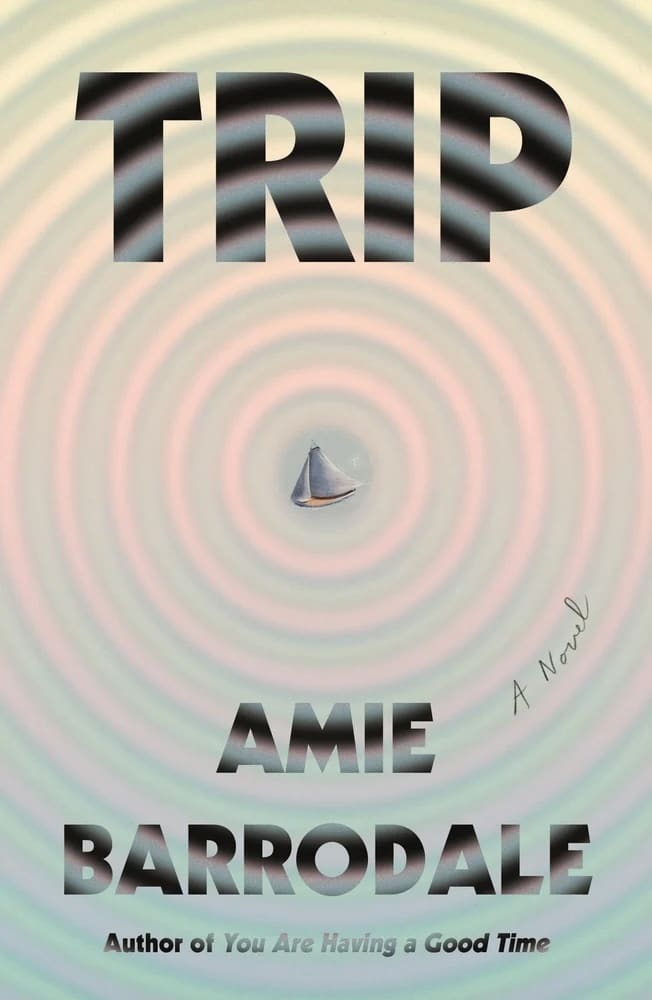
Trip: A Novel by Amie Barrodale follows a woman who embarks on a journey to the afterlife to help her son, who is lost at sea. Her voyage begins on a limbo-drifting ghost ship, blending humor and emotion as she explores the body and mind. Barrodale skillfully combines humor with poignant moments, making the supernatural feel personal. The book moved me, reflecting the emotional tides between mother and son.

Read book review Get this book All books

The Jan Lilien Education Fund!

Trip: A Novel

Read: September 2025

Get this book

Trip: A Novel

by Amie Barrodale

Trip: A Novel by Amie Barrodale follows a woman who embarks on a journey to the afterlife to help her son, who is lost at sea. Her voyage begins on a limbo-drifting ghost ship, blending humor and emotion as she explores the body and mind. Barrodale skillfully combines humor with poignant moments, making the supernatural feel personal. The book moved me, reflecting the emotional tides between mother and son.

Sandra dies suddenly at a death conference in Nepal. Days later in America, her son, Trip, runs away with a man. Sandra tries to send a message to Trip through the mystics, but they are distracted while her son and the man set out to sea.

Amie Barrodale‘s first novel follows the unpredictable journey of Sandra and her son, Trip, as they navigate the realms of restless souls and Buddhist deities. As they move between life and death, Sandra’s unwavering devotion to saving her child and striving to be a good mother anchors the narrative, propelling it forward with emotional depth and urgency. This book will particularly resonate with fans of literary fiction, magical realism, and those intrigued by philosophical explorations of life and death. Readers who appreciate stories rich in emotional complexity and spiritual themes will find themselves eagerly immersed in this enthralling tale.

Wide-eyed with wonder, hilariously funny and painfully moving, Trip: A Novel reveals the deeper meaning of The Tibetan Book of the Dead: the past is a memory, the future is a projection, the present disappears before we can see it.


Amie Barrodale’s stories and essays have appeared in The Paris Review, Harper’s Magazine, and other publications. In 2012, she was awarded The Paris Review’s Plimpton Prize for Fiction for her story “William Wei.” She is the author of You Are Having a Good Time: Stories.


Discover your next favorite book and dive into a world of curated, exciting reads by purchasing through my links. You’ll have access to a diverse selection of books that I’ve personally vetted to ensure quality and enjoyment. Additionally, by supporting these selections, you’ll help me continue to provide you with more personalized recommendations. I earn a small commission from your purchase, which allows me to buy and share even more books with you. Your support truly makes a difference!


×
Time of the Child

Read: December 2024

Get this book

Time of the Child

by Niall Williams

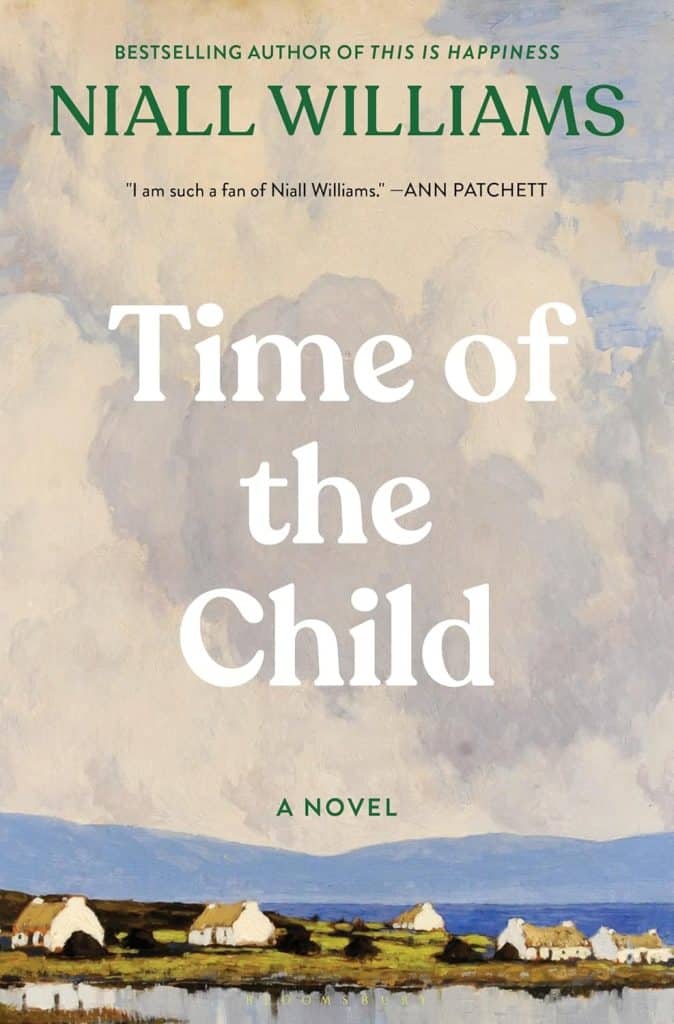
Today, I dove into “Time of the Child” by Niall Williams, and I can already tell it will be a journey worth taking. This beautifully crafted novel, penned by the same author who brought us “This Is Happiness,” unfolds during a magical Christmas in the quaint Irish town of Faha. At its heart is a touching story about a father and daughter that beautifully explores the idea that miracles can touch our lives, no matter our beliefs.

As I turned the pages, I thought about how this enchanting tale would evoke love’s profound and transformative power when I light my Hanukkah candles. It promises to be a genuinely uplifting read!

Doctor Jack Troy was born and raised in Faha, but his responsibilities toward the sick and his care for the dying have always set him apart from the town. His eldest daughter, Ronnie, has grown up in her father’s shadow and remains there, having missed one chance at love and declined another marriage proposal from an unsuitable man.

During the Advent season of 1962, as the town prepared for Christmas, Ronnie and Doctor Troy’s lives were turned upside down when a baby arrived on their doorstep. As winter passes, the lives of the father and daughter, their understanding of family, and their roles in the community are changed forever.

Set throughout one December in the same village as Williams’ beloved “This Is Happiness,” “Time of the Child” offers a tender return to Faha for readers familiar with its charms and serves as a heartwarming welcome for new readers exploring it for the first time.


When you purchase a book through one of my links, I earn a small commission that helps support my passion for reading. This contribution allows me to buy even more books to share with you, creating an incredible cycle of discovering great reads together! Your support truly makes a difference!


×
When We Cease to Understand the World

Read: September 2024

Get this book

When We Cease to Understand the World

by Benjamín Labatut

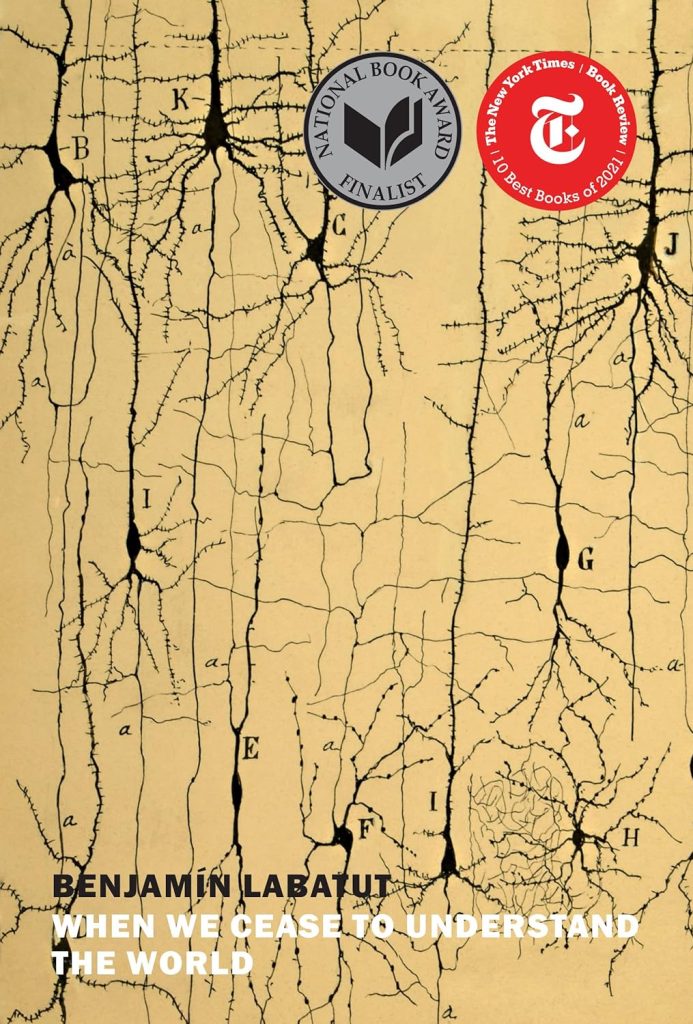
Today, I began reading When We Cease to Understand the World by Benjamín Labatut, translated by Adrian Nathan West. This book, listed on The New York Times 100 Best Books of the 21st Century, promises to be thought-provoking as it delves into the intricate connections between scientific and mathematical discovery, madness, and destruction.

In a world where scientific advancements often involve ethical dilemmas and societal implications, this book offers a unique perspective on the lives of scientists who have shaped our understanding of the world. Fritz Haber, Alexander Grothendieck, Werner Heisenberg, and Erwin Schrödinger are some of the luminaries whose troubled lives Benjamín Labatut deeply explores in his fictional examination. Labatut shows how these scientists and thinkers grappled with profound questions of existence, experiencing strokes of unparalleled genius, alienating friends and lovers, and descending into isolation and insanity. Their discoveries, some of which significantly improved human life, while others led to chaos and unimaginable suffering, continue to shape our world.

With a breakneck pace and a wealth of disturbing detail, Labatut uses fiction’s imaginative resources to tell the stories of the scientists and mathematicians who expanded our notions of the possible.

×
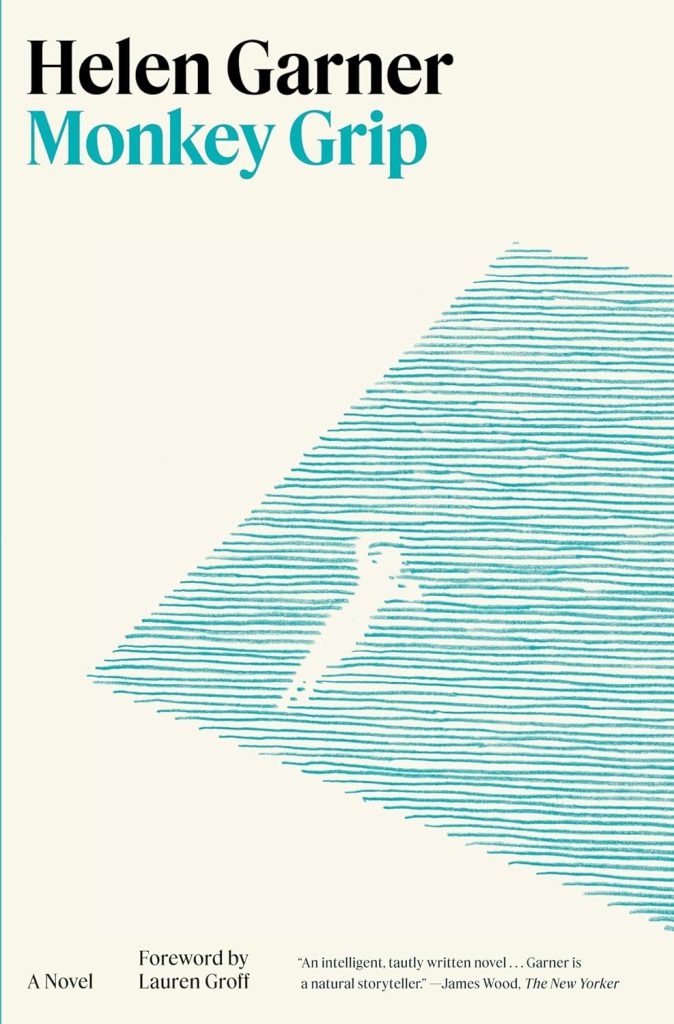
Monkey Grip: A Novel

Read: February 2024

Get this book

Monkey Grip: A Novel

by Helen Garner

Today, I began reading Monkey Grip: A Novel by Helen Garner. It’s a book that launched the career of one of Australia’s most celebrated writers. The story follows the infatuations of a young, single mother fascinated by the excesses of Melbourne’s late-70s counterculture. Monkey Grip is a seminal novel about Australia’s turbulent 1970s, including communal households, music, friendships, children, love, drugs, and sex.

Helen Garner is a renowned novelist, short-story writer, and journalist. She’s best known for her frank, unsparing, and intricate portrayals of Australian life, often drawn from the pages of her journals and diaries. A new US edition of her debut novel, which establishes Garner’s masterful and quietly radical literary voice, is now available.

The novel is set in Australia during the late 1970s and tells the story of Nora, a single mother and writer. Nora navigates Melbourne’s bohemian underground with her young daughter, Gracie, in tow. Nora falls in love with Javo, a flighty man trapped in his addiction. As their relationship disintegrates, Nora struggles to wean off a love that feels impossible to live without.

When Monkey Grip was first published in 1977, it caused a sensation. Critics praised Garner for her craft, but many criticized her gritty depictions of the human body, frankness about sex and drugs, the mess of motherhood, and her unabashed use of her own life as inspiration. Today, such criticism feels old-fashioned and glaringly gendered, and Monkey Grip is considered a modern masterpiece.

×
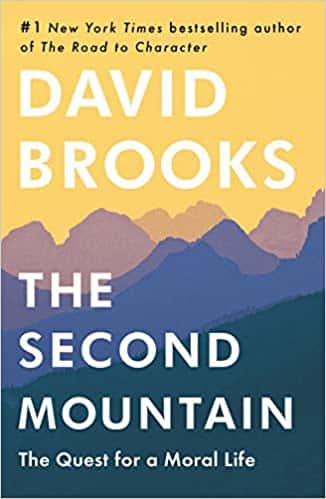
The Second Mountain: The Quest for a Moral Life

Read: May 2019

Get this book

The Second Mountain: The Quest for a Moral Life

by David Brooks

The Second Mountain: The Quest for a Moral Life by David Brooks is a book I often recommend. Mr. Brooks writes about the first mountain that most people climb. The book challenges the reader to “live for a cause greater than themselves.”

It is about “to be a success, make your mark, experience personal happiness.” Even when they reach the top of the mountain, most people find they are unhappy. The climb to the summit has become unsatisfying.

On the second mountain, life moves from self-centered to other-centered.” Life becomes interdependent, not independent; it becomes a life of commitment, not about us.

Mr. Brooks “explores the four commitments that define a life of meaning and purpose: to a spouse and family, to a vocation, to a philosophy or faith, and to a community.

We live in a society, Brooks argues, that celebrates freedom, that tells us to be true to ourselves, at the expense of surrendering to a cause, rooting ourselves in a neighborhood, binding ourselves to others by social solidarity and love. We have taken individualism to the extreme—and in the process we have torn the social fabric in a thousand different ways.

When I read The Second Mountain, it became clear that Jan and I never even attempted to climb the first mountain. We were constantly climbing the second mountain.

We had chosen to do work that repaired the world; we both had a faith community and lived in a community.

All we were missing as far as commitments when we met was each other. Our love for each other provided the missing link and allowed us to climb to the top of the second mountain.


The Jan Lilien Education Fund sponsors ongoing sustainability and environmental awareness programs. Gifts made this month; I will match dollar-for-dollar. All donations are tax-deductible.

Subscribe

Contact Us

I receive a commission when you buy a book or product using a link on this page. Thank you for supporting Sharing Jan’s Love blog.

×
We Do Not Part

Read: March 2025

Get this book

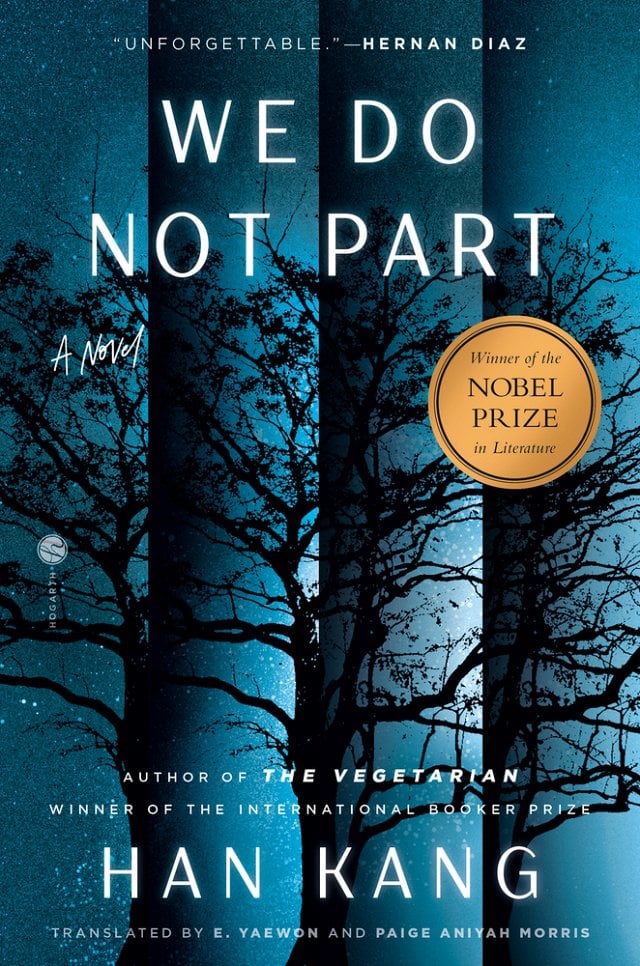
We Do Not Part: A Novel

by Han Kang

Today, I explored “We Do Not Part,” the latest novel by Han Kang, the 2024 Nobel Prize in Literature laureate. Translated by the talented e. yaewon and Paige Aniyah Morris, this book offers a remarkable journey. The New York Times has called it Kang’s most revealing work since her acclaimed novel, “The Vegetarian.” What captivates me the most is how it intricately weaves the story of two women’s friendship while shedding light on a hidden chapter of Korean history.

One winter morning, Kyungha receives an urgent message from her friend Inseon, asking her to visit a hospital in Seoul. Inseon has injured herself in an accident and begs Kyungha to return to Jeju Island, where she lives, to save her beloved pet—a white bird named Ama. A snowstorm hits the island when Kyungha arrives. At all costs, she must reach Inseon’s house, but the icy wind and blizzards slow her down as night falls. She wonders if she will arrive in time to save the animal—or even survive the terrible cold that envelops her with every step. Lost in a world of snow, she does not yet suspect the vertiginous plunge into darkness that awaits her at her friend’s house.

Blurring the boundaries between dream and reality, “We Do Not Part” powerfully illuminates a forgotten chapter of Korean history buried for decades, bringing to light the lost voices of the past to prevent them from fading into oblivion. It is both a tribute to enduring friendship and a plea for remembrance. The novel tells a story of profound love in the face of unspeakable violence and celebrates life, however fragile.


Han Kang was born in 1970 in South Korea. She is the author of The Vegetarian, which I have read, and winner of the International Booker Prize,  Human Acts, The White Book, Greek Lessons, and We Do Not Part. In 2024, she received the Nobel Prize in Literature.

e. yaewon is based in Korea and translates from and into Korean, including titles by Hwang Jungeun, Deborah Levy, and Samuel Beckett.

Paige Aniyah Morris divides her time between the United States and Korea. Recent translations include works by Pak Kyongni, Ji-min Lee, and Chang Kang-myoung.


When you purchase a book through one of my links, I earn a small commission that helps support my passion for reading. This contribution allows me to buy even more books to share with you, creating an incredible cycle of discovering great reads together! Your support truly makes a difference!


×
The Candy House

Read: December 2022

Get this book

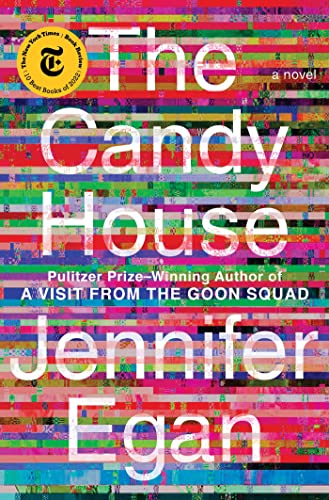
The Candy House: A Novel

by Jennifer Egan

The Candy House: A Novel by Jennifer Egan focuses on a new technology that allows you access to every memory you’ve ever had and to share your memories in exchange for access to the memories of others—it has seduced multitudes. According to the NYTimes, “this is minimalist maximalism. As a widow, I live in a world of memories, but I would not want them shared as they are in The Candy House. “It’s as if Egan compressed a big 19th-century novel onto a flash drive.”

Of course, I am not able to access my unconscious memories. Albeit in an amateur way, I write down some of my memories as they remind me of the power of the love that Jan and I shared. For example, the essay when I met Jan rekindles the memory and attempts to tell the story the way it happened, not how some would like it to be remembered.

The Candy House is one of the NYTimes’ top five fiction books of 2022. I have read two of them, The Furrows and Checkout 19. Initially, I was overwhelmed by the multitude of characters and was confused. By the novel’s middle, their interconnectedness helped me understand its real meaning. In the end, Egan delivers a fierce and exhilarating testament to the tenacity and transcendence of human longing for authentic connection, love, family, privacy, and redemption. As a widow, authenticity Is what I need to heal.

The Candy House is the seventieth (70) book I have read this year. 

The Goodreads summary provides an overview.

It’s 2010. Staggeringly successful and brilliant tech entrepreneur Bix Bouton is desperate for a new idea. He’s forty, with four kids, and restless when he stumbles into a conversation with mostly Columbia professors, one of whom is experimenting with downloading or “externalizing” memory. Within a decade, Bix’s new technology, Own Your Unconscious—that allows you access to every memory you’ve ever had and to share every memory in exchange for access to the memories of others—has seduced multitudes. But not everyone.

In spellbinding linked narratives, Egan spins out the consequences of Own Your Unconscious through the lives of multiple characters whose paths intersect over several decades. Egan introduces these characters in an astonishing array of styles—from omniscient to first person plural to a duet of voices, an epistolary chapter, and a chapter of tweets. In the world of Egan’s spectacular imagination, there are “counters” who track and exploit desires and “eluders” who understand the price of taking a bite of the Candy House.

Intellectually dazzling and extraordinarily moving, The Candy House is a bold, brilliant imagining of a world that is moments away. With a focus on social media, gaming, and alternate worlds, you can almost experience moving among dimensions in a role-playing game.​ Egan delivers a fierce and exhilarating testament to the tenacity and transcendence of human longing for real connection, love, family, privacy, and redemption.


The Jan Lilien Education Fund sponsors ongoing sustainability and environmental awareness programs. Gifts made this month; I will match dollar-for-dollar. All donations are tax-deductible.

Subscribe

Contact Us

I receive a commission when you buy a book or product using a link on this page. Thank you for supporting Sharing Jan’s Love blog.


×