

My Never-Ending Conversation with Jan

My Never-Ending Conversation with Jan

Estimated reading time: 0 minutes, 58 seconds
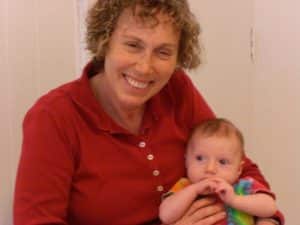
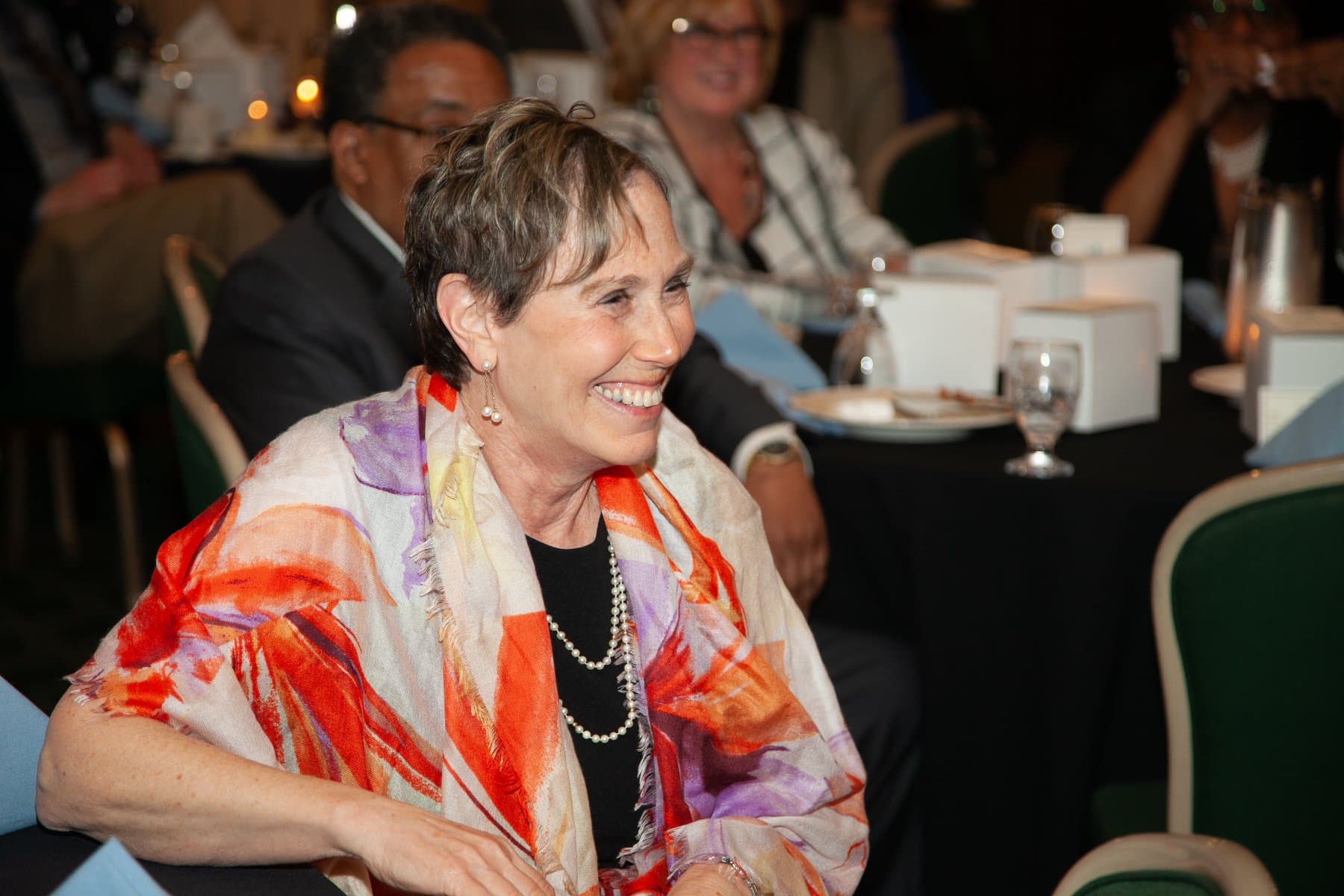
Happy together!Every day I speak to Jan, a good marriage is a life-long conversation.

Sometimes, these are about mundane tasks such as shopping, laundry, et cetera.

In July, I have two critical messages that I shared with her.

One is our new grandson Wes. His middle name is Jude which is a way to continue her name and a nod to The Beatles and their song Hey Jude.

Jan may not be able to hold Wes Jude, but when I do, I kiss him twice, once for her and then for me.

The second message I want to share with her is that I am alone and in grief, but I am still and always will be in love with her.

I begin and end every conversation with Jan by saying how much I love her.


The Jan Lilien Education Fund sponsors ongoing sustainability and environmental awareness programs. All donations are tax-deductible.

Subscribe

Contact Us

I receive a commission when you buy a book or product using a link on this page. Thank you for supporting Sharing Jan’s Love blog.
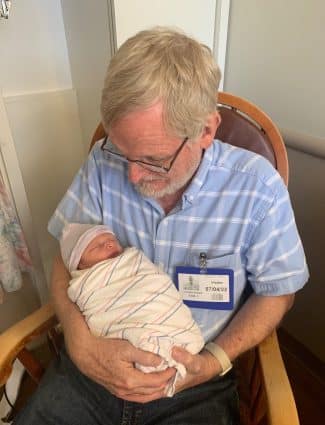
Happy Birthday, Wes Jude Nucero!

Jude, the middle name, honors Jan, the love of my life, Mike's mom, and Wes's grandmother. It also shows her love of music, especially The Beatles and Hey Jude.

God, in her infinite and divine wisdom, had Wes Jude born fourteen months after Jan died. Wes Jude's birth on this day is a true blessing for Jan, Jude, and our family.

Share your thoughts and ideas

This site uses Akismet to reduce spam. Learn how your comment data is processed.

The Jan Lilien Education Fund!

My Never-Ending Conversation with Jan
×
Last House: A Novel

Read: May 2024

Get this book

Last House: A Novel

by Jessica Shattuck

I started reading “Last House: A Novel” by Jessica Shattuck today. She is an esteemed New York Times bestselling author known for her work “The Women in the Castle.” This sweeping narrative, perfect for “The Dutch House” and “Great Circle” fans, explores a nation’s rise to power and a family’s complex ties to the resources that shaped their wealth. It also delves into the events that led to their greatest tragedy, a secret that threatens to tear them apart.

In 1953, a World War II veteran turned company lawyer, Nick Taylor, saw oil as the key to the future. He commutes to the city for work and returns to the peaceful suburbs to be with his wife, Bet, a former codebreaker now a housewife, and their two children, Katherine and Harry. Nick, who comes from humble origins, can provide for his family, including their secluded country escape called Last House, thanks to his work for American Oil. Last House, deep in the Vermont mountains, offers the Taylors a retreat from the stresses of modern life. Bet no longer worries about the Russian H-bombs that haunt her dreams, and the children can roam freely in the woods. Last House is a place that seems capable of surviving the end of the world.

1968, a turning point in American history, where the nation teeters on the brink of transformation. The streets pulsate with protestors challenging everything from the Vietnam War to racism and even the country’s reliance on Big Oil. As Katherine enters adulthood, she finds herself caught in the era’s tide, struggling to reconcile her ideals with the privileged upbringing her parents, part of the Greatest Generation, toiled to provide. But when the Movement takes a secure, more radical turn, each member of the Taylor family must face the repercussions of their choices for the causes they believed in. This rich historical backdrop infuses the Taylor family’s narrative with depth and intrigue, leaving us hungry for more about this transformative era.

Last House” spans multiple generations and nearly eighty years, telling the story of one American family during a time of grand ideals and significant downfalls. It explores themes of family dynamics, the impact of wealth, and the societal changes that shaped America. Set against the backdrop of our nation’s history, this emotional tour de force delves deeply into questions of inheritance and what we owe each other. It captures the gravity of time, the double edge of progress, and the hubris of empire to stunning effect.

×
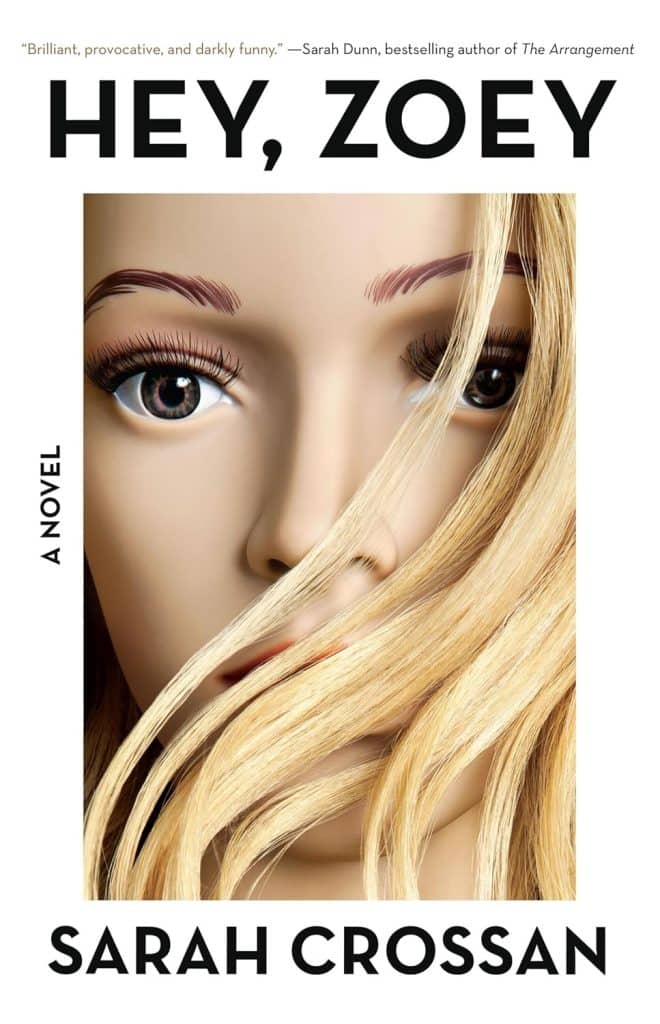
Hey, Zoey

Read: June 2024

Get this book

Hey, Zoey: A Novel

by Sarah Crossan

Today, I enjoyed immersing myself in the captivating and thought-provoking world of Sarah Crossan‘s novel ‘Hey, Zoey.’ As Sarah Dunn eloquently puts it, this book is a masterful blend of brilliance and dark humor. The story revolves around Dolores O’Shea, whose life turns surprising when she discovers her husband’s AI sex doll, Zoey, in the garage.

A profound and heartfelt journey of self-discovery unfolds for Dolores as she and ‘Zoey‘ develop an unconventional bond, unearthing deeply buried emotions and memories. Dolores O’Shea, a 43-year-old woman, is a beacon of strength, juggling her job, ailing mother, and social life with remarkable efficiency.

Her marriage with an anesthesiologist, David, is in turmoil, but she’s determined to confront the issues. Her world is completely upended when she uncovers Zoey, the $8,000 AI sex doll that David had been concealing in the garage. At first, Dolores’ response to Zoey is a whirlwind of anger and confusion, throwing her meticulously organized life into chaos.

As the narrative unfolds, Dolores and Zoey embark on a series of conversations that unearth unexpected emotions and memories, profoundly influencing all of Dolores’ relationships, particularly her relationship with herself. Dolores’ journey is a rollercoaster of events and emotions that resonates with us all. ‘Hey, Zoey‘ is a novel that enthralls and challenges our perception of modern-day connections and the diverse forms that love can assume in a lifetime.

×
The Last White Man

Read: August 2022

Get this book

The Last White Man: A Novel

by Mohsin Hamid

The Last White Man by Mohsin Hamid is a story of love, loss, and rediscovery in a time of unsettling change. One morning, Anders, the novel’s protagonist,  wakes to find that his skin has turned dark, his reflection a stranger to him. At first, he tells only Oona, an old friend, newly a lover. Soon, reports of similar occurrences surface across the land.

In Mohsin Hamid’s “lyrical and urgent” prose (O Magazine), The Last White Man powerfully uplifts our capacity for empathy and the transcendence over bigotry, fear, and anger it can achieve.

I highly recommend this book. It was a page-turner that kept me thinking about love, loss, and rediscovery. All three are subjects close to my heart since Jan’s death.

I decided to read the book after hearing an interview with the author on All of It on WNYC.

The Goodreads summary provides a good overview,

One morning, Anders wakes to find that his skin has turned dark, his reflection a stranger to him. At first he tells only Oona, an old friend, newly a lover. Soon, reports of similar occurrences surface across the land. Some see in the transformations the long-dreaded overturning of an established order, to be resisted to a bitter end. In many, like Anders’s father and Oona’s mother, a sense of profound loss wars with profound love. As the bond between Anders and Oona deepens, change takes on a different shading: a chance to see one another, face to face, anew.

Hamid’s The Last White Man invites us to envision a future – our future – that dares to reimagine who we think we are, and how we might yet be together.


The Jan Lilien Education Fund sponsors ongoing sustainability and environmental awareness programs. Gifts made this month; I will match dollar-for-dollar. All donations are tax-deductible.

Subscribe

Contact Us

I receive a commission when you buy a book or product using a link on this page. Thank you for supporting Sharing Jan’s Love blog.

×
The Garden of Letters

Read: June 2021

Get this book

The Garden of Letters

by son Richman

The Garden of Letters by Alyson Richman was one of the first books I read after Jan died. It was the perfect love story to read after the loss of the love of my life. The love Jan and I shared was because we shared a portion of the soul of the other, and thus we were meant for each other from day one. 

The two primary characters – Elodie Bertolotti and Angelo Rosselli – resonated with me as they were also people who shared souls. The book “captures the hope, suspense, and romance of an uncertain era, in an epic intertwining story of first love, great tragedy, and spectacular bravery.

As I turned every page, the story filled my heart with love and happiness as it reminded me of the love that Jan and I shared.

Portofino, Italy, 1943. A young woman steps off a boat in a scenic coastal village. Although she knows how to disappear in a crowd, Elodie is too terrified to slip by the German officers while carrying her poorly forged identity papers. She is frozen until a man she’s never met before claims to know her. In desperate need of shelter, Elodie follows him back to his home on the cliffs of Portofino.

Only months before, Elodie Bertolotti was a cello prodigy in Verona, unconcerned with world events. But when Mussolini’s Fascist regime strikes her family, Elodie is drawn into the burgeoning resistance movement by Luca, a young and passionate bookseller. As the occupation looms, she discovers that her unique musical talents, and her courage, have the power to save lives.

In Portofino, young doctor Angelo Rosselli gives the frightened and exhausted girl sanctuary. He is a man with painful secrets of his own, haunted by guilt and remorse. But Elodie’s arrival has the power to awaken a sense of hope that Angelo thought was lost to him forever.

I not only recommend this book, but I am also looking forward to reading more of her novels.

Subscribe

Contact Us

×
Don't Be a Stranger: A Novel

Read: October 2024

Get this book

Don’t Be a Stranger: A Novel

by Susan Minot

Today, I began reading “Don’t Be a Stranger: A Novel” by Susan Minot, a captivating new work by the author of ‘Evening.’ Known for her lyrical prose and exploration of complex human relationships, Minot’s latest novel revolves around a woman involved in a love affair during midlife. It is a radiant tale that explores themes of erotic obsession, the desire for intimacy, communication, and oblivion, which will resonate with fans of Miranda July‘s ‘All Fours,’ a book I have also read.

Ivy Cooper is 52 years old when Ansel Fleming first enters her life. Twenty years her junior, a musician newly released from prison on a minor drug charge, Ansel’s beguiling good looks and quiet intensity instantly seduce her. Despite the gulf between their ages and experience, their physical chemistry is overpowering. Over the heady weeks and months that follow, Ivy finds her life bifurcated by his presence: On the surface, she is a responsible mother, managing the demands of friends, an ex-husband, and home, but emotionally, psychologically, sexually, she is consumed by desire and increasingly alive only in the stolen moments-out-of-time, with Ansel in her bed.

Don’t Be a Stranger is a gripping, sensual, and provocative work from one of the most remarkable voices in contemporary fiction.

×
Victory City: A Novel

Read: February 2023

Get this book

Victory City: A Novel

by Salman Rushdie

Victory City: A Novel by Salman Rushdie is an epic tale of a woman who breathes a fantastical empire into existence, only to be consumed by it over the centuries from the transcendent imagination of Booker Prize-winning, internationally bestselling author Salman Rushdie. It is well written and was a page-turner from page one to the end. I highly recommend this novel and encourage everyone to read it.

Brilliantly styled as a translation of an ancient epic, this is a saga of love, adventure, and myth that is a testament to storytelling’s power. After witnessing her mother’s death, the grief-stricken Pampa Kampana becomes a vessel for the goddess Parvati, who begins to speak out of the girl’s mouth. I was hooked when Pampa Kampana provided the seeds that created Victory City out of thin air.

David Remnick’s interview with Salman Rushdie in The New Yorker provided background I would have missed.

“The first kings of Vijayanagara announced, quite seriously, that they were descended from the moon,” Rushdie said. “So when these kings, Harihara and Bukka, announce that they’re members of the lunar dynasty, they’re associating themselves with those great heroes. It’s like saying, ‘I’ve descended from the same family as Achilles.’ Or Agamemnon. And so I thought, Well, if you could say that, I can say anything.”

Above all, the book is buoyed by the character of Pampa Kampana, who, Rushdie says, “just showed up in my head” and gave him his story, his sense of direction. Rushdie’s pleasure in writing the novel was in “world building” and, at the same time, writing about a character building that world: “It’s me doing it, but it’s also her doing it.” The pleasure is infectious. “Victory City” is an immensely enjoyable novel. It is also an affirmation. At the end, with the great city in ruins, what is left is not the storyteller but her words:

I, Pampa Kampana, am the author of this book.
I have lived to see an empire rise and fall.
How are they remembered now, these kings, these queens?
They exist now only in words . . .
I myself am nothing now. All that remains is this city of words.
Words are the only victors.

The Goodreads summary provides a brief overview,

In the wake of an insignificant battle between two long-forgotten kingdoms in fourteenth-century southern India, a nine-year-old girl has a divine encounter that will change the course of history. After witnessing her mother’s death, the grief-stricken Pampa Kampana becomes a vessel for the goddess Parvati, who begins to speak out of the girl’s mouth. Granting her powers beyond Pampa Kampana’s comprehension, the goddess tells her that she will be instrumental in the rise of a great city called Bisnaga–literally victory city–the wonder of the world.

Over the next two hundred and fifty years, Pampa Kampana’s life becomes deeply interwoven with Bisnaga’s, from its literal sowing out of a bag of magic seeds to its tragic ruination in the most human of ways: the hubris of those in power. Whispering Bisnaga and its citizens into existence, Pampa Kampana attempts to make good on Parvati’s task: giving women equal agency in a patriarchal world. But all stories have a way of getting away from their creator, and Bisnaga is no exception. As years pass, rulers come and go, battles are won and lost, and allegiances shift, the very fabric of Bisnaga becomes an ever more complex tapestry–with Pampa Kampana at its center.


The Jan Lilien Education Fund sponsors ongoing sustainability and environmental awareness programs. Gifts made this month; I will match dollar-for-dollar. All donations are tax-deductible.

Subscribe

Contact Us

I receive a commission when you buy a book or product using a link on this page. Thank you for supporting Sharing Jan’s Love blog.


×