
Wind Sculpture
Estimated reading time: 0 minutes, 0 seconds
Wind Sculpture
Wind Sculpture
Subscribe to Sharing Jan's Love Newsletter!
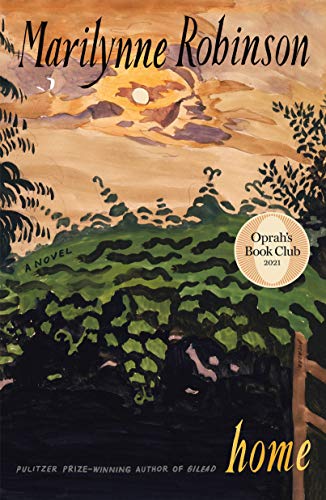
by Marilynne Robinson
Home: A Novel by Marilynne Robinson is a moving and healing book about families, family secrets, the passing of the generations, love, death, and faith. Robinson’s most significant work is an unforgettable embodiment of the most profound and universal emotions. Although I have not read the other novels in this series, I plan to add them to my list. I highly recommend this book.
It is a moving and healing book about families, family secrets, the passing of generations, love, death, and faith. With the loss of the love of my life ten months ago, these are topics that I have spent time thinking about. Ms. Robinson’s powerful writing weaved a story that I could not stop reading.
Again, I highly recommend this novel.
This is the Goodreads summary.
Hundreds of thousands were enthralled by the luminous voice of John Ames in Gilead Marilynne Robinson’s Pulitzer Prize-winning novel. Home is an entirely independent, deeply affecting novel that takes place concurrently in the same locale, this time in the household of Reverend Robert Boughton, Ames’s closest friend.
Glory Boughton, aged thirty-eight, has returned to Gilead to care for her dying father. Soon her brother, Jack—the prodigal son of the family, gone for twenty years—comes home too, looking for refuge and trying to make peace with a past littered with tormenting trouble and pain.
Jack is one of the great characters in recent literature. A bad boy from childhood, an alcoholic who cannot hold a job, he is perpetually at odds with his surroundings and with his traditionalist father, though he remains Boughton’s most beloved child. Brilliant, lovable, and wayward, Jack forges an intense bond with Glory and engages painfully with Ames, his godfather and namesake.
Home is a moving and healing book about families, family secrets, the passing of the generations, love, death, and faith. Robinson’s most significant work is an unforgettable embodiment of the most profound and universal emotions.
When you buy a book or product using a link on this page, I receive a commission. Thank you for supporting Sharing Jan’s Love blog.
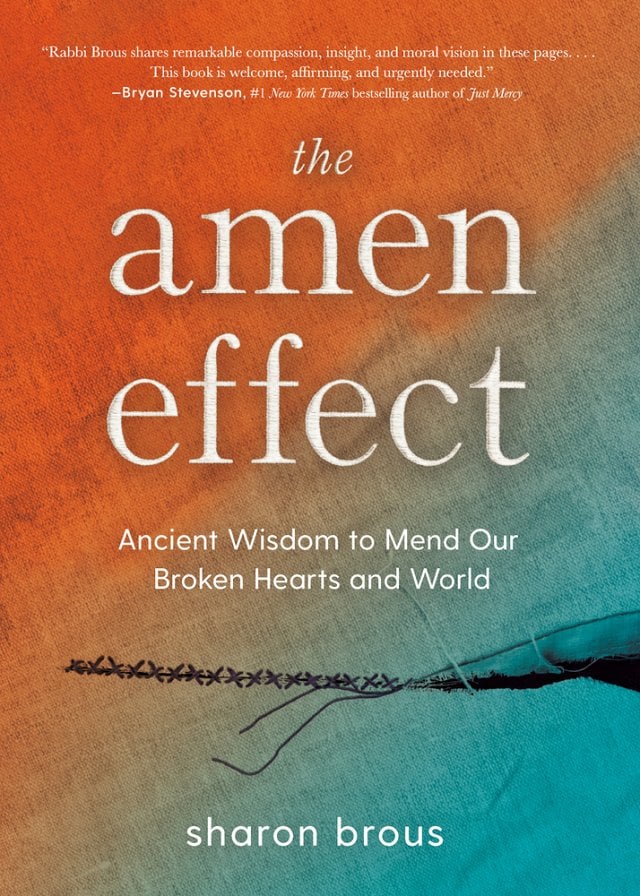
by Sharon Brous
Sharon Brous, a prominent American rabbi, argues in The Amen Effect: Ancient Wisdom to Heal Our Hearts and Mend Our Broken World that the essential spiritual work of our time—though instinctual and often countercultural—focuses on connecting through celebration, sorrow, and solidarity. We must support one another in times of joy and pain, embracing vulnerability and possibility, nurturing relationships with shared purposes, and creating communities centered on care.
From one of our country’s most prominent rabbis comes this inspiring book about the power of community, based on one of her most impactful sermons. What will it take to mend our broken hearts and rebuild our society in a time of loneliness, isolation, social rupture, and alienation?
Brous contends that honoring our most basic human instinct—the yearning for authentic connection—is the way to reawaken our shared humanity and begin the healing process. This kind of sacred presence is captured by the word amen, a powerful ancient idea that we affirm the fullness of one another’s experience by demonstrating, in body and word: “I see you. You are not alone.”
An acclaimed preacher and storyteller, Brous pairs heart-driven anecdotes from her experience building and pastoring to a leading-edge faith community over the past two decades with ancient Jewish wisdom and contemporary science. The result is a clarion call: the sense of belonging engendered by our genuine presence is both a social and biological need, as well as a moral and spiritual necessity.
With original insights and practical tools, The Amen Effect translates foundational ideas into simple practices that connect us to our better angels, offering a blueprint for a more meaningful life and a more connected and caring world.
As she writes in the preface, after listing the joys and pains of life, weddings, births, and death,
It’s in these times that I feel the weight of the work, the privilege of being alive, the blessing of being so close to such raw beauty and pain. It’s there that I have learned the power of saying ‘Amen‘ to one another’s grief and joy, sorrow and celebration with our very presence. Of bearing witness to profound suffering and protesting injustice with our very presence. Of comforting and consoling, surviving and thriving with our very presence. What I’ve learned, during the years, is the meaning of sacred companionship. I have seen, in ways subtle and pronounced, a longing to connect with others who can help hold the pain, a need to share what we’ve learned in the trenches, and a desire to give, even when we ourselves have barely caught our breath. And I have seen how knowing that we’re not alone can both heighten our joy and help us endure unimaginable hardship.
Click here to read about my experience listening to Rabbi Brous at the Kol Tzedek Speakers Series at Temple Emanu-El in Westfield.
Sharon Brous is the senior and founding rabbi of IKAR, a leading-edge Jewish community based in Los Angeles, and the author of The Amen Effect: Ancient Wisdom to Heal Our Hearts and Mend Our Broken World, a national bestseller.
In 2013, Brous blessed President Obama and Vice President Biden at the Inaugural National Prayer Service, and in 2021, returned to bless President Biden and Vice President Harris and then led the White House Passover Seder 2021 and the Hanukkah candle lighting with the Vice President and Second Gentleman in 2023. She was ranked as the number one most influential Rabbi in America by Newsweek/The Daily Beast. She has also been recognized by The Forward and the Jerusalem Post as one of the most influential Jews alive today. Her work has appeared in prominent publications, including The New York Times, The Los Angeles Times, and The Washington Post. Additionally, her TED talk, “Reclaiming Religion,” has been viewed by over 1.5 million people.
Brous is part of the inaugural cohort of Auburn Seminary’s Senior Fellows program, which brings together top faith leaders working on the frontlines for justice. She sits on the faculty of REBOOT and serves on the International Council of the New Israel Fund, as well as the national steering committee for the Poor People’s Campaign.
A Columbia University graduate (holding both undergraduate and M.A. degrees in Human Rights), she was ordained by the Jewish Theological Seminary and resides in Los Angeles with her husband and children.
When you purchase a book through one of my links, I earn a small commission that helps support my passion for reading. This contribution allows me to buy even more books to share with you, creating an incredible cycle of discovering great reads together! Your support truly makes a difference!
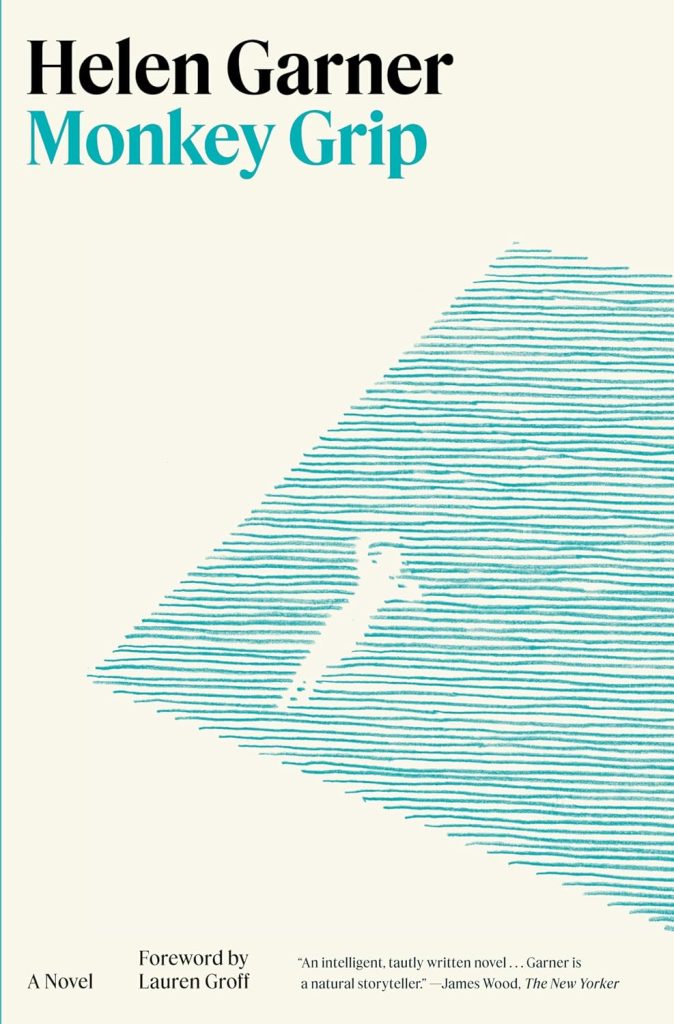
by Helen Garner
Today, I began reading Monkey Grip: A Novel by Helen Garner. It’s a book that launched the career of one of Australia’s most celebrated writers. The story follows the infatuations of a young, single mother fascinated by the excesses of Melbourne’s late-70s counterculture. Monkey Grip is a seminal novel about Australia’s turbulent 1970s, including communal households, music, friendships, children, love, drugs, and sex.
Helen Garner is a renowned novelist, short-story writer, and journalist. She’s best known for her frank, unsparing, and intricate portrayals of Australian life, often drawn from the pages of her journals and diaries. A new US edition of her debut novel, which establishes Garner’s masterful and quietly radical literary voice, is now available.
The novel is set in Australia during the late 1970s and tells the story of Nora, a single mother and writer. Nora navigates Melbourne’s bohemian underground with her young daughter, Gracie, in tow. Nora falls in love with Javo, a flighty man trapped in his addiction. As their relationship disintegrates, Nora struggles to wean off a love that feels impossible to live without.
When Monkey Grip was first published in 1977, it caused a sensation. Critics praised Garner for her craft, but many criticized her gritty depictions of the human body, frankness about sex and drugs, the mess of motherhood, and her unabashed use of her own life as inspiration. Today, such criticism feels old-fashioned and glaringly gendered, and Monkey Grip is considered a modern masterpiece.
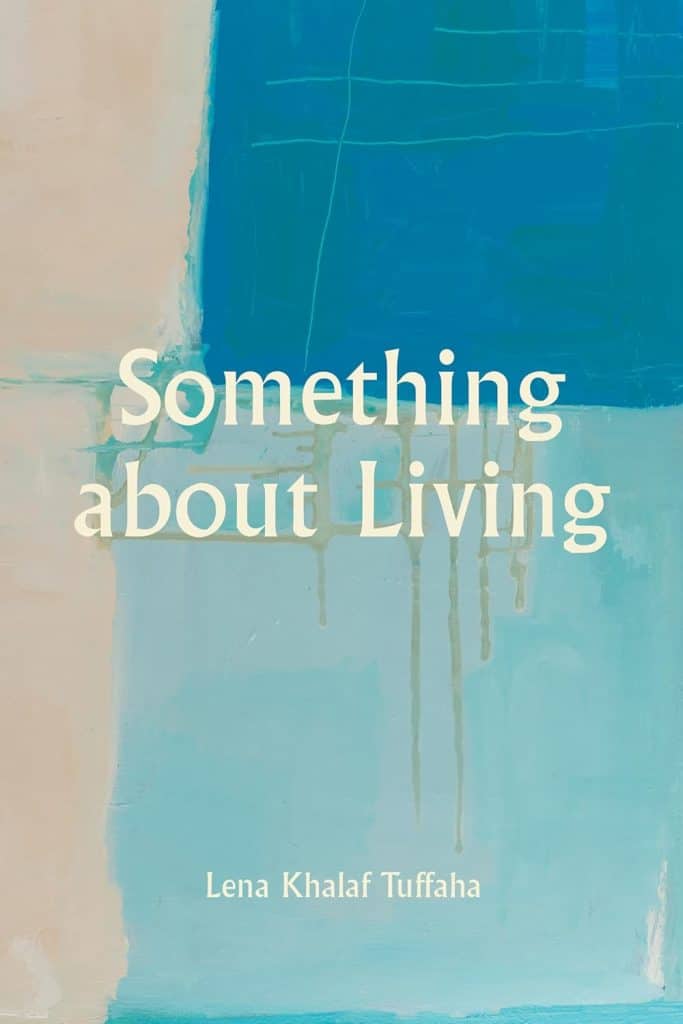
by Lena Khalaf Tuffaha
I recently read “Something About Living” by Lena Khalaf Tuffaha, a poet and essayist whose work resonates deeply. The book of poems won the 2024 National Book Award for Poetry and delved into Palestinian life through the lens of the American language, revealing a legacy of obfuscation and erasure. It questions what happens when language packages ongoing disasters for consumption and disposal.
As a Jew supporting a two-state solution, I initially hesitated to read this collection of poems. However, I was pleasantly surprised by the lyrical beauty of the verses, which explore love not just as an emotion but as a transformative force and “a radical act.” Every poem that genuinely resonated with me. “Something About Living” is a book I highly recommend for its depth and insight!
Ms. Khalaf Tuffaha has an incredible literary repertoire; her previous work, “Water & Salt,” earned the esteemed 2018 Washington State Book Award, while “Kaan & Her Sisters” was a finalist for the Firecracker Award. In addition, “Something About Living” also received the 2022 Akron Prize for Poetry. I’m excited to explore her profound insights and lyrical mastery!
Adrian Matejka, the author of “Somebody Else Sold the World,” has written about “Something About Living,”
“It’s nearly impossible to write poetry that simultaneously holds the human desire for joy and the insistent agitations of protest, but Lena Khalaf Tuffaha‘s gorgeous and wide-ranging new collection Something About Living does just that. Her poems interweave Palestine’s historic suffering, the challenges of living in this world full of violence and ill will, and the gentle delights we embrace to survive that violence. Khalaf Tuffaha’s elegant poems sing the fractured songs of Diaspora while remaining clear-eyed to the cause of the fracturing: the multinational hubris of colonialism and greed. This collection is her witness to our collective unraveling, vowel by vowel, syllable by syllable. “Let the plural be a return of us,” the speaker of “On the Thirtieth Friday We Consider Plurals” says and this plurality is our tenuous humanity and the deep need to hang on to kindness in our communities. In these poems Khalaf Tuffaha reminds us that love isn’t an idea; it is a radical act. Especially for those who, like this poet, travel through the world vigilantly, but steadfastly remain heart first.
When you purchase a book through one of my links, I earn a small commission that helps support my passion for reading. This contribution allows me to buy even more books to share with you, creating an incredible cycle of discovering great reads together! Your support truly makes a difference!
by Lorrie Moore
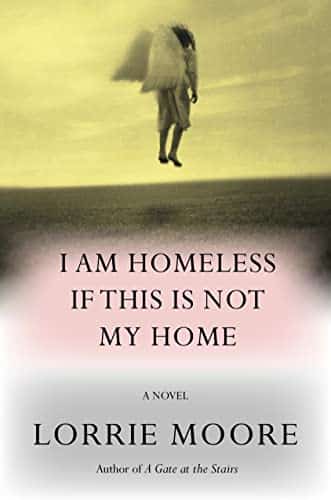
Today, I started reading Lorrie Moore‘s latest novel; I Am Homeless If This Is Not My Home. It’s her first book since A Gate at the Stairs, and it’s a bold and contemplative exploration of love, death, passion, and grief. Moore examines what it means to be haunted by the past in terms of history and the human heart.
The story follows a teacher who visits his dying brother in the Bronx. A mysterious journal from the 19th century is stolen from a boarding house. There’s also a therapy clown and an assassin, who is presumed dead but may not be.
Moore’s unique wordplay, wry humor, and wisdom make for an enchanting read. She presents us with a magic box of surprises, exploring themes of love, rebirth, and the pull toward life. This novel is a poetic and imaginative portrait of lovers and siblings that questions the stories we’ve been told and whether they’re true.
With I Am Homeless If This Is Not My Home, Moore takes us on a journey to a windswept, tragic, and comic landscape. It’s unmistakably her world and a journey you won’t forget.
The Jan Lilien Education Fund sponsors ongoing sustainability and environmental awareness programs. Gifts made this month; I will match dollar-for-dollar. All donations are tax-deductible.
I receive a commission when you buy a book or product using a link on this page. Thank you for supporting Sharing Jan’s Love blog.
by Benjamin Wood
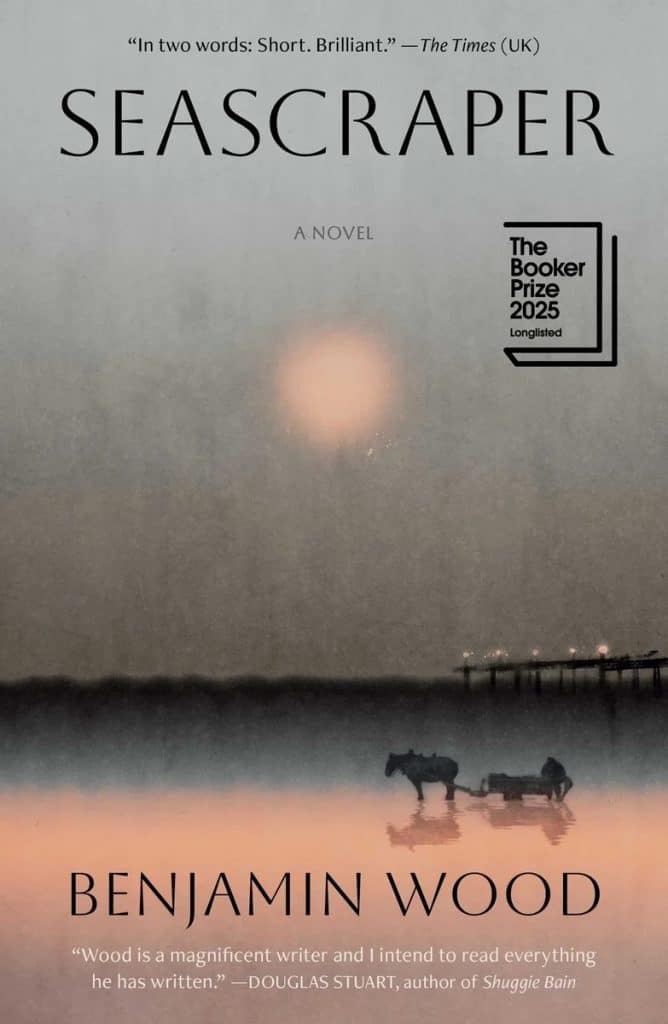
Haunting, timeless, and stunningly atmospheric, Seascraper by Benjamin Wood explores the story of a young man whose quiet existence is dramatically altered in just one day. His circumstances confine him, yet he yearns for a sense of fulfillment that extends far beyond the world he knows. The novel has been longlisted for the 2025 Booker Prize.
Twenty-year-old Thomas Flett lives a slow, deliberate life with his mother in Longferry, Northern England, working his grandpa’s trade as a shanker. He rises early to take his horse and cart to the drizzly shore to scrape for shrimp, and spends the afternoon selling his wares, trying to wash away the salt and sea-scum, pining for his neighbor, Joan Wyeth, and playing songs on his guitar. At heart, he is a folk musician, but this remains a private dream.
Then a mysterious American arrives in town and enlists Thomas’s help in finding a perfect location for his next movie. Though skeptical at first, Thomas learns to trust the stranger, Edgar, and, shaken from the drudgery of his days by the promise of Hollywood glamour, begins to see a different future for himself. But how much of what Edgar claims is true, and how far can his inspiration carry Thomas?
Benjamin Wood was born in 1981 and grew up in Merseyside. Seascraper is his fifth novel. His previous works were shortlisted for the Costa First Novel Award, the Commonwealth Book Prize, the Sunday Times Young Writer of the Year Award, the RSL Encore Award, the CWA Gold Dagger Award, and the European Union Prize for Literature. In 2014, he won France’s Prix du Roman Fnac.
He is a senior lecturer in creative writing at King’s College, London, and lives in Surrey with his wife and sons.
Discover your next favorite book and dive into a world of curated, exciting reads by purchasing through my links. You’ll have access to a diverse selection of books that I’ve personally vetted to ensure quality and enjoyment. Additionally, by supporting these selections, you’ll help me continue to provide you with more personalized recommendations. I earn a small commission from your purchase, which allows me to buy and share even more books with you. Your support truly makes a difference!