
Despite Grief, I Can Shape My Future

Despite Grief, I Can Shape My Future

Without Jan, My Agency Helps Me Live Fully

Estimated reading time: 2 minutes, 6 seconds
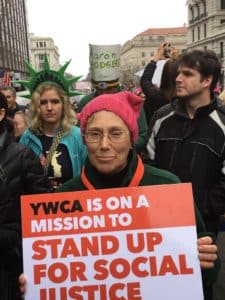
Jan in Washington January 2017

Jan in Washington January 2017

I woke up this morning feeling lethargic.

Despite my lack of energy and wet snow falling from the sky, I knew if I did not walk, I would not only lose my streak but feel worse later in the day.

I was meandering from one room to another in Apt. 3B, I decided to do my primary walk inside for the first time in over a year.

Walking in the hallways is not the same as walking in nature. But I did, and I finished four miles and burned over 400 calories.

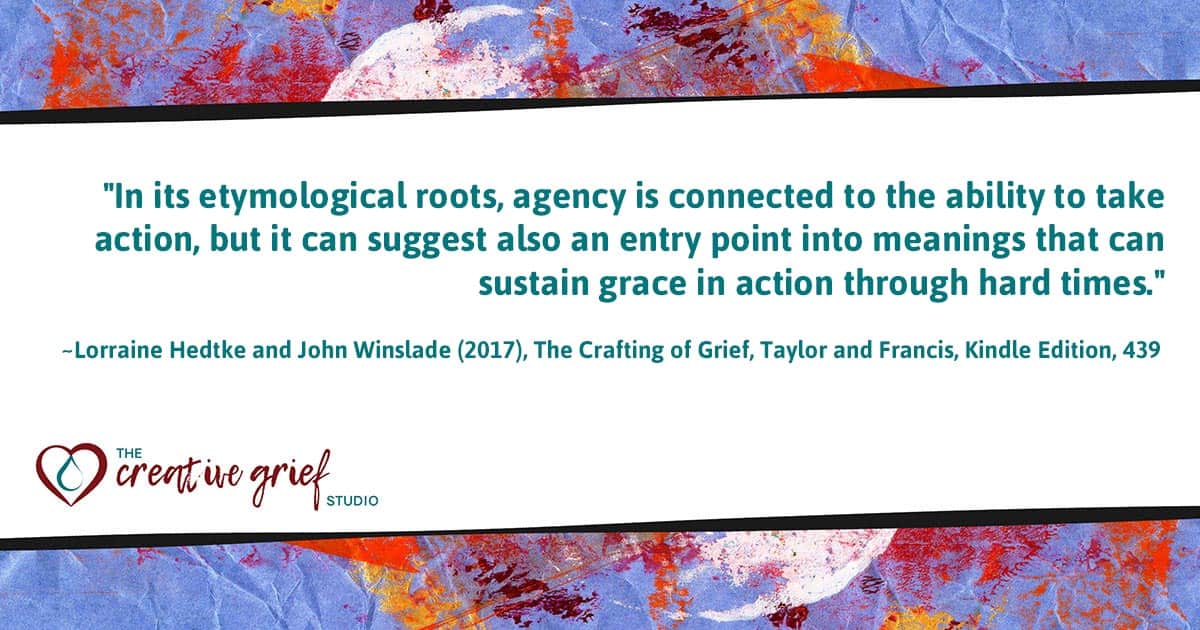
Today’s perambulation reminded me of the definition of agency, which is to control our actions and their consequences on our lives.

My exercise was less than optimal, but I must live with my decision.

When Jan was alive, we shared decision-making.

In the early days of my grief journey, I found it effortless to avoid choices as I convinced myself the outcomes might be more than I could manage.

Accepting that there were many things I could not change, I accepted Victor Frankl the essential truth that Victor Frankl wrote about in Man’s Search for Meaning,

When we are no longer able to change a situation, we are challenged to change ourselves.

What should I make for dinner? How can I fill my time? Among others, the time I spent debating what to do seemed silly in retrospect. However, at the time, every decision or non-decision would be an earthquake that would destroy my life.

Once I decided to focus on Jan’s Memorial Garden, walk daily, read more, and write about and share our love, I grew around my grief.

In time, I accepted that grief had been an outstanding teacher, and I have learned to live life fully.

By living fully, I know I am not only doing what Jan wanted me to do, but if we were to meet now, she would see someone she could love, not someone so drained by a loss that they are an empty shell.


The Jan Lilien Education Fund sponsors ongoing sustainability and environmental awareness programs. Gifts made this month; I will match dollar-for-dollar. All donations are tax-deductible.

Subscribe

Contact Us

I receive a commission when you buy a book or product using a link on this page. Thank you for supporting Sharing Jan’s Love blog.


Choosing to Participate Fully in Life!

Afraid grief would destroy me; I chose to grow and actively participate in my life.

I celebrated Jan's life and helped build a memorial garden in Hanson Park.

Each of those baby steps helped me thru the darkest days of my grief.

But accepting that grief has been an outstanding teacher in my life, I have learned to live life fully.

By living fully, I know I am not only doing what Jan wanted me to do, but if we were to meet now, she would see someone she could love, not someone so drained by a loss that they are an empty shell.

Share your thoughts and ideas

This site uses Akismet to reduce spam. Learn how your comment data is processed.

The Jan Lilien Education Fund!

Despite Grief, I Can Shape My Future
×
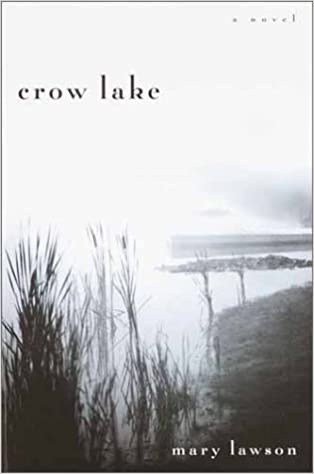
Crow Lake

Read: January 2022

Get this book

Crow Lake

by Mary Lawson

Crow Lake by Mary Lawson is set in northern Ontario’s rural “badlands.” The badlands are where heartbreak and hardship are mirrored in the landscape of the farming Pye family. Crow Lake is that rare find, a first novel so quietly assured, so emotionally pitch-perfect, you know from the opening page that this is the real thing – a literary experience in which to lose yourself, by an author of immense talent.

Crow Lake was a page-turner for me once I read the prologue.

Two families dominate the story.

On the one hand, it is the Greek tragedy of the Pye family. On their farm, “the sins of the fathers are visited on the sons, and terrible events occur—offstage.”

Kate Morrison has left her two brothers and sister at the lake to become a zoologist. The four siblings lost their parents and struggled to remain together. Their “tragedy looks more immediate if less brutal, but is, in reality, insidious and divisive.

As Goodreads describes the novel,

In this universal drama of family love and misunderstandings, of resentments harbored and driven underground, Lawson ratchets up the tension with heartbreaking humor and consummate control, continually overturning one’s expectations right to the very end. Tragic, funny, unforgettable, this deceptively simple masterpiece about the perils of hero worship leaped to the top of the bestseller lists only days after being released in Canada and earned glowing reviews in The New York Times and The Globe and Mail, to name a few.

I highly recommend this novel and am looking forward to reading more from Mary Lawson.

Subscribe

Contact Us

When you buy a book or product using a link on this page, I receive a commission. Thank you for supportJan’sharing Jan’s Love blog.

×
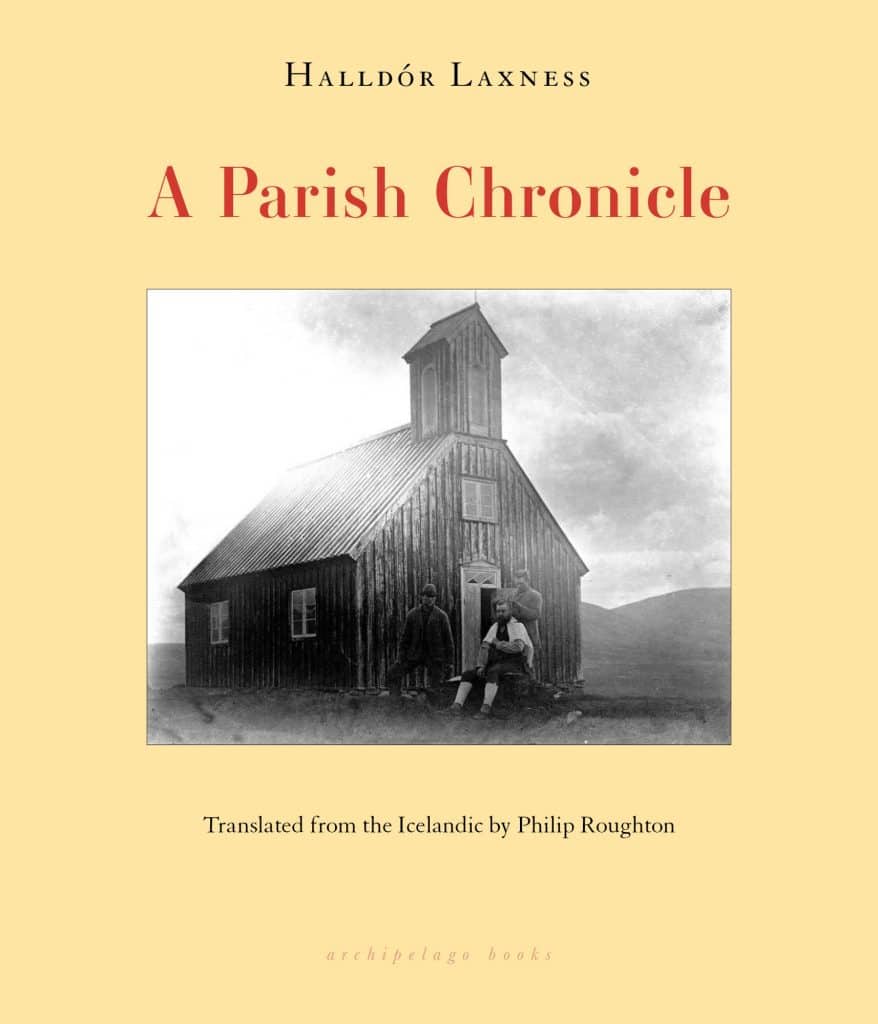
A Parish Chronicle

Read: February 2026

Get this book

A Parish Chronicle

by Halldór Laxness

In “A Parish Chronicle,” celebrated novelist Halldór Laxness weaves an essayistic tale about the unlikely miracles that keep a church—destined to disappear time and again—rooted on the same hillside. Laxness explores the minutiae of history, from the location of the ancient burial mound of national hero Egill Skallagrímsson to the end of the 19th century, where weak-sighted Ólafur and boisterous farmhand Gunna each play unexpected roles in the parish’s enduring survival.

1882. In the still of morning, Ólafur sharpens his scythe on the bone-dry pavestones that separate his farmhouse from the rest of Mosfell Valley, where life revolves around sheep. The sound of his hammer rings out like a high-pitched bell over the tussocky fields. Across the valley, perched on a hill that receives more sunshine than others, stands Mosfell Church. Nearby, the parish priest’s maid Gunna pours her “slosh,” a weak cup of coffee. Further afield in Reykjavík (“down south” as the locals say), the general assembly decides to revisit an old plan to cut costs by consolidating small parishes and calls for the demolition of Mosfell. Yet today a church stands on that same hillside—its sharp steeple silhouetted against the clouds, its crown bell hanging to the left of the altar.

This intimate tribute to life in Laxness‘s home valley also offers a thoughtful commentary on how the peculiarities of certain individuals can shape history. “A Parish Chronicle” is rich with life and detail.


Halldór Laxness (1902-1998) is the undisputed master of modern Icelandic fiction. He was awarded the Nobel Prize in Literature in 1955, “for his vivid epic power which has renewed the great narrative art of Iceland.” His body of work includes novels, essays, poems, plays, stories, and memoirs: more than sixty books in all. His works available in English include Independent People, The Fish Can Sing, World Light, Under the Glacier, Iceland’s Bell, and Paradise Reclaimed.

Philip Roughton has translated the work of Halldór Laxness, Jón Kalman Stefánsson, Kristín Marja Baldursdóttir, and many others. He has twice been awarded the American-Scandinavian Foundation Translation Prize for his renderings of Halldór Laxness‘s work, in 2001 for Iceland’s Bell and in 2015 for Wayward Heroes. He also received the 2016 Oxford-Weidenfeld Prize for his translation of Jón Kalman Stefánsson’s The Heart of Man. He lives in Iceland. Translator Residence: Akureyri, Iceland

Salvatore Scibona is the recipient of a Mildred and Harold Strauss Living Award from the American Academy of Arts and Letters. His first novel, The End, was a finalist for the National Book Award and winner of the Young Lions Fiction Award. His second novel, The Volunteer, was called a “masterpiece” by the New York Times and won the Ohioana Book Award. His books have been translated into ten languages. His work has won a Guggenheim Fellowship, a Pushcart Prize, an O. Henry Award, and a Whiting Award, and the New Yorker named him one of its “20 Under 40” fiction writers. He is the Sue Ann and John Weinberg Director of the Cullman Center for Scholars and Writers at the New York Public Library.


Discover your next favorite book and dive into a world of curated, exciting reads by purchasing through my links. You’ll have access to a diverse selection of books I’ve personally vetted for quality and enjoyment. Additionally, by supporting these selections, you’ll help me continue to provide you with more personalized recommendations. I earn a small commission from your purchase, which allows me to buy and share even more books with you. Your support truly makes a difference!


×
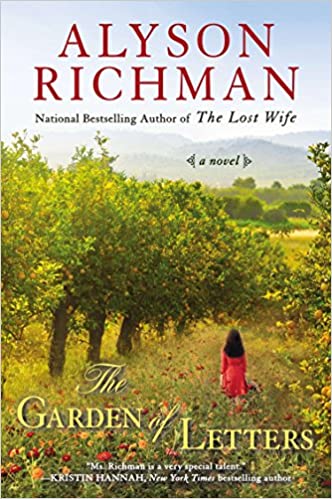
The Garden of Letters

Read: June 2021

Get this book

The Garden of Letters

by son Richman

The Garden of Letters by Alyson Richman was one of the first books I read after Jan died. It was the perfect love story to read after the loss of the love of my life. The love Jan and I shared was because we shared a portion of the soul of the other, and thus we were meant for each other from day one. 

The two primary characters – Elodie Bertolotti and Angelo Rosselli – resonated with me as they were also people who shared souls. The book “captures the hope, suspense, and romance of an uncertain era, in an epic intertwining story of first love, great tragedy, and spectacular bravery.

As I turned every page, the story filled my heart with love and happiness as it reminded me of the love that Jan and I shared.

Portofino, Italy, 1943. A young woman steps off a boat in a scenic coastal village. Although she knows how to disappear in a crowd, Elodie is too terrified to slip by the German officers while carrying her poorly forged identity papers. She is frozen until a man she’s never met before claims to know her. In desperate need of shelter, Elodie follows him back to his home on the cliffs of Portofino.

Only months before, Elodie Bertolotti was a cello prodigy in Verona, unconcerned with world events. But when Mussolini’s Fascist regime strikes her family, Elodie is drawn into the burgeoning resistance movement by Luca, a young and passionate bookseller. As the occupation looms, she discovers that her unique musical talents, and her courage, have the power to save lives.

In Portofino, young doctor Angelo Rosselli gives the frightened and exhausted girl sanctuary. He is a man with painful secrets of his own, haunted by guilt and remorse. But Elodie’s arrival has the power to awaken a sense of hope that Angelo thought was lost to him forever.

I not only recommend this book, but I am also looking forward to reading more of her novels.

Subscribe

Contact Us

×
Lone Women

Read: March 2023

Lone Women: A Novel

by Victor LaValle

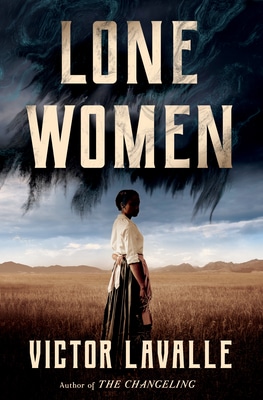
As an amateur historian, I have always enjoyed historical fiction, especially when It helps us redefine the past to be more accurate. Lone Women: A Novel by Victor LaValle is a haunting new vision of the American West from the award-winning author of The Changeling. Blue skies, empty land—and enough room to hide away a horrifying secret. Or is there? I recommend this book.

When I began reading this novel, I was unsure where it was going or what might be hidden in the steamer trunk. I was unaware of this story and found this book a well-written account of forgotten history that must be told and shared with all readers. Stay the course as Lone Women: A Novel reveals the secrets in the Trunk and the fantastic story of lone women who lived in and prospered in the old West.

Lone Women is the twenty-fifth book I have read in 2023. Although I have surpassed my reading goal, I will continue to read.

The Goodreads summary provides an overview,

Adelaide Henry carries an enormous steamer trunk with her wherever she goes. It’s locked at all times. Because when the trunk is opened, people around her start to disappear…

The year is 1914, and Adelaide is in trouble. Her secret sin killed her parents and forced her to flee her hometown of Redondo, California, in a hellfire rush, ready to make her way to Montana as a homesteader. Dragging the trunk with her at every stop, she will be one of the “lone women” taking advantage of the government’s offer of free land for those who can cultivate it—except Adelaide isn’t alone. And the secret she’s tried so desperately to lock away might be the only thing keeping her alive.

Told in Victor LaValle’s signature style, blending historical fiction, shimmering prose, and inventive horror, Lone Women is the gripping story of a woman desperate to bury her past—and a portrait of early twentieth-century America as you’ve never seen.


The Jan Lilien Education Fund sponsors ongoing sustainability and environmental awareness programs. Gifts made this month; I will match dollar-for-dollar. All donations are tax-deductible.

Subscribe

Contact Us

I receive a commission when you buy a book or product using a link on this page. Thank you for supporting Sharing Jan’s Love blog.


×
Sleep: A Novel

Read: May 2025

Get this book

Sleep: A Novel

by Honor Jones

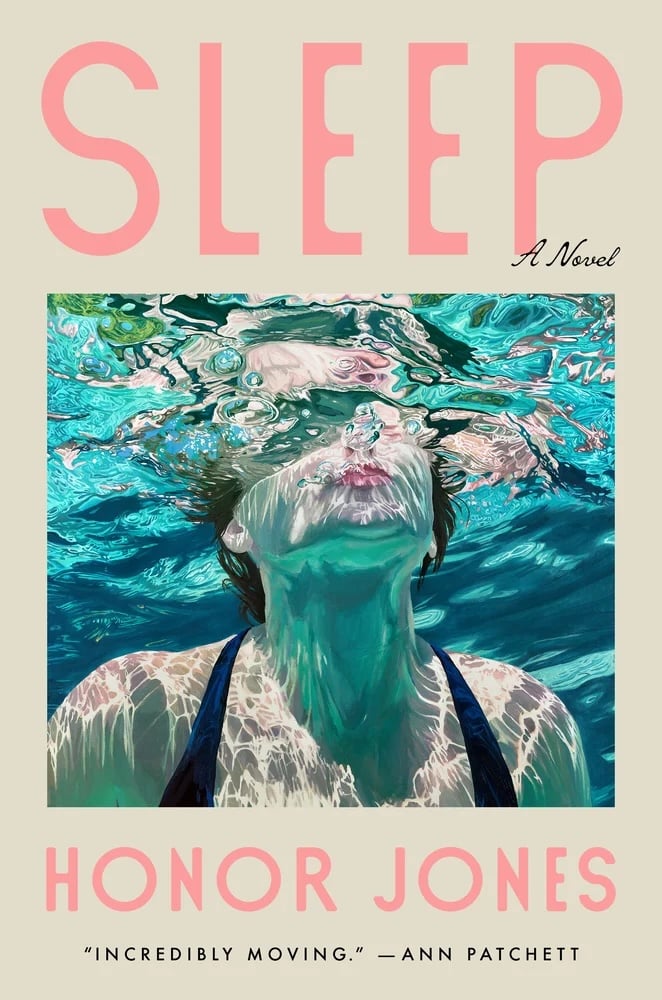
Sleep: A Novel” by Honor Jones captivates readers with its heartfelt narrative and deep insights into the human experience. This debut novel offers a genuine insight into the complex dynamics of motherhood and childhood, weaving together themes of love, secrets, and the vast array of possibilities that life can hold beyond silence.

Every parent exists in two families simultaneously: the one they were born into and the one they have created.

Ten-year-old Margaret, much like many of us, hides beneath a blackberry bush in her family’s lush backyard while her brother searches for her in a game of flashlight tag. Her childhood is filled with sunlit swimming pools, Saturday morning pancakes, and a devoted best friend. However, her family life requires careful navigation. Her mother can be as brittle and demanding as she is loving, while her father and brother embody familiar, if uncomfortable, models of masculinity. Then, late one summer, everything changes. After a series of confusing events, the simple joys of girlhood begin to fade away.

Twenty-five years later, Margaret hides under her parents’ bed, waiting for her young daughters to find her in a game of hide and seek. Newly divorced, she is learning to navigate her life as a co-parent while also discovering the pleasures of a new relationship. Yet part of her remains under the blackberry bush, frozen in time. As she strives to be a mother to her daughters and a daughter to her mother, she must confront the echoes and reflections of her past in light of her present. She grapples with what it means to keep a child safe and how much of our lives we experience in solitude.

Jones presents these emotional cycles with generosity and unflinching honesty, making the novel a compelling read that resonates on multiple levels.


Honor Jones, a senior editor at The Atlantic and formerly at The New York Times, brings her wealth of experience and insight to this novel. She lives in Brooklyn with her three children, a life experience that undoubtedly enriches her storytelling.


When you purchase a book through one of my links, I earn a small commission that helps support my passion for reading. This contribution allows me to buy even more books to share with you, creating an incredible cycle of discovering great reads together! Your support truly makes a difference!

Don’t miss out on this exciting opportunity! Enjoy a limited-time offer of 20% off your next book purchase at Bookshop.org! It’s the perfect chance to add this compelling novel to your collection.


×
Grand Rapids: A Novel

Read: January 2026

Get this book

Grand Rapids: A Novel

by Natasha Stagg

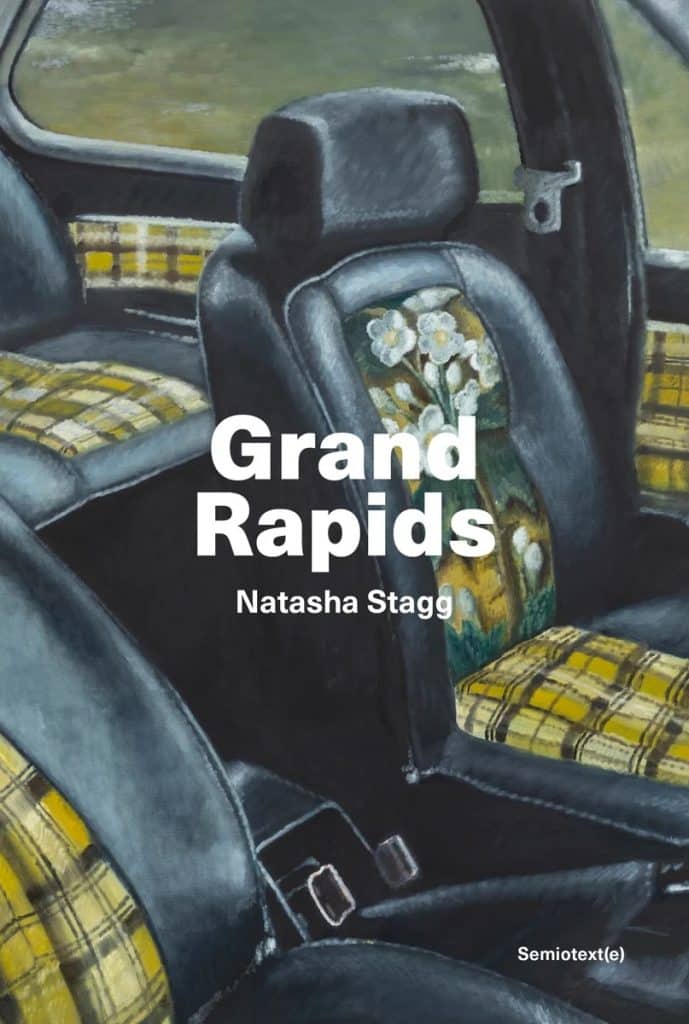
Natasha Stagg‘s “Grand Rapids” is a coming-of-age story set in the Michigan suburbs in the early 2000s. Alexander Calder’s public sculpture, “La Grande Vitesse”, installed alongside the Grand River in downtown Grand Rapids, has become a symbol of the city. Tess moved there from Ypsilanti, Michigan, in 2001—the same year her mother passed away, marking the beginning of a time when everything felt like it was moving in slow motion for her.

Thrust into adolescence nearly rudderless, fifteen-year-old Tess is intoxicated, angsty, and sexually awake. A decade later, inspired by diary entries and TV reruns, she remembers this summer in the suburbs as the one that redefined her. Its echoes of death are frozen in time, like the waves represented in Calder’s sculpture or the concrete steps leading down to the churning river. She sees Grand Rapids as a collection of architecture and emblems, another home to which she cannot return.


Natasha Stagg is the author of Surveys: A Novel (2016), Sleeveless: Fashion, Image, Media, New York 2011–2019 (2019), and Artless: Stories 2019–2023 (2023). She lives in New York City.


Discover your next favorite book and dive into a world of curated, exciting reads by purchasing through my links. You’ll have access to a diverse selection of books that I’ve personally vetted to ensure quality and enjoyment. Additionally, by supporting these selections, you’ll help me continue to provide you with more personalized recommendations. I earn a small commission from your purchase, which allows me to buy and share even more books with you. Your support truly makes a difference!


×