
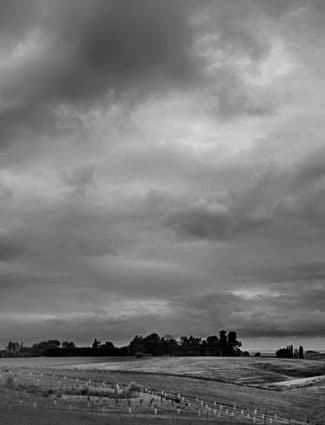
Dark, Dismal, Dreary Drizzle

Dark, Dismal, Dreary Drizzle

Estimated reading time: 0 minutes, 48 seconds
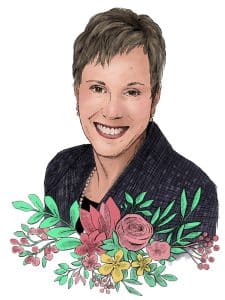
Jan Lilien

Artwork graciously provided by Emi Sato.

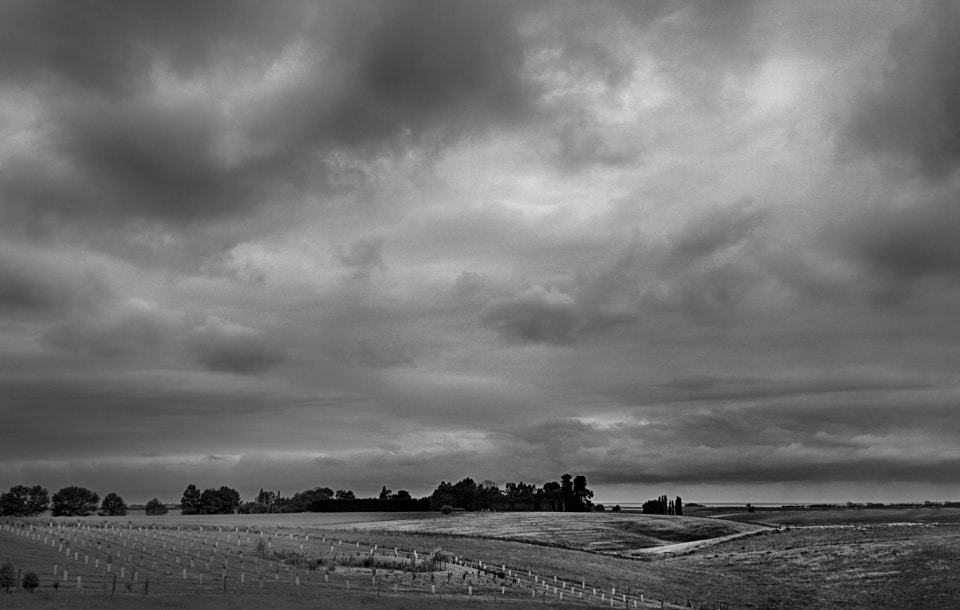
The month of May has arrived with rain showers. How will the flowers bloom if the rain storms come in May?

Waking up to a dark, dismal, dreary drizzle, I  went for my morning walk.

I walked slower and slightly less than I might have done on a bright, sunny day.

Like Jan, the love of my life, I persisted and achieved all of my exercise goals.

Jan’s whispered words of wisdom – Richard, you are capable, strong, and I believe in you – remind me even when my body would prefer to stay in bed to get up, move, and share Jan’s love.


Subscribe

Contact Us

When you buy a book or product using a link on this page, I receive a commission. Thank you for supporting Sharing Jan’s Love blog.

Share your thoughts and ideas

This site uses Akismet to reduce spam. Learn how your comment data is processed.

The Jan Lilien Education Fund!

Dark, Dismal, Dreary Drizzle
×
What Kind of Paradise

Read: July 2025

Get this book

What Kind of Paradise: A Novel

by Janelle Brown

What Kind of Paradise is a captivating and suspenseful novel by bestselling author Janelle Brown. It follows a young woman on her quest to understand self-identity. The story boldly explores complex themes, including the relationships between parents and children, the balance between nature and technology, the tension between innocence and knowledge, the losses we experience in our past, and our aspirations for the future.

This unforgettable narrative delves into what shapes us as individuals. The first thing you have to understand is that my father was my entire world, says Jane, the narrator.

Growing up in an isolated cabin in Montana in the mid-1990s, Jane knows only the world that she and her father live in: the woodstove that heats their home, the vegetable garden where they try to eke out a subsistence, the books of nineteenth-century philosophy that her father gives her to read instead of going to school. Her father is elusive about their pasts, giving Jane little beyond the fact that they once lived in the Bay Area and that her mother died in a car accident, the crash propelling him to move Jane off the grid to raise her in a Walden-esque utopia.

As Jane becomes a teenager, she begins to push against the boundaries of her restricted world. She begs to accompany her father on his occasional trips away from the cabin. But when Jane realizes that her devotion to her father has made her an accomplice to a horrific crime, she flees Montana to the only place she knows to look for answers about her mysterious past and her mother’s death: San Francisco. It is a city amid a seismic change, where her quest to understand herself will force her to reckon with both the possibilities and the perils of the fledgling internet, and where she will come to question everything she values.


Janelle Brown is the New York Times bestselling author of I’ll Be You, Pretty Things, Watch Me Disappear, All We Ever Wanted Was Everything, and This Is Where We Live. An essayist and journalist, she has written for Vogue, The New York Times, Elle, Wired, Self, Los Angeles Times, Salon, and more. She lives in Los Angeles with her husband and their two children.


When you purchase a book through one of my links, I earn a small commission that helps support my passion for reading. This contribution allows me to buy even more books to share with you, creating an incredible cycle of discovering great reads together! Your support truly makes a difference!

Enjoy a limited-time offer of 20% off your next book purchase at Bookshop.org!


×
Vigil: A Novel

Read: January 2026

Get this book

Vigil: A Novel

by George Saunders 

With the wisdom, playfulness, and explosive imagination we’ve come to expect from George Saunders, Vigil addresses some of the most pressing issues of our time, including corporate greed, the toll of capitalism, and the environmental dangers associated with progress. In doing so, it weaves a narrative that explores themes of life and death, good and evil, and the complex question of absolution. The New York Times has listed it as one of “The Novels Everyone Will Be Talking About in 2026.”

Not for the first time, Jill “Doll” Blaine finds herself hurtling toward earth, reconstituting as she falls, right down to her favorite black pumps. She plummets towards her newest charge, yet another soul she must usher into the afterlife, and lands headfirst in the circular drive of his ornate mansion.

She has performed this sacred duty 343 times since her own death. Her charges, as a rule, have been greatly comforted in their final moments. But this charge, she soon discovers, isn’t like the others. The powerful K. J. Boone claims he has nothing to regret. He lived a big, bold, epic life, and the world is better for it. Isn’t it?

Vigil transports us, careening, through the wild final evening of a complicated man. Visitors begin to arrive (worldly and otherworldly, alive and dead), clamoring for a reckoning. Birds swarm the dying man’s room; a black calf grazes on the love seat; a man from a distant, drought-ravaged village materializes; two oil-business cronies from decades past show up with chilling plans for Boone’s post-death future.


George Saunders is the author of thirteen books, including the novel Lincoln in the Bardo, which won the Booker Prize, and five collections of stories, including Tenth of December, which was a finalist for the National Book Award, and the recent collection Liberation Day (selected by former President Obama as one of his ten favorite books of 2022).

Three of Saunders’s books—Pastoralia, Tenth of December, and Lincoln in the Bardo—were chosen for The New York Times’s list of the 100 Best Books of the 21st Century. Saunders hosts the popular Story Club on Substack, which grew out of his book, A Swim in a Pond in the Rain. In 2013, he was named one of Time’s 100 Most Influential People. He teaches in the creative writing program at Syracuse University.


Discover your next favorite book and dive into a world of curated, exciting reads by purchasing through my links. You’ll have access to a diverse selection of books that I’ve personally vetted to ensure quality and enjoyment. Additionally, by supporting these selections, you’ll help me continue to provide you with more personalized recommendations. I earn a small commission from your purchase, which allows me to buy and share even more books with you. Your support truly makes a difference!


×
Sun City

Read: February 2025

Get this book

Sun City by Tove Jansson

by Tove Jansson

Today, I began reading “Sun City” by Tove Jansson, translated by Thomas Teal. I found this book mentioned in Maya Chung‘s review in The Atlantic’s Book Briefings, and as an older man, it seemed like the perfect choice for me. In “The Summer Book” and “The True Deceiver,” as well as in her many short stories, Tove Jansson consistently explores the everyday lives of older adults.

She portrays them not as a separate group but as fully fleshed individuals who experience the same jealousies, desires, and joys as any other demographic. It’s no wonder that in her travels through America in the 1970s, she became fascinated with what was then a particularly American institution, the retirement home, where older people lived in their tightly knit worlds.

In Sun City, Jansson depicts these worlds in a group portrait of residents and employees at the Berkeley Arms in St. Petersburg, Florida. As the narrative moves from character to character, the characters move through an America riven by cultural divides, facing the death of its dream. The Berkeley Arms’s newest resident finds a place among the rocking chairs and endless chatter on the veranda while other residents long for past glories, mourning their losses and killing time. Meanwhile, one of their attendants, Bounty Joe, is eagerly awaiting a letter, or even just a postcard, alerting him to the imminent return of Jesus Christ. Nobody’s normal anymore,” the bartender says, “not the old geezers and not the newborn kids.”


When you purchase a book through one of my links, I earn a small commission that helps support my passion for reading. This contribution allows me to buy even more books to share with you, creating an incredible cycle of discovering great reads together! Your support truly makes a difference!


×
Year of Wonders: A Novel

Read: November 2024

Get this book

Year of Wonders: A Novel

by Geraldine Brooks

I started reading Year of Wonders: A Novel” by Geraldine Brooks today. It is a compelling story set in 17th-century England about a village that quarantines itself to stop the spread of the plague. The book is written by the author of “The Secret Chord” and “March,” both of which won the Pulitzer Prize. Inspired by the events in Eyam, a village in the rugged hill country of England, “Year of Wonders” offers a richly detailed portrayal of a significant historical moment.

The plot begins when an infected bolt of cloth arrives from London, bringing the plague to an isolated village. A housemaid named Anna Frith emerges as an unlikely heroine and healer. Through Anna’s perspective, we experience the fateful year of 1666 as she and her fellow villagers confront the outbreak of disease and the rise of superstition. As death visits each household and villagers turn from prayer to fear-driven witch-hunting, Anna must find the strength to face the breakdown of her community and the temptations of forbidden love. Her struggle for survival and growth transforms a disastrous year into an extraordinary “year of wonders.

Written with remarkable emotional depth, the novel introduces, according to The Wall Street Journal, “an inspiring heroine” and skillfully weaves themes of love and learning, loss and renewal into a captivating and unforgettable narrative.

×
Kala: A Novel

Read: June 2024

Get this book

Kala: A Novel

by Colin Walsh

Today, I started reading “Kala: A Novel” by Colin Walsh, a gripping literary page-turner from a rising Irish talent. Former friends, estranged for twenty years, reckon with the terrifying events of the summer that changed their lives. Three old friends are reunited in the seaside town of Kinlough, on Ireland’s west coast, for the first time in years.

Helen, Joe, and Mush were part of an original group of six inseparable teenagers in the summer of 2003, with motherless, reckless Kala Lanann as their group’s white-hot center. Soon after that summer’s peak, Kala disappeared without a trace.

Now it’s fifteen years later:

  • Helen has reluctantly returned to Ireland for her father’s wedding.
  • Joe is a world-famous musician who is newly back in town.
  • Mush has never left, too scared to venture beyond the counter of his mother’s café.

But human remains are discovered in the woods. Two more girls have gone missing. As past and present begin to collide, the estranged friends are forced to confront their involvement in the events that led to Kala’s disappearance.

Against the backdrop of a town suffocating on its secrets, in a story that builds from a smolder to a stunning climax, Kala brilliantly examines the sometimes brutal costs of belonging and the battle in the human heart between vengeance and forgiveness, despair and redemption.

×
When We Cease to Understand the World

Read: September 2024

Get this book

When We Cease to Understand the World

by Benjamín Labatut

Today, I began reading When We Cease to Understand the World by Benjamín Labatut, translated by Adrian Nathan West. This book, listed on The New York Times 100 Best Books of the 21st Century, promises to be thought-provoking as it delves into the intricate connections between scientific and mathematical discovery, madness, and destruction.

In a world where scientific advancements often involve ethical dilemmas and societal implications, this book offers a unique perspective on the lives of scientists who have shaped our understanding of the world. Fritz Haber, Alexander Grothendieck, Werner Heisenberg, and Erwin Schrödinger are some of the luminaries whose troubled lives Benjamín Labatut deeply explores in his fictional examination. Labatut shows how these scientists and thinkers grappled with profound questions of existence, experiencing strokes of unparalleled genius, alienating friends and lovers, and descending into isolation and insanity. Their discoveries, some of which significantly improved human life, while others led to chaos and unimaginable suffering, continue to shape our world.

With a breakneck pace and a wealth of disturbing detail, Labatut uses fiction’s imaginative resources to tell the stories of the scientists and mathematicians who expanded our notions of the possible.

×