Autumn Reflection

Autumn’s Reflections

Estimated reading time: 0 minutes, 33 seconds

Walking in the morning twilight can be calming and liberating. Stepping from the darkness into the light reassures me that despite losing Jan, life is worth living. Today’s walk took me by the Rahway River, where a recent storm had toppled a tree into the water. The reflections in the water reminded me that sometimes what is up can, at other times, be down.

When I saw the tree, I turned to Jan to ensure she saw the reflection.

Of course, only her spirit was with me to enjoy autumn’s colorful display.

Love never dies.

Subscribe

Contact Us

Share your thoughts and ideas

This site uses Akismet to reduce spam. Learn how your comment data is processed.

The Jan Lilien Education Fund!

Autumn Reflection
×
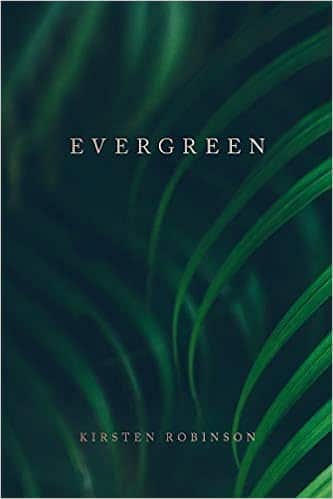
Evergreen

Read: October 2022

Get this book

Evergreen by Kirsten Robinson

by Kirsten Robinson

Evergreen by Kirsten Robinson is a tribute to the enduring resilience of human nature as we cycle through times of light and darkness, much like nature itself. In her debut book, Kirsten Robinson (@NakedWriting) lays her heart bare in a raw, relatable, and inspirational way to describe the journey of growth born out of finding beauty in breakage and love after loss.

Albeit a cliche, the book jumped off the shelf and into my hands when I saw it in Hickory & Hill General Store in Cranford.

This artfully honest collection embodies and expands upon the poetry and prose Robinson began writing under the famous social media pseudonym Naked Writing.

I highly recommend this book and intend to keep it at my bedside for a pick-me-up.

Although I have only started reading the poems, I want to share two that resonated with me.

The first one is on giving thanks.

Give thanks for all
that is good and beautiful;
the gifts you carry
people who lift you up
your big, big love
faith and trust that your life
is unfolding as it should

Give thanks for all
that has been difficult and hard;
trials tribulations tears
tests of self strength fears
all of the unknowns and days
that broke you

Without the darkness
you would not have
learned to appreciate the light

A second one on bravery.

Bravery
is not about standing tall
after you’ve climbed up
the top of a mountain

Bravery
is looking
fear
heartache
rejection
terror
loss
death
in the eye
and saying, “no,
not today”

Bravery
is standing back up
after you’ve been brought down
to your knees


The Jan Lilien Education Fund sponsors ongoing sustainability and environmental awareness programs. Gifts made this month; I will match dollar-for-dollar. All donations are tax-deductible.

Subscribe

Contact Us

I receive a commission when you buy a book or product using a link on this page. Thank you for supporting Sharing Jan’s Love.

×
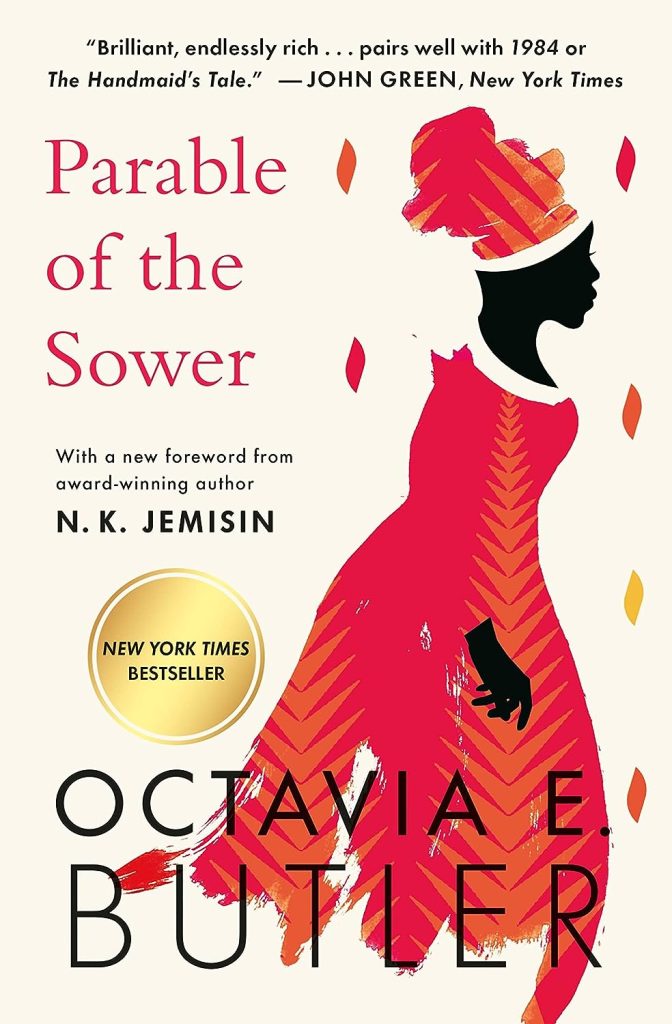
Parable of the Sower.

Read: January 2024

Get this book

Parable of the Sower

by Octavia E. Butler

Today, I started reading Octavia E. Butler‘s acclaimed post-apocalyptic novel, “Parable of the Sower.” The book depicts a world in which global climate change and economic crises have led to social chaos, particularly in California. The state is plagued by dangers such as pervasive water shortages and masses of vagabonds who are willing to do whatever it takes to survive.

The novel provides a message of hope even in a gloomy environment. It tells the story of Lauren Olamina, a fifteen-year-old girl who lives with her preacher father, family, and neighbors in a gated community. They are protected from the chaos happening around them. However, in a society where everyone is at risk, Lauren suffers from hyperempathy, a condition that makes her highly sensitive to the emotions of others.

Lauren is a young girl who is wise beyond her years and acutely aware of the dangers that her community refuses to acknowledge. She must speak up to protect her loved ones from the impending disasters that could otherwise harm them. However, her fight for survival leads to something much bigger—the emergence of a new faith and a profound insight into humanity’s destiny.


The Jan Lilien Education Fund sponsors ongoing sustainability and environmental awareness programs. Gifts made this month; I will match dollar-for-dollar. All donations are tax-deductible.

Subscribe

Contact Us

I receive a commission when you buy a book or product using a link on this page. Thank you for supporting Sharing Jan’s Love blog.


×
Invisible Child

Read: December 2021

Get this book

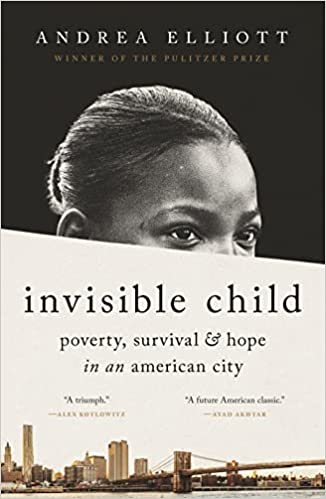
Invisible Child: Poverty, Survival & Hope in an American City

by Andrea Elliott

Invisible Child: Poverty, Survival & Hope in an American City by Andrea Elliott was a gift from my son Jon. The New York Times selected “Invisible Child” as one of the best books published this year. It is indeed one of the top books on my all-time list.

GoodReads summary provides a good overview,

The riveting, unforgettable story of a girl whose indomitable spirit is tested by homelessness, poverty, and racism in an unequal America—from Pulitzer Prize-winning journalist Andrea Elliott of The New York Times

Invisible Child follows eight dramatic years in the life of Dasani Coates, a child with imagination as soaring as the skyscrapers near her Brooklyn homeless shelter. Born at the turn of a new century, Dasani is named for the bottled water that comes to symbolize Brooklyn’s gentrification and the shared aspirations of a divided city. As Dasani grows up, moving with her tight-knit family from shelter to shelter, this story goes back to trace the passage of Dasani’s ancestors from slavery to the Great Migration north. When Dasani comes of age, New York City’s homeless crisis explodes as the chasm deepens between rich and poor.

In the shadows of this new Gilded Age, Dasani must lead her seven siblings through a thicket of problems: hunger, parental drug addiction, violence, housing instability, segregated schools, and the constant monitoring of the child-protection system. When, at age thirteen, Dasani enrolls at a boarding school in Pennsylvania, her loyalties are tested like never before. As she learns to “code switch” between the culture she left behind and the norms of her new town, Dasani starts to feel like a stranger in both places. Ultimately, she faces an impossible question: What if leaving poverty means abandoning the family you love?

By turns heartbreaking and revelatory, provocative and inspiring, Invisible Child tells an astonishing story about the power of resilience, the importance of family, and the cost of inequality. Based on nearly a decade of reporting, this book vividly illuminates some of the most critical issues in contemporary America through the life of one remarkable girl.

Jan and I were involved and knew that child poverty and homelessness needed repair. In addition, Jan lived on Washington Park across from Ft. Greene Park in 1974-75. We knew the neighborhood where much of the book’s story takes place. 

Before meeting Jan in 1973, I was both a community/tenant organizer and a youth worker. In the latter role, I made weekly hostel trips for eight to ten young boys from East Williamsburg during 1973. The trips were the first the boys had ever been outside of their neighborhood.

Many of them had imaginations like Dasani. They also had her instinct to fight. One of my first tasks was to check for any weapons.

Decades later, when I would see any of them, now adults, they would ask when we were going on another trip. I wish I had met Jan when I made those trips. She would have helped me improve them and document the impact. If I could re-write history, I would have her join me as the second adult on the hostel trips.

After that summer, it was clear my primary skills were as a community/tenant organizer. Over the next few years, my work focused on creating affordable and supportive housing.

Jan and I did meaningful work that made a difference, yet the need for a permanent solution to the crisis remains. The book highlights the crucial role of resilience, the importance of family, and the cost of inequality. As a nation, we cannot undermine those values by breaking up families, impeding resilience, and maintaining racial and economic inequality. 

The current debate in Washington over the Build Back Better legislation needs to focus not on how much we spend but on its impact on children and families

David Brooks, a conservative commentator, has supported these expenditures for what they can do to address this country’s cultural and economic crisis. 

These packages say to the struggling parents and the warehouse workers: I see you. Your work has dignity. You are paving your way. You are at the center of our national vision.

This is how you fortify a compelling moral identity, which is what all of us need if we’re going to be able to look in the mirror with self-respect. This is the cultural transformation that good policy can sometimes achieve. Statecraft is soulcraft.

If you can only read one book this year, this is the one to read. Child poverty, homelessness, and inequality impact all of us. Ending child poverty and homelessness will make us a healthier and more inclusive nation. It is time for a compelling moral call to action!

Subscribe

Contact Us

When you buy a book or product using a link on this page, I receive a commission. Thank you for supporting Sharing Jan’s Love blog.

×
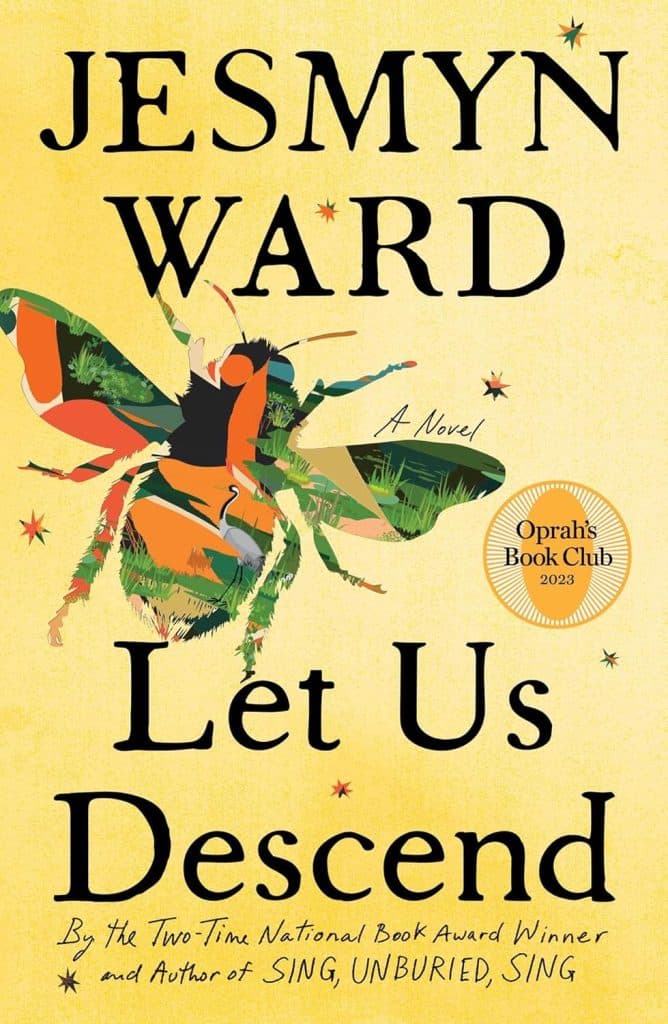
Let Us Descend: A Novel

Read: November 2023

Get this book

Let Us Descend: A Novel

by Jesmyn Ward

Today, I started reading Let Us Descend: A Novel by Jesmyn Ward. She is a two-time National Book Award winner, the youngest winner of the Library of Congress Prize for American Fiction, and a MacArthur Fellow. The book is a haunting masterpiece that is sure to become an instant classic. It tells the story of an enslaved girl in the years before the Civil War.

The book’s title is from Dante Alighieri’s Inferno: “‘Let us descend,’ the poet now began, ‘and enter this blind world.” Let Us Descend is a reimagining of American slavery, beautifully rendered yet heart-wrenching. The novel takes us on a journey from the rice fields of the Carolinas to the slave markets of New Orleans and into the fearsome heart of a Louisiana sugar plantation.

Annis is the reader’s guide through this hellscape, sold south by the white enslaver who fathered her. As Annis struggles through the miles-long march, she turns inward, seeking comfort from memories of her mother and stories of her African warrior grandmother. Throughout the journey, she opens herself to a world beyond this world, one teeming with spirits: of earth and water, of myth and history, spirits who nurture and give, and those who manipulate and take. While Ward leads readers through the descent, this, her fourth novel, is ultimately a story of rebirth and reclamation.

Let Us Descend is a magnificent novel that inscribes Black American grief and joy in the very land of the American South. Ward’s writing takes you through the rich but unforgiving forests, swamps, and rivers of the South, making this novel a masterwork for the ages.


The Jan Lilien Education Fund sponsors ongoing sustainability and environmental awareness programs. Gifts made this month; I will match dollar-for-dollar. All donations are tax-deductible.

Subscribe

Contact Us

I receive a commission when you buy a book or product using a link on this page. Thank you for supporting Sharing Jan’s Love blog.


×
The Kitchen House

Read: August 2021

Get this book

The Kitchen House

by Kathleen Grisson

The Kitchen House by Kathleen Grissom was a book that I knew very little about who I took from our bookshelf. My wife had encouraged me to read it as it focused on the south, and she knew I ofter read both about that place and enjoyed history.

From the opening pages, It became a book that I could not put down.

Two characters narrate the book. One is Lavinia, an Irish girl orphaned and brought to the plantation by the master, a ship’s captain. She is assigned to the kitchen house to work with Belle, who is the illegitimate child of the master of the estate.

As Lavinia grows under the tutelage of Belle, the story highlights the struggles of a plantation. Lavinia finds family and love from the enslaved even though she is only indentured. The distinction that skin color would have on their lives is one that Lavinia only learns at the end.

Through the unique eyes of Lavinia and Belle, Grissom’s debut novel unfolds in a heartbreaking and ultimately hopeful story of class, race, dignity, deep-buried secrets, and familial bonds.

The Kitchen House is Ms. Grissom’s first novel and impressed me and inspired me even though I have no skills as a writer.

I strongly recommend this book.

Subscribe

Contact Us

×
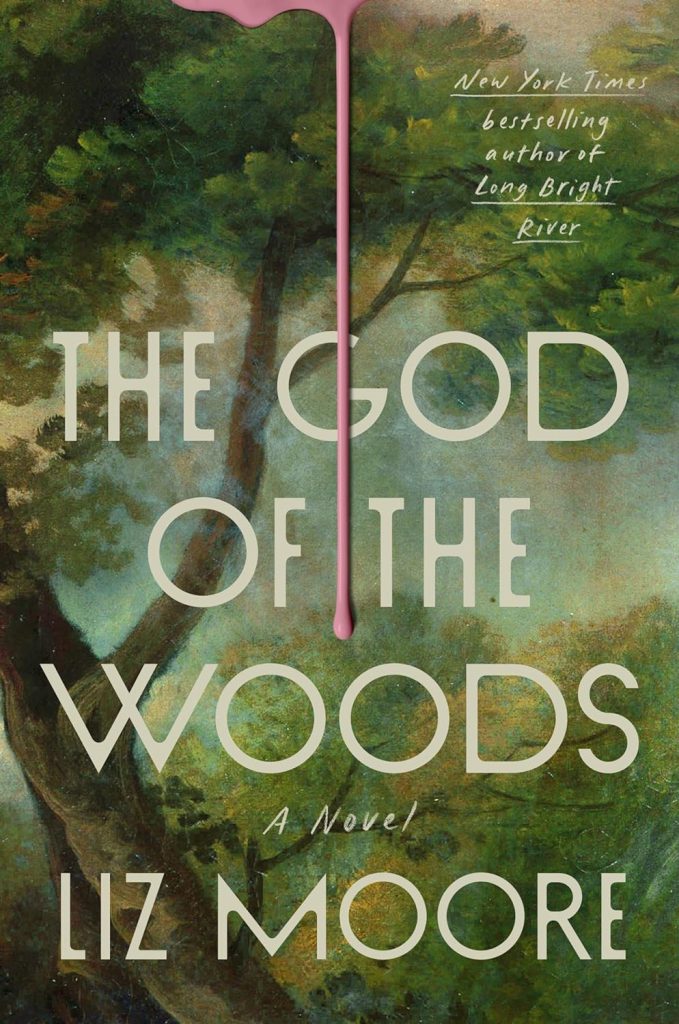
The God of the Woods: A Novel

Read: July 2024

Get this book

The God of the Woods: A Novel

by Liz Moore

I started reading “The God of the Woods: A Novel” by Liz Moore today. Several reviews recommended it as a great summer read. The story is set in August 1975, the same month and year my spouse Jan and I married. Liz Moore weaves a multi-threaded story, inviting readers into a rich and gripping dynasty of secrets and second chances.

The novel begins with a camp counselor discovering an empty bunk at an Adirondack summer camp belonging to thirteen-year-old Barbara Van Laar, who has mysteriously vanished. Barbara is not just any teenager; she is the daughter of the family that owns the camp and employs many residents. What makes this disappearance even more intriguing is that Barbara’s older brother went missing similarly fourteen years ago and was never found.

As the search for Barbara begins, the novel unfolds into a thrilling drama, delving into the deeply buried secrets of the Van Laar family and the blue-collar community working in its shadow. This novel is said to be Liz Moore’s most ambitious and wide-reaching work yet.

×