
All Day Lunch

All Day Lunch!

Estimated reading time: 0 minutes, 42 seconds

Celebrate Jan

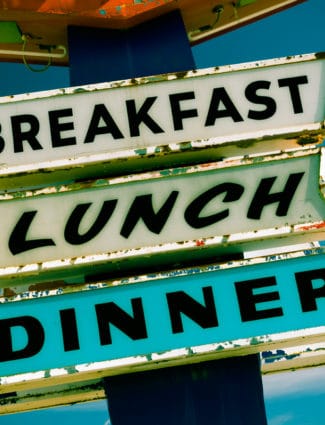
Since Jan died seven months ago, I have eaten well and improved my health by walking. Unfortunately, as I have noted previously, I have an issue with fast eating, not fast food. When I meet someone for lunch, it often becomes an all-day meal. It is not that I eat more. Instead, it is because I can talk with someone while eating.

Twice recently, the lunch lasted until no one was left except my host and me.

It will never replace dining with Jan, but it is a joy!

Love never dies; it only grows stronger.

Subscribe

Contact Us

I receive a commission when you buy a book or product using a link on this page. Thank you for supporting Sharing Jan’s Love blog.

Fast Eating

Recently, I have noticed that I devour my meals, even though I have never been a fan of fast food. I miss having my dear companion, Jan, by my side during mealtimes.

I rushed through my meals and cleaned up more efficiently without Jan. Unfortunately, I am left with nothing but the lonely hours of the night as my companion.

Share your thoughts and ideas

This site uses Akismet to reduce spam. Learn how your comment data is processed.

The Jan Lilien Education Fund!

All Day Lunch
×
Living With Loss, One Day at a Time

Read: September 2021

Get this book

Living With Loss, One Day at a Time

by Rachel Blythe Kodanaz

Living With Loss, One Day at a Time by Rachel Blythe Kodanaz is the book I would recommend for anyone beginning or in the early stages of grief. It should be on the griever’s nightstand so they can start and end their day with reading.

Ms. Kodanaz has presented at my bereavement groups and has been an inspiration. She encouraged me not only to continue writing but also to share my thoughts publicly.

Usually, I only write a review once I have finished the book. However, this is a collection of thoughts for each day of the journey. Over the first weekend, I read up to the number of days since my wife died. Now I will read the daily message each day. When I get to the end of the year, I will start over.

There are many essential gems in the daily readings. The one for Day 9, Love Never Dies, jumped off the page due to my writings on the same theme.

Love Never Dies. Your loved one has passed away, but the love you shared has not died. The memories you created, the connection you built together, and your affection toward one another will live forever.

Embrace the love and cherish the memories, as they will always be a part of you remain in your heart.

There are at least a dozen others that I have earmarked for future streams or even the basis of future posts.

Subscribe

Contact Us

×
The Hunter: A Novel

Read: March 2024

Get this book

The Hunter: A Novel

by Tana French

Today, I began reading “The Hunter: A Novel” by Tana French, often called the Queen of Irish crime fiction. The story takes place in a small village in the West of Ireland during a hot summer. Two men arrive, one returning home and the other seeking riches. However, one of them is also seeking death.

Cal Hooper is a retired Chicago police officer who moved to rural Ireland for a peaceful life. He has built a relationship with a local woman named Lena and has been mentoring Trey Reddy, a troubled teenager on a better path. But when Trey’s long-lost father returns, accompanied by an English millionaire and a plan to find gold in the townland, everything they have built is threatened. Cal and Lena are willing to do whatever it takes to protect Trey, but Trey is not interested in protection. What she wants is revenge.

This novel, written by the acclaimed author described by The New York Times as “in a class by herself,” tells a nuanced and atmospheric tale about what we are willing to do for our loved ones, what we will do for revenge, and what we may have to sacrifice when the two collide.

×
The Secrets we Left Behind

Read: March 2022

Get this book

The Secrets We Left Behind

The Secrets We Left Behind by Soraya M. Lane is a historical fiction that raises the question, where were the women after Dunkirk and the fall of France? When World War II appeared to have been lost with a Nazi victory. Ms. Lane watched the movie Dunkirk and then researched that time and the women’s possible roles during that difficult moment in history.

She connected the evacuation at Dunkirk to the Massacre at Le Paradis, fifty miles away, to connect a British nurse and two French women whose strength helps them survive Nazi-occupied France. Three British male soldiers, two of whom survived the massacre and one who escaped Dunkirk, have secondary roles in the novel. 

The Secrets We Left Behind is the story of the three strong women and their efforts to survive the occupation while hiding the three soldiers. This focus on the role of women has been long overdue in history. Ms. Lane, who studied to be a lawyer, has found a career as a writer. The Secrets We Left Behind is the first book I have read, but it will not be the last one by Ms. Lane that I read.

I strongly recommend this book!

The Goodreads synopsis provides an overview of the novel.

How far will they go for family, friendship, and love? Occupied France, 1940. When the staff at a field hospital draw straws to find out who will join the evacuation from Dunkirk, Nurse Cate is left behind. But when the Nazis arrive to claim prisoners of war, she takes her chance and flees into the night, taking one patient with her.

Fifty miles away, the surrendering soldiers of the Royal Norfolk Regiment are shot dead by the advancing Germans. Beneath the pile of bodies, two men survive, crawling to the safety of a nearby farmhouse, where sisters Elise and Adelaide risk their lives to take them in. When Cate, too, arrives at their door with her injured soldier, the pressure mounts.

The sisters are risking everything to keep their visitors safe. But with the Nazis coming ever closer and relationships in the farmhouse intensifying, they must all question the sacrifices they are willing to make for the lives of others. How far will they go for family, friendship, and love?

Register to Attend Celebrate Jan Day

Subscribe

Contact Us

When you buy a book or product using a link on this page, I receive a commission. Thank you for supporting Sharing Jan’s Love blog.

×
The Heaven & Earth Grocery Store

Read: November 2023

Get this book

The Heaven & Earth Grocery Store

by James McBride

I started reading The Heaven & Earth Grocery Store: A Novel by James McBride today. It’s the seventy-first book I’ve read this year and the two hundredth since January 1, 2019. The novel’s narrative begins in 1972 when workers in Pottstown, Pennsylvania, were digging the foundations for a new development. They were surprised to find a skeleton at the bottom of the well. The identity of the skeleton and how it ended up there were long-held secrets that the residents of Chicken Hill kept.

Jewish immigrants and African Americans lived together in this run-down neighborhood and shared their aspirations and hardships. Moshe and Chona Ludlow resided in Chicken Hill when Moshe integrated his theatre, and Chona ran the Heaven & Earth Grocery Store. When the state officials searched for a deaf boy to institutionalize him, it was Chona and Nate Timblin, the Black janitor at Moshe’s theatre and the unofficial leader of the Black community on Chicken Hill, who collaborated to keep the boy safe.

As the stories of these characters intertwine and develop, it becomes evident how much the individuals living on the outskirts of white, Christian America struggle to survive and what they must do to make it through. As the truth is ultimately disclosed regarding the events that occurred on Chicken Hill, including the involvement of the town’s white establishment, McBride illustrates to us that, even in the darkest of times, love and community – the very essence of heaven and earth – help us endure.

Bringing his masterly storytelling skills and deep faith in humanity to The Heaven & Earth Grocery Store, James McBride has written a novel as compassionate as Deacon King Kong and as inventive as The Good Lord Bird.

The Jan Lilien Education Fund sponsors ongoing sustainability and environmental awareness programs. Regarding gifts made this month, I will match dollar for dollar. All donations are tax-deductible.

Subscribe

Contact Us

I receive a commission when you buy a book or product using a link on this page. Thank you for supporting Sharing Jan’s Love blog.


×
Invisible Child

Read: December 2021

Get this book

Invisible Child: Poverty, Survival & Hope in an American City

by Andrea Elliott

Invisible Child: Poverty, Survival & Hope in an American City by Andrea Elliott was a gift from my son Jon. The New York Times selected “Invisible Child” as one of the best books published this year. It is indeed one of the top books on my all-time list.

GoodReads summary provides a good overview,

The riveting, unforgettable story of a girl whose indomitable spirit is tested by homelessness, poverty, and racism in an unequal America—from Pulitzer Prize-winning journalist Andrea Elliott of The New York Times

Invisible Child follows eight dramatic years in the life of Dasani Coates, a child with imagination as soaring as the skyscrapers near her Brooklyn homeless shelter. Born at the turn of a new century, Dasani is named for the bottled water that comes to symbolize Brooklyn’s gentrification and the shared aspirations of a divided city. As Dasani grows up, moving with her tight-knit family from shelter to shelter, this story goes back to trace the passage of Dasani’s ancestors from slavery to the Great Migration north. When Dasani comes of age, New York City’s homeless crisis explodes as the chasm deepens between rich and poor.

In the shadows of this new Gilded Age, Dasani must lead her seven siblings through a thicket of problems: hunger, parental drug addiction, violence, housing instability, segregated schools, and the constant monitoring of the child-protection system. When, at age thirteen, Dasani enrolls at a boarding school in Pennsylvania, her loyalties are tested like never before. As she learns to “code switch” between the culture she left behind and the norms of her new town, Dasani starts to feel like a stranger in both places. Ultimately, she faces an impossible question: What if leaving poverty means abandoning the family you love?

By turns heartbreaking and revelatory, provocative and inspiring, Invisible Child tells an astonishing story about the power of resilience, the importance of family, and the cost of inequality. Based on nearly a decade of reporting, this book vividly illuminates some of the most critical issues in contemporary America through the life of one remarkable girl.

Jan and I were involved and knew that child poverty and homelessness needed repair. In addition, Jan lived on Washington Park across from Ft. Greene Park in 1974-75. We knew the neighborhood where much of the book’s story takes place. 

Before meeting Jan in 1973, I was both a community/tenant organizer and a youth worker. In the latter role, I made weekly hostel trips for eight to ten young boys from East Williamsburg during 1973. The trips were the first the boys had ever been outside of their neighborhood.

Many of them had imaginations like Dasani. They also had her instinct to fight. One of my first tasks was to check for any weapons.

Decades later, when I would see any of them, now adults, they would ask when we were going on another trip. I wish I had met Jan when I made those trips. She would have helped me improve them and document the impact. If I could re-write history, I would have her join me as the second adult on the hostel trips.

After that summer, it was clear my primary skills were as a community/tenant organizer. Over the next few years, my work focused on creating affordable and supportive housing.

Jan and I did meaningful work that made a difference, yet the need for a permanent solution to the crisis remains. The book highlights the crucial role of resilience, the importance of family, and the cost of inequality. As a nation, we cannot undermine those values by breaking up families, impeding resilience, and maintaining racial and economic inequality. 

The current debate in Washington over the Build Back Better legislation needs to focus not on how much we spend but on its impact on children and families

David Brooks, a conservative commentator, has supported these expenditures for what they can do to address this country’s cultural and economic crisis. 

These packages say to the struggling parents and the warehouse workers: I see you. Your work has dignity. You are paving your way. You are at the center of our national vision.

This is how you fortify a compelling moral identity, which is what all of us need if we’re going to be able to look in the mirror with self-respect. This is the cultural transformation that good policy can sometimes achieve. Statecraft is soulcraft.

If you can only read one book this year, this is the one to read. Child poverty, homelessness, and inequality impact all of us. Ending child poverty and homelessness will make us a healthier and more inclusive nation. It is time for a compelling moral call to action!

Subscribe

Contact Us

When you buy a book or product using a link on this page, I receive a commission. Thank you for supporting Sharing Jan’s Love blog.

×
Everything's Fine

Read: June 2023

Get this book

Everything’s Fine

by Cecilia Rabess

I started reading Everything’s Fine by Cecilia Rabess today, a stunning debut introducing a talented new author. However, I found it easier to decide to read it after reading in the New York Times that some reviewers on Goodreads criticized the book’s premise without reading it. It’s unfair to criticize something after experiencing it first-hand.

On Jess’s first day at Goldman Sachs, she’s disappointed to learn that she’ll be working with Josh, a white conservative she used to argue with in college. Josh enjoys playing devil’s advocate and can be challenging to deal with.

But when Jess realizes she’s the only Black woman on the team and is being overlooked, Josh offers his support in imperfect but meaningful ways. As they develop an unlikely friendship with undeniable chemistry, it eventually becomes an electrifying romance that shocks them both.

Despite their differences, their attraction brings them together, and Jess starts to question whether happiness is more important than being right. However, as the cultural and political landscape shifts in 2016, Jess, who is just discovering herself, must decide what she’s willing to compromise for love and if everything is excellent. This poignant and sharp novel by Cecilia Rabess asks if they will and if they should.


The Jan Lilien Education Fund sponsors ongoing sustainability and environmental awareness programs. Gifts made this month; I will match dollar-for-dollar. All donations are tax-deductible.

Subscribe

Contact Us

I receive a commission when you buy a book or product using a link on this page. Thank you for supporting Sharing Jan’s Love blog.


×