
Jan’s Purple Wind Sculpture
Estimated reading time: 0 minutes, 1 second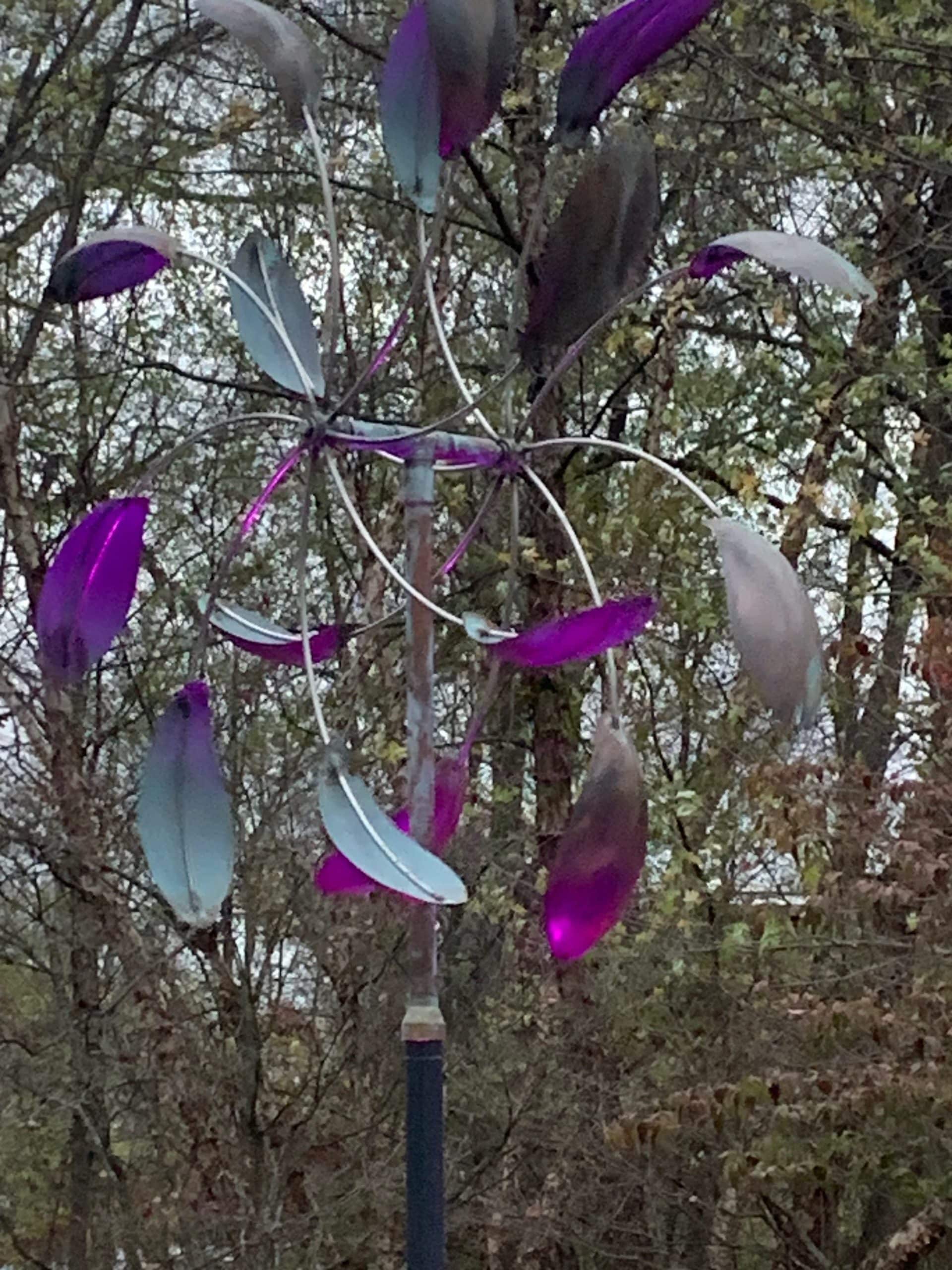
Jan’s Purple Wind Sculpture
Jan’s Purple Wind Sculpture
Subscribe to Sharing Jan's Love Newsletter!
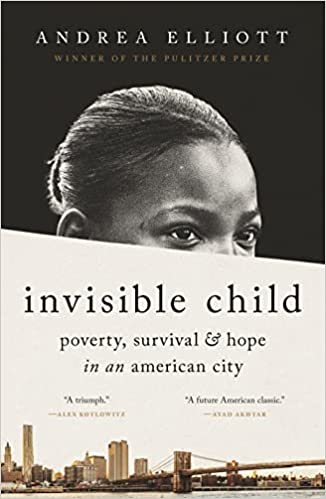
by Andrea Elliott
Invisible Child: Poverty, Survival & Hope in an American City by Andrea Elliott was a gift from my son Jon. The New York Times selected “Invisible Child” as one of the best books published this year. It is indeed one of the top books on my all-time list.
GoodReads summary provides a good overview,
The riveting, unforgettable story of a girl whose indomitable spirit is tested by homelessness, poverty, and racism in an unequal America—from Pulitzer Prize-winning journalist Andrea Elliott of The New York Times
Invisible Child follows eight dramatic years in the life of Dasani Coates, a child with imagination as soaring as the skyscrapers near her Brooklyn homeless shelter. Born at the turn of a new century, Dasani is named for the bottled water that comes to symbolize Brooklyn’s gentrification and the shared aspirations of a divided city. As Dasani grows up, moving with her tight-knit family from shelter to shelter, this story goes back to trace the passage of Dasani’s ancestors from slavery to the Great Migration north. When Dasani comes of age, New York City’s homeless crisis explodes as the chasm deepens between rich and poor.
In the shadows of this new Gilded Age, Dasani must lead her seven siblings through a thicket of problems: hunger, parental drug addiction, violence, housing instability, segregated schools, and the constant monitoring of the child-protection system. When, at age thirteen, Dasani enrolls at a boarding school in Pennsylvania, her loyalties are tested like never before. As she learns to “code switch” between the culture she left behind and the norms of her new town, Dasani starts to feel like a stranger in both places. Ultimately, she faces an impossible question: What if leaving poverty means abandoning the family you love?
By turns heartbreaking and revelatory, provocative and inspiring, Invisible Child tells an astonishing story about the power of resilience, the importance of family, and the cost of inequality. Based on nearly a decade of reporting, this book vividly illuminates some of the most critical issues in contemporary America through the life of one remarkable girl.
Jan and I were involved and knew that child poverty and homelessness needed repair. In addition, Jan lived on Washington Park across from Ft. Greene Park in 1974-75. We knew the neighborhood where much of the book’s story takes place.
Before meeting Jan in 1973, I was both a community/tenant organizer and a youth worker. In the latter role, I made weekly hostel trips for eight to ten young boys from East Williamsburg during 1973. The trips were the first the boys had ever been outside of their neighborhood.
Many of them had imaginations like Dasani. They also had her instinct to fight. One of my first tasks was to check for any weapons.
Decades later, when I would see any of them, now adults, they would ask when we were going on another trip. I wish I had met Jan when I made those trips. She would have helped me improve them and document the impact. If I could re-write history, I would have her join me as the second adult on the hostel trips.
After that summer, it was clear my primary skills were as a community/tenant organizer. Over the next few years, my work focused on creating affordable and supportive housing.
Jan and I did meaningful work that made a difference, yet the need for a permanent solution to the crisis remains. The book highlights the crucial role of resilience, the importance of family, and the cost of inequality. As a nation, we cannot undermine those values by breaking up families, impeding resilience, and maintaining racial and economic inequality.
The current debate in Washington over the Build Back Better legislation needs to focus not on how much we spend but on its impact on children and families.
David Brooks, a conservative commentator, has supported these expenditures for what they can do to address this country’s cultural and economic crisis.
These packages say to the struggling parents and the warehouse workers: I see you. Your work has dignity. You are paving your way. You are at the center of our national vision.
This is how you fortify a compelling moral identity, which is what all of us need if we’re going to be able to look in the mirror with self-respect. This is the cultural transformation that good policy can sometimes achieve. Statecraft is soulcraft.
If you can only read one book this year, this is the one to read. Child poverty, homelessness, and inequality impact all of us. Ending child poverty and homelessness will make us a healthier and more inclusive nation. It is time for a compelling moral call to action!
When you buy a book or product using a link on this page, I receive a commission. Thank you for supporting Sharing Jan’s Love blog.
by Charlotte Mendelson
I began reading Charlotte Mendelson‘s novel, The Exhibitionist, today. The book tells the story of Lucia and Ray, two artists whose marriage starts to fall apart over a weekend. It explores themes such as art, sacrifice, family dynamics, queer desire, and personal freedom. Charlotte Mendelson has created yet another exceptional novel with The Exhibitionist, ranked as the year’s novel by The Times of London, and described as “furiously funny.”
The Hanrahan family is coming together for an important weekend. Ray Hanrahan, a well-known artist with a big ego, is preparing for his first exhibition in many years. His eldest daughter, Leah, is his biggest supporter. His son, Patrick, has decided to pursue his own path. His youngest daughter, Jess, has a big decision to make. Ray’s wife, Lucia, is also an artist but has always prioritized her roles as a wife and mother. She is keeping secrets of her own and must decide which desires to pursue as the weekend progresses and the exhibition approaches.
The Jan Lilien Education Fund sponsors ongoing sustainability and environmental awareness programs. Gifts made this month; I will match dollar-for-dollar. All donations are tax-deductible.
I receive a commission when you buy a book or product using a link on this page. Thank you for supporting Sharing Jan’s Love blog.
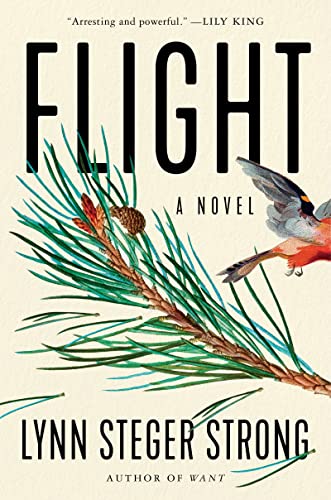
by Lynn Steger Strong
Flight: A Novel by Lynn Steger Strong is a novel about family, ambition, precarity, art, and desire, forming a decisive next step from a brilliant chronicler of our time. The book has been on my to-read list for a few months. A New Yorker Best Books of 2022, it seemed like a good start on my 2023 Goodreads Reading challenge. Flight is the first book I read in 2023. Last year I read seventy-four books, and each helped me with my grief journey.
I recommend this novel as it is a page-turner highlighting the difficulty families experience after a loss. As a culture, we are experiencing declining social connections, including within families. Flight is an excellent effort to define the crisis.
Although several possible resolutions to the conflict became clear by the middle of the novel, Ms. Strong told the story so that until the end, it was unclear how or if it would be resolved. In addition, enough unresolved issues remained so that.
The Goodreads summary provides an overview,
It’s December twenty-second and siblings Henry, Kate, and Martin have converged with their spouses on Henry’s house in upstate New York. This is the first Christmas the siblings are without their mother, the first not at their mother’s Florida house. Over the course of the next three days, old resentments and instabilities arise as the siblings, with a gaggle of children afoot, attempt to perform familiar rituals, while also trying to decide what to do with their mother’s house, their sole inheritance. As tensions rise, the whole group is forced to come together unexpectedly when a local mother and daughter need help.
With the urgency and artfulness that cemented her previous novel Want as “a defining novel of our age” (Vulture), Strong once again turns her attention to the structural and systemic failings that are haunting Americans, but also to the ways in which family, friends, and strangers can support each other through the gaps
The Jan Lilien Education Fund sponsors ongoing sustainability and environmental awareness programs. Gifts made this month; I will match dollar-for-dollar. All donations are tax-deductible.
I receive a commission when you buy a book or product using a link on this page. Thank you for supporting Sharing Jan’s Love blog.
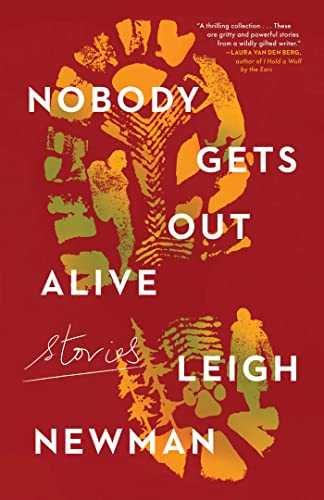
by Leigh Newman
Nobody Gets Out Alive: Stories by Leigh Newman, set in Newman’s home state of Alaska and an exciting virtuosic story collection about women navigating the wilds of a male-dominated society. Nobody Gets Out Alive is a collection of dazzling, courageous stories about women struggling to survive, not just grizzly bears and charging moose but the raw, exhausting legacy of their marriages and families.
There are moments when characters in a story leap off the page and become, for a few moments, our soul mates. Ms. Newman, in each of these memorable stories, engages so fully that each character becomes so alive that I wanted to know more about their lives.
The stores span both the recent past and the founding of Anchorage. I found all of them to be stories I would happily read again. The recent stories highlight the common desire for a freer, more inclusive world for women. A woman forced to sell her home or a new bride testing limits on her return home resonates as themes of the modern world.
The final story is set in 1915 in a railroad camp. The story highlights the founding of Anchorage. As one who likes historical fiction, I was so engaged that I could not take a break. I was not expecting the outspoken heiress would stage an elaborate theatrical to seduce the wife of her husband’s employer.
I may never visit Alaska at my age, but I now know enough to feel I have lived in Seward’s Folly.
I decided to read this book after reading Ms. Newman wrote a review of The Faraway World. Ms. Newman is a skilled writer, and I highly recommend this collection and look forward to reading more of her stories in the future.
The Goodreads summary provides an overview,
In “Howl Palace”—winner of The Paris Review’s Terry Southern Prize, a Best American Short Story, and Pushcart Prize selection—an aging widow struggles with a rogue hunting dog and the memories of her five ex-husbands while selling her house after bankruptcy. In the title story, “Nobody Gets Out Alive,” newly married Katrina visits her hometown of Anchorage. She blows up her wedding reception by flirting with the host and running off with an enormous mastodon tusk.
Alongside stories set in today’s Last Frontier—rife with suburban sprawl, global warming, and opioid addiction—Newman delves into the remote wilderness of the 1970s and 80s, bringing to life young girls and single moms in search of a wilder, more accessible, more adventurous America. The final story takes place in a railroad camp in 1915, where an outspoken heiress stages an elaborate theatrical to seduce the wife of her husband’s employer, revealing how this masterful storyteller is “not only writing unforgettable, brilliantly complex characters, she’s somehow inventing souls” (Kimberly King Parsons, author of Black Light).
The Jan Lilien Education Fund sponsors ongoing sustainability and environmental awareness programs. Gifts made this month; I will match dollar-for-dollar. All donations are tax-deductible.
I receive a commission when you buy a book or product using a link on this page. Thank you for supporting Sharing Jan’s Love blog.
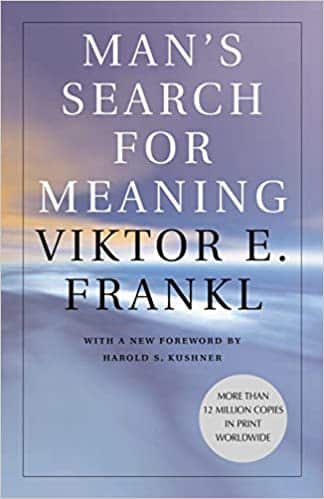
by Viktor E. Frankl
I recall reading portions of Man’s Search for Meaning by Viktor E. Frankl at various times, but I never completed the book. However, recently, eight and a half months after Jan’s passing, my wife and I were discussing in one of my groups. Frankl’s theory of logotherapy, which derives from the Greek word for “meaning,” centers around the idea that the primary human drive is not pleasure, as Freud believed, but rather the search for what gives life meaning. I now have a framework for my life without Jan.
For those like me who are widows, Frankl understands suffering,
In some ways, suffering ceases to be suffering at the moment it finds a meaning, such as the meaning of a sacrifice.
Jan and I lived meaningful lives. My challenge now is to continue to find meaning in my life without Jan.
As Frankl writes,
Those who have a ‘why’ to live can bear with almost any ‘how.
The love Jan and I shared was one of my primary sources of meaning. In addition, I stopped working full-time at the end of 2018 and struggled to replace the purpose I had gained from repairing the world. After Jan died, I suffered the “provisional existence of an unknown limit, ” which Frankl experienced when he was in the concentration camps.
I have replaced the loss of meaning and purpose with a series of activities:
I am also beginning to serve on the board of a few non-profits. It is time to transition from hands-on work to providing leadership in a different way.
Will this be enough to give my life meaning?
Ultimately, man should not ask what the meaning of his life is, but rather must recognize that it is he who is asked. In a word, each man is questioned by life, and he can only answer to life by answering for his own life; to life, he can only respond by being responsible.
I must continue to focus on my search for meaning, as life will inevitably change over time.
My grief journey has taught me that love never dies,
For the first time in my life, I saw the truth as it is set into song by so many poets, proclaimed as the final wisdom by so many thinkers. The truth – that Love is the ultimate and highest goal to which man can aspire. Then I grasped the meaning of the greatest secret that human poetry, thought, and belief have to impart: The salvation of man is through love and in love.
My path forward is to keep Jan’s love alive and continue to share it with others.
I recommend this book without reservation.
When you purchase a book through one of my links, I earn a small commission that helps support my passion for reading. This contribution allows me to buy even more books to share with you, creating an incredible cycle of discovering great reads together! Your support truly makes a difference!
Enjoy a limited-time offer of 20% off your next book purchase at Bookshop.org!
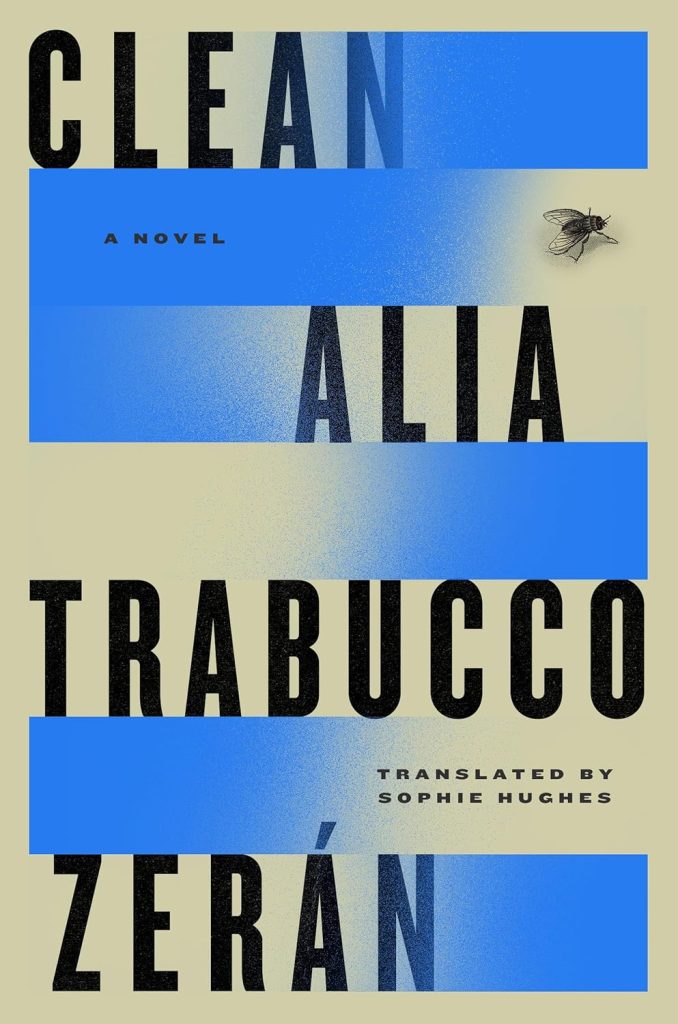
by Alia Trabucco Zerán
Today, I delved into the unique narrative of ‘Clean: A Novel‘ by Alia Trabucco Zerán, translated by Sophie Hughes. This compelling novel, shortlisted for the Femina Etranger and Medicis Etranger Prizes, unfolds the story of a maid who has witnessed a lot and a family on the brink of collapse. The narrative is centered around a young girl’s death, with the family’s maid being the critical witness under interrogation, tasked with recounting the events leading up to the tragedy.
Estela’s journey from the countryside, leaving her mother behind, to work for the señor and señora when their only child was born is poignant. Their ad for a housemaid: ‘Smart appearance, full-time,’ was her ticket to earning enough to support her mother and return home. Estela cleaned their laundry, wiped their floors, and made their meals for seven years, but she also became privy to their secrets, witnessed their conflicts, and raised their daughter. She heard the rats in the ceiling, saw the looks the señor gave the señora, and knew about the poison in the cabinet, the gun, the daughter’s rebellion, the mother’s coldness, and the father’s distance. She experienced it all.
After a series of shocking betrayals and revelations, Estela’s silence becomes her shield, broken only now to reveal how it all unraveled. Is this a tale of vengeance or a confession? A clash of classes or a lesson in caution? With each page turn, ‘Clean: A Novel‘ builds tension, offering a gripping, incisive exploration of power, domesticity, and betrayal from an international star at the peak of her storytelling prowess.