
A Healthy Baby Boy!

Estimated reading time: 10 minutes, 26 seconds
Call the Midwife

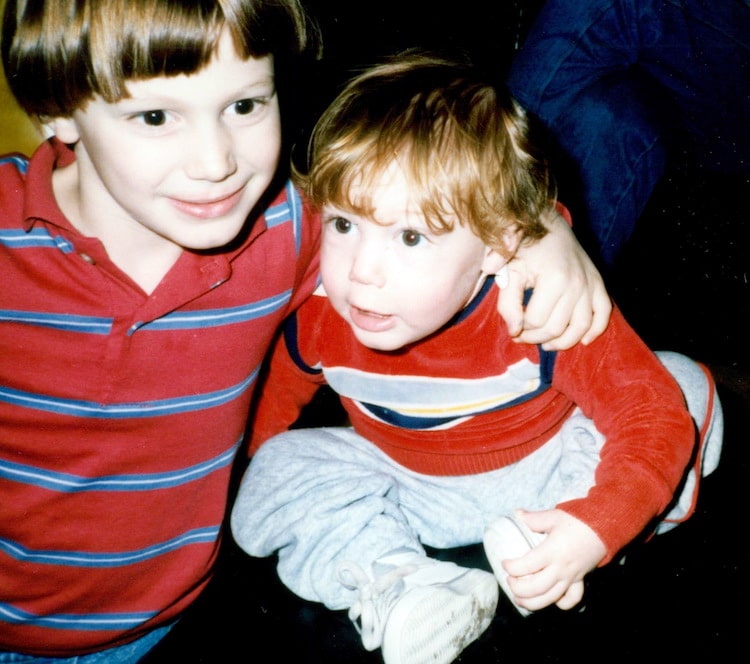
We should call the midwife,” I said again as Jan’s contractions were getting closer. The three times I had suggested we call, she had said no. It’s the middle of the night; I do not want to bother the Midwife. 

This time I insisted. If we do not call, I will have to be your Midwife for an at-home delivery!”

“What time is it?”

I responded that it was 3 am.

OK, you can call,” Jan said in the middle of another contraction. But I am sure she will say we can wait until morning.”

The Midwife answered on the second ring. She explained how the contractions were more frequent.

“You should come to Methodist Hospital now,” was the response.

When I told Jan, she wanted to speak to the Midwife. 

Fortunately, she got the same answer with even greater urgency.

I helped Jan out of bed and helped her get dressed. Grabbed the go-bag and helped Jan down the stairs.

When we arrived at the hospital, the triage nurses looked at Jan, quickly got a wheelchair, and rushed her upstairs. 

“We need to get you upstairs before the baby arrives,” said one of the nurses. 

I started to follow them. 

“You need to check her in,” they said, pointing to the left.

I pulled out my wallet and took out the insurance cards. 

The person doing the intake was moving slower than the Lazy l train.

“My wife’s having a baby,” I exclaimed.

Just a few more minutes was the response.

All I could think of us was that I would miss the birth!


Next Page

Pages: 1 2 3 4 5

7 comments add your comment

  1. What a great way to remember Your dear wife! I will spend some time reading past articles. Keep going, Richard! Great job!!!

    • Hugo, thank you so very much for your kind words.

      I write from my heart about Jan. The words flow like fresh honey.

      As Helen Keller wrote,

      “What we have once enjoyed we can never lose. All that we love deeply becomes a part of us.”

      Let me know if you find other articles of interest and feel free to share the newsletter with anyone you believe might enjoy reading it.

Share your thoughts and ideas

This site uses Akismet to reduce spam. Learn how your comment data is processed.

The Jan Lilien Education Fund!

Self-Portrait with Ghost: Short Stories

Read: December 2022

Get this book

Self-Portrait with Ghost: Short Stories

by Meng Jin

Self-Portrait with Ghost: Short Stories by Meng Jin was written during the turbulent years of the Trump administration and the first year of the pandemic, these stories explore intimacy and isolation, coming of age, and coming to terms with the repercussions of past mistakes, fraying relationships, and surprising moments of connection. I highly recommend Self-Portrait with Ghost: Short Stories!

Each story speaks so clearly to the loneliness epidemic that confronts our world. I would read one short story and promise to stop and wait until another day to read the next one. Instead

One phrase that will always remain with me is: “The hallucinatory quality of grief.” As a widow, the phrase struck a chord that will forever resonate in my soul.

This is the seventy-third book I have read this year.

The Goodreads summary provides an overview,

Meng Jin’s critically acclaimed debut novel, Little Gods, was praised as “spectacular and emotionally polyphonic (Omar El-Akkad, BookPage), “powerful” (Washington Post), and “meticulously observed, daringly imagined” (Claire Messud). Jin turns her considerable talents into short fiction in ten thematically linked stories.

Moving between San Francisco and China, and from unsparing realism to genre-bending delight, Self-Portrait with Ghost considers what it means to live in an age of heightened self-consciousness, seemingly unlimited access to knowledge, and little actual power.

Page-turning, thought-provoking, and wholly unique, Self-Portrait with Ghost further establishes Meng Jin as a writer who “reminds us that possible explanations in our universe are as varied as the beings who populate it” (Paris Review).


The Jan Lilien Education Fund sponsors ongoing sustainability and environmental awareness programs. Gifts made this month; I will match dollar-for-dollar. All donations are tax-deductible.

Subscribe

Contact Us

I receive a commission when you buy a book or product using a link on this page. Thank you for supporting Sharing Jan’s Love blog.


×
Lessons in Chemistry

Read: January 2023

Get this book

Lessons in Chemistry: A Novel

by Bonnie Garmus

Lessons in Chemistry: A Novel by Bonnie Garmus is a must-read book as it reimagines the gender dynamics of the 1950s and early 1960s. Elizabeth Zott, a chemist, struggles in a male-dominated world where her work is not taken seriously until she meets Calvin Evans. She describes their relationship, “Calvin and I were soulmates,” like Jan and I viewed ours.

What underlies their love affair was “a mutual respect for the other’s capabilities.” “Do you know how extraordinary that is?” she said. That a man would treat his lover’s work as seriously as his own?” Of course, every relationship should be based on the same dynamics, but even after seventy years, we still struggle to achieve equality in our society.

I highly recommend this novel. Reading the story, the Zott/Evans relationship reminded me of the love that Jan and I shared. I know that Jan would have loved this book.

Laugh-out-loud funny, shrewdly observant, and studded with a dazzling cast of supporting characters, Lessons in Chemistry is as original and vibrant as its protagonist. Like Jan, Elizabeth Zott, the protagonist, would be the first to point out that there is no such thing as an average woman. Chemist Elizabeth Zott is not your average woman.

Although Jan and Elizabeth had much in common, I felt Madeline (aka Mad), Elizabeth’s daughter, was Jan’s alter ego in this novel. Jan was smart and ahead of her classmates, just like Mad was. She was breaking barriers when she was Mad’s age.

I also connected to Six Thirty, the dog. Like Oscar, Six Thirty was more intelligent than the average dog.

Lessons in Chemistry has been the number one best-selling book in the New York Times for thirty-four weeks.

The Goodreads summary provides an overview,

It’s the early 1960s and Elizabeth Zott’s all-male team at Hastings Research Institute takes a very unscientific view of equality. Except for one: Calvin Evans, the lonely, brilliant, Nobel–prize-nominated grudge-holder who falls in love with—of all things—her mind. True chemistry results.

But like science, life is unpredictable. Which is why a few years later Elizabeth Zott finds herself not only a single mother, but the reluctant star of America’s most beloved cooking show Supper at Six. Elizabeth’s unusual approach to cooking (“combine one tablespoon acetic acid with a pinch of sodium chloride”) proves revolutionary. But as her following grows, not everyone is happy. Because as it turns out, Elizabeth Zott isn’t just teaching women to cook. She’s daring them to change the status quo.


The Jan Lilien Education Fund sponsors ongoing sustainability and environmental awareness programs. Gifts made this month; I will match dollar-for-dollar. All donations are tax-deductible.

Subscribe

Contact Us

I receive a commission when you buy a book or product using a link on this page. Thank you for supporting Sharing Jan’s Love blog.


×
All the Water in the World

Read: January 2025

Get this book

All the Water in the World

by Eiren Caffall

Today, I began reading “All the Water in the World” by Eiren Caffall. Like Station Eleven, this novel is a literary thriller set partly in New York’s American Museum of Natural History in a flooded future. In the spirit of “From the Mixed-Up Files of Mrs. Basil E. Frankweiler” and “Parable of the Sower,” this adventurous journey offers hope that the most important things—love, work, community, and knowledge—will endure.

All the Water in the World” is narrated by a girl who profoundly appreciates water. In the years following the melting of the glaciers, Nonie, along with her older sister, parents, and their researcher friends, remains in a nearly deserted New York City. They have established a settlement on the roof of the American Museum of Natural History with a strict rule: they may only take from the exhibits in cases of dire need. They hunt and grow their food in Central Park while also working to preserve the collections of human history and science.

When a superstorm breaches the city’s flood walls, Nonie and her family must escape northward along the Hudson River. They carry a book containing records of the lost collections. As they race down the swollen river for safety, they encounter communities that have adapted in various, sometimes frightening, ways to the new reality. Despite the challenges, they are determined to create a new world that honors everything they have saved.

Inspired by the stories of curators in Iraq and Leningrad who worked to protect their collections during wartime, “All the Water in the World” mediates what we strive to preserve from collapse and an adventure filled with danger, storms, and a fight for survival.


When you purchase a book through one of my links, I earn a small commission that helps support my passion for reading. This contribution allows me to buy even more books to share with you, creating an incredible cycle of discovering great reads together! Your support truly makes a difference!


×
The Furrows- A Novel

Read: October 2022

Get this book

The Furrows: A Novel

by Namwali Serpell

The Furrows: A Novel by Namwali Serpell is a bold exploration of memory and mourning that twists unexpectedly into a story of mistaken identity, double consciousness, and the wishful—and sometimes willful—longing for reunion with those we’ve lost. Namwali Serpell’s remarkable new novel captures the uncanny experience of grief, the way the past breaks over the present like waves in the sea. I highly recommend this book.

The Furrows: A Novel reminded me of my longing to be reunited with Jan. I know it is impossible, but that does not keep me from desiring the unattainable. Reading this novel helped me remind me that Jan is still with me in spirit and that is far better than reuniting with her.

The Goodreads summary provides an overview,

Cassandra Williams is twelve, and her little brother Wayne is seven. One day, an accident happens when they’re alone together, and Wayne is lost forever. Or so it seems. Though his body is never recovered, their mother, unable to give up hope, launches an organization dedicated to missing children. Their father leaves and starts another family somewhere else.

As C grows older, she sees her brother everywhere: in coffee shops, airplane aisles, subway cars, and cities on either coast. Here is her brother’s more aging face, the light in his eyes, his lanky limbs, the way he seems to recognize her too. But it can’t be, of course. Or can it? Disaster strikes again, and C meets a man, both mysterious and strangely familiar, who is also searching for someone and his place in the world. His name is Wayne.

Namwali Serpell’s remarkable novel captures the ongoing and uncanny experience of grief–the past breaking over the present like waves in the sea. The Furrows is a bold and beautiful exploration of memory and mourning that twists unexpectedly into a masterful story of black identity, double consciousness, and the wishful and sometimes willful longing for reunion with those we’ve lost.


The Jan Lilien Education Fund sponsors ongoing sustainability and environmental awareness programs. Gifts made this month; I will match dollar-for-dollar. All donations are tax-deductible.

Subscribe

Contact Us

I receive a commission when you buy a book or product using a link on this page. Thank you for supporting Sharing Jan’s Love blog.

×
Sing, Unburied, Sing

Read: October 2024

Get this book

Sing, Unburied, Sing

by Jesmyn Ward

I started reading Jesmyn Ward‘s novel Sing, Unburied, Sing today. The New York Times selected it as one of the best books of the 21st century and awarded it the National Book Award. According to The New York Times, Jesmyn Ward‘s historic second National Book Award winner is “perfectly poised for the moment.” It’s an intimate portrait of three generations of a family and an epic tale of hope and struggle.

Jojo is thirteen years old and is trying to understand what it means to be a man. He has several father figures to learn from, including his Black grandfather, Pop. However, Jojo’s understanding is complicated by other men in his life: his absent White father, Michael, who is being released from prison; his absent White grandfather, Big Joseph, who refuses to acknowledge him; and the memories of his deceased uncle, Given, who died as a teenager.

His mother, Leonie, is inconsistent in her and her toddler daughter’s lives. She is a flawed mother in constant conflict with herself and those around her. She is Black, and her children’s father is White. She wants to be a better mother but struggles to prioritize her children over her own needs, particularly her drug use. Tormented and comforted by visions of her deceased brother, which only come to her when she’s high, Leonie is embattled in ways that reflect the harsh reality of her circumstances.

When their father is released from prison, Leonie takes her kids and a friend in her car and drives north to Mississippi and Parchman Farm, the State Penitentiary. At Parchman, there is another thirteen-year-old boy, the ghost of a deceased inmate who carries the ugly history of the South with him in his wanderings. With his supernatural presence, this ghostly figure also has something to teach Jojo about fathers and sons, legacies, violence, and love.

Described as a majestic and unforgettable family story, ‘Sing, Unburied, Sing‘ is rich with Ward‘s distinctive, lyrical language. As noted by The Philadelphia Inquirer, her unique narrative style takes readers on ‘an odyssey through rural Mississippi’s past and present.’

×
The Field of Blood: Violence in Congress and the Road to Civil War

Read: March 2019

Get this book

The Field of Blood

by Joanne B. Freeman

The Field of Blood: Violence in Congress and the Road to Civil War by Joanne B. Freeman, Professor of History and American Studies at Yale University, is a must-read in our hyper-partisan times. The partisanship and divisiveness of the period before the Civil War have many parallels to our time, and the difference is the violence of the Civil War era. Professor Freeman recovers the long-lost story of physical violence on the floor of the U.S. Congress.

She can do this by first source materials from Benjamin Brown French. He was never elected to office but was an acquaintance of twelve consecutive presidents, from Andrew Jackson to Ulysses S. Grant. In addition, he maintained a diary for forty years that highlighted the violence and his and the nation’s political transformation.

During much of this period, he was the Clerk in the House.  His diary documents the violence that did not get covered by the press. Legislative sessions included mortal threats, canings, flipped desks, and all-out slugfests. When debate broke down, members of Congress drew pistols and waved Bowie knives. One representative even killed another in a duel. Many were beaten and bullied in an attempt to intimidate them into compliance, particularly on the issue of slavery.

The Field of Blood is one of four books I purchased after my first One Day University class.

Subscribe

Contact Us

×

Discover more from Sharing Jan’s Love

Subscribe now to keep reading and get access to the full archive.

Continue reading