
What Can Grief Teach Me?

What Can Grief Teach Me?

Estimated reading time: 0 minutes, 44 seconds
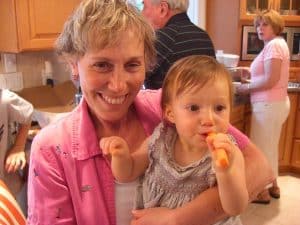
Jan and NickMourning can destroy everything in its wake. Perhaps it is because our grief requires us to believe that everything is happening to us.

For example, when my sadness over losing Jan overwhelms me, my life is like a sled flying down the ski slope without controls.

Now that I have observed both the secular and Hebrew anniversaries, I realize one lesson I did not expect to learn over the last year.

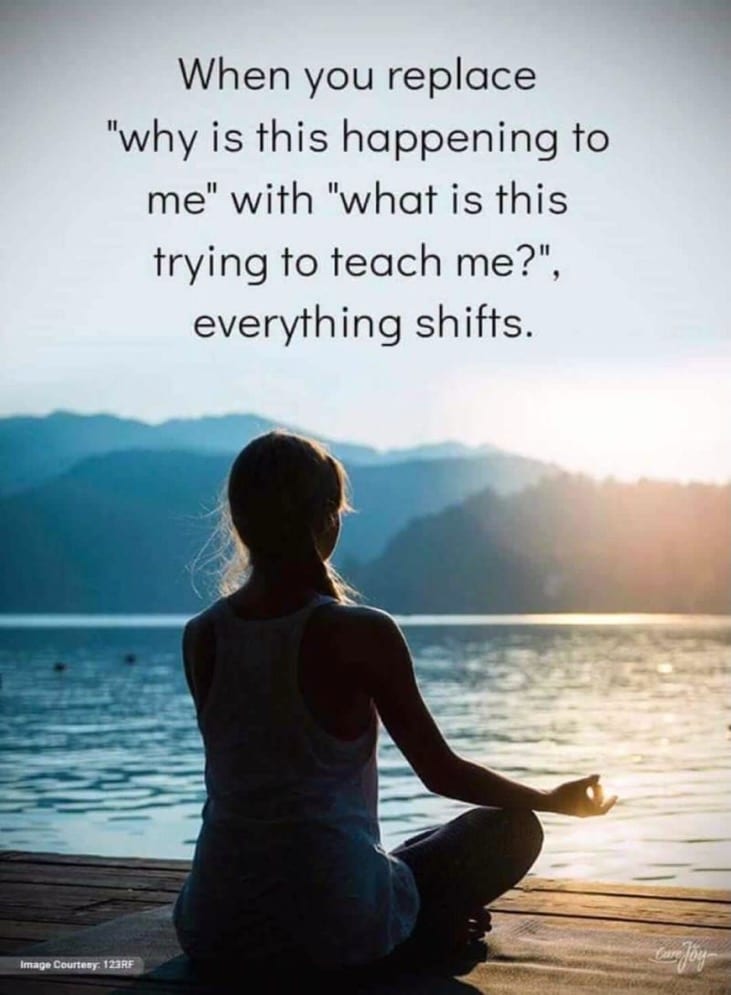
When I stop letting the grief dominate my life and instead focus on what I can learn from my sadness, I can share Jan’s love and love more than ever.


Subscribe

Contact Us

When you buy a book or product using a link on this page, I receive a commission. Thank you for supporting Sharing Jan’s Love blog.

Show thread (2)

A Year Without Jan is a Strange Year

It has been a year since my love died. This morning, I got up and went on my walk as if it was just another day.

But it is not just another day. It is one more day without Jan and one filled with questions.

Have I done enough to honor her?
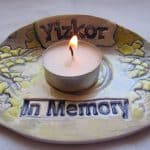
Jan’s Yahrzeit Reminds Me Why Love Never Dies

During my walk, I remembered a passage from Rachel Kodanaz's book "Living with Loss, One Day at a Time" on page 138. The passage poses a thought-provoking question about whether someone would rather have their years shortened or not have any at all.

Reflecting on this question, my answer remains unchanged. Although the thought of Jan's life ending when we first met would have initially caused me great sadness, I would have eventually come to focus on the love we shared rather than the time we lost.

Share your thoughts and ideas

This site uses Akismet to reduce spam. Learn how your comment data is processed.

The Jan Lilien Education Fund!

What Can Grief Teach Me?
×
Small Things Like These

Read: July 2024

Get this book

Small Things Like These

by Claire Keegan

Today, I read “Small Things Like These” by Claire Keegan, one of the New York Times’s 100 Best Books of the 21st Century, and the seventeenth book I have read from that list. “Small Things Like These” is award-winning author Claire Keegan‘s landmark new novel, a tale of one man’s courage and a remarkable portrait of love and family.

The story is set in 1985 in a small Irish town. During the weeks leading up to Christmas, Bill Furlong, a coal merchant and family man, faces his busiest season. Early one morning, while delivering an order to the local convent, Bill makes a discovery that forces him to confront his past and the complicit silences of a town controlled by the church.

I found this short but well-written novel very impactful. The following quote explains the powerful impact of the need for meaning and purpose in our lives, as Furlong walks in the snow after taking action to bring home a young girl from a Magdalen laundry. How often can we ignore the small things like these and still look ourselves in the mirror?

“As they carried on along and met more people Furlong did and did not know, he found himself asking was there any point in being alive without helping one another? Was it possible to carry on along through all the years, the decades, through an entire life, without once being brave enough to go against what was there and yet call yourself a Christian, and face yourself in the mirror?”

As an international bestseller, ‘Small Things Like These‘ is a profoundly moving story of hope and quiet heroism. It’s a narrative that will make you admire the characters and stir your empathy, all crafted by one of our most critically acclaimed and iconic writers. The characters in the story are so relatable that you will feel understood and deeply invested in their journey.


Discover your next favorite book and dive into a world of curated, exciting reads by purchasing through my links. You’ll have access to a diverse selection of books that I’ve personally vetted to ensure quality and enjoyment. Supporting these selections not only helps me continue providing you with personalized recommendations but also ensures you get access to meaningful stories that enrich your life. Your support truly makes a difference in helping me share more books and insights with you!


×
We Do Not Part

Read: March 2025

Get this book

We Do Not Part: A Novel

by Han Kang

Today, I explored “We Do Not Part,” the latest novel by Han Kang, the 2024 Nobel Prize in Literature laureate. Translated by the talented e. yaewon and Paige Aniyah Morris, this book offers a remarkable journey. The New York Times has called it Kang’s most revealing work since her acclaimed novel, “The Vegetarian.” What captivates me the most is how it intricately weaves the story of two women’s friendship while shedding light on a hidden chapter of Korean history.

One winter morning, Kyungha receives an urgent message from her friend Inseon, asking her to visit a hospital in Seoul. Inseon has injured herself in an accident and begs Kyungha to return to Jeju Island, where she lives, to save her beloved pet—a white bird named Ama. A snowstorm hits the island when Kyungha arrives. At all costs, she must reach Inseon’s house, but the icy wind and blizzards slow her down as night falls. She wonders if she will arrive in time to save the animal—or even survive the terrible cold that envelops her with every step. Lost in a world of snow, she does not yet suspect the vertiginous plunge into darkness that awaits her at her friend’s house.

Blurring the boundaries between dream and reality, “We Do Not Part” powerfully illuminates a forgotten chapter of Korean history buried for decades, bringing to light the lost voices of the past to prevent them from fading into oblivion. It is both a tribute to enduring friendship and a plea for remembrance. The novel tells a story of profound love in the face of unspeakable violence and celebrates life, however fragile.


Han Kang was born in 1970 in South Korea. She is the author of The Vegetarian, which I have read, and winner of the International Booker Prize,  Human ActsThe White BookGreek Lessons, and We Do Not Part. In 2024, she received the Nobel Prize in Literature.

e. yaewon is based in Korea and translates from and into Korean, including titles by Hwang Jungeun, Deborah Levy, and Samuel Beckett.

Paige Aniyah Morris divides her time between the United States and Korea. Recent translations include works by Pak Kyongni, Ji-min Lee, and Chang Kang-myoung.


When you purchase a book through one of my links, I earn a small commission that helps support my passion for reading. This contribution allows me to buy even more books to share with you, creating an incredible cycle of discovering great reads together! Your support truly makes a difference!


×
How to Commit a Postcolonial Murder

Read: January 2026

Get this book

How to Commit a Postcolonial Murder

by Nina McConigley

How to Commit a Postcolonial Murder” by Nina McConigley is a bold, inventive, and fiercely original debut novel. The story begins with the death of an uncle and features his tween niece’s private confession to the reader—she and her sister are responsible for his death, and they blame the British. The New York Times has listed it as one of “The Novels Everyone Will Be Talking About in 2026.”

Summer, 1986. The Creel sisters, Georgie Ayyar, and Agatha Krishna, welcome their aunt, uncle, and young cousin—newly arrived from India—into their house in rural Wyoming, where they’ll all live together. Because this is what families do, that is, until the sisters decide that it’s time for their uncle to die.

According to Georgie, the British are to blame. And to understand why, you need to hear her story. She details the violence hiding in their house and history, her once-unshakeable bond with Agatha Krishna, and her understanding of herself as an Indian-American in the heart of the West. Her account is, at every turn, cheeky, unflinching, and infectiously inflected with the trappings of teendom, including the magazine quizzes that help her make sense of her life. At its heart, the tale she weaves is:

a)    a vivid portrait of an extended family
b)    a moving story of sisterhood
c)    a playful ode to the 80s
d)    a murder mystery (of sorts)
e)    an unexpected and unwaveringly powerful meditation on history and language, trauma and healing, and the meaning of independence

Or maybe it’s really:

f)      all of the above.


Nina McConigley is the author of the story collection Cowboys and East Indians, which won the PEN Open Book Award and the High Plains Book Award. She has received grants and fellowships from the National Endowment for the Arts (NEA), the Radcliffe Institute, the Bread Loaf Writers’ Conference, the Vermont Studio Center, and the Sewanee Writers’ Conference.

McConigley was awarded the Wyoming Arts Council’s Frank Nelson Doubleday Memorial Writing Award and was a finalist for a National Magazine Award for her columns in High Country News. Her work has appeared in several prominent publications, including The New York Times, Orion, O: The Oprah Magazine, and The Virginia Quarterly Review.

Born in Singapore and raised in Wyoming, she currently resides in Colorado.


Discover your next favorite book and dive into a world of curated, exciting reads by purchasing through my links. You’ll have access to a diverse selection of books I’ve personally vetted for quality and enjoyment. Additionally, by supporting these selections, you’ll help me continue to provide you with more personalized recommendations. I earn a small commission from your purchase, which allows me to buy and share even more books with you. Your support truly makes a difference!


×
The Brief Wondrous Life of Oscar Wao

Read: August 2024

Get this book

The Brief Wondrous Life of Oscar Wao

by Junot Diaz

Today, I started reading Junot Diaz‘s The Brief Wondrous Life of Oscar Wao, one of The New York Times’ 100 Best Books of the Century. The book also won a Pulitzer Prize. Oscar is a sweet but disastrously overweight ghetto nerd who—from the New Jersey home he shares with his old-world mother and rebellious sister—dreams of becoming the Dominican J.R.R. Tolkien and, most of all, finding love.

But Oscar may never get what he wants. Blame the fukú—a curse that has haunted Oscar’s family for generations, following them on their epic journey from Santo Domingo to the USA. Encapsulating Dominican-American history, The Brief Wondrous Life of Oscar Wao opens our eyes to an astonishing vision of the contemporary American experience. It explores the endless human capacity to persevere—and risk it all—in the name of love.

×
The City We Became

Read: October 2021

Get this book

The City We Became: A Novel

by N. K. Jemisin

The City We Became: A Novel by N. K. Jemisin is my first science fiction and urban fantasy novel in quite some time. It is a story of culture, identity, magic, and myths in contemporary New York City. Jan and I had lived in New York City, and the book brought back fond memories.

Every great city has a soul. Some are ancient as myths, and others are as new and destructive as children.

But every City also has a dark side. A roiling, ancient evil stirs beneath the earth, threatening to destroy the City and her five protectors unless they can come together and stop it once and for all.

As Jemisin writes:

A city is never alone, not really — and this city seems less solitary than most. More like a family: many parts, frequently squabbling … but in the end, against enemies, they come together to protect one another. They must, or die.

The challenge is when evil forces threaten the City; the entire community needs to unite, and the City’s avatars for each of the five boroughs.

Initially, this is supposed to be one for each borough and one for the entire City. In the end, one of the avatars for the five boroughs chooses not to unite with the others. Without all six, they stand no chance to defeat the forces of evil.

How do they solve this? By adding the sixth borough – Jersey City.

I recommend this book without reservation.

When you buy a book or product using a link on this page, I receive a commission. Thank you for supporting Sharing Jan’s Love blog.

Subscribe

Contact Us

×
Invisible Child

Read: December 2021

Get this book

Invisible Child: Poverty, Survival & Hope in an American City

by Andrea Elliott

Invisible Child: Poverty, Survival & Hope in an American City by Andrea Elliott was a gift from my son Jon. The New York Times selected “Invisible Child” as one of the best books published this year. It is indeed one of the top books on my all-time list.

GoodReads summary provides a good overview,

The riveting, unforgettable story of a girl whose indomitable spirit is tested by homelessness, poverty, and racism in an unequal America—from Pulitzer Prize-winning journalist Andrea Elliott of The New York Times

Invisible Child follows eight dramatic years in the life of Dasani Coates, a child with imagination as soaring as the skyscrapers near her Brooklyn homeless shelter. Born at the turn of a new century, Dasani is named for the bottled water that comes to symbolize Brooklyn’s gentrification and the shared aspirations of a divided city. As Dasani grows up, moving with her tight-knit family from shelter to shelter, this story goes back to trace the passage of Dasani’s ancestors from slavery to the Great Migration north. When Dasani comes of age, New York City’s homeless crisis explodes as the chasm deepens between rich and poor.

In the shadows of this new Gilded Age, Dasani must lead her seven siblings through a thicket of problems: hunger, parental drug addiction, violence, housing instability, segregated schools, and the constant monitoring of the child-protection system. When, at age thirteen, Dasani enrolls at a boarding school in Pennsylvania, her loyalties are tested like never before. As she learns to “code switch” between the culture she left behind and the norms of her new town, Dasani starts to feel like a stranger in both places. Ultimately, she faces an impossible question: What if leaving poverty means abandoning the family you love?

By turns heartbreaking and revelatory, provocative and inspiring, Invisible Child tells an astonishing story about the power of resilience, the importance of family, and the cost of inequality. Based on nearly a decade of reporting, this book vividly illuminates some of the most critical issues in contemporary America through the life of one remarkable girl.

Jan and I were involved and knew that child poverty and homelessness needed repair. In addition, Jan lived on Washington Park across from Ft. Greene Park in 1974-75. We knew the neighborhood where much of the book’s story takes place. 

Before meeting Jan in 1973, I was both a community/tenant organizer and a youth worker. In the latter role, I made weekly hostel trips for eight to ten young boys from East Williamsburg during 1973. The trips were the first the boys had ever been outside of their neighborhood.

Many of them had imaginations like Dasani. They also had her instinct to fight. One of my first tasks was to check for any weapons.

Decades later, when I would see any of them, now adults, they would ask when we were going on another trip. I wish I had met Jan when I made those trips. She would have helped me improve them and document the impact. If I could re-write history, I would have her join me as the second adult on the hostel trips.

After that summer, it was clear my primary skills were as a community/tenant organizer. Over the next few years, my work focused on creating affordable and supportive housing.

Jan and I did meaningful work that made a difference, yet the need for a permanent solution to the crisis remains. The book highlights the crucial role of resilience, the importance of family, and the cost of inequality. As a nation, we cannot undermine those values by breaking up families, impeding resilience, and maintaining racial and economic inequality. 

The current debate in Washington over the Build Back Better legislation needs to focus not on how much we spend but on its impact on children and families

David Brooks, a conservative commentator, has supported these expenditures for what they can do to address this country’s cultural and economic crisis. 

These packages say to the struggling parents and the warehouse workers: I see you. Your work has dignity. You are paving your way. You are at the center of our national vision.

This is how you fortify a compelling moral identity, which is what all of us need if we’re going to be able to look in the mirror with self-respect. This is the cultural transformation that good policy can sometimes achieve. Statecraft is soulcraft.

If you can only read one book this year, this is the one to read. Child poverty, homelessness, and inequality impact all of us. Ending child poverty and homelessness will make us a healthier and more inclusive nation. It is time for a compelling moral call to action!

Subscribe

Contact Us

When you buy a book or product using a link on this page, I receive a commission. Thank you for supporting Sharing Jan’s Love blog.

×