New Book: What Kind of Paradise

Estimated reading time: 0 minutes, 0 seconds
What Kind of Paradise

What Kind of Paradise

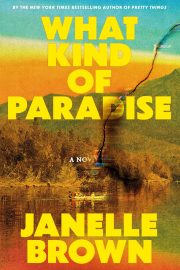
What Kind of Paradise is a captivating and suspenseful novel by bestselling author Janelle Brown. It follows a young woman on her quest to understand self-identity. The story boldly explores complex themes, including the relationships between parents and children, the balance between nature and technology, the tension between innocence and knowledge, the losses we experience in our past, and our aspirations for the future.

Read book review Get this book All books

The Jan Lilien Education Fund!

What Kind of Paradise

Read: July 2025

Get this book

What Kind of Paradise: A Novel

by Janelle Brown

What Kind of Paradise is a captivating and suspenseful novel by bestselling author Janelle Brown. It follows a young woman on her quest to understand self-identity. The story boldly explores complex themes, including the relationships between parents and children, the balance between nature and technology, the tension between innocence and knowledge, the losses we experience in our past, and our aspirations for the future.

This unforgettable narrative delves into what shapes us as individuals. The first thing you have to understand is that my father was my entire world, says Jane, the narrator.

Growing up in an isolated cabin in Montana in the mid-1990s, Jane knows only the world that she and her father live in: the woodstove that heats their home, the vegetable garden where they try to eke out a subsistence, the books of nineteenth-century philosophy that her father gives her to read instead of going to school. Her father is elusive about their pasts, giving Jane little beyond the fact that they once lived in the Bay Area and that her mother died in a car accident, the crash propelling him to move Jane off the grid to raise her in a Walden-esque utopia.

As Jane becomes a teenager, she begins to push against the boundaries of her restricted world. She begs to accompany her father on his occasional trips away from the cabin. But when Jane realizes that her devotion to her father has made her an accomplice to a horrific crime, she flees Montana to the only place she knows to look for answers about her mysterious past and her mother’s death: San Francisco. It is a city amid a seismic change, where her quest to understand herself will force her to reckon with both the possibilities and the perils of the fledgling internet, and where she will come to question everything she values.


Janelle Brown is the New York Times bestselling author of I’ll Be You, Pretty Things, Watch Me Disappear, All We Ever Wanted Was Everything, and This Is Where We Live. An essayist and journalist, she has written for Vogue, The New York Times, Elle, Wired, Self, Los Angeles Times, Salon, and more. She lives in Los Angeles with her husband and their two children.


When you purchase a book through one of my links, I earn a small commission that helps support my passion for reading. This contribution allows me to buy even more books to share with you, creating an incredible cycle of discovering great reads together! Your support truly makes a difference!

Enjoy a limited-time offer of 20% off your next book purchase at Bookshop.org!


×
Invisible Child

Read: December 2021

Get this book

Invisible Child: Poverty, Survival & Hope in an American City

by Andrea Elliott

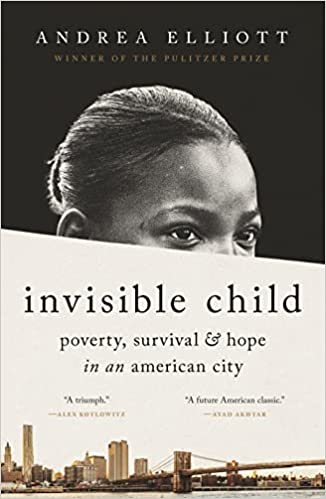
Invisible Child: Poverty, Survival & Hope in an American City by Andrea Elliott was a gift from my son Jon. The New York Times selected “Invisible Child” as one of the best books published this year. It is indeed one of the top books on my all-time list.

GoodReads summary provides a good overview,

The riveting, unforgettable story of a girl whose indomitable spirit is tested by homelessness, poverty, and racism in an unequal America—from Pulitzer Prize-winning journalist Andrea Elliott of The New York Times

Invisible Child follows eight dramatic years in the life of Dasani Coates, a child with imagination as soaring as the skyscrapers near her Brooklyn homeless shelter. Born at the turn of a new century, Dasani is named for the bottled water that comes to symbolize Brooklyn’s gentrification and the shared aspirations of a divided city. As Dasani grows up, moving with her tight-knit family from shelter to shelter, this story goes back to trace the passage of Dasani’s ancestors from slavery to the Great Migration north. When Dasani comes of age, New York City’s homeless crisis explodes as the chasm deepens between rich and poor.

In the shadows of this new Gilded Age, Dasani must lead her seven siblings through a thicket of problems: hunger, parental drug addiction, violence, housing instability, segregated schools, and the constant monitoring of the child-protection system. When, at age thirteen, Dasani enrolls at a boarding school in Pennsylvania, her loyalties are tested like never before. As she learns to “code switch” between the culture she left behind and the norms of her new town, Dasani starts to feel like a stranger in both places. Ultimately, she faces an impossible question: What if leaving poverty means abandoning the family you love?

By turns heartbreaking and revelatory, provocative and inspiring, Invisible Child tells an astonishing story about the power of resilience, the importance of family, and the cost of inequality. Based on nearly a decade of reporting, this book vividly illuminates some of the most critical issues in contemporary America through the life of one remarkable girl.

Jan and I were involved and knew that child poverty and homelessness needed repair. In addition, Jan lived on Washington Park across from Ft. Greene Park in 1974-75. We knew the neighborhood where much of the book’s story takes place. 

Before meeting Jan in 1973, I was both a community/tenant organizer and a youth worker. In the latter role, I made weekly hostel trips for eight to ten young boys from East Williamsburg during 1973. The trips were the first the boys had ever been outside of their neighborhood.

Many of them had imaginations like Dasani. They also had her instinct to fight. One of my first tasks was to check for any weapons.

Decades later, when I would see any of them, now adults, they would ask when we were going on another trip. I wish I had met Jan when I made those trips. She would have helped me improve them and document the impact. If I could re-write history, I would have her join me as the second adult on the hostel trips.

After that summer, it was clear my primary skills were as a community/tenant organizer. Over the next few years, my work focused on creating affordable and supportive housing.

Jan and I did meaningful work that made a difference, yet the need for a permanent solution to the crisis remains. The book highlights the crucial role of resilience, the importance of family, and the cost of inequality. As a nation, we cannot undermine those values by breaking up families, impeding resilience, and maintaining racial and economic inequality. 

The current debate in Washington over the Build Back Better legislation needs to focus not on how much we spend but on its impact on children and families

David Brooks, a conservative commentator, has supported these expenditures for what they can do to address this country’s cultural and economic crisis. 

These packages say to the struggling parents and the warehouse workers: I see you. Your work has dignity. You are paving your way. You are at the center of our national vision.

This is how you fortify a compelling moral identity, which is what all of us need if we’re going to be able to look in the mirror with self-respect. This is the cultural transformation that good policy can sometimes achieve. Statecraft is soulcraft.

If you can only read one book this year, this is the one to read. Child poverty, homelessness, and inequality impact all of us. Ending child poverty and homelessness will make us a healthier and more inclusive nation. It is time for a compelling moral call to action!

Subscribe

Contact Us

When you buy a book or product using a link on this page, I receive a commission. Thank you for supporting Sharing Jan’s Love blog.

×
The Cemetery of Untold Stories

Read: April 2024

Get this book

The Cemetery of Untold Stories

by Julia Alvarez

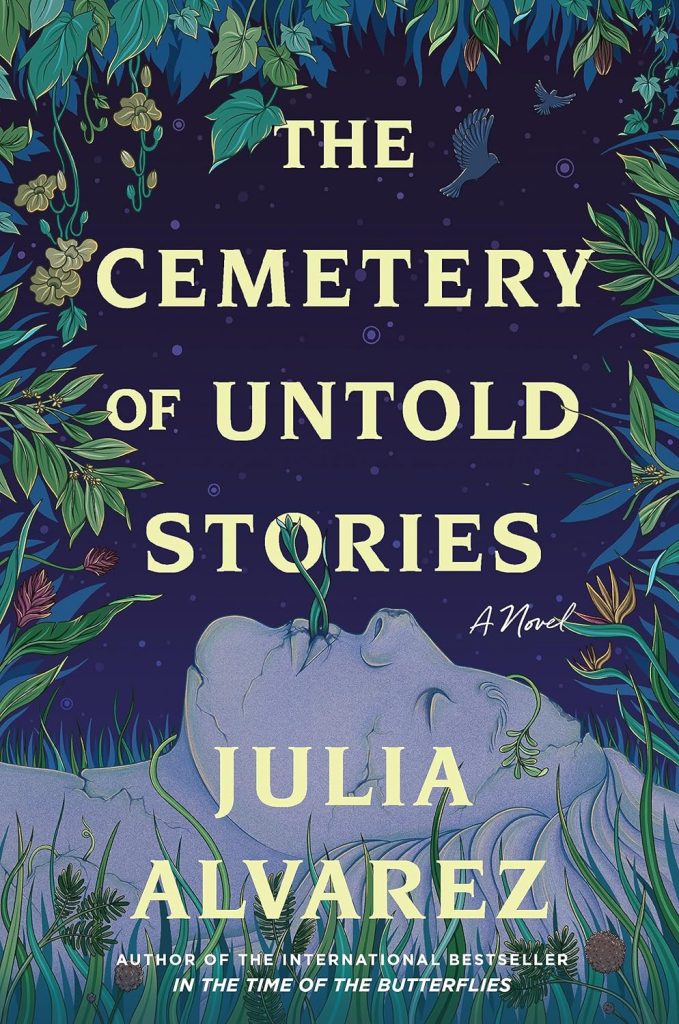
Today, I began reading Julia Alvarez‘s novel “The Cemetery of Untold Stories.” The book explores whose stories deserve to be told and whose should remain buried. In the end, Alma, the main character, finds meaning in the power of storytelling. Julia Alvarez reminds us that our stories are never truly finished, even at the end.

Alma Cruz, a famous writer, doesn’t want to suffer the same fate as her friend, who became mentally unstable after struggling to finish a book. So, when Alma inherits a small plot of land in her native Dominican Republic, she turns it into a cemetery for her unfinished stories. She hopes her characters will finally be able to rest in peace.

However, they have other ideas and soon begin to rewrite and revise themselves, even talking and interacting with one another. Fortunately, Filomena, a local woman hired as the groundskeeper, becomes a listener to Alma’s characters’ secret tales. These tales include those of Bienvenida, the abandoned wife of dictator Rafael Trujillo, who was erased from official history, and Manuel Cruz, a doctor who fought in the Dominican underground and escaped to the United States.

×
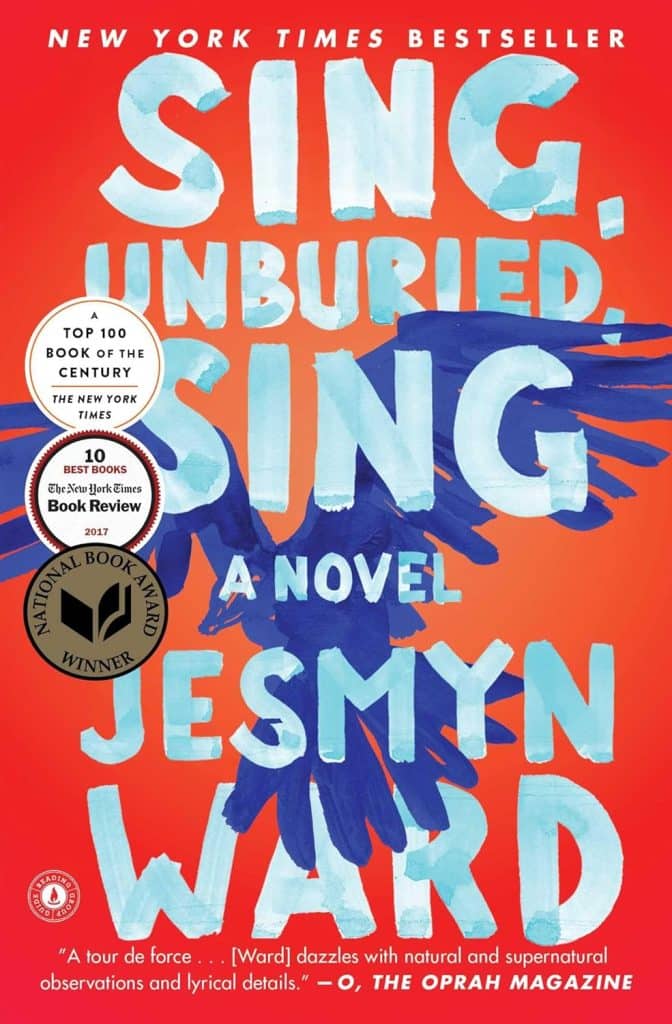
Sing, Unburied, Sing

Read: October 2024

Get this book

Sing, Unburied, Sing

by Jesmyn Ward

I started reading Jesmyn Ward‘s novel Sing, Unburied, Sing today. The New York Times selected it as one of the best books of the 21st century and awarded it the National Book Award. According to The New York Times, Jesmyn Ward‘s historic second National Book Award winner is “perfectly poised for the moment.” It’s an intimate portrait of three generations of a family and an epic tale of hope and struggle.

Jojo is thirteen years old and is trying to understand what it means to be a man. He has several father figures to learn from, including his Black grandfather, Pop. However, Jojo’s understanding is complicated by other men in his life: his absent White father, Michael, who is being released from prison; his absent White grandfather, Big Joseph, who refuses to acknowledge him; and the memories of his deceased uncle, Given, who died as a teenager.

His mother, Leonie, is inconsistent in her and her toddler daughter’s lives. She is a flawed mother in constant conflict with herself and those around her. She is Black, and her children’s father is White. She wants to be a better mother but struggles to prioritize her children over her own needs, particularly her drug use. Tormented and comforted by visions of her deceased brother, which only come to her when she’s high, Leonie is embattled in ways that reflect the harsh reality of her circumstances.

When their father is released from prison, Leonie takes her kids and a friend in her car and drives north to Mississippi and Parchman Farm, the State Penitentiary. At Parchman, there is another thirteen-year-old boy, the ghost of a deceased inmate who carries the ugly history of the South with him in his wanderings. With his supernatural presence, this ghostly figure also has something to teach Jojo about fathers and sons, legacies, violence, and love.

Described as a majestic and unforgettable family story, ‘Sing, Unburied, Sing‘ is rich with Ward‘s distinctive, lyrical language. As noted by The Philadelphia Inquirer, her unique narrative style takes readers on ‘an odyssey through rural Mississippi’s past and present.’

×
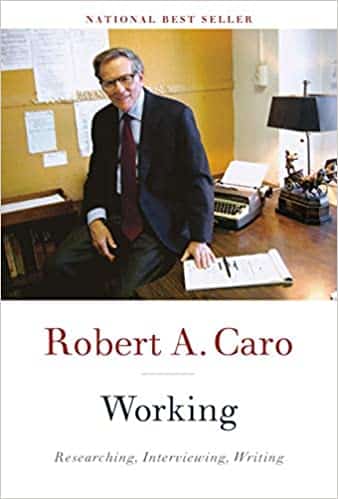
Working

Read: October 2019

Get this book

Working

by Robert A. Caro

Working by Robert A. Caro is a book of evocatively written essays on his life and work. Among the many valuable words of wisdom is his case that one needs to look at every piece of information, not just what we know when we begin. Far too often, people jump to conclusions without having learned all of the facts.

He describes what it was like to interview the mighty Robert Moses and to begin discovering the extent of the political power Moses wielded; the combination of discouragement and exhilaration he felt confronting the vast holdings of the Lyndon B. Johnson Library in Austin, Texas; his encounters with witnesses, including longtime residents wrenchingly displaced by the construction of Moses’ Cross-Bronx Expressway and Lady Bird Johnson acknowledging the beauty and influence of one of LBJ‘s mistresses. He gratefully remembers how, after years of working in solitude, he found a writers’ community at the New York Public Library, and details the ways he goes about planning and composing his books.

Caro recalls the moments at which he came to understand that he wanted to write not just about the men who wielded power but about the people and the politics that were shaped by that power. And he talks about the importance to him of the writing itself, of how he tries to infuse it with a sense of place and mood to bring characters and situations to life on the page. Taken together, these reminiscences–some previously published, some written expressly for this book–bring into focus the passion, the wry self-deprecation, and the integrity with which this brilliant historian has always approached his work.

I found this one of the best books I have read and recommend it to all readers.

Subscribe

Contact Us

×
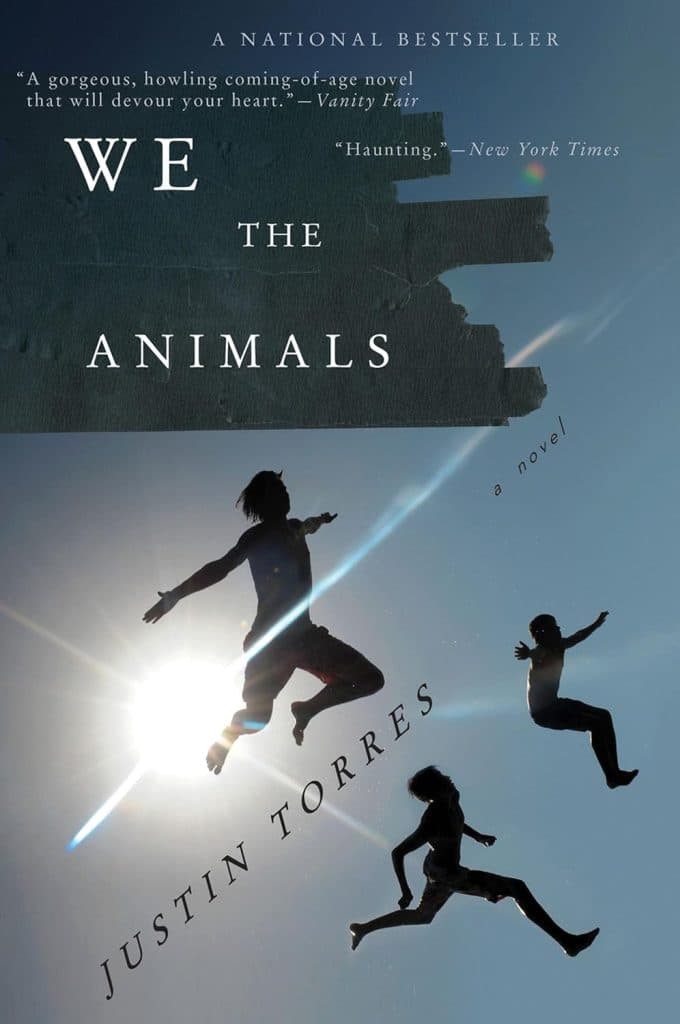
We the Animals

Read: July 2024

Get this book

We the Animals

by Justin Torres

Today, I embarked on the literary journey of We the Animals by Justin Torres. This novel, listed among the New York Times’ 100 Best Books of the Century, is a groundbreaking work of art. The author of Blackouts immerses us in the tumultuous heart of a family, the intense bonds of three brothers, and the mythic impact of this fierce love on the individuals we are destined to become.

The narrative unfolds as three brothers navigate their way through childhood, a journey filled with emotional highs and lows, from playful acts like smashing tomatoes on each other to finding solace in each other’s company during their parents’ conflicts and even tiptoeing around the house as their mother rests after her graveyard shift. Paps and Ma, hailing from Brooklyn—he’s Puerto Rican, she’s white—share a profound and challenging love, shaping and reshaping the family numerous times. Life in this family is intense and all-consuming, filled with disorder, heartache, and the ecstasy of belonging to each other.

From the intense familial unity, a child feels to the profound alienation he endures as he begins to see the world, this beautiful novel doesn’t just tell a coming-of-age story; it reinvents it in a sly and punch-in-the-stomach powerful way. It delves into themes such as love, the meaning of family, and heartache, adding another layer of depth and complexity to the story.

×
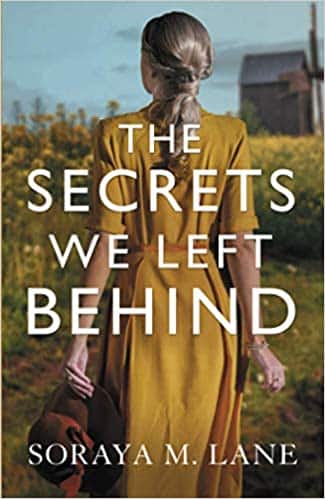
The Secrets we Left Behind

Read: March 2022

Get this book

The Secrets We Left Behind

The Secrets We Left Behind by Soraya M. Lane is a historical fiction that raises the question, where were the women after Dunkirk and the fall of France? When World War II appeared to have been lost with a Nazi victory. Ms. Lane watched the movie Dunkirk and then researched that time and the women’s possible roles during that difficult moment in history.

She connected the evacuation at Dunkirk to the Massacre at Le Paradis, fifty miles away, to connect a British nurse and two French women whose strength helps them survive Nazi-occupied France. Three British male soldiers, two of whom survived the massacre and one who escaped Dunkirk, have secondary roles in the novel. 

The Secrets We Left Behind is the story of the three strong women and their efforts to survive the occupation while hiding the three soldiers. This focus on the role of women has been long overdue in history. Ms. Lane, who studied to be a lawyer, has found a career as a writer. The Secrets We Left Behind is the first book I have read, but it will not be the last one by Ms. Lane that I read.

I strongly recommend this book!

The Goodreads synopsis provides an overview of the novel.

How far will they go for family, friendship, and love? Occupied France, 1940. When the staff at a field hospital draw straws to find out who will join the evacuation from Dunkirk, Nurse Cate is left behind. But when the Nazis arrive to claim prisoners of war, she takes her chance and flees into the night, taking one patient with her.

Fifty miles away, the surrendering soldiers of the Royal Norfolk Regiment are shot dead by the advancing Germans. Beneath the pile of bodies, two men survive, crawling to the safety of a nearby farmhouse, where sisters Elise and Adelaide risk their lives to take them in. When Cate, too, arrives at their door with her injured soldier, the pressure mounts.

The sisters are risking everything to keep their visitors safe. But with the Nazis coming ever closer and relationships in the farmhouse intensifying, they must all question the sacrifices they are willing to make for the lives of others. How far will they go for family, friendship, and love?

Register to Attend Celebrate Jan Day

Subscribe

Contact Us

When you buy a book or product using a link on this page, I receive a commission. Thank you for supporting Sharing Jan’s Love blog.

×