New Book: We Do Not Part

Estimated reading time: 0 minutes, 0 seconds
We Do Not Part

We Do Not Part

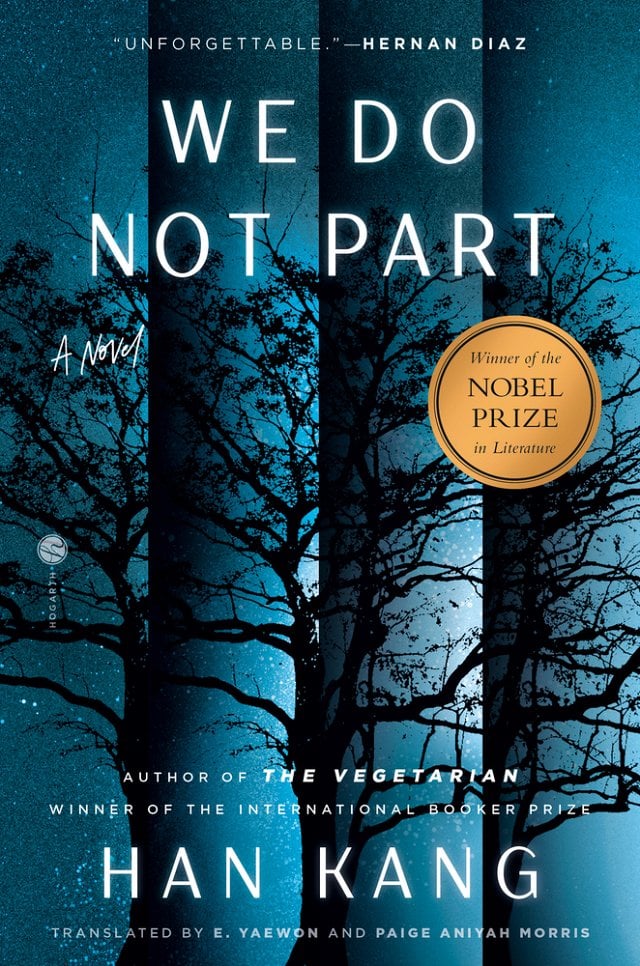
Today, I explored "We Do Not Part," the latest novel by Han Kang, the 2024 Nobel Prize in Literature laureate. Translated by the talented e. yaewon and Paige Aniyah Morris, this book offers a remarkable journey. The New York Times has called it Kang's most revealing work since her acclaimed novel, "The Vegetarian." What captivates me the most is how it intricately weaves the story of two women's friendship while shedding light on a hidden chapter of Korean history.

Read book review Get this book All books

Share your thoughts and ideas

This site uses Akismet to reduce spam. Learn how your comment data is processed.

The Jan Lilien Education Fund!

We Do Not Part

Read: March 2025

Get this book

We Do Not Part: A Novel

by Han Kang

Today, I explored “We Do Not Part,” the latest novel by Han Kang, the 2024 Nobel Prize in Literature laureate. Translated by the talented e. yaewon and Paige Aniyah Morris, this book offers a remarkable journey. The New York Times has called it Kang’s most revealing work since her acclaimed novel, “The Vegetarian.” What captivates me the most is how it intricately weaves the story of two women’s friendship while shedding light on a hidden chapter of Korean history.

One winter morning, Kyungha receives an urgent message from her friend Inseon, asking her to visit a hospital in Seoul. Inseon has injured herself in an accident and begs Kyungha to return to Jeju Island, where she lives, to save her beloved pet—a white bird named Ama. A snowstorm hits the island when Kyungha arrives. At all costs, she must reach Inseon’s house, but the icy wind and blizzards slow her down as night falls. She wonders if she will arrive in time to save the animal—or even survive the terrible cold that envelops her with every step. Lost in a world of snow, she does not yet suspect the vertiginous plunge into darkness that awaits her at her friend’s house.

Blurring the boundaries between dream and reality, “We Do Not Part” powerfully illuminates a forgotten chapter of Korean history buried for decades, bringing to light the lost voices of the past to prevent them from fading into oblivion. It is both a tribute to enduring friendship and a plea for remembrance. The novel tells a story of profound love in the face of unspeakable violence and celebrates life, however fragile.


Han Kang was born in 1970 in South Korea. She is the author of The Vegetarian, which I have read, and winner of the International Booker Prize,  Human ActsThe White BookGreek Lessons, and We Do Not Part. In 2024, she received the Nobel Prize in Literature.

e. yaewon is based in Korea and translates from and into Korean, including titles by Hwang Jungeun, Deborah Levy, and Samuel Beckett.

Paige Aniyah Morris divides her time between the United States and Korea. Recent translations include works by Pak Kyongni, Ji-min Lee, and Chang Kang-myoung.


When you purchase a book through one of my links, I earn a small commission that helps support my passion for reading. This contribution allows me to buy even more books to share with you, creating an incredible cycle of discovering great reads together! Your support truly makes a difference!


×
Keepers of the House

Read: May 2021

Get this book

The Keepers of the House

by Shirley Ann Grau

The Keepers of the House by Shirley Ann Grau is a book that I read a portion of for a college class, but for reasons that I cannot now remember never got around to reading it from cover to cover. In the early stages of grief, I found a copy in our bookshelf and said, let me read it now. It was a decision that I did not regret.

Having grown up in the American South, the book resonated with me, as did the sections I read fifty years ago. It’s a many-layered indictment of racism and rage that is as terrifying as it is wise.

As someone who likes history and values the importance of place, the book’s focus on the continued ownership of the same land since the early 1800s by the Howland’s provided a broad historical perspective. Abigail Howland has learned many important family legacies, but not all.

However, when William’s, her grandfather, relationship with Margaret Carmichael, a black housekeeper, is revealed to the community, the racism and fury boil over. Abigail chooses to get even with the town her family built by punishing them.

The Keepers of the House is a book that I wish I had read in its entirety half a century ago. Having read it now, I recommend it to all who care about life and community.

Subscribe

Contact Us

×
The Antidote

Read: October 2025

Get this book

The Antidote: A Novel

by Karen Russell

Karen Russell‘s The Antidote, a finalist in the fiction category for the 2025 National Book Award, serves as a profound reckoning with a nation’s tendency to forget. It addresses the settler amnesia and deliberate omissions that have been passed down through generations, revealing not only horrors but also shimmering possibilities. The Antidote resonates with urgent warnings about our current climate emergency, prompting readers to reflect on what might have been and what is still possible.

The Antidote opens on Black Sunday, as a historic dust storm ravages the fictional town of Uz, Nebraska. But Uz is already collapsing—not just under the weight of the Great Depression and the Dust Bowl drought but beneath its own violent histories.

The Antidote follows a “Prairie Witch,” whose body serves as a bank vault for peoples’ memories and secrets; a Polish wheat farmer who learns how quickly a hoarded blessing can become a curse; his orphan niece, a basketball star and witch’s apprentice in furious flight from her grief; a voluble scarecrow; and a New Deal photographer whose time-traveling camera threatens to reveal both the town’s secrets and its fate.


Karen Russell is the author of six fiction books, including the New York Times bestsellers Swamplandia! and Vampires in the Lemon Grove. She is a MacArthur Fellow, a Guggenheim Fellow, and a Pulitzer Prize finalist.

She has received two National Magazine Awards for Fiction, the Shirley Jackson Award, the 2023 Bottari Lattes Grinzane Prize, and the 2024 Mary McCarthy Prize, and was selected for the National Book Foundation’s 5 Under 35 award and The New Yorker’s 20 Under 40 list (she is now decisively over forty).

She serves on the board of Street Books, a mobile library for people living outdoors. Born and raised in Miami, Florida, she lives in Portland, Oregon, with her husband, son, and daughter.


Discover your next favorite book and dive into a world of curated, exciting reads by purchasing through my links. You’ll have access to a diverse selection of books that I’ve personally vetted to ensure quality and enjoyment. Additionally, by supporting these selections, you’ll help me continue to provide you with more personalized recommendations. I earn a small commission from your purchase, which allows me to buy and share even more books with you. Your support truly makes a difference!


×
Worry: A Novel

Read: May 2024

Get this book

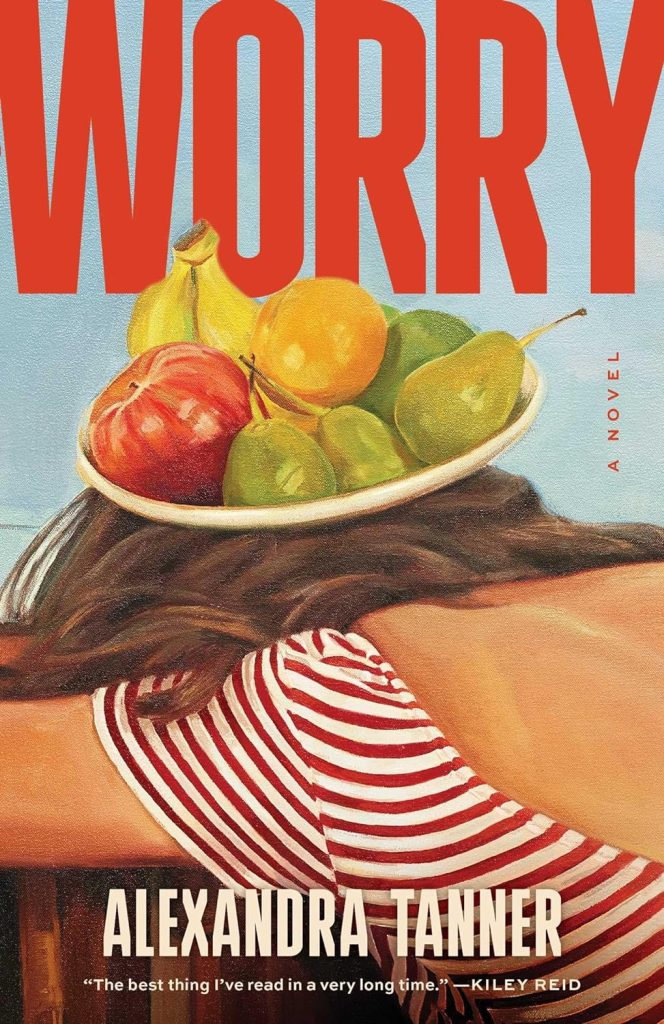
Worry: A Novel

by Alexandra Tanner

Today, I began reading Alexandra Tanner‘s debut novel, Worry: A Novel. The New Yorker praised it as “dryly witty,” The New York Times Book Review called it “fabulously revealing.” The story follows two siblings-turned-roommates who try to navigate an absurd world on the verge of calamity. It explores existentialism and sisterhood in a Seinfeldian style.

In March 2019, Jules Gold, a 28-year-old woman, felt anxious, frustrated with her art, and addicted to the internet. She lives alone in the apartment she used to share with her ex-fiancé. Her younger sister Poppy unexpectedly comes to stay with her indefinitely. Poppy, who attempted suicide a year and a half ago, is looking for work and purpose in Brooklyn. Meanwhile, Jules spends her days scrolling through the feeds of Mormon mommy bloggers and waiting for something to happen in her life.

Poppy’s hives, which she has had since childhood, flare up again. Jules has health problems with her uterus. Poppy adopts a poorly behaved-rescue dog named Amy Klobuchar. Poppy’s mother, who recently became a devout Messianic Jew, starts believing in the same deep-state conspiracy theories as Jules’ online mommies. Jules half-heartedly tries to find the source of her ennui and cruelly blames Poppy for not being a good enough friend, writer, or sister. As the year progresses and a new decade approaches, a disastrous trip back to Florida forces Jules and Poppy to question their futures and whether they want to spend them together or apart.

Worry is a darkly funny and deadpan portrayal of two sisters struggling through anxiety and uncertainty in America. A bold new voice in contemporary fiction writes it.

×
How to Commit a Postcolonial Murder

Read: January 2026

Get this book

How to Commit a Postcolonial Murder

by Nina McConigley

How to Commit a Postcolonial Murder” by Nina McConigley is a bold, inventive, and fiercely original debut novel. The story begins with the death of an uncle and features his tween niece’s private confession to the reader—she and her sister are responsible for his death, and they blame the British. The New York Times has listed it as one of “The Novels Everyone Will Be Talking About in 2026.”

Summer, 1986. The Creel sisters, Georgie Ayyar, and Agatha Krishna, welcome their aunt, uncle, and young cousin—newly arrived from India—into their house in rural Wyoming, where they’ll all live together. Because this is what families do, that is, until the sisters decide that it’s time for their uncle to die.

According to Georgie, the British are to blame. And to understand why, you need to hear her story. She details the violence hiding in their house and history, her once-unshakeable bond with Agatha Krishna, and her understanding of herself as an Indian-American in the heart of the West. Her account is, at every turn, cheeky, unflinching, and infectiously inflected with the trappings of teendom, including the magazine quizzes that help her make sense of her life. At its heart, the tale she weaves is:

a)    a vivid portrait of an extended family
b)    a moving story of sisterhood
c)    a playful ode to the 80s
d)    a murder mystery (of sorts)
e)    an unexpected and unwaveringly powerful meditation on history and language, trauma and healing, and the meaning of independence

Or maybe it’s really:

f)      all of the above.


Nina McConigley is the author of the story collection Cowboys and East Indians, which won the PEN Open Book Award and the High Plains Book Award. She has received grants and fellowships from the National Endowment for the Arts (NEA), the Radcliffe Institute, the Bread Loaf Writers’ Conference, the Vermont Studio Center, and the Sewanee Writers’ Conference.

McConigley was awarded the Wyoming Arts Council’s Frank Nelson Doubleday Memorial Writing Award and was a finalist for a National Magazine Award for her columns in High Country News. Her work has appeared in several prominent publications, including The New York Times, Orion, O: The Oprah Magazine, and The Virginia Quarterly Review.

Born in Singapore and raised in Wyoming, she currently resides in Colorado.


Discover your next favorite book and dive into a world of curated, exciting reads by purchasing through my links. You’ll have access to a diverse selection of books I’ve personally vetted for quality and enjoyment. Additionally, by supporting these selections, you’ll help me continue to provide you with more personalized recommendations. I earn a small commission from your purchase, which allows me to buy and share even more books with you. Your support truly makes a difference!


×
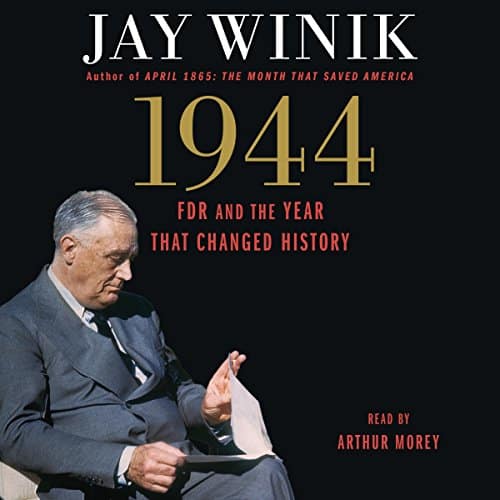
1944: FDR and the Year That Changed History

Read: October 2019

Get this book

1944: FDR and the Year That Changed History

by Jay Winik

1944: FDR and the Year That Changed History by Jay Winik is a book that I had put off reading several times. When I finally did read it, I could not remember why I had not read it sooner. Had I gone to graduate school and become a professor, it might have been the type of book I might write, and I certainly would have had on my list of books for my classes. 

As The NY Times wrote, “Jay Winik brings to life in gripping detail the year 1944, which determined the outcome of World War II and put more pressure than any other on an ailing yet determined President Roosevelt.” Reading a book about events five years before my birth that transformed the world I live in becomes an easy page-turner.

It was not inevitable that World War II would end as it did or that it would even end well. Nineteen forty-four was a year that could have stymied the Allies and cemented Hitler’s waning power. Instead it saved those democracies – but with a fateful cost. Now, in a superbly told story, Jay Winik, the acclaimed author of April 1865 and The Great Upheaval, captures the epic images and extraordinary history as never before.

1944 witnessed a series of titanic events: FDR at the pinnacle of his wartime leadership as well as his reelection, the planning of Operation Overlord with Churchill and Stalin, the unprecedented D-Day invasion, the liberation of Paris, and the horrific Battle of the Bulge, and the tumultuous conferences that finally shaped the coming peace. But on the way, millions of more lives were still at stake as President Roosevelt was exposed to mounting evidence of the most grotesque crime in history, the Final Solution. Just as the Allies were landing in Normandy, the Nazis were accelerating the killing of millions of European Jews.

Winik shows how escalating pressures fell on an all but dying Roosevelt, whose rapidly deteriorating health was a closely guarded secret. Here then, as with D-Day, was a momentous decision for the president. Was winning the war the best way to rescue the Jews? Was a rescue even possible? Or would it get in the way of defeating Hitler? In a year when even the most audacious undertakings were within the world’s reach, including the liberation of Europe, one challenge – saving Europe’s Jews – seemed to remain beyond Roosevelt’s grasp.

I recommend this book.

Subscribe

Contact Us

×
Isola

Read: May 2025

Get this book

Isola: A Novel

by Allegra Goodman

Set against the backdrop of the sixteenth century, Allegra Goodman‘s Isola brings to life the gripping saga of a remarkable woman’s fight for survival. Journey with Marguerite as she battles the harsh realities of being marooned on a desolate island in the Gulf of St. Lawrence, in the heart of New France, because she dared to love the wrong man, leading her to this lonely exile.

Heir to a fortune, Marguerite is destined for a life of prosperity and gentility. However, her world is turned upside down when she becomes an orphan. Her guardian, an enigmatic and unpredictable man, squanders her inheritance and insists she accompany him on an expedition to New France. The journey takes an unexpected turn when Marguerite is accused of betrayal, leading to her brutal punishment and abandonment on a small island.

Once a child of privilege, adorned in gowns and pearls, Marguerite now finds herself at the mercy of nature. As the weather changes and the island becomes blanketed in ice, she uncovers a faith she never knew she needed.


Allegra Goodman is the author of six novels, including the national bestseller Sam, a Read with Jenna selection; two short story collections; and a book for young readers. Her fiction has appeared in The New Yorker and elsewhere, and has been anthologized in The O. Henry Awards and Best American Short Stories. She lives with her family in Cambridge, Massachusetts.


When you purchase a book through one of my links, I earn a small commission that helps support my passion for reading. This contribution allows me to buy even more books to share with you, creating an incredible cycle of discovering great reads together! Your support truly makes a difference!

Enjoy a limited-time offer of 20% off your next book purchase at Bookshop.org!


×