New Book: The Unfolding: A Novel

Estimated reading time: 0 minutes, 0 seconds
The Unfolding

The Unfolding

The Unfolding by A.M. Homes is a darkly comic political parable braided with a Bildungsroman that takes us inside the heart of a divided country. The Unfolding is an alternative history that is terrifyingly prescient, profoundly tender, and devastatingly funny. Will this novel help me to understand how we became a nation that no longer shares the same definitions of truth, freedom, and democracy, much less a shared vision of the future?

Read book review Get this book All books

Share your thoughts and ideas

This site uses Akismet to reduce spam. Learn how your comment data is processed.

The Jan Lilien Education Fund!

The Unfolding

Read: October 2022

Get this book

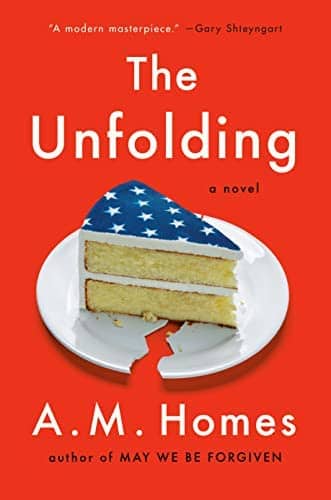
The Unfolding: A Novel

by A.M. Homes

The Unfolding by A.M. Homes is a darkly comic political parable braided with a Bildungsroman that takes us inside the heart of a divided country. The Unfolding is an alternative history that is terrifyingly prescient, profoundly tender, and devastatingly funny. Will this novel help me to understand how we became a nation that no longer shares the same definitions of truth, freedom, and democracy, much less a shared vision of the future?

Although I understand more clearly the crisis facing the US, I highly recommend this novel.

Ms. Homes has written a must-read book that compliments the January 6th Committee report and should make us all more vigilant.

The characters are so well defined that at the end of the novel, I wanted to continue to read about them, especially Meghan.

The Goodreads summary provides an overview,

The Big Guy loves his family, money, and country. Undone by the 2008 presidential election results, he taps a group of like-minded men to reclaim their version of the American Dream. As they build a scheme to disturb and disrupt, the Big Guy also faces turbulence within his family. His wife, Charlotte, grieves a life not lived, while his 18-year-old daughter, Meghan, realizes that her favorite subject–history–is not exactly what her father taught her.

In a story that is as much about the dynamics within a family as it is about the desire for those in power to remain in force, Homes presciently unpacks a dangerous rift in American identity, prompting a reconsideration of the definition of truth, freedom, and democracy–and exploring the explosive consequences of what happens when the exact words mean such different things to people living together under one roof.

In her first novel since the Women’s Prize award-winning May We Be Forgiven, A.M. Homes delivers us back to ourselves in this stunning alternative history that is both terrifyingly prescient, deeply tender, and devastatingly funny.


The Jan Lilien Education Fund sponsors ongoing sustainability and environmental awareness programs. Gifts made this month; I will match dollar-for-dollar. All donations are tax-deductible.

Subscribe

Contact Us

I receive a commission when you buy a book or product using a link on this page. Thank you for supporting Sharing Jan’s Love.

×
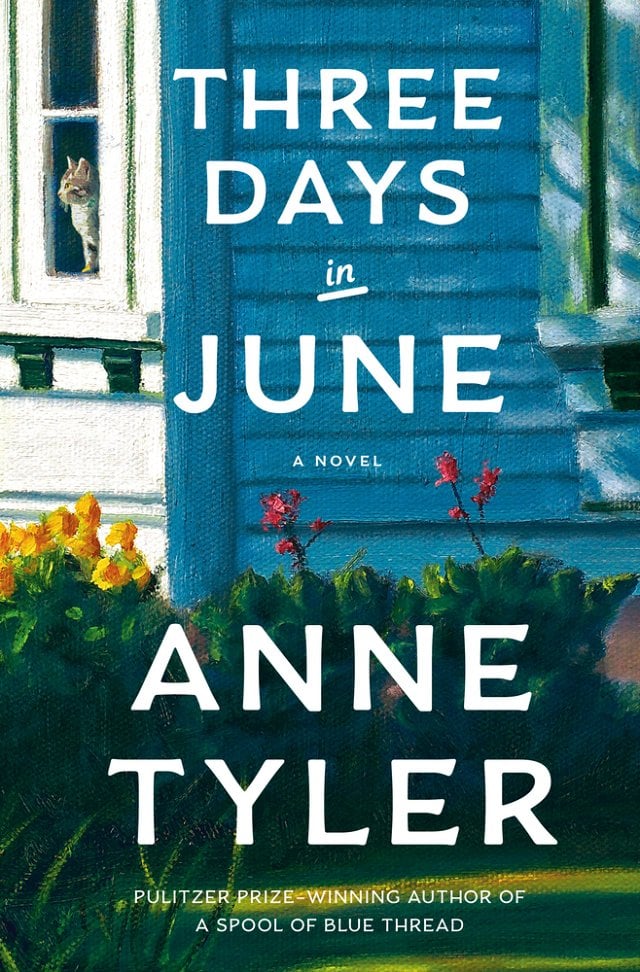
Three Days in June

Read: February 2025

Get this book

Three Days in June

by Anne Tyler

Today, I dove into the enchanting world of “Three Days in June” by Anne Tyler, a novel that promises to become an instant classic. It beautifully captures the experience of a socially awkward mother-of-the-bride as she navigates the whirlwind of emotions before and after her daughter’s wedding. After shuffling through the frosty morning air on my walk, wrapping myself in the warmth of Tyler‘s words about three sun-soaked days in June felt like the perfect escape. What a delightful contrast!

Gail Baines is having a bad day. First, she loses her job—or quits, depending on whom you ask. Tomorrow, her daughter, Debbie, is getting married, and she hasn’t even been invited to the spa day organized by the groom’s mother. Then, Gail’s ex-husband, Max, arrives unannounced on her doorstep, carrying a cat, without a place to stay or even a suit.

However, the crisis occurs when Debbie shares a secret she has just learned about her husband-to-be with her parents. This will not only throw the wedding into question but also stir up Gail and Max’s past.

Told with deep sensitivity and a tart sense of humor and full of the joys and heartbreaks of love, marriage, and family life, “Three Days in June” is a triumph and shows the perennially bestselling, Pulitzer Prize-winning writer at the height of her powers.


When you purchase a book through one of my links, I earn a small commission that helps support my passion for reading. This contribution allows me to buy even more books to share with you, creating an incredible cycle of discovering great reads together! Your support truly makes a difference!


×
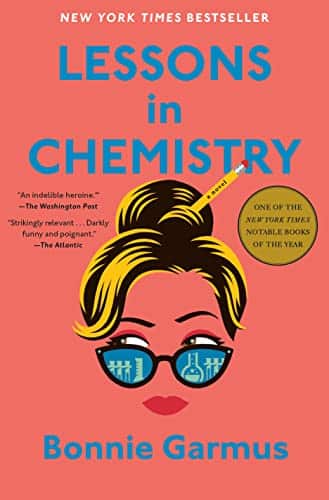
Lessons in Chemistry

Read: January 2023

Get this book

Lessons in Chemistry: A Novel

by Bonnie Garmus

Lessons in Chemistry: A Novel by Bonnie Garmus is a must-read book as it reimagines the gender dynamics of the 1950s and early 1960s. Elizabeth Zott, a chemist, struggles in a male-dominated world where her work is not taken seriously until she meets Calvin Evans. She describes their relationship, “Calvin and I were soulmates,” like Jan and I viewed ours.

What underlies their love affair was “a mutual respect for the other’s capabilities.” “Do you know how extraordinary that is?” she said. That a man would treat his lover’s work as seriously as his own?” Of course, every relationship should be based on the same dynamics, but even after seventy years, we still struggle to achieve equality in our society.

I highly recommend this novel. Reading the story, the Zott/Evans relationship reminded me of the love that Jan and I shared. I know that Jan would have loved this book.

Laugh-out-loud funny, shrewdly observant, and studded with a dazzling cast of supporting characters, Lessons in Chemistry is as original and vibrant as its protagonist. Like Jan, Elizabeth Zott, the protagonist, would be the first to point out that there is no such thing as an average woman. Chemist Elizabeth Zott is not your average woman.

Although Jan and Elizabeth had much in common, I felt Madeline (aka Mad), Elizabeth’s daughter, was Jan’s alter ego in this novel. Jan was smart and ahead of her classmates, just like Mad was. She was breaking barriers when she was Mad’s age.

I also connected to Six Thirty, the dog. Like Oscar, Six Thirty was more intelligent than the average dog.

Lessons in Chemistry has been the number one best-selling book in the New York Times for thirty-four weeks.

The Goodreads summary provides an overview,

It’s the early 1960s and Elizabeth Zott’s all-male team at Hastings Research Institute takes a very unscientific view of equality. Except for one: Calvin Evans, the lonely, brilliant, Nobel–prize-nominated grudge-holder who falls in love with—of all things—her mind. True chemistry results.

But like science, life is unpredictable. Which is why a few years later Elizabeth Zott finds herself not only a single mother, but the reluctant star of America’s most beloved cooking show Supper at Six. Elizabeth’s unusual approach to cooking (“combine one tablespoon acetic acid with a pinch of sodium chloride”) proves revolutionary. But as her following grows, not everyone is happy. Because as it turns out, Elizabeth Zott isn’t just teaching women to cook. She’s daring them to change the status quo.


The Jan Lilien Education Fund sponsors ongoing sustainability and environmental awareness programs. Gifts made this month; I will match dollar-for-dollar. All donations are tax-deductible.

Subscribe

Contact Us

I receive a commission when you buy a book or product using a link on this page. Thank you for supporting Sharing Jan’s Love blog.


×
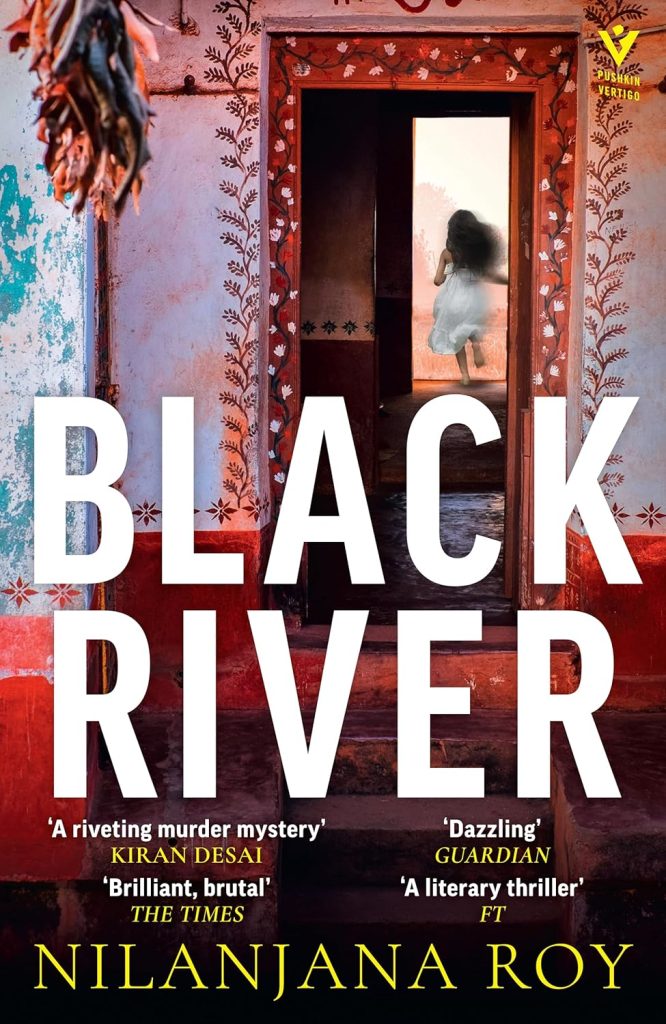
Black River

Read: November 2024

Get this book

Black River: A Novel

by Nilanjana S. Roy

Today, I dove into the captivating pages of “Black River” by Nilanjana S. Roy, a standout selection from The New York Times’ 100 Notable Books of 2024. This compelling debut novel unfolds against contemporary India, a country grappling with rising religious intolerance. Roy’s storytelling is nothing short of mesmerizing, intricately weaving a narrative that vividly reflects the nation’s complexities and contradictions.

Teetapur, an unassuming village just a few hours outside bustling Delhi, is known for nothing—until the discovery of an 8-year-old girl named Munia, found dead and hanging from the branch of a Jamun tree. In this predominantly Hindu village, suspicion quickly falls on Mansoor, an itinerant Muslim man. The tension ignites like wildfire, intensified by the underlying religious discord.

The responsibility for uncovering the elusive truth—and preventing the lynching of the prime suspect—falls on the weary shoulders of Sub-Inspector Ombir Singh. With only one other officer under his command and a single working revolver between them, can he bring justice to a grieving father and an angry village? Or will Teetapur demand vengeance instead?

Black River” offers readers a gripping mystery and a sweeping analysis of the nation’s state, serving as a searing critique of modern India.


When you purchase a book through one of my links, I earn a small commission that helps support my passion for reading. This contribution allows me to buy even more books to share with you, creating an incredible cycle of discovering great reads together! Your support truly makes a difference!


×
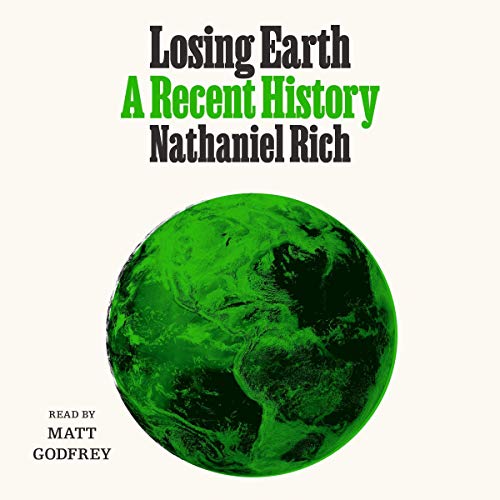
Losing Earth: A Recent History

Read: October 2019

Get this book

Losing Earth: A Recent History

by Nathaniel Rich

Losing Earth: A Recent History by Nathaniel Rich reminds us how close we were to halting the climate emergency, and our failure has resulted in our passing the tilting point. The book “reveals, in previously unreported detail, the birth of climate denialism and the genesis of the fossil-fuel industry’s coordinated effort to thwart climate policy through misinformation propaganda and political influence.”

By 1979, we knew nearly everything we understand today about climate change – including how to stop it. Over the next decade, a handful of scientists, politicians, and strategists, led by two unlikely heroes, risked their careers in a desperate, escalating campaign to convince the world to act before it was too late. Losing Earth is their story and ours.

The New York Times Magazine devoted an entire issue to Nathaniel Rich’s groundbreaking chronicle of that decade, which became an instant journalistic phenomenon – the subject of news coverage, editorials, and conversations all over the world. In its emphasis on the lives of the people who grappled with the significant existential threat of our age, it made vivid the moral dimensions of our shared plight.

Losing Earth tells the human story of climate change in even richer, more intimate terms. It reveals, in previously unreported detail, the birth of climate denialism and the genesis of the fossil-fuel industry’s coordinated effort to thwart climate policy through misinformation propaganda and political influence. The audiobook carries the story into the present day, wrestling with the long shadow of our past failures and asking crucial questions about how we make sense of our past, our future, and ourselves.

Like John Hersey’s Hiroshima and Jonathan Schell’s The Fate of the Earth, Losing Earth is the rarest of achievements: a riveting work of dramatic history that articulates a moral framework for understanding how we got here and how we must go forward.

Losing Earth is a must-read book!

Subscribe

Contact Us

×
Followers

Read: December 2021

Get this book

Followers

by Megan Angelo

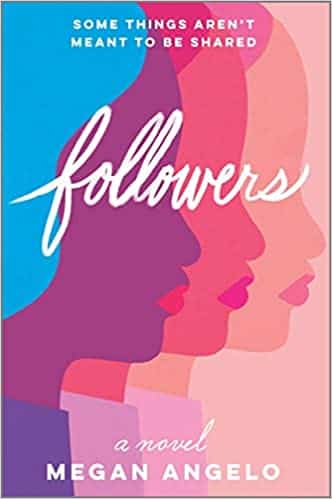
Followers by Megan Angelo is one of NPR’s Books We Love from 2020. Goodreads describes this as an electrifying story of two ambitious friends, the dark choices they make, and the stunning moment that changes the world as we know it forever.

Followers is a novel, but it could easily be read as history with all that has occurred with technology and social media. With the increased discussion of the Metaverse, how close are we to a significant spill of personal information? With the focus on followers defining our culture, how close are we to being manipulated by social media?

As a wannabe blogger, I am impressed by a handful of likes on social media and two comments on my posts. Although I can understand the temptation of Orla and Floss to manipulate the system for their benefit, it is something I know I would not do even if I had the skills.

The spill of personal information is described in a very plausible way. It is not just credit card data but private conversations, photos, and secrets that are spilled and alter the world as we know it. Is this possible? Hopefully not, but without adequate privacy regulations, we may all wake up one day to know that our most private secrets become known by everyone.

Marlow, the daughter of two mothers, along with Orla, provides an option of how we might all leave with less reliance on blue screens. As a secessionist nation in NJ, Atlantis was an interesting alternate reality.

Goodreads provides this overview if you are not convinced to read this book.

Orla Cadden is a budding novelist stuck in a dead-end job, writing clickbait about movie-star hookups and influencer yoga moves. Then Orla meets Floss ― a striving wannabe A-lister ― who comes up with a plan for launching them both into the high-profile lives they dream about. So what if Orla and Floss’s methods are a little shady and sometimes people get hurt? Their legions of followers can’t be wrong.

Thirty-five years later, in a closed California village where government-appointed celebrities live every moment of the day on camera, a woman named Marlow discovers a shattering secret about her past. Despite her massive popularity ― twelve million loyal followers ― Marlow dreams of fleeing the corporate sponsors who would do anything to keep her on-screen. When she learns that her whole family history is based on a lie, Marlow finally summons the courage to run in search of the truth, no matter the risks.

Followers traces the paths of Orla, Floss and Marlow as they wind through time toward each other, and toward a cataclysmic event that sends America into lasting upheaval. At turns wry and tender, bleak and hopeful, this darkly funny story reminds us that even if we obsess over famous people we’ll never meet, what we crave is genuine human connection.

I recommend Followers as not only a good read but an allegory of our technology-dominated culture.

×
1944: FDR and the Year That Changed History

Read: October 2019

Get this book

1944: FDR and the Year That Changed History

by Jay Winik

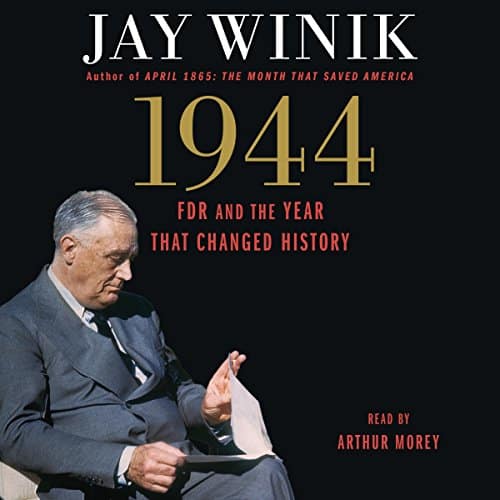
1944: FDR and the Year That Changed History by Jay Winik is a book that I had put off reading several times. When I finally did read it, I could not remember why I had not read it sooner. Had I gone to graduate school and become a professor, it might have been the type of book I might write, and I certainly would have had on my list of books for my classes. 

As The NY Times wrote, “Jay Winik brings to life in gripping detail the year 1944, which determined the outcome of World War II and put more pressure than any other on an ailing yet determined President Roosevelt.” Reading a book about events five years before my birth that transformed the world I live in becomes an easy page-turner.

It was not inevitable that World War II would end as it did or that it would even end well. Nineteen forty-four was a year that could have stymied the Allies and cemented Hitler’s waning power. Instead it saved those democracies – but with a fateful cost. Now, in a superbly told story, Jay Winik, the acclaimed author of April 1865 and The Great Upheaval, captures the epic images and extraordinary history as never before.

1944 witnessed a series of titanic events: FDR at the pinnacle of his wartime leadership as well as his reelection, the planning of Operation Overlord with Churchill and Stalin, the unprecedented D-Day invasion, the liberation of Paris, and the horrific Battle of the Bulge, and the tumultuous conferences that finally shaped the coming peace. But on the way, millions of more lives were still at stake as President Roosevelt was exposed to mounting evidence of the most grotesque crime in history, the Final Solution. Just as the Allies were landing in Normandy, the Nazis were accelerating the killing of millions of European Jews.

Winik shows how escalating pressures fell on an all but dying Roosevelt, whose rapidly deteriorating health was a closely guarded secret. Here then, as with D-Day, was a momentous decision for the president. Was winning the war the best way to rescue the Jews? Was a rescue even possible? Or would it get in the way of defeating Hitler? In a year when even the most audacious undertakings were within the world’s reach, including the liberation of Europe, one challenge – saving Europe’s Jews – seemed to remain beyond Roosevelt’s grasp.

I recommend this book.

Subscribe

Contact Us

×