
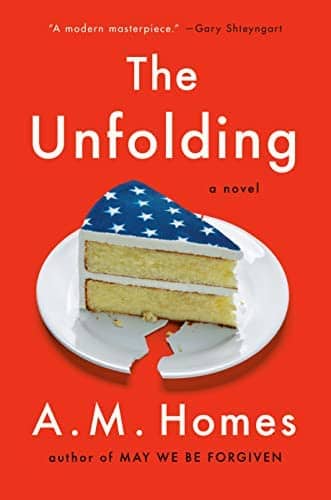
The Unfolding: A Novel

Estimated reading time: 1 minute, 55 seconds

The Unfolding by A.M. Homes is a darkly comic political parable braided with a Bildungsroman that takes us inside the heart of a divided country. The Unfolding is an alternative history that is terrifyingly prescient, profoundly tender, and devastatingly funny. Will this novel help me to understand how we became a nation that no longer shares the same definitions of truth, freedom, and democracy, much less a shared vision of the future?

Although I understand more clearly the crisis facing the US, I highly recommend this novel.

Ms. Homes has written a must-read book that compliments the January 6th Committee report and should make us all more vigilant.

The characters are so well defined that at the end of the novel, I wanted to continue to read about them, especially Meghan.

The Goodreads summary provides an overview,

The Big Guy loves his family, money, and country. Undone by the 2008 presidential election results, he taps a group of like-minded men to reclaim their version of the American Dream. As they build a scheme to disturb and disrupt, the Big Guy also faces turbulence within his family. His wife, Charlotte, grieves a life not lived, while his 18-year-old daughter, Meghan, realizes that her favorite subject–history–is not exactly what her father taught her.

In a story that is as much about the dynamics within a family as it is about the desire for those in power to remain in force, Homes presciently unpacks a dangerous rift in American identity, prompting a reconsideration of the definition of truth, freedom, and democracy–and exploring the explosive consequences of what happens when the exact words mean such different things to people living together under one roof.

In her first novel since the Women’s Prize award-winning May We Be Forgiven, A.M. Homes delivers us back to ourselves in this stunning alternative history that is both terrifyingly prescient, deeply tender, and devastatingly funny.


The Jan Lilien Education Fund sponsors ongoing sustainability and environmental awareness programs. Gifts made this month; I will match dollar-for-dollar. All donations are tax-deductible.

Subscribe

Contact Us

I receive a commission when you buy a book or product using a link on this page. Thank you for supporting Sharing Jan’s Love.

The Jan Lilien Education Fund!

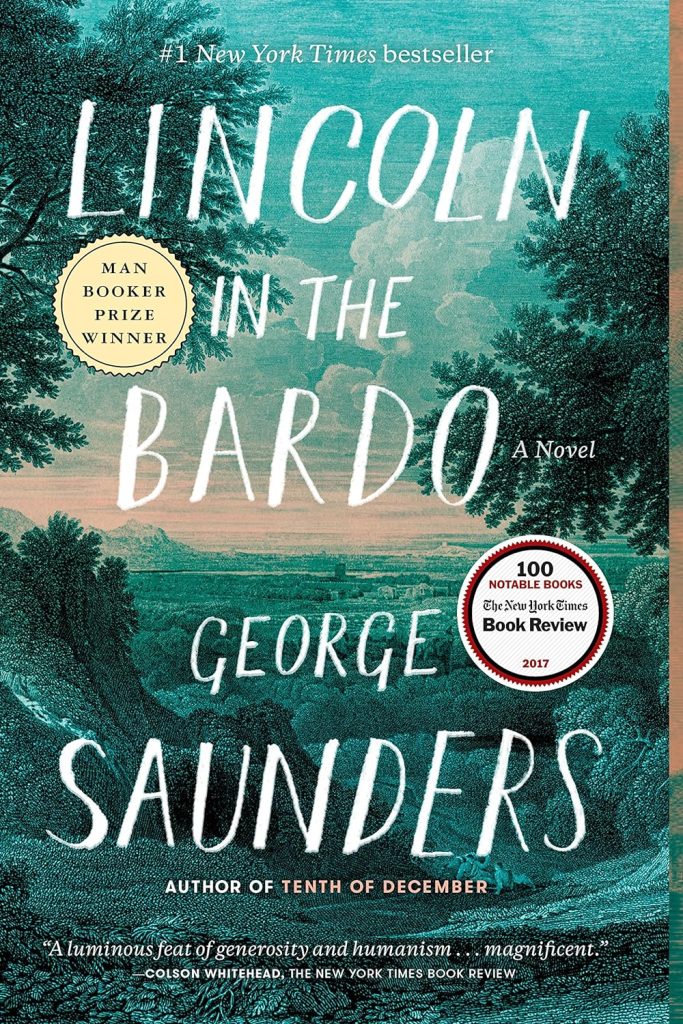
Lincoln in the Bardo: A Novel

Read: August 2024

Get this book

Lincoln in the Bardo: A Novel

by George Saunders

My journey with “Lincoln in the Bardo: A Novel” by George Saunders began with recognition as one of The New York Times’ 100 Best Books of the Century. As I turned its pages, I was immersed in its profound exploration of living and loving in the face of inevitable endings. The book, which struck a personal chord with me after a loss, is a testament to Saunders’ storytelling prowess and a must-read for those interested in Abraham Lincoln.

February 1862. The Civil War is less than one year old. The fighting has begun in earnest, and the nation has already realized it is in for a long, bloody struggle. Meanwhile, President Lincoln’s beloved eleven-year-old son, Willie, lies upstairs in the White House, gravely ill. In a matter of days, despite predictions of a recovery, Willie dies and is laid to rest in a Georgetown cemetery. “My poor boy, he was too good for this earth,” the president says at the time. “God has called him home.” Newspapers report that a grief-stricken Lincoln returns, alone, to the crypt several times to hold his boy’s body.

From a seed of historical truth, George Saunders weaves an unforgettable tale of familial love and loss that transcends its realistic, historical framework. The story takes a daring leap into a realm that is hilarious and terrifyingly supernatural. Willie Lincoln’s journey in a strange purgatory, where ghosts mingle, gripe, commiserate, quarrel, and enact bizarre acts of penance, is a testament to Saunders’ imaginative prowess. The monumental struggle over young Willie’s soul in this transitional state, known as the bardo in the Tibetan tradition, is a narrative that will leave you spellbound.

Lincoln in the Bardo is an astonishing feat of imagination and a bold step forward from one of his generation’s most important and influential writers. Formally daring, generous in spirit, and deeply concerned with matters of the heart, it is a testament to fiction’s ability to speak honestly and powerfully about the things that matter to us. Saunders has invented a thrilling new form that deploys a kaleidoscopic, theatrical panorama of voices to ask a timeless, profound question: How do we live and love when we know everything we love must end?


George Saunders is the author of thirteen books, including the novel Lincoln in the Bardo, which won the Booker Prize, and five collections of stories, including Tenth of December, which was a finalist for the National Book Award, and the recent collection Liberation Day (selected by former President Obama as one of his ten favorite books of 2022).

Three of Saunders’s books—Pastoralia, Tenth of December, and Lincoln in the Bardo—were chosen for The New York Times’s list of the 100 Best Books of the 21st Century. Saunders hosts the popular Story Club on Substack, which grew out of his book, A Swim in a Pond in the Rain. In 2013, he was named one of Time’s 100 Most Influential People. He teaches in the creative writing program at Syracuse University.


Discover your next favorite book and dive into a world of curated, exciting reads by purchasing through my links. You’ll have access to a diverse selection of books that I’ve personally vetted to ensure quality and enjoyment. Additionally, by supporting these selections, you’ll help me continue to provide you with more personalized recommendations. I earn a small commission from your purchase, which allows me to buy and share even more books with you. Your support truly makes a difference!


×
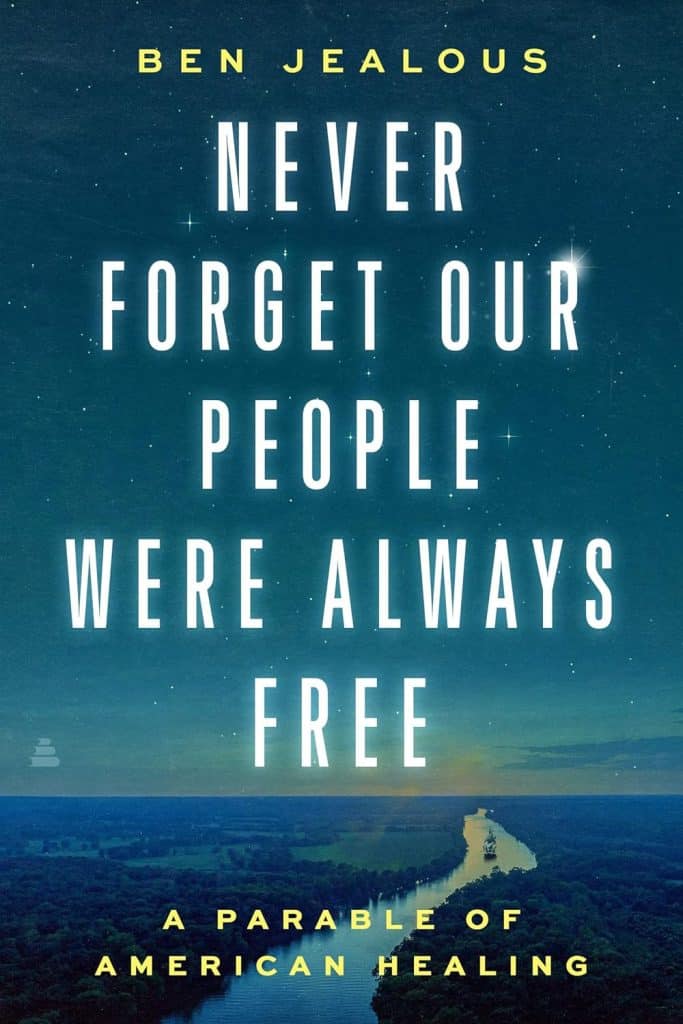
Never Forget Our People Were Always Free

Read: March 2024

Get this book

Never Forget Our People Were Always Free

by Ben Jealous

Today, I started reading “Never Forget Our People Were Always Free: A Parable of American Healing” by Ben Jealous, the Executive Director of the Sierra Club. The book highlights how the path to healing America’s broken heart begins with each of us having the courage to heal ourselves. According to Mr. Jealous, it would be transformative if every American treated each other as cousins.

Ben Jealous is the son of parents who had to leave Maryland because their cross-racial marriage was illegal.

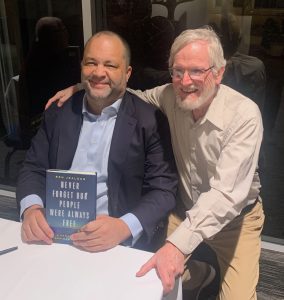
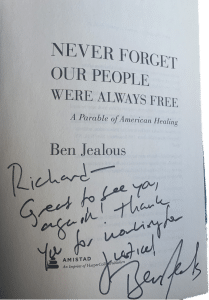
I briefly met Ben Jealous last May when I went to Washington with the Religious Action Center of Reform Judaism‘s Day of Action. When I saw Mr. Jealous speaking at Temple Emanu-El in neighboring Westfield, I immediately signed up to attend in person. He is an inspiration as an advocate for the environment, civil rights, and the healing of America’s broken heart.

His lively, courageous, and empathetic storytelling calls on every American to look past deeply cut divisions and recognize that we are all in the same boat now. Along the way, Jealous grapples with hidden American mysteries, including:

  • Why do white men die from suicide more often than black men die from murder?
  • How did racial profiling kill an American president?
  • What happens when a Ku Klux Klansman wrestles with what Jesus said?
  • How did Dave Chappelle know the DC Snipers were Black?
  • Why shouldn’t the civil rights movement give up on rednecks?
  • When is what we have collectively forgotten about race more important than what we know?
  • What do the most indecipherable things our elders say tell us about ourselves?

The book Never Forget Our People Were Always Free is told through parables. It features intimate glimpses of political and faith leaders such as Jack Kemp, Stacey Abrams, and the late Archbishop Desmond Tutu. The book also highlights unlikely heroes such as a retired constable, a female pirate from Madagascar, a long-lost Irishman, a death row inmate, and a man with a Confederate flag over his heart.
Never Forget Our People Were Always Free offers readers hope that America’s oldest wounds can heal and her oldest divisions can be overcome.

Although I have only read a handful of pages of the book, I highly recommend it!

×
Chess Story

Read: April 2026

Get this book

Chess Story: A Novella

by Stefan Zweig

“Chess Story,” also known as “The Royal Game,” is the final work of Austrian author Stefan Zweig. He completed it while in exile in Brazil and sent it to his American publisher just days before his suicide in 1942. This story is unique as it is the only one in which Zweig directly examines Nazism, portraying it through his characteristic focus on psychological themes.

The narrative follows travelers aboard a ship bound for Buenos Aires, where they encounter an arrogant, unfriendly world chess champion. Attempting to challenge him, they find themselves thoroughly defeated. However, a mysterious passenger steps forward to offer them advice, dramatically shifting their fortunes. The story delves into how this enigmatic figure acquired his extraordinary chess skills and the personal toll that it entailed.

This new translation of “Chess Story” highlights the work’s distinctive blend of high suspense and poignant reflection.


Stefan Zweig (1881–1942), novelist, biographer, poet, and translator, was born in Vienna into a wealthy Austrian Jewish family. During the 1930s, he was one of the best-selling writers in Europe and was among the most translated German-language writers before the Second World War. With the rise of Nazism, he moved from Salzburg to London (taking British citizenship), to New York, and finally to Brazil, where he committed suicide with his wife. New York Review Books has published Zweig’s novels The Post-Office Girl and Beware of Pity, as well as the novella Chess Story.

Peter Gay was Director of the Center for Scholars and Writers at the New York Public Library. He wrote Schnitzler’s Century: The Making of Middle-Class Culture, 1815–1914.


Discover your next favorite book and dive into a world of curated, exciting reads by purchasing through my links. You’ll have access to a diverse selection of books I’ve personally vetted for quality and enjoyment. Supporting these selections not only helps me continue to provide you with personalized recommendations but also ensures you have access to meaningful stories that enrich your life. Your support truly makes a difference in helping me share more books and insights with you!


×
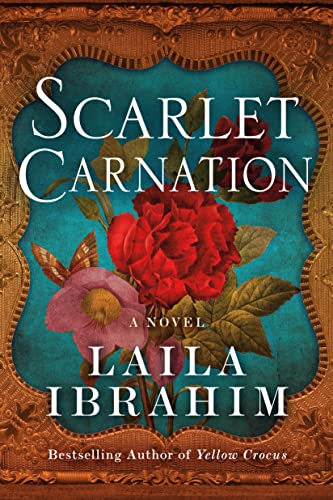
Scarlet Carnation: A Novel

Read: March 2022

Get this book

Scarlet Carnation: A Novel

by Laila Ibrahim

Scarlet Carnation: A Novel by Laila Ibrahim is a book I enjoyed reading. Having read this book, I am now a fan of Laila Ibrahim and look forward to reading more of her novels. In addition, I am a fan of historical fiction, and this is one of the best I have read about the second decade of the twentieth century.

May and Naomi are related, but their lives are very relatable to the reader. The promises of equality and transformation of women’s roles resonate even now. Bringing together the myriad issues they confront – racism, shaming for decisions they made, peace, and the interlocking of their families from a plantation, make this a book that I highly recommend.

The only observation was my shock at reading that they were petitioning President Coolidge at the start of WW I. It is a minor issue as the story flows strongly from the first to the last page.

The Goodreads overview highlights the narrative of the book.

In an early twentieth-century America roiling with racial injustice, class divides, and WWI, two women fight for their dreams in a galvanizing novel by the bestselling author of Golden Poppies. 1915. May and Naomi are extended families, their grandmothers’ lives inseparably entwined on a Virginia plantation in the volatile time leading up to the Civil War. For both women, the twentieth century promises social transformation and equal opportunity.

May, a young white woman, is on the brink of achieving the independent life she’s dreamed of since childhood. Naomi, a nurse, mother, and leader of the NAACP, has fulfilled her own dearest desire: buying a home for her family. But they both are about to learn that dreams can be destroyed in an instant. May’s future is upended, and she is forced to rely once again on her mother. Meanwhile, the white-majority neighborhood into which Naomi has moved is organizing against her while her sons are away fighting for their country.

In the tumult of a changing nation, these two women—whose grandmothers survived the Civil War—support each other’s quest for liberation and dignity. Both find the strength to confront injustice and the faith to thrive on their chosen paths.

Register to Attend Celebrate Jan Day

Subscribe

Contact Us

When you buy a book or product using a link on this page, I receive a commission. Thank you for supporting Sharing Jan’s Love blog.

×
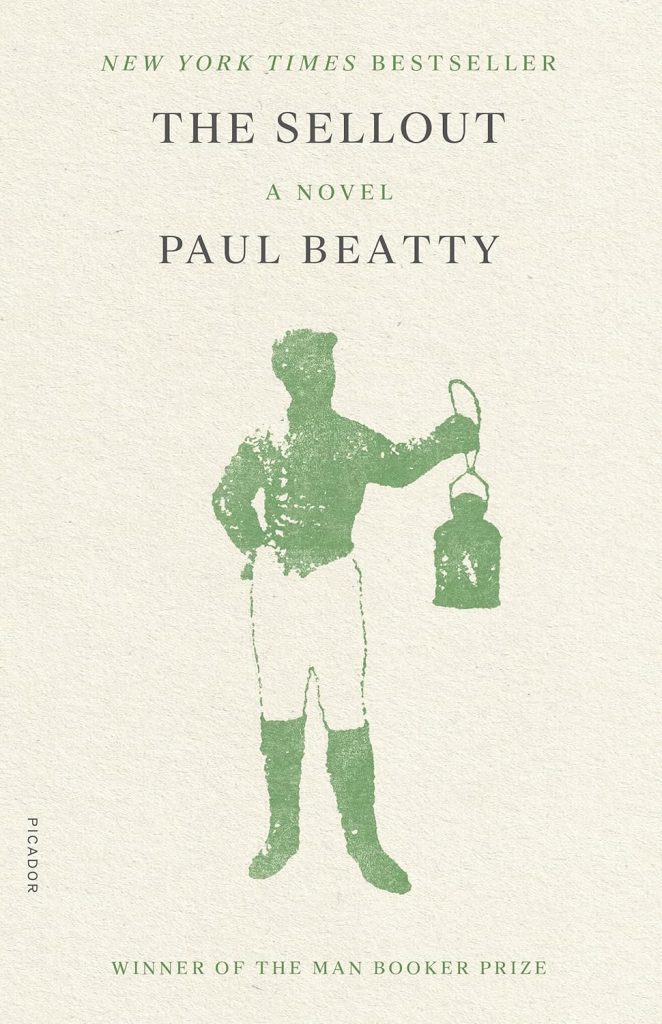
The Sellout: A Novel

Read: August 2024

Get this book

The Sellout: A Novel

by Paul Beatty

Today, I embarked on the unique narrative journey of The Sellout: A Novel by Paul Beatty. This biting satire, which revolves around a young man’s isolated upbringing and the race trial that takes him to the Supreme Court, is a testament to Paul Beatty‘s comic genius. The Sellout, a part of The New York Times’ 100 Best Books of the Century, is a must-read for those who appreciate a distinct narrative style.

The Sellout is a bold and thought-provoking work that challenges the sacred tenets of the United States Constitution, urban life, and the civil rights movement. It also explores the father-son relationship and the pursuit of racial equality, symbolized by the black Chinese restaurant. This social commentary is a vital aspect of The Sellout, making it a relevant and engaging read for those interested in contemporary issues.

Born in the “agrarian ghetto” of Dickens—on the southern outskirts of Los Angeles—the narrator of The Sellout resigns himself to the fate of lower-middle-class Californians: “I’d die in the same bedroom I’d grown up in, looking up at the cracks in the stucco ceiling that’s been there since ’68 quake.”

Raised by a single father, a controversial sociologist, he spent his childhood as the subject of racially charged psychological studies. Despite these challenges, he believes his father’s pioneering work will result in a memoir that will solve his family’s financial woes. But when his father is killed in a police shoot-out, he realizes there never was a memoir. All that’s left is the bill for a drive-thru funeral.

Fuelled by this deceit and the general disrepair of his hometown, the narrator sets out to right another wrong: Dickens has been removed from the map to save California from further embarrassment. Enlisting the help of the town’s most famous resident—the last surviving Little Rascal, Hominy Jenkins—he initiates the most outrageous action conceivable: reinstating slavery and segregating the local high school, which lands him in the Supreme Court. His determination to fight injustice is a powerful force that drives the narrative forward.

×
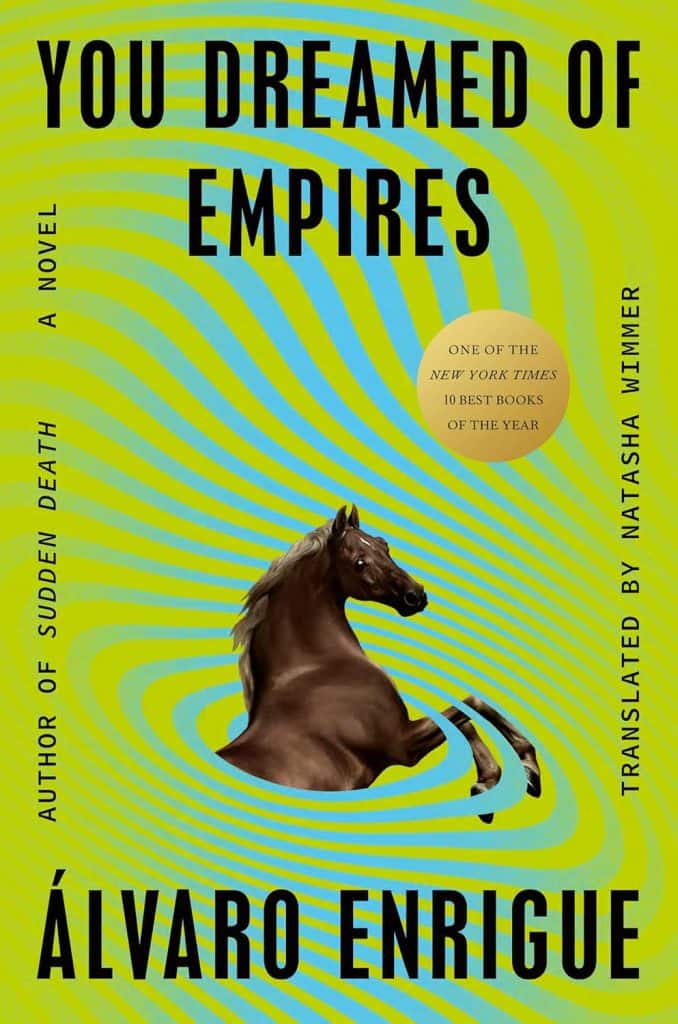
You Dreamed of Empires: A Novel

Read: December 2024

Get this book

You Dreamed of Empires: A Novel

by Álvaro Enrigue

Today, I began reading “You Dreamed of Empires: A Novel” by Álvaro Enrigue, translated by Natasha Wimmer. This book is from the visionary author of “Sudden Death,” a hallucinatory and revelatory tale of colonial revenge. It has been recognized as one of The New York Times’ 100 Notable Books of 2024 and included in the list of 10 Best Books of 2024. So far, I have read four of the top five fiction books of 2024: “All Fours,” “James,” “Martyr!,” and “Good Material.”

One morning in 1519, conquistador Hernán Cortés entered the city of Tenochtitlan, today’s Mexico City. Later that day, he will meet the emperor Moctezuma in a collision of two worlds, two empires, two languages, and two possible futures.

Cortés is accompanied by his captains, troops, prized horses, and two translators: Friar Aguilar, a taciturn friar, and Malinalli, an enslaved, strategic Nahua princess. After nearly bungling their entrance to the city, the Spaniards are greeted at a ceremonial welcome meal by the steely Aztec princess Atotoxtli, sister and wife of Moctezuma. As they await their meeting with the emperor – who is at a political and spiritual crossroads and relies on hallucinogens to get by – Cortés and his entourage are ensconced in the labyrinthine palace. Soon, one of Cortés’s captains, Jazmín Caldera, overwhelmed by the place’s grandeur, began questioning the ease with which they were welcomed into the city and wondered at the chances of getting out alive, much less conquering the empire. And what if… they don’t?

You Dreamed of Empires brings Tenochtitlan to life at its height and reimagines its destiny. The incomparably original Álvaro Enrigue sets afire the moment of conquest and turns it into a revolution, a restitutive, fantastical counterattack, in a novel so electric and unique that it feels like a dream.


When you purchase a book through one of my links, I earn a small commission that helps support my passion for reading. This contribution allows me to buy even more books to share with you, creating an incredible cycle of discovering great reads together! Your support truly makes a difference!


×