New Book: The Sorrow Apartments

Estimated reading time: 0 minutes, 0 seconds
The Sorrow Apartments

The Sorrow Apartments

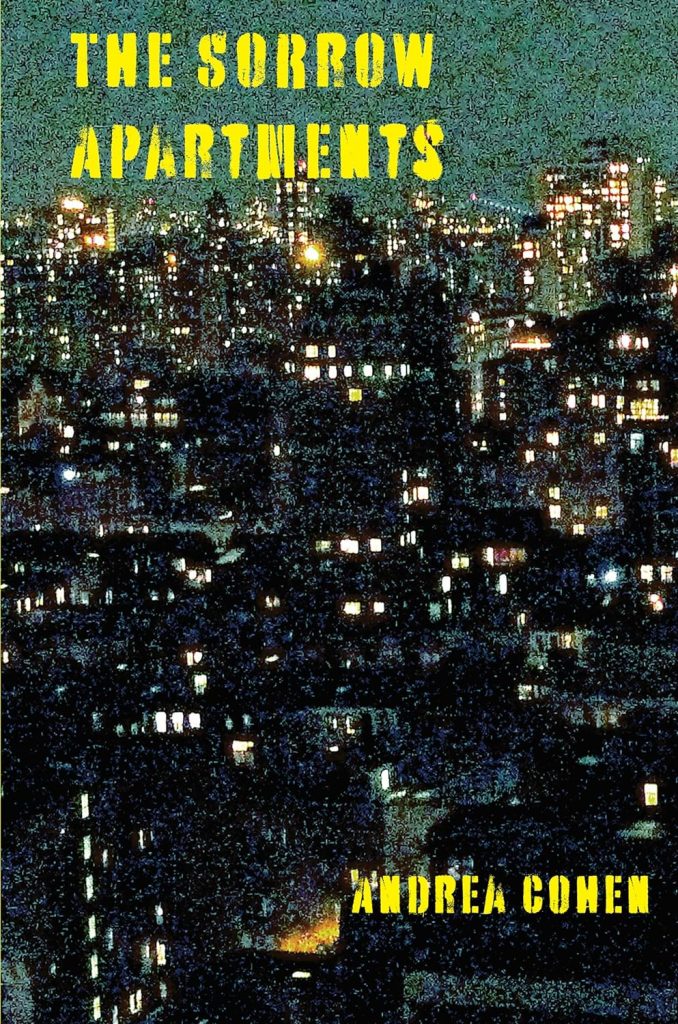
Today, I explored "The Sorrow Apartments," the eighth collection of poems by poet Andrea Cohen. Renowned poet Christian Wiman accurately describes Cohen's work as a "cumulative force," showcasing her deep attention, genuine intelligence, and soul. Cohen's distinctive talents are featured in this collection, complemented by her characteristic sly humor, unwavering conciseness, and surprising moments of profound wisdom.

Read book review Get this book All books

Share your thoughts and ideas

This site uses Akismet to reduce spam. Learn how your comment data is processed.

The Jan Lilien Education Fund!

The Sorrow Apartments

Read: June 2024

Get this book

The Sorrow Apartments

by Andrea Cohen

Today, I explored “The Sorrow Apartments,” the eighth collection of poems by poet Andrea Cohen. Renowned poet Christian Wiman accurately describes Cohen’s work as a “cumulative force,” showcasing her deep attention, genuine intelligence, and soul. Cohen’s distinctive talents are featured in this collection, complemented by her characteristic sly humor, unwavering conciseness, and surprising moments of profound wisdom.

It’s astonishing how swiftly Cohen transports us:

Bunker

What would I
think, coming

up after
my world

had evaporated?
I’d wish

I were water.

The Sorrow Apartments house a collection of sparse and haunting poetry, each piece a captivating narrative of mystery, grief, and awe. These poems transport us not just across time but also through a spectrum of emotions. Cohen’s unique approach to illumination is evident in “Acapulco,” where an unanticipated companion muses, “as men tend to, / the stars comprising Orion’s belt — / as if it were the lustrous sparks and not / the leveling dark that connects us.” For a poet often deemed unfashionable, Cohen’s work proves that unfashionable can be beautiful.

×
Working

Read: October 2019

Get this book

Working

by Robert A. Caro

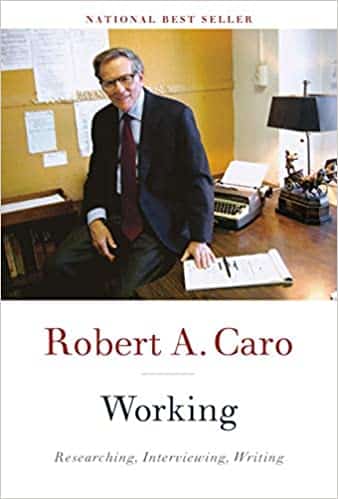
Working by Robert A. Caro is a book of evocatively written essays on his life and work. Among the many valuable words of wisdom is his case that one needs to look at every piece of information, not just what we know when we begin. Far too often, people jump to conclusions without having learned all of the facts.

He describes what it was like to interview the mighty Robert Moses and to begin discovering the extent of the political power Moses wielded; the combination of discouragement and exhilaration he felt confronting the vast holdings of the Lyndon B. Johnson Library in Austin, Texas; his encounters with witnesses, including longtime residents wrenchingly displaced by the construction of Moses’ Cross-Bronx Expressway and Lady Bird Johnson acknowledging the beauty and influence of one of LBJ‘s mistresses. He gratefully remembers how, after years of working in solitude, he found a writers’ community at the New York Public Library, and details the ways he goes about planning and composing his books.

Caro recalls the moments at which he came to understand that he wanted to write not just about the men who wielded power but about the people and the politics that were shaped by that power. And he talks about the importance to him of the writing itself, of how he tries to infuse it with a sense of place and mood to bring characters and situations to life on the page. Taken together, these reminiscences–some previously published, some written expressly for this book–bring into focus the passion, the wry self-deprecation, and the integrity with which this brilliant historian has always approached his work.

I found this one of the best books I have read and recommend it to all readers.

Subscribe

Contact Us

×
Revolutionary Mothers

Read: February 2019

Get this book

Revolutionary Mothers

by Carol Berkin

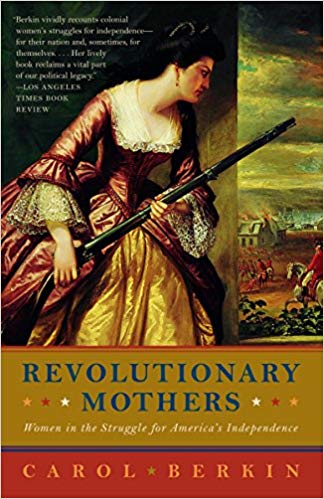
Revolutionary Mothers by Carol Berkin, Presidential Professor of American Colonial and Revolutionary History; Women’s History Professor at Baruch College, is one of four books I purchased after my first One Day University Class on February 9, 2019. It should be required reading!

The book explains how women of the Revolution were most active at home, organizing boycotts of British goods, raising funds for the fledgling nation, and managing the family business while struggling to maintain a modicum of normalcy as husbands, brothers, and fathers died.

It was not just the men who fought on the front lines, as in the story of Margaret Corbin, who was crippled for life when she took her husband’s place beside a cannon at Fort Monmouth. She explains the mystery of Molly Pitcher (she was not a person but a group of women), camp followers, women who spied for their country, Loyalist women, and the impact on African American and Native women.

This intelligent and comprehensive history brings these forgotten stories to their rightful place in the struggle for American independence. Dr. Birkin also highlights how their efforts set the stage for the continuing campaign for gender equality.

Subscribe

Contact Us

×
Don't Be a Stranger: A Novel

Read: October 2024

Get this book

Don’t Be a Stranger: A Novel

by Susan Minot

Today, I began reading “Don’t Be a Stranger: A Novel” by Susan Minot, a captivating new work by the author of ‘Evening.’ Known for her lyrical prose and exploration of complex human relationships, Minot’s latest novel revolves around a woman involved in a love affair during midlife. It is a radiant tale that explores themes of erotic obsession, the desire for intimacy, communication, and oblivion, which will resonate with fans of Miranda July‘s ‘All Fours,’ a book I have also read.

Ivy Cooper is 52 years old when Ansel Fleming first enters her life. Twenty years her junior, a musician newly released from prison on a minor drug charge, Ansel’s beguiling good looks and quiet intensity instantly seduce her. Despite the gulf between their ages and experience, their physical chemistry is overpowering. Over the heady weeks and months that follow, Ivy finds her life bifurcated by his presence: On the surface, she is a responsible mother, managing the demands of friends, an ex-husband, and home, but emotionally, psychologically, sexually, she is consumed by desire and increasingly alive only in the stolen moments-out-of-time, with Ansel in her bed.

Don’t Be a Stranger is a gripping, sensual, and provocative work from one of the most remarkable voices in contemporary fiction.

×
Losing Earth: A Recent History

Read: October 2019

Get this book

Losing Earth: A Recent History

by Nathaniel Rich

Losing Earth: A Recent History by Nathaniel Rich reminds us how close we were to halting the climate emergency, and our failure has resulted in our passing the tilting point. The book “reveals, in previously unreported detail, the birth of climate denialism and the genesis of the fossil-fuel industry’s coordinated effort to thwart climate policy through misinformation propaganda and political influence.”

By 1979, we knew nearly everything we understand today about climate change – including how to stop it. Over the next decade, a handful of scientists, politicians, and strategists, led by two unlikely heroes, risked their careers in a desperate, escalating campaign to convince the world to act before it was too late. Losing Earth is their story and ours.

The New York Times Magazine devoted an entire issue to Nathaniel Rich’s groundbreaking chronicle of that decade, which became an instant journalistic phenomenon – the subject of news coverage, editorials, and conversations all over the world. In its emphasis on the lives of the people who grappled with the significant existential threat of our age, it made vivid the moral dimensions of our shared plight.

Losing Earth tells the human story of climate change in even richer, more intimate terms. It reveals, in previously unreported detail, the birth of climate denialism and the genesis of the fossil-fuel industry’s coordinated effort to thwart climate policy through misinformation propaganda and political influence. The audiobook carries the story into the present day, wrestling with the long shadow of our past failures and asking crucial questions about how we make sense of our past, our future, and ourselves.

Like John Hersey’s Hiroshima and Jonathan Schell’s The Fate of the Earth, Losing Earth is the rarest of achievements: a riveting work of dramatic history that articulates a moral framework for understanding how we got here and how we must go forward.

Losing Earth is a must-read book!

Subscribe

Contact Us

×
How the Word is Passed

Read: December 2021

Get this book

How the Word Is Passed: A Reckoning with the History of Slavery Across America

by Clint Smith

How the Word Is Passed: A Reckoning with the History of Slavery Across America by Clint Smith. This book was a gift from my son Jon. The New York Times selected How the Word is Passed as one of the best books published this year. Beginning in his hometown of New Orleans, Clint Smith leads the reader on an unforgettable tour of monuments and landmarks—those that are honest about the past and those that are not—that offer an intergenerational story of how slavery has been central in shaping our nation’s collective history, and ourselves.

How the Word is Passed is one of the best books I have read in 2021. I had read an excerpt in The Atlantic on the Whitney Plantation, one of the only former plantations devoted to preserving the experience of the enslaved people whose lives and work sustained it. Like most of us, I had placed the book on my to-read list, where it remained lost in the cobwebs. Fortunately, my son Jon purchased the book for me.

Secondly, the book rekindled my long-lost dream of being an American Studies professor. As soon as Jan and I met, I dropped plans to leave Brooklyn and start graduate school in the fall of 1974. I made that decision primarily because of how much I loved Jan. But it was also partly that I did not have a clear vision of what my life would be like as a professor. The book provided clear examples of people like Yvonne Holden at The Whitney Plantation redefining history to be more accurate and inclusive. I probably could not have done as well as she did, but I can now see that it might have resulted in a career for me that could have been impactful.

Goodreads provides this overview for those who still need to be convinced to read this book.

It is the story of the Monticello Plantation in Virginia, the estate where Thomas Jefferson wrote letters espousing the urgent need for liberty while enslaving over 400 people on the premises. It is the story of the Whitney Plantation, one of the only former plantations devoted to preserving the experience of the enslaved people whose lives and work sustained it. It is the story of Angola Prison in Louisiana, a former plantation named for the country from which most of its enslaved people arrived and which has since become one of the most gruesome maximum-security prisons in the world. And it is the story of Blandford Cemetery, the final resting place of tens of thousands of Confederate soldiers.

In a deeply researched and transporting exploration of the legacy of slavery and its imprint on centuries of American history, How the Word Is Passed illustrates how some of our country’s most essential stories are hidden in plain view-whether in places we might drive by on our way to work, holidays such as Juneteenth, or entire neighborhoods—like downtown Manhattan—on which the brutal history of the trade in enslaved men, women and children has been deeply imprinted.

Informed by scholarship and brought alive by the story of people living today, Clint Smith’s debut work of nonfiction is a landmark work of reflection and insight that offers a new understanding of the hopeful role that memory and history can play in understanding our country.

How the Word is Passed is one of the best books I have read this year and many prior ones. I encourage you to read it and share your comments.

Subscribe

Contact Us

When you buy a book or product using a link on this page, I receive a commission. Thank you for supporting Sharing Jan’s Love blog.

×
Whale Fall: A Novel

Read: July 2024

Get this book

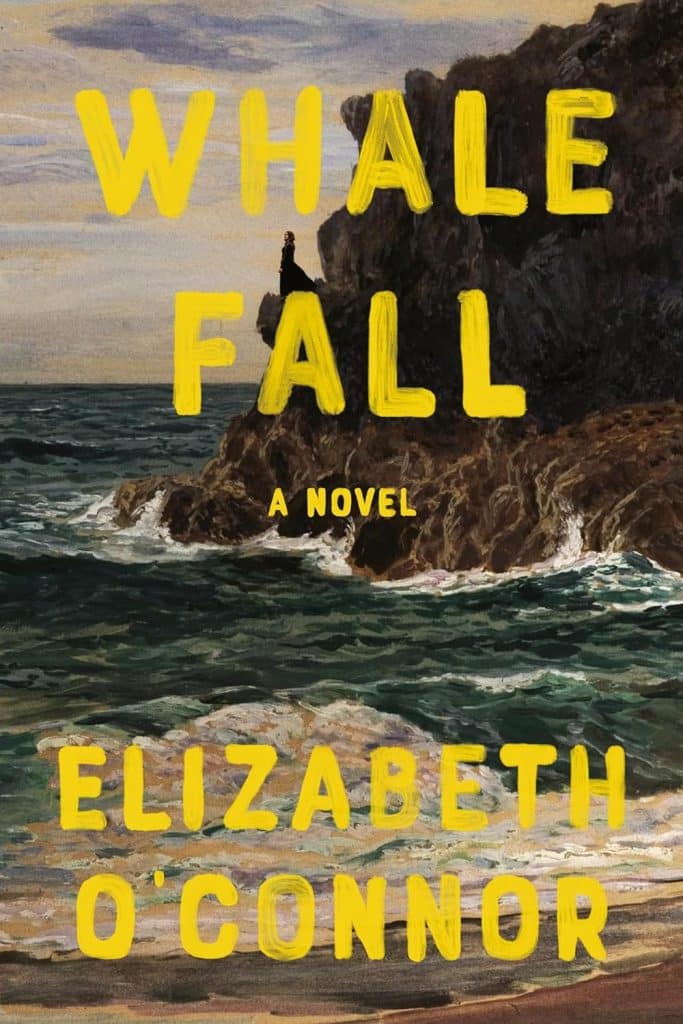
Whale Fall: A Novel

by Elizabeth O'Connor

I have started reading “Whale Fall: A Novel” by Elizabeth O’Connor. With its unique blend of loss, isolation, folklore, and the journey of self-discovery, this debut novel offers a compelling narrative set in 1938 on a remote Welsh island. The story is catalyzed by the arrival of a dead whale, a powerful symbol that sets the stage for the characters’ journeys.

The story revolves around Manod, a young woman who has spent her entire life on the island. Despite their island home’s harsh yet stunning surroundings, Manod yearns to explore life beyond it, a desire that will resonate with many readers.

As two English ethnographers arrive to study the island’s culture, Manod sees it as a potential escape from her community. However, her growing involvement with them triggers a profound internal conflict. She grapples with the dilemma of pursuing her desires or remaining loyal to her community. This struggle resonates with the universal human experience, making it a compelling read for many.

Whale Fall‘ vividly portrays the tensions that surface when one person’s aspirations threaten the unity of a community. O’Connor’s narrative skillfully depicts the community and Manod on the brink, forced to confront a world that seems to infringe upon them. This evokes a sense of admiration for O’Connor’s storytelling prowess, making it a must-read for literary fiction enthusiasts.

×