
Friends for Life

Love Guides Me Into the Future

Whatever Path I Take, I Will Share My Love

Estimated reading time: 1 minute, 45 seconds
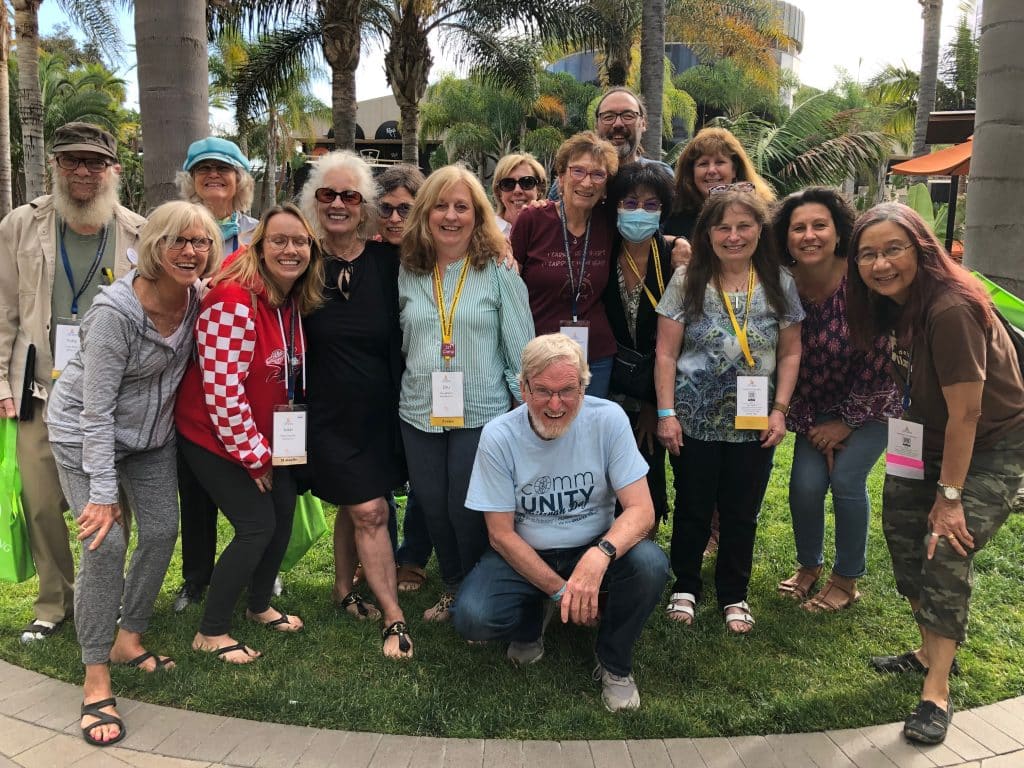
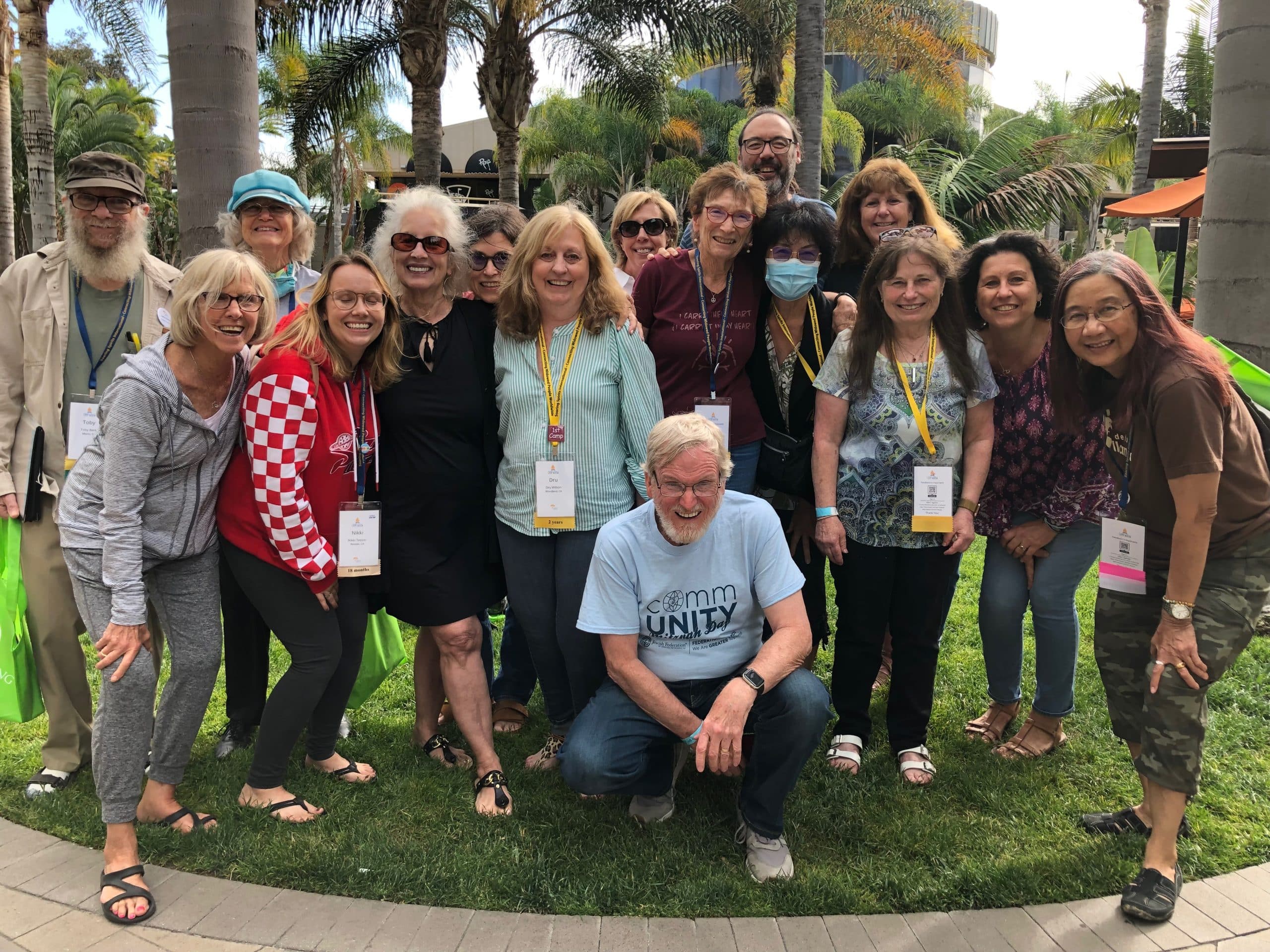
Friends for Life

Camp Widow 2022

After last weekend’s heavy rain, the wetlands by the frog pond were now dry enough for me to take the path. The water was like a reflective sheet of glass, with some sections opaque and others as clear as a babbling brook. As I walked, my mind wandered freely, and the sound of the frogs croaking guided me through the wilderness. I could see a future without limitations rather than obstacles in my way.

My Apple Watch notified me that I had closed my moving ring, but my body reminded me that I needed to hurry to the restroom. Despite this, I paused as I approached the slabs that allowed me to tiptoe over the waterway. The pond reflected life’s choices more clearly than any self-help guidebook.

The ink-dark portions of the pond were impenetrable and reflected nothing of my world. I feared that if I stepped into that portion, I would disappear. However, the transparent part of the pond reminded me that the water was so shallow it would only reach my mid-calf. Despite being wet, I could walk forward unimpeded and knew I could not drown.

The sound of the frogs wakes me from my rest. The sun’s warmth invites me to venture forth, and I stroll past the pond to the path around the sports field. As a widow, the darkest fears of my life recede as I proceed toward the park’s comfort facilities. I will always confidently move forward, trusting in love to guide me. I aim to share my passion, embrace life’s challenges and joys, and live fully.


The Jan Lilien Education Fund sponsors ongoing sustainability and environmental awareness programs. Gifts made this month; I will match dollar-for-dollar. All donations are tax-deductible.

Subscribe

Contact Us

I receive a commission when you buy a book or product using a link on this page. Thank you for supporting Sharing Jan’s Love blog.
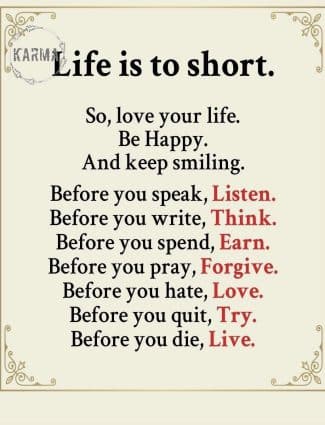


Life is Too Short!

I sometimes yearn for more from life than I have, but I also acknowledge that I have more than others. During my last conversation with my wife, she said she did not want me to be alone. "You are a good man and an excellent husband," she said. "You will be happier with someone than alone." Although I resisted, she was persistent. Now that I am alone, will I be content if I never find someone to love? Yes, but I know that Jan was right, and while I can live alone, I will always be less than entirely happy.

Show thread (1)

Frog Pond

Whatever Path I Take, I Will Share My Love

Estimated reading time: 1 minute, 45 seconds
Walking By Frog Pond

Walking by the bakery the next day, I greeted the staff with a friendly wave. Suddenly, someone called, "Hey, Mr. Have a Nice Day! Do you remember me from Nomehagan Park yesterday when I fell?" It was one of the bakers who delivered baked goods to Track 5 every morning. I realized that she was also the person who had slipped in the park's wetlands.

When I asked her how she was doing after the fall, she replied, "I'm fine, just a scrape. Thank you for asking. It seems like most people don't care about their neighbors, but you're different and genuinely concerned."

This conversation reminded me of the importance of caring for others. While many praised me for handling my grief on Memorial Day, this woman validated my humanity and made me reflect on the significance of empathy.

Share your thoughts and ideas

This site uses Akismet to reduce spam. Learn how your comment data is processed.

The Jan Lilien Education Fund!

Friends for Life
×
The Kitchen House

Read: August 2021

Get this book

The Kitchen House

by Kathleen Grisson

The Kitchen House by Kathleen Grissom was a book that I knew very little about who I took from our bookshelf. My wife had encouraged me to read it as it focused on the south, and she knew I ofter read both about that place and enjoyed history.

From the opening pages, It became a book that I could not put down.

Two characters narrate the book. One is Lavinia, an Irish girl orphaned and brought to the plantation by the master, a ship’s captain. She is assigned to the kitchen house to work with Belle, who is the illegitimate child of the master of the estate.

As Lavinia grows under the tutelage of Belle, the story highlights the struggles of a plantation. Lavinia finds family and love from the enslaved even though she is only indentured. The distinction that skin color would have on their lives is one that Lavinia only learns at the end.

Through the unique eyes of Lavinia and Belle, Grissom’s debut novel unfolds in a heartbreaking and ultimately hopeful story of class, race, dignity, deep-buried secrets, and familial bonds.

The Kitchen House is Ms. Grissom’s first novel and impressed me and inspired me even though I have no skills as a writer.

I strongly recommend this book.

Subscribe

Contact Us

×
A Line in the Sand- A Novel

Read: June 2023

Get this book

A Line in the Sand: A Novel

by Kevin Powers

Today I started reading A Line in the Sand: A Novel by Kevin Powers. Listed as one of the books to read this week by The New York Times, which described it as “a stunning novel. Kevin Powers provides what any discerning reader desires the most — complex and flawed characters, precise use of language, succinct description, and believable dialogue.”

One early morning on a Norfolk beach in Virginia, a dead body is discovered by a man taking his daily swim—Arman Bajalan, formerly an interpreter in Iraq. After narrowly surviving an assassination attempt that killed his wife and child, Arman has been given lonely sanctuary in the US as a maintenance worker at the Sea Breeze Motel. Now, convinced that the body is connected to his past, he knows he is still unsafe.

Seasoned detective Catherine Wheel and her newly minted partner have little to go on beyond a bus ticket in the dead man’s pocket. It leads them to Sally Ewell, a local journalist as grief-stricken as Arman is by the Iraq War, investigating a corporation on the cusp of landing a multi-billion-dollar government defense contract.

As victims mount around Arman, taking the team down wrong turns and towards startling evidence, they find themselves in a race committed to unraveling the truth and keeping Arman alive—even if it costs them everything.


The Jan Lilien Education Fund sponsors ongoing sustainability and environmental awareness programs. Gifts made this month; I will match dollar-for-dollar. All donations are tax-deductible.

Subscribe

Contact Us

I receive a commission when you buy a book or product using a link on this page. Thank you for supporting Sharing Jan’s Love blog.


×
Absolution: A Novel

Read: November 2023

Get this book

Absolution: A Novel

by Alice McDermott

I started reading “Absolution: A Novel” by Alice McDermott today. The opening line immediately grabbed my attention: “You have no idea what it was like. For us. The women, I mean.” In most literature about the Vietnam War, American women, particularly wives, have been minor characters. However, in “Absolution,” they take center stage.

The book follows the story of two women, Tricia, a shy newlywed, and Charlene, a practiced corporate spouse and mother of three. They both found themselves in Saigon in 1963, forming a wary alliance. They balance the era’s mandate to be “helpmeets” to their ambitious husbands with their inchoate impulse to “do good” for the people of Vietnam.

Sixty years later, Charlene’s daughter reaches out to Tricia after encountering an aging Vietnam vet. Together, they look back at their time in Saigon, carefully considering that pivotal year and Charlene’s altruistic machinations. They discover how their lives as women on the periphery have been shaped and burdened by the same unintended consequences that followed America’s tragic interference in Southeast Asia.

This virtuosic new novel from Alice McDermott, one of our most observant and affecting writers, explores themes of folly and grace, obligation, sacrifice, and, finally, the quest for absolution in a broken world.


The Jan Lilien Education Fund sponsors ongoing sustainability and environmental awareness programs. Gifts made this month; I will match dollar-for-dollar. All donations are tax-deductible.

Subscribe

Contact Us

I receive a commission when you buy a book or product using a link on this page. Thank you for supporting Sharing Jan’s Love blog.


×
The Rest Is Memory: A Novel

Read: January 2025

Get this book

The Rest Is Memory: A Novel

by Lily Tuck

Today, I dove into “The Rest Is Memory: A Novel” by Lily Tuck, and it’s already leaving a powerful impression. This poignant tale follows a young Catholic girl’s harrowing journey to Auschwitz, woven in a captivating Rashomon-style narrative showcasing Tuck’s brilliance as a storyteller. Esquire has rightly placed it on their list of Best Books for Fall 2024, and I can see why.

In Tuck‘s skilled hands, “The Rest Is Memory” transforms into an unforgettable piece of historical reclamation, breathing life into an innocent soul who has long been remembered only through a haunting triptych of photographs. It’s a journey that promises to linger in my thoughts long after I’ve turned the last page.

In this mesmerizing novel by Lily Tuck, we first glimpse fourteen-year-old Czeslawa riding on the back of a boy’s motorcycle. Tuck imagines Czeslawa’s upbringing in a small Polish village before her world imploded in late 1942. Stripped of her modest belongings, she arrives at Auschwitz shorn and bearing the tattoo number 26947. Shortly after, she is photographed. Three months later, she is dead.

How did this happen to an ordinary Polish citizen? This is the question Tuck grapples with in this haunting narrative, which frames Czeslawa’s story within the tragic context of the six million Poles who perished during the German occupation. A decade before writing The Rest Is Memory“, Tuck read an obituary of the photographer Wilhelm Brasse, who took over 40,000 pictures of Auschwitz prisoners—including three of Czeslawa Kwoka, a Catholic girl from rural southeastern Poland. Tuck cut out these photos and kept them, determined to learn more about Czeslawa. However, she could only gather the barest facts: the village she came from, the transport she was on, that she was accompanied by her mother and neighbors, her tattoo number, and the date of her death. Tuck crafts a remarkable kaleidoscope of imagination from this scant evidence, something only our greatest novelists can achieve.

Susanna Moore described the novel as “Beautifully written, all the while instilling a sense of horror.” Tuck’s language swirls around the reader, yet no word is out of place. The subtly rotating images tumble forth, accelerating as we learn about Czeslawa’s tragic time in Auschwitz, as well as the lives of real individuals, including the brutal Commandant Rudolf Höss, his unconscionable wife Hedwig, psychiatrist and child rescuer Janusz Korczak, and the sharp Polish short story writer Tadeusz Borowski. Although we know Czeslawa’s fate, we must keep turning the pages, thoroughly captivated by Tuck’s nearly otherworldly prose.


When you purchase a book through one of my links, I earn a small commission that helps support my passion for reading. This contribution allows me to buy even more books to share with you, creating an incredible cycle of discovering great reads together! Your support truly makes a difference!


×
The Singing Word

Read: September 2025

Get this book

The Singing Word

by Walt Hunter

The Singing Word: 168 Years of Atlantic Poetry, edited by Walt Hunter, celebrates the people, land, and spirit of America. This remarkable collection showcases a wide range of contemporary and historical poetry from the 168-year archive of The Atlantic magazine. Since its first issue in 1857, the poetry published in The Atlantic has drawn attention to the nation’s ongoing journey of self-discovery.

The magazine’s verse has featured odes to American leaders and landscapes, laments for the dead, and calls for change, appealing to the enduring ideals of Atlantic readers.

This one-of-a-kind collection selects poems of rousing optimism, clear-eyed realism, and moving lyricism—poems infused with the language of America’s songs, myths, and history, from the Civil War up through the present in three rich parts: National Anthems, Natural Lines, and Personal Mythologies.

Curated by The Atlantic’s Poetry Editor, this anthology features both world-famous poets—from Longfellow to Limón, including Robert Frost, W. S. Merwin, Sylvia Plath, and Adrienne Rich—as well as poets whose work has never before been published outside of the magazine.

Offering readers an essential understanding of American canon and the evolving nation, its poets have yearned to capture—the poetry of The Atlantic is the poetry of America.


Walt Hunter is a professor of twentieth- and twenty-first-century literature and chair of the English department at Case Western Reserve University. He is also the fiction and poetry editor for The Atlantic.


Discover your next favorite book and dive into a world of curated, exciting reads by purchasing through my links. You’ll have access to a diverse selection of books that I’ve personally vetted to ensure quality and enjoyment. Additionally, by supporting these selections, you’ll help me continue to provide you with more personalized recommendations. I earn a small commission from your purchase, which allows me to buy and share even more books with you. Your support truly makes a difference!


×
Autobiography of Cotton

Read: February 2026

Get this book

Autobiography of Cotton

by Cristina Rivera Garza

In 1934, a young José Revueltas traveled to Tamaulipas to support the cotton workers’ strike in Estación Camarón, which would later serve as the foundation for his landmark novel, Human Mourning. In her groundbreaking novel Autobiography of Cotton, Cristina Rivera Garza recounts her grandparents’ journey from mining towns to those same cotton fields. Her narrative intersects with Revueltas’s life and offers a vivid and evocative account of the history of cotton cultivation along the Mexico-U.S. border.

Through archival research and personal narrative, Rivera Garza explores how cotton transformed the borderlands by recounting the story of the cotton workers’ strike. She reveals how cycles of deprivation and environmental destruction continue to affect generations. Rivera Garza skillfully creates a new kind of border novel that illustrates how a fragile landscape drastically changed her grandparents’ lives and the territories they helped to develop. In this intimate fictionalization, Autobiography of Cotton offers a rich social history that encompasses agricultural colonization, labor activism, environmental degradation, and cross-border migration.

I recommend “Autobiography of Cotton,” but readers should be patient as the book shifts back and forth in time. Everything becomes clear as you continue reading.


Cristina Rivera Garza is the Pulitzer Prize–winning author of Liliana’s Invincible Summer. A MacArthur Fellow, she is the Hugh Roy and Lillie Cranz Cullen Distinguished Chair and founder of the University of Houston’s PhD in Creative Writing in Spanish.

Christina MacSweeney is the award-winning literary translator of works by Julián Herbert, Valeria Luiselli, and Elvira Navarro. She received the 2024 Sundial Literary Translation Award for her translation of Verónica Gerber Bicecci‘s The Company.


Discover your next favorite book and dive into a world of curated, exciting reads by purchasing through my links. You’ll have access to a diverse selection of books that I’ve personally vetted to ensure quality and enjoyment. Additionally, by supporting these selections, you’ll help me continue to provide you with more personalized recommendations. I earn a small commission from your purchase, which allows me to buy and share even more books with you. Your support truly makes a difference!


×