
Garden2
Estimated reading time: 0 minutes, 0 seconds
Subscribe to Sharing Jan's Love Newsletter!
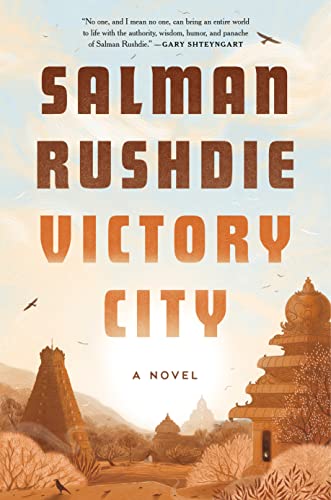
by Salman Rushdie
Victory City: A Novel by Salman Rushdie is an epic tale of a woman who breathes a fantastical empire into existence, only to be consumed by it over the centuries from the transcendent imagination of Booker Prize-winning, internationally bestselling author Salman Rushdie. It is well written and was a page-turner from page one to the end. I highly recommend this novel and encourage everyone to read it.
Brilliantly styled as a translation of an ancient epic, this is a saga of love, adventure, and myth that is a testament to storytelling’s power. After witnessing her mother’s death, the grief-stricken Pampa Kampana becomes a vessel for the goddess Parvati, who begins to speak out of the girl’s mouth. I was hooked when Pampa Kampana provided the seeds that created Victory City out of thin air.
David Remnick’s interview with Salman Rushdie in The New Yorker provided background I would have missed.
“The first kings of Vijayanagara announced, quite seriously, that they were descended from the moon,” Rushdie said. “So when these kings, Harihara and Bukka, announce that they’re members of the lunar dynasty, they’re associating themselves with those great heroes. It’s like saying, ‘I’ve descended from the same family as Achilles.’ Or Agamemnon. And so I thought, Well, if you could say that, I can say anything.”
Above all, the book is buoyed by the character of Pampa Kampana, who, Rushdie says, “just showed up in my head” and gave him his story, his sense of direction. Rushdie’s pleasure in writing the novel was in “world building” and, at the same time, writing about a character building that world: “It’s me doing it, but it’s also her doing it.” The pleasure is infectious. “Victory City” is an immensely enjoyable novel. It is also an affirmation. At the end, with the great city in ruins, what is left is not the storyteller but her words:
The Goodreads summary provides a brief overview,
In the wake of an insignificant battle between two long-forgotten kingdoms in fourteenth-century southern India, a nine-year-old girl has a divine encounter that will change the course of history. After witnessing her mother’s death, the grief-stricken Pampa Kampana becomes a vessel for the goddess Parvati, who begins to speak out of the girl’s mouth. Granting her powers beyond Pampa Kampana’s comprehension, the goddess tells her that she will be instrumental in the rise of a great city called Bisnaga–literally victory city–the wonder of the world.
Over the next two hundred and fifty years, Pampa Kampana’s life becomes deeply interwoven with Bisnaga’s, from its literal sowing out of a bag of magic seeds to its tragic ruination in the most human of ways: the hubris of those in power. Whispering Bisnaga and its citizens into existence, Pampa Kampana attempts to make good on Parvati’s task: giving women equal agency in a patriarchal world. But all stories have a way of getting away from their creator, and Bisnaga is no exception. As years pass, rulers come and go, battles are won and lost, and allegiances shift, the very fabric of Bisnaga becomes an ever more complex tapestry–with Pampa Kampana at its center.
The Jan Lilien Education Fund sponsors ongoing sustainability and environmental awareness programs. Gifts made this month; I will match dollar-for-dollar. All donations are tax-deductible.
I receive a commission when you buy a book or product using a link on this page. Thank you for supporting Sharing Jan’s Love blog.
by Emily St. John Mandel
Station Eleven: A Novel by Emily St. John Mandel, one of The New York Times’ 100 Best Books of the Century, is set in the unsettling days of civilization’s collapse and tells the captivating story of a Hollywood star, his potential savior, and a nomadic group of actors traveling through the scattered outposts of the Great Lakes region. They risk everything for art and humanity, reminding us of the enduring power of culture even in the most dire circumstances.
Kirsten Raymonde will never forget the night Arthur Leander, the famous Hollywood actor, had a heart attack on stage during a production of King Lear. That night, a devastating flu pandemic arrived in the city, and within weeks, civilization as we know it came to an end. Little did she know that this event would set events to shape the world’s future.
Twenty years later, Kirsten, a key figure in the story, traverses the settlements of the altered world with a small troupe of actors and musicians. They are The Traveling Symphony, a group that has made it their mission to keep the remnants of art and humanity alive. Their encounters, particularly in St. Deborah by the Water, with a violent prophet threatening their existence, form a crucial part of the narrative. The story’s unique structure, moving back and forth in time, vividly depicts life before and after the pandemic, and the strange twist of fate that connects them all will keep you on the edge of your seat.
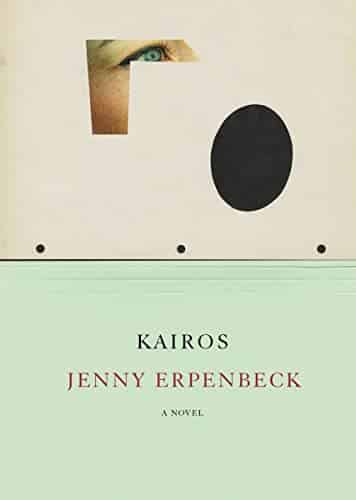
by Jenny Erpenbeck
I’ve recently delved into the captivating novel Kairos by Jenny Erpenbeck, which has left a lasting impression on me. The book tells the story of a young woman named Katharina who falls in love with a married writer named Hans, whom she met in East Berlin during the late 1980s. The historical context of Germany’s reunification is already an intriguing topic, but the addition of a love story made this book a must-read.
As their intense and complicated relationship plays out against the backdrop of a declining GDR, the novel offers a unique perspective on the tumultuous period following the country’s dissolution in 1989. Erpenbeck’s writing style is unmistakable, and her sweeping portrayal of the two lovers’ journey is truly remarkable. We witness Katharina’s growth as she tries to reconcile the reality of her lousy romance with the disappearance of an entire world and its ideologies.
The Times Literary Supplement has praised Erpenbeck’s ability to capture the weight of history and the influence of cultural and subjective memory on individual identity. Her work acknowledges the complexity of the human experience and the nuances of historical events.
Jenny Erpenbeck is an epic storyteller and a highly respected voice in contemporary German literature. Her translator, Michael Hofmann, has described Kairos as a great post-Unification novel, and his translation has been praised for being both faithful to the original text and beautifully written. I highly recommend this book to anyone seeking a thought-provoking and engaging read.
The Jan Lilien Education Fund sponsors ongoing sustainability and environmental awareness programs. Gifts made this month; I will match dollar-for-dollar. All donations are tax-deductible.
I receive a commission when you buy a book or product using a link on this page. Thank you for supporting Sharing Jan’s Love blog.
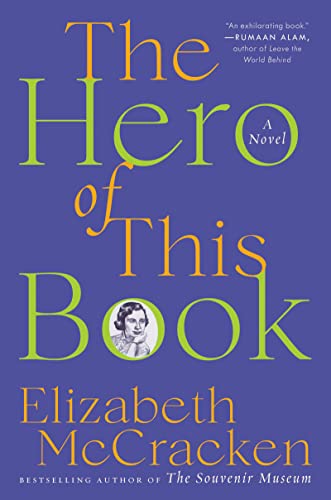
by Elizabeth McCracken
The Hero of This Book: A Novel by Elizabeth McCracken is a searing examination of grief and renewal and a deeply felt relationship between a child and her parents. It is not a memoir but a remembrance of those we have lost. Ten months after her mother’s death, the narrator of The Hero of This Book takes a trip to London. The city was a favorite of her mother’s, and as the narrator wanders the streets, she reflects on her mother’s life and their relationship.
Thoughts of the past meld with questions of the future: Back in New England, the family home is now up for sale, its considerable contents already winnowed.
The following quote resonated with me.
I’ve always hated the notion, in life or in fiction, that the human personality is a puzzle to be solved, that we are a single flashback away from understanding why this person is cruel to her children, why that man has a dreamy, downcast look. A human being is not a lock and the past is not a key.
I highly recommend this book.
The Goodreads summary provides an overview,
The woman, a writer, recalls all that made her complicated mother extraordinary–her brilliant wit, her generosity, her unbelievable obstinacy, her sheer will to seize life despite physical difficulties–and finds herself wondering how her mother had endured. Even though she wants to respect her mother’s nearly pathological sense of privacy, the woman must come to terms with whether making a chronicle of this remarkable life constitutes an act of love or betrayal.
The Hero of This Book is a searing examination of grief and renewal and a deeply felt relationship between a child and her parents. What begins as a question of filial devotion ultimately becomes a lesson in what it means to write. At once comic and heartbreaking, with prose that delights at every turn, this is a novel of such piercing love and tenderness that we are reminded that art is what remains when all else falls away.
The Jan Lilien Education Fund sponsors ongoing sustainability and environmental awareness programs. Gifts made this month; I will match dollar-for-dollar. All donations are tax-deductible.
I receive a commission when you buy a book or product using a link on this page. Thank you for supporting Sharing Jan’s Love blog.
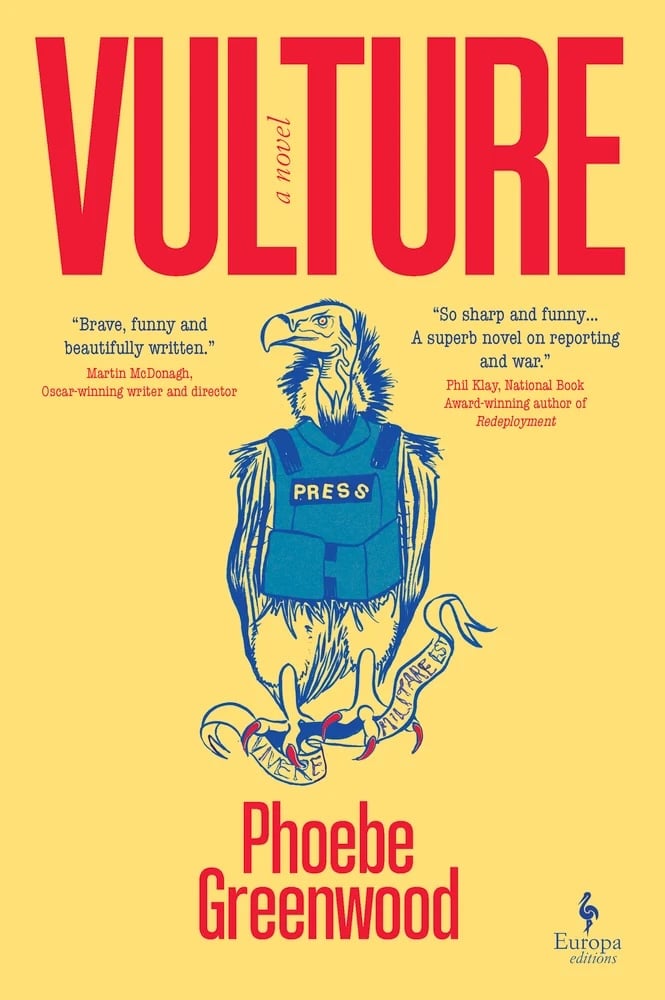
by Phoebe Greenwood
Phoebe Greenwood‘s debut novel, Vulture, immerses readers in the dark heart of Western media and boldly questions its role in the tragedies it reports. This darkly humorous and emotionally charged satire exposes the inner workings of the war news industry. Set in the Middle East, Vulture is a fast-paced critique of war reporting, blending elements of satire with a tragicomic coming-of-age story.
In November 2012, Sara Byrne, an ambitious young journalist, is sent to Gaza to cover the war from The Beach. At the four-star hotel, the staff work tirelessly to provide safety, comfort, and generator-powered internet for the world’s media, all while their own homes and families are under threat.
Sara is determined to use this war to jumpstart her stalled career and win back her lover. When her fixer, Nasser, refuses to help her set up the dangerous story she believes will make her name, she turns to Fadi, the youngest member of a powerful militant family. Driven by the demons of a troubled and entitled childhood, Sara is willing to do anything to prove herself, even if it brings disaster to those around her.
Phoebe Greenwood is a writer and journalist based in London. From 2010 to 2013, she worked as a freelance correspondent in Jerusalem, covering the Middle East for publications such as The Guardian, The Daily Telegraph, and The Sunday Times. From 2013 to 2021, she served as an editor and correspondent at The Guardian, specializing in foreign affairs.
When you purchase a book through one of my links, I earn a small commission that helps support my passion for reading. This contribution allows me to buy even more books to share with you, creating an incredible cycle of discovering great reads together! Your support truly makes a difference!
Enjoy a limited-time offer of 20% off your next book purchase at Bookshop.org!
by Megan Goldin
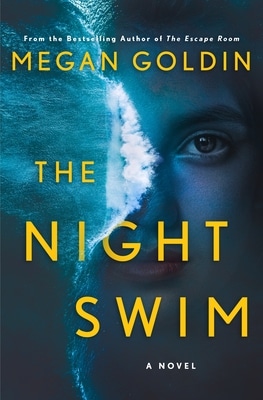
The Night Swim by Megan Goldin is a book that I thought would be different from the last two books – Sarah’s Key and Send for Me – that I had read. Both of those were directly or indirectly about the Holocaust. I often selected this book from the e-library based on reviews and reading the sample section.
The Night Swim was a page-turner, but it also was about numerous social issues that Jan ad I had spent our lives working to resolve.
Among these are male violence and its impact directly and indirectly on women. Rachel Krall, a podcaster, spoke about how male violence had impacted her. Two of the other female characters were either a victim or the sister of a victim. Having spent my life trying not to exhibit male violence, I was reminded while reading his novel of how painful it can be and the impact of micro-aggressions.
I knew that the author had done her research when I realized that. Ms. Goldin set the story in Neapolis, a fictional town on the outer banks of North Carolina. Neapolis, which in Latin means “New Town,” is also the old Roman name for the biblical city of Sheechem, where the rape of Dinah took place.
I missed the role of the Nightingale as it appears more as a background piece and not a primary role. Of course, this is a subtle reference by the author to Greek mythology and the rape of Philomela by her sisters’ husband. Her assailant cut out her tongue to prevent her from speaking of the crime. She was turned into a nightingale to escape. That is why female nightingales cannot sing. The one in the novel never sings and is rescued by Rachel at the end of the book.
Rachel narrates two sections of the novel, first with her on-the-ground work at the trial and second with her podcasts.
Hannah’s narrative is initially only in letters and then emails.
This format helped move the story along and make the story unfold in unique ways.
The following is a summary from Goodreads.
After the first season of her true-crime podcast became an overnight sensation and set an innocent man free, Rachel Krall is now a household name―and the last hope for thousands of people seeking justice. But she’s used to being recognized for her voice, not her face. Which makes it all the more unsettling when she finds a note on her car windshield, addressed to her, begging for help.
The small town of Neapolis is being torn apart by a devastating rape trial. The town’s golden boy, a swimmer, destined for Olympic greatness, has been accused of raping a high school student, the beloved granddaughter of the police chief. Under pressure to make Season Three a success, Rachel throws herself into interviewing and investigating―but the mysterious letters keep showing up in unexpected places. Someone is following her, and she won’t stop until Rachel finds out what happened to her sister twenty-five years ago. Officially, Jenny Stills tragically drowned, but the letters insist she was murdered―and when Rachel starts asking questions, nobody seems to want to answer. The past and present start to collide as Rachel uncovers startling connections between the two cases that will change the course of the trial and the lives of everyone involved.
Electrifying and propulsive, The Night Swim asks: What is the price of a reputation? Can a small town ever right the wrongs of its past? And what happened to Jenny?
I highly recommend this novel and look forward to reading more of Ms. Goldin’s work.