
Garden2
Estimated reading time: 0 minutes, 0 seconds
Subscribe to Sharing Jan's Love Newsletter!
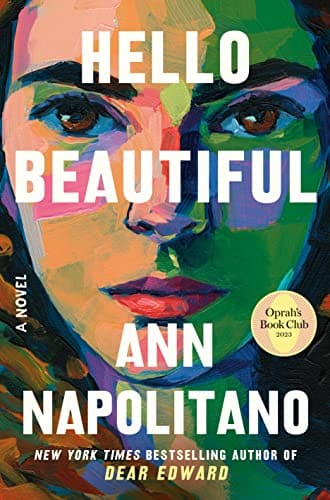
by Ann Napolitano
Hello Beautiful by Ann Napolitano is a gorgeous, profoundly moving portrait of what’s possible when we choose to love someone, not despite who they are but because of it. Although several sources recommended Hello Beautiful, I chose the novel based on the title as it is how I always greeted Jan. I highly recommend this book as it is one of the best I have ever read.
Hello Beautiful is an exquisite homage to Louisa May Alcott’s timeless classic, Little Women. Knowing it was not him, William Waters’s experience growing up as an only child was an engaging character in the early portion of the novel. However, my hero was Sylvie, the dreamer who pursued true love and found it in a place one would less expect to find it. The consequences of her love reverberate over decades in their families.
The following passage is one example of a well-written book.
We’re separated from the world by our own edges,” Charlie Padavano says to Sylvie in “Hello Beautiful.” He continues, “We’re all interconnected, and when you see that, you see how beautiful life is.
The interconnections of the characters make this novel one of the best I have read. If only more of us could learn the lessons that Charlie Padavano shared with Sylvie.
As a man on a lifetime grief journey, this exchange echoes my experience.
When an old person dies,” Kent said, “even if that person is wonderful, he or she is still somewhat ready, and so are the people who loved them. They’re like old trees, whose roots have loosened in the ground. They fall gently. But when someone like your aunt Sylvie dies—before her time—her roots get pulled out and the ground is ripped up. Everyone nearby is in danger of being knocked over.”
Grief is love.” Now Alice thought: Forgiveness is too.
The Goodreads summary provides an overview,
William Waters grew up in a house silenced by tragedy, where his parents could hardly bear to look at him, much less love him. So it’s a relief when his skill on the basketball court earns him a scholarship to college, far away from his childhood home. He soon meets Julia Padavano, a spirited and ambitious young woman who surprises William with her appreciation of his quiet steadiness. With Julia comes her family; she is inseparable from her three younger sisters: Sylvie, the dreamer, is happiest with her nose in a book and imagines a future different from the expected path of wife and mother; Cecelia, the family’s artist; and Emeline, who patiently takes care of all of them. Happily, the Padavanos fold Julia’s new boyfriend into their loving, chaotic household.
But then darkness from William’s past surfaces, jeopardizing not only Julia’s carefully orchestrated plans for their future, but the sisters’ unshakeable loyalty to one another. The result is a catastrophic family rift that changes their lives for generations. Will the loyalty that once rooted them be strong enough to draw them back together when it matters most?
The Jan Lilien Education Fund sponsors ongoing sustainability and environmental awareness programs. Gifts made this month; I will match dollar-for-dollar. All donations are tax-deductible.
I receive a commission when you buy a book or product using a link on this page. Thank you for supporting Sharing Jan’s Love blog.
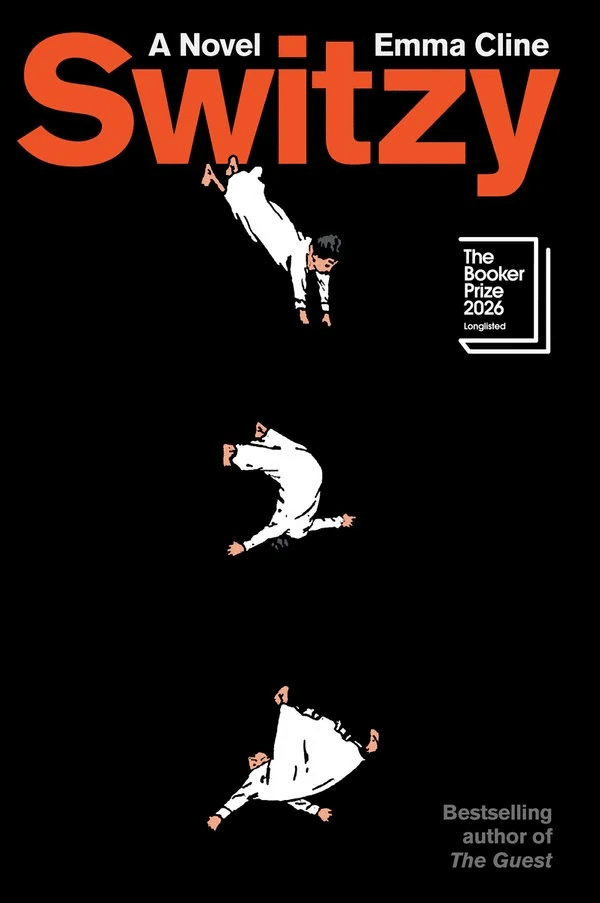
by Emma Cline
“Switzy” by Emma Cline is a captivating exploration of an aging man’s final journey. Written by the award-winning author of “The Girls” and “The Guest,” the story follows David as he prepares to arrive in Zurich. Throughout the narrative, the story unfolds as a vividly rendered portrait of an unraveling mind. The tale is darkly humorous and deeply moving, presenting a mystery layered with others. The world, once so familiar, has become inscrutable.
Hypnotic and strikingly original, “Switzy” explores the depths of human consciousness, examining what remains for a man when the accomplishments and compromises that have defined him, along with the illusions he has relied on, vanish.
A private plane glides through the winter night, somewhere over Greenland. David, a retired executive, leans back in his leather seat and plays solitaire on his phone. Click. Click. Drag. Click. He has filled the notebook in his jacket pocket with familiar phrases and urgent reminders, but he struggles to recognize his own handwriting.
This is what David knows: Cody, his assistant, is asleep in the seat next to him and will guide him along the journey. He will stop in London, have dinner with his adult daughter, and meet an old friend in France he has been estranged from for decades.
David’s final destination is Zurich.
As he moves through hotel rooms, airports, and foreign cities, he feels his mortal life slipping away. His grip on the present weakens, and memories flood in: childhood Sunday roasts, stiff clothes reserved for church, and a summer spent at a friend’s house. He reflects on the losses and missteps that have marked his life.
Emma Cline is a New York Times bestselling author known for “The Guest”, “The Girls”, and the short story collection “Daddy”. “The Girls” was a finalist for several prestigious awards, including the Center for Fiction’s First Novel Prize, the National Book Critics Circle John Leonard Award, and the Los Angeles Times Book Prize. It was also selected as a New York Times Editor’s Choice and won the Shirley Jackson Award. Additionally, “The Guest” was longlisted for the PEN/Faulkner Award.
Cline’s stories have appeared in prominent publications such as “The New Yorker”, “Granta”, “The Paris Review”, and in “The Best American Short Stories” anthologies. She has received an O. Henry Award and the Plimpton Prize from “The Paris Review” and was recognized as one of Granta’s Best Young American Novelists.
Discover your next favorite book and explore curated, exciting reads by purchasing through my links. Your support truly makes a difference by helping me share more meaningful stories and insights with you and enrich your reading journey.
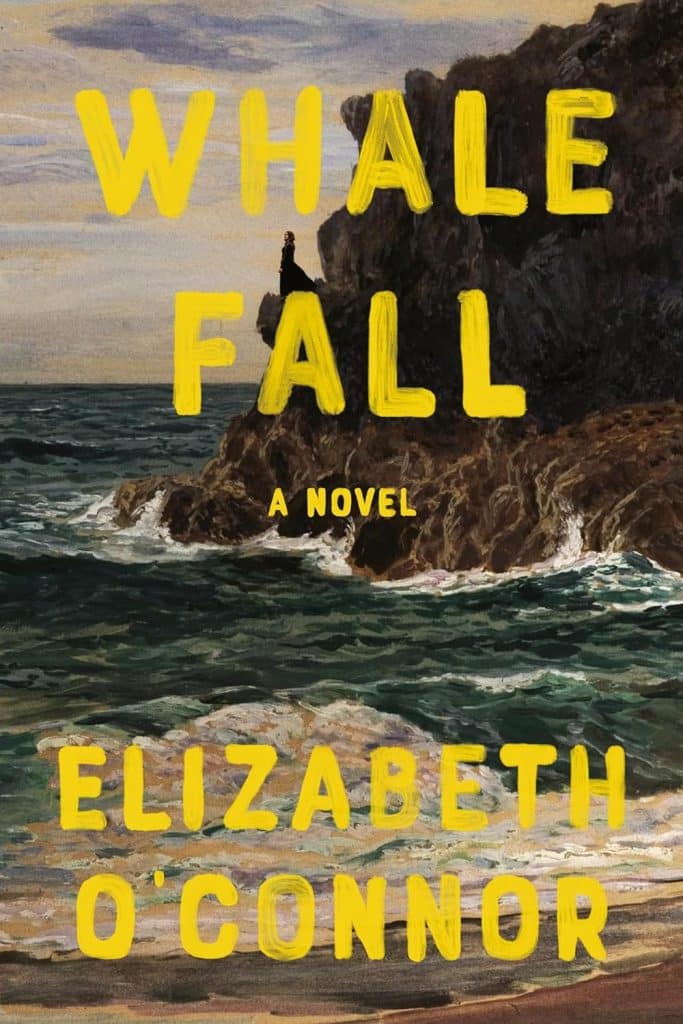
by Elizabeth O'Connor
I have started reading “Whale Fall: A Novel” by Elizabeth O’Connor. With its unique blend of loss, isolation, folklore, and the journey of self-discovery, this debut novel offers a compelling narrative set in 1938 on a remote Welsh island. The story is catalyzed by the arrival of a dead whale, a powerful symbol that sets the stage for the characters’ journeys.
The story revolves around Manod, a young woman who has spent her entire life on the island. Despite their island home’s harsh yet stunning surroundings, Manod yearns to explore life beyond it, a desire that will resonate with many readers.
As two English ethnographers arrive to study the island’s culture, Manod sees it as a potential escape from her community. However, her growing involvement with them triggers a profound internal conflict. She grapples with the dilemma of pursuing her desires or remaining loyal to her community. This struggle resonates with the universal human experience, making it a compelling read for many.
‘Whale Fall‘ vividly portrays the tensions that surface when one person’s aspirations threaten the unity of a community. O’Connor’s narrative skillfully depicts the community and Manod on the brink, forced to confront a world that seems to infringe upon them. This evokes a sense of admiration for O’Connor’s storytelling prowess, making it a must-read for literary fiction enthusiasts.
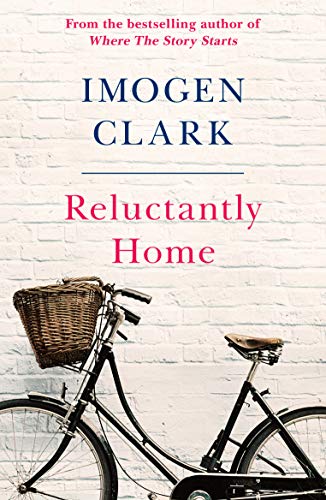
by Imogen Clark
Reluctantly Home by Imogen Clark is about dealing with the past—and finally facing the future-a topic that was appealing to me. Thirteen months into my grief journey, I live between a perfect past and an unknowable future. Will Reluctantly Home by Imogen Clark help me manage these two worlds?
Surprisingly it did. Unlike the two protagonists, I am mourning losing Jan, the love of my life. However, the neuromapping in my brain made it impossible to understand how to continue to love Jan and separate that from the time and space connections that made me believe she would return at any moment.
Reluctantly Home by Imogen Clark helped me understand that grief should and cannot define us forever. I recommend this book to all readers, not only those on a grief journey like mine.
The Goodreads summary provides an overview.
Pip Appleby seems to have it all, with her prestigious job as a human rights lawyer and her enviable London home. But then a tragic accident stops her life in its tracks, and everything changes instantly. Retreating to her family’s rural farm and the humble origins she has been trying to hide, Pip is haunted by what she has done.
When she discovers the diary of actress Evelyn Mountcastle in a box of old books, Pip revels in the opportunity to lose herself in someone else’s life rather than focus on the disaster that is her own. But soon, she sees parallels—Evelyn’s life was also beset by tragedy, and, like Pip, she returned to Southwold under a dark cloud.
When Pip and Evelyn’s paths cross in real life, they slowly begin to reveal the hidden stories holding them back. Can they help each other forgive what happened in the past and, perhaps, find happiness in the future?
When you buy a book or product using a link on this page, I receive a commission. Thank you for supporting Sharing Jan’s Love blog.
by Amy Bloom
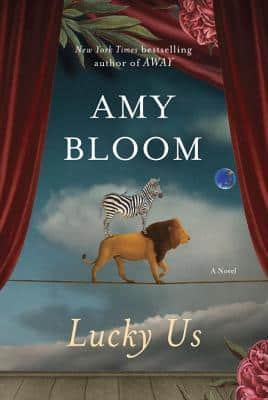
Having surpassed my Goodreads 2022 reading goal, I wanted a lite, historical fiction book and found this one in the e-library. Lucky Us by Amy Bloom is a book that hooked me on the opening line – “My father’s wife died. My mother said we should drive down to his place and see what might be in it for us.” I enjoyed reading it and highly recommend it.
The first section in Hollywood was the one I found less appealing. Partly that is because I identified with Eva, and she does not fulfill her leading role until the last two sections. Its depiction of how people survived the way years by sometimes is a reminder of our inner resilience.
Goodreads provides the following summary.
So begins this remarkable novel by Amy Bloom, whose critically acclaimed Away was called “a literary triumph” (The New York Times). Lucky Us is a brilliantly written, deeply moving, fantastically funny novel of love, heartbreak, and luck.
Disappointed by their families, Iris, the hopeful star and Eva the sidekick, journey through 1940s America in search of fame and fortune. Iris’s ambitions take the pair across the America of Reinvention in a stolen station wagon, from small-town Ohio to an unexpected and sensuous Hollywood, and to the jazz clubs and golden mansions of Long Island.
With their friends in high and low places, Iris and Eva stumble and shine through a landscape of big dreams, scandals, betrayals, and war. Filled with gorgeous writing, memorable characters, and surprising events, Lucky Us is a thrilling and resonant novel about success and failure, good luck and bad, the creation of a family, and the pleasures and inevitable perils of family life, conventional and otherwise. From Brooklyn’s beauty parlors to London’s West End, a group of unforgettable people love, lie, cheat, and survive in this story of our fragile, absurd, heroic species.
When you buy a book or product using a link on this page, I receive a commission. Thank you for supporting Sharing Jan’s Love blog.
by Ann Patchett
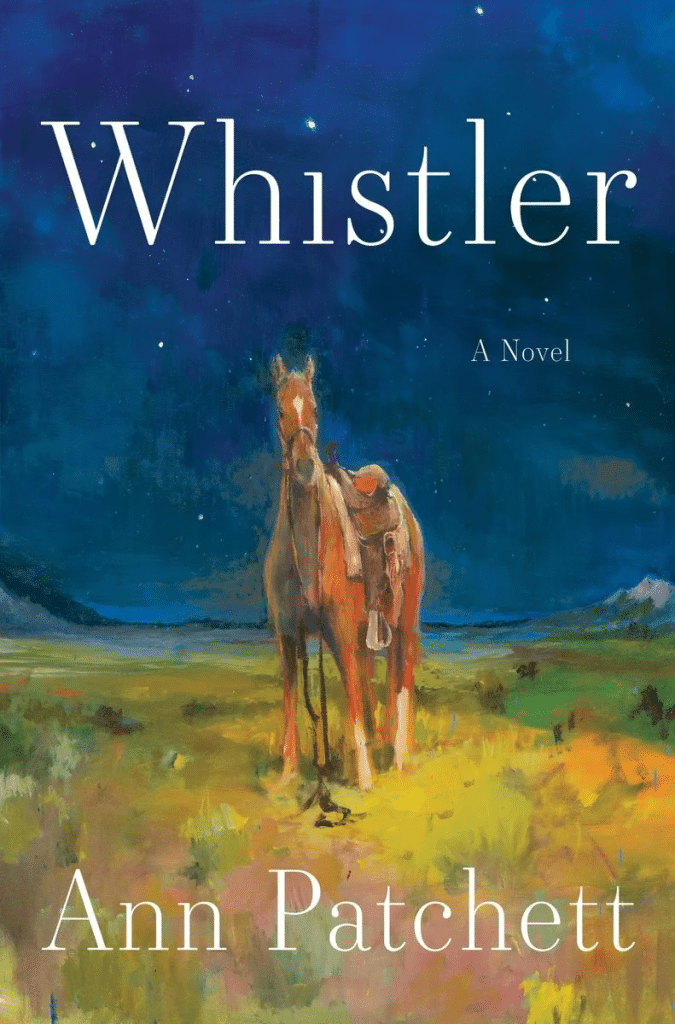
Whistler, by Ann Patchett, tells the story of two adults reflecting on the choices they made and those made for them. It explores themes of bravery, memory, and the often small yet significant moments that shape our lives, as well as the inevitable loss that eventually touches us all. Beautiful in its simplicity, the novel ultimately reveals how love endures and how the experience of being truly known by another person—even for a brief time—can change everything.
When Daphne Fuller and her husband, Jonathan, visit the Metropolitan Museum of Art, they notice an older gentleman with white hair following them. This man turns out to be Eddie Triplett, Daphne’s former stepfather. He had been married to her mother for just over a year when Daphne was nine. Now fifty-three, Daphne hasn’t seen Eddie in many years, not since the event that changed the course of both their lives. Upon reuniting, time seems to vanish; despite their brief relationship, it had a profound impact on both of them, and now that they are together again, they have no intention of ever being separated again.
Ann Patchett is an accomplished author known for her novels, nonfiction works, and children’s books. Her most recent novel, Tom Lake, became a #1 New York Times bestseller. Patchett has received numerous awards, including the PEN/Faulkner Award, the Women’s Prize for Fiction in the UK, and the Book Sense Book of the Year Award.
Her novel The Dutch House was a finalist for the Pulitzer Prize. Her works have been translated into more than thirty languages, and Time magazine recognized her as one of the 100 Most Influential People in the World. In honor of her contributions to American culture, President Biden awarded her the National Humanities Medal. She resides in Nashville, Tennessee, where she owns Parnassus Books.
Discover your next favorite book and explore curated, exciting reads by purchasing through my links. Your support truly helps me share more meaningful stories and insights with you, enriching your reading journey.