
Finding Peace, One Piece at a Time

Estimated reading time: 1 minute, 22 seconds

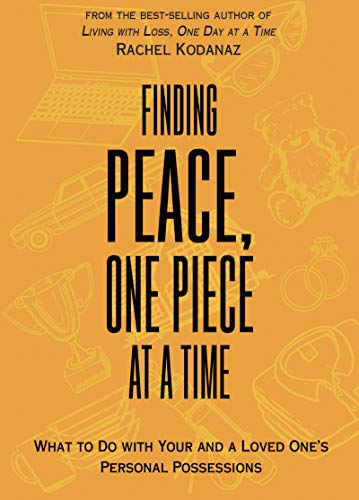
Finding Peace, One Piece at a Time by Rachel Blythe Kodanaz is a book I wish I had long before Jan died. It provides helpful information on maintaining an organized lifestyle and handling a loved one’s possessions.

Having lost almost everything I had except for the clothes on my back after a house fire in 1972, I thought I had adopted a view that possessions were not significant. With Jan’s death, the truth is that she and I had collected essential possessions, and now it was my responsibility to decide what to do with them.

Rachel’s book is a practical guide, offering a comprehensive understanding of the significance of possessions and a step-by-step plan to manage them. Chapter 3, in particular, is a treasure trove of practical advice, focusing on Building Your Game Plan: The Ten Essentials and covering all the crucial topics – triggers, building a team, and creating a timeline, among others.

Magic of the Six Piles is a well-designed plan that will help most of us confront the possessions of our loved ones. The piles are:

  1. Keep
  2. Share
  3. Donate
  4. Sell
  5. Dispose
  6. Ponder

Having absorbed the book’s wisdom, I am ready to transition from contemplation to action. This is how I sort my wife’s possessions into six piles. I am optimistic that it will also help me streamline my possessions, making books my trusted company more accessible for my sons.

Ms. Kodanaz has presented at my bereavement groups and has been an inspiration. She has also encouraged me to write about my love for Jan in a journal.

Subscribe

Contact Us

The Jan Lilien Education Fund!

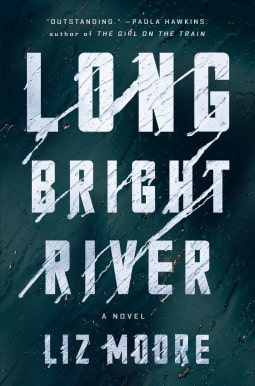
Long Bright River

Read: December 2021

Get this book

Long Bright River

by Liz Moore

Long Bright River by Liz Moore was a 2020 NPR Books We Love Selection. It’s a contemporary novel about the opioid epidemic, it’s a novel about sisters and families, it’s a book about the police and how they fall short of the communities they serve, and it’s a well-plotted crime novel. Its main story revolves around Mickey, a patrol officer raising a young son in a working-class neighborhood in Northeast Philadelphia, and her missing sister, who’s addicted to drugs. Both women are the children of addicts, raised by a strict grandmother.

Despite Long Bright River being selected by NPR and others as one of the best books, I was not sure what to expect. My doubts evaporated on page one. Mickey’s narration, including her description of Kensignton, made this a page-turner.

Mickey and Kacey’s lives became so realistic that I could not put the book down. One night, I stayed up to finish reading for the first time in almost a decade.

As much as it focuses on the opioid epidemic and the shortcomings of policing, its proper focus is on sisters and families. My love of family has become more important to me than ever since the loss of Jan, the love of my life.

Ms. Moore brings it all together in the ending but leaves enough doubt as to the future relationship of the sisters that we can feel the harsh reality of life itself. Long Bright River is the first but not the last book by this author that I will read.

Goodreads has an overview if you need more convincing.

In a Philadelphia neighborhood rocked by the opioid crisis, two once-inseparable sisters find themselves at odds. One, Kacey, lives on the streets in the vise of addiction. The other, Mickey, walks those same blocks on her police beat. They don’t speak anymore, but Mickey never stops worrying about her sibling.

Then Kacey disappears suddenly, at the same time that a mysterious string of murders begins in Mickey’s district, and Mickey becomes dangerously obsessed with finding the culprit–and her sister–before it’s too late.

Alternating its present-day mystery with the story of the sisters’ childhood and adolescence, Long Bright River is at once heart-pounding and heart-wrenching: a gripping suspense novel that is also a moving story of sisters, addiction, and the formidable ties that persist between place, family, and fate.

I highly recommend this book.

×
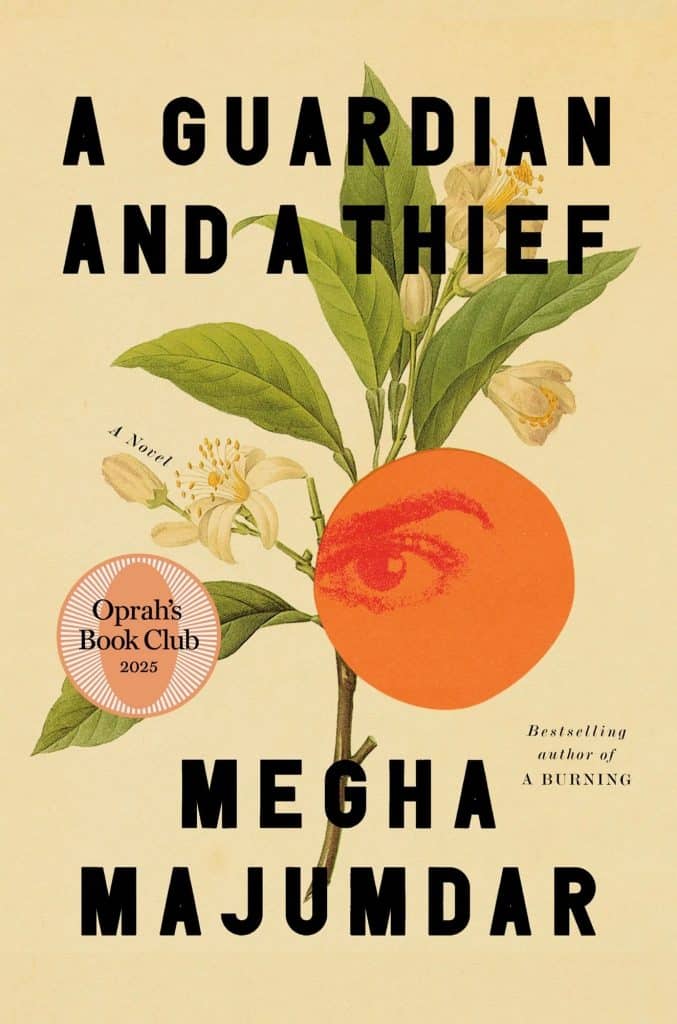
A Guardian and a Thief

Read: October 2025

Get this book

A Guardian and a Thief

by Megha Majumdar

Set over the course of one week, A Guardian and a Thief, by Megha Majumdar, a finalist in the fiction category for the 2025 National Book Award, tells two stories: Ma’s frantic search for the thief while keeping hunger at bay amid a worsening food shortage. The tale of Boomba, the thief, whose desperation to care for his family drives him to commit a series of escalating crimes whose consequences he cannot fathom.

With stunning control and command, Megha Majumdar paints a kaleidoscopic portrait of two families, each operating from a place of ferocious love and undefeated hope, each discovering how far they will go to secure their children’s future as they stave off encroaching catastrophe.

In a near-future Kolkata, Ma, her two-year-old daughter, and her elderly father are just days from leaving the collapsing city behind to join Ma’s husband in Ann Arbor, Michigan. After procuring long-awaited visas from the consulate, they pack their bags for the flight to America. But in the morning, they awaken to discover that Ma’s purse, containing their treasured immigration documents, has been stolen.

A masterful new work from one of the most exciting voices of her generation.


Megha Majumdar is the author of the bestselling novel A Burning, which has been recognized by the New York Times and nominated for several prestigious awards, including the National Book Award, the National Book Critics Circle’s John Leonard Prize, and the American Library Association’s Andrew Carnegie Medal. The book “A Burning” was recognized as one of the best of the year by various media outlets, including The Washington Post, The New York Times, NPR, The Atlantic, Vogue, and TIME Magazine.

In 2022, she received a Whiting Award. Born and raised in Kolkata, India, Majumdar holds degrees in anthropology from Harvard University and Johns Hopkins University. She is the former editor-in-chief of Catapult Books and currently resides in New York.


Discover your next favorite book and dive into a world of curated, exciting reads by purchasing through my links. You’ll have access to a diverse selection of books I’ve personally vetted for quality and enjoyment. Additionally, by supporting these selections, you’ll help me continue to provide you with more personalized recommendations. I earn a small commission from your purchase, which allows me to buy and share even more books with you. Your support truly makes a difference!


×
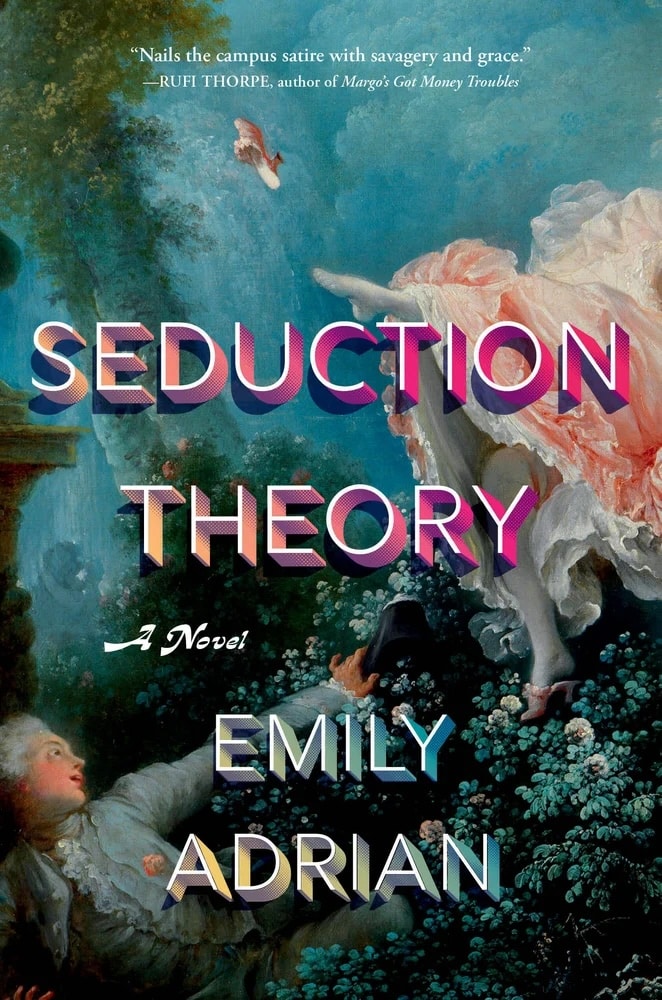
Seduction Theory

Read: September 2025

Get this book

Seduction Theory

by Emily Adrian

Seduction Theory by Emily Adrian is a captivating exploration of the complex interplay between power and attraction. This thought-provoking narrative beautifully illustrates how love and betrayal can intertwine. As two married professors navigate the delicate path toward infidelity, a graduate student’s compelling thesis project unveils their hidden struggles, creating a fascinating tale of desire and consequence.

Simone is a shining star in the creative writing department at Edwards University, celebrated for her scholarship on Woolf, her poignant memoirs of grief, and her captivating presence on campus. Her husband, Ethan, although not as widely recognized, is a dedicated lecturer and author whose work has a quietly impactful impact. Together, they portray a picture of marital bliss that everyone admires—until an unexpected turn shakes their world when Ethan has an affair with Abigail, the department’s administrative assistant.

As summer unfolds, Simone faces her own struggles. With Ethan away, she becomes increasingly close to her talented advisee, graduate student Roberta “Robbie” Green. They share runs, secrets, and dreams. Still, unbeknownst to Simone, Robbie is crafting an MFA thesis that delves into the complexities of Simone’s marriage, weaving a narrative that may reveal more than Simone anticipates.

Through Robbie’s unique lens, the intricacies of relationships, truth, and self-discovery come to the fore, creating a captivating story that promises to explore the delicate threads binding their lives together in unexpected ways.


Emily Adrian is the author of Everything Here is Under Control and The Second Season, as well as the memoir Daughterhood and two critically acclaimed novels for young adults. Her work has appeared in Granta, Joyland, The Point, EPOCH, Alta Journal, and Los Angeles Review of Books. Originally from Portland, Oregon, Adrian currently lives in New Haven, Connecticut.


Discover your next favorite book and dive into a world of curated, exciting reads by purchasing through my links. You’ll have access to a diverse selection of books that I’ve personally vetted to ensure quality and enjoyment. Additionally, by supporting these selections, you’ll help me continue to provide you with more personalized recommendations. I earn a small commission from your purchase, which allows me to buy and share even more books with you. Your support truly makes a difference!


×
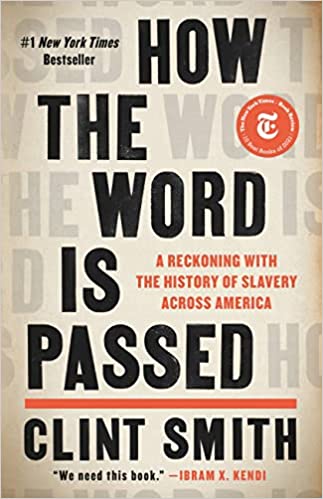
How the Word is Passed

Read: December 2021

Get this book

How the Word Is Passed: A Reckoning with the History of Slavery Across America

by Clint Smith

How the Word Is Passed: A Reckoning with the History of Slavery Across America by Clint Smith. This book was a gift from my son Jon. The New York Times selected How the Word is Passed as one of the best books published this year. Beginning in his hometown of New Orleans, Clint Smith leads the reader on an unforgettable tour of monuments and landmarks—those that are honest about the past and those that are not—that offer an intergenerational story of how slavery has been central in shaping our nation’s collective history, and ourselves.

How the Word is Passed is one of the best books I have read in 2021. I had read an excerpt in The Atlantic on the Whitney Plantation, one of the only former plantations devoted to preserving the experience of the enslaved people whose lives and work sustained it. Like most of us, I had placed the book on my to-read list, where it remained lost in the cobwebs. Fortunately, my son Jon purchased the book for me.

Secondly, the book rekindled my long-lost dream of being an American Studies professor. As soon as Jan and I met, I dropped plans to leave Brooklyn and start graduate school in the fall of 1974. I made that decision primarily because of how much I loved Jan. But it was also partly that I did not have a clear vision of what my life would be like as a professor. The book provided clear examples of people like Yvonne Holden at The Whitney Plantation redefining history to be more accurate and inclusive. I probably could not have done as well as she did, but I can now see that it might have resulted in a career for me that could have been impactful.

Goodreads provides this overview for those who still need to be convinced to read this book.

It is the story of the Monticello Plantation in Virginia, the estate where Thomas Jefferson wrote letters espousing the urgent need for liberty while enslaving over 400 people on the premises. It is the story of the Whitney Plantation, one of the only former plantations devoted to preserving the experience of the enslaved people whose lives and work sustained it. It is the story of Angola Prison in Louisiana, a former plantation named for the country from which most of its enslaved people arrived and which has since become one of the most gruesome maximum-security prisons in the world. And it is the story of Blandford Cemetery, the final resting place of tens of thousands of Confederate soldiers.

In a deeply researched and transporting exploration of the legacy of slavery and its imprint on centuries of American history, How the Word Is Passed illustrates how some of our country’s most essential stories are hidden in plain view-whether in places we might drive by on our way to work, holidays such as Juneteenth, or entire neighborhoods—like downtown Manhattan—on which the brutal history of the trade in enslaved men, women and children has been deeply imprinted.

Informed by scholarship and brought alive by the story of people living today, Clint Smith’s debut work of nonfiction is a landmark work of reflection and insight that offers a new understanding of the hopeful role that memory and history can play in understanding our country.

How the Word is Passed is one of the best books I have read this year and many prior ones. I encourage you to read it and share your comments.

Subscribe

Contact Us

When you buy a book or product using a link on this page, I receive a commission. Thank you for supporting Sharing Jan’s Love blog.

×
Invisible Child

Read: December 2021

Get this book

Invisible Child: Poverty, Survival & Hope in an American City

by Andrea Elliott

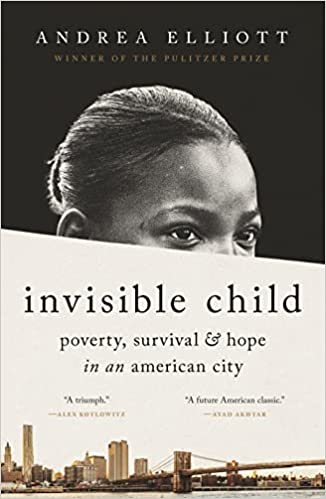
Invisible Child: Poverty, Survival & Hope in an American City by Andrea Elliott was a gift from my son Jon. The New York Times selected “Invisible Child” as one of the best books published this year. It is indeed one of the top books on my all-time list.

GoodReads summary provides a good overview,

The riveting, unforgettable story of a girl whose indomitable spirit is tested by homelessness, poverty, and racism in an unequal America—from Pulitzer Prize-winning journalist Andrea Elliott of The New York Times

Invisible Child follows eight dramatic years in the life of Dasani Coates, a child with imagination as soaring as the skyscrapers near her Brooklyn homeless shelter. Born at the turn of a new century, Dasani is named for the bottled water that comes to symbolize Brooklyn’s gentrification and the shared aspirations of a divided city. As Dasani grows up, moving with her tight-knit family from shelter to shelter, this story goes back to trace the passage of Dasani’s ancestors from slavery to the Great Migration north. When Dasani comes of age, New York City’s homeless crisis explodes as the chasm deepens between rich and poor.

In the shadows of this new Gilded Age, Dasani must lead her seven siblings through a thicket of problems: hunger, parental drug addiction, violence, housing instability, segregated schools, and the constant monitoring of the child-protection system. When, at age thirteen, Dasani enrolls at a boarding school in Pennsylvania, her loyalties are tested like never before. As she learns to “code switch” between the culture she left behind and the norms of her new town, Dasani starts to feel like a stranger in both places. Ultimately, she faces an impossible question: What if leaving poverty means abandoning the family you love?

By turns heartbreaking and revelatory, provocative and inspiring, Invisible Child tells an astonishing story about the power of resilience, the importance of family, and the cost of inequality. Based on nearly a decade of reporting, this book vividly illuminates some of the most critical issues in contemporary America through the life of one remarkable girl.

Jan and I were involved and knew that child poverty and homelessness needed repair. In addition, Jan lived on Washington Park across from Ft. Greene Park in 1974-75. We knew the neighborhood where much of the book’s story takes place. 

Before meeting Jan in 1973, I was both a community/tenant organizer and a youth worker. In the latter role, I made weekly hostel trips for eight to ten young boys from East Williamsburg during 1973. The trips were the first the boys had ever been outside of their neighborhood.

Many of them had imaginations like Dasani. They also had her instinct to fight. One of my first tasks was to check for any weapons.

Decades later, when I would see any of them, now adults, they would ask when we were going on another trip. I wish I had met Jan when I made those trips. She would have helped me improve them and document the impact. If I could re-write history, I would have her join me as the second adult on the hostel trips.

After that summer, it was clear my primary skills were as a community/tenant organizer. Over the next few years, my work focused on creating affordable and supportive housing.

Jan and I did meaningful work that made a difference, yet the need for a permanent solution to the crisis remains. The book highlights the crucial role of resilience, the importance of family, and the cost of inequality. As a nation, we cannot undermine those values by breaking up families, impeding resilience, and maintaining racial and economic inequality. 

The current debate in Washington over the Build Back Better legislation needs to focus not on how much we spend but on its impact on children and families

David Brooks, a conservative commentator, has supported these expenditures for what they can do to address this country’s cultural and economic crisis. 

These packages say to the struggling parents and the warehouse workers: I see you. Your work has dignity. You are paving your way. You are at the center of our national vision.

This is how you fortify a compelling moral identity, which is what all of us need if we’re going to be able to look in the mirror with self-respect. This is the cultural transformation that good policy can sometimes achieve. Statecraft is soulcraft.

If you can only read one book this year, this is the one to read. Child poverty, homelessness, and inequality impact all of us. Ending child poverty and homelessness will make us a healthier and more inclusive nation. It is time for a compelling moral call to action!

Subscribe

Contact Us

When you buy a book or product using a link on this page, I receive a commission. Thank you for supporting Sharing Jan’s Love blog.

×
Everything's Fine

Read: June 2023

Get this book

Everything’s Fine

by Cecilia Rabess

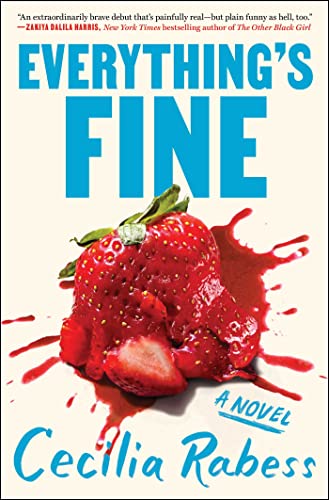
I started reading Everything’s Fine by Cecilia Rabess today, a stunning debut introducing a talented new author. However, I found it easier to decide to read it after reading in the New York Times that some reviewers on Goodreads criticized the book’s premise without reading it. It’s unfair to criticize something after experiencing it first-hand.

On Jess’s first day at Goldman Sachs, she’s disappointed to learn that she’ll be working with Josh, a white conservative she used to argue with in college. Josh enjoys playing devil’s advocate and can be challenging to deal with.

But when Jess realizes she’s the only Black woman on the team and is being overlooked, Josh offers his support in imperfect but meaningful ways. As they develop an unlikely friendship with undeniable chemistry, it eventually becomes an electrifying romance that shocks them both.

Despite their differences, their attraction brings them together, and Jess starts to question whether happiness is more important than being right. However, as the cultural and political landscape shifts in 2016, Jess, who is just discovering herself, must decide what she’s willing to compromise for love and if everything is excellent. This poignant and sharp novel by Cecilia Rabess asks if they will and if they should.


The Jan Lilien Education Fund sponsors ongoing sustainability and environmental awareness programs. Gifts made this month; I will match dollar-for-dollar. All donations are tax-deductible.

Subscribe

Contact Us

I receive a commission when you buy a book or product using a link on this page. Thank you for supporting Sharing Jan’s Love blog.


×