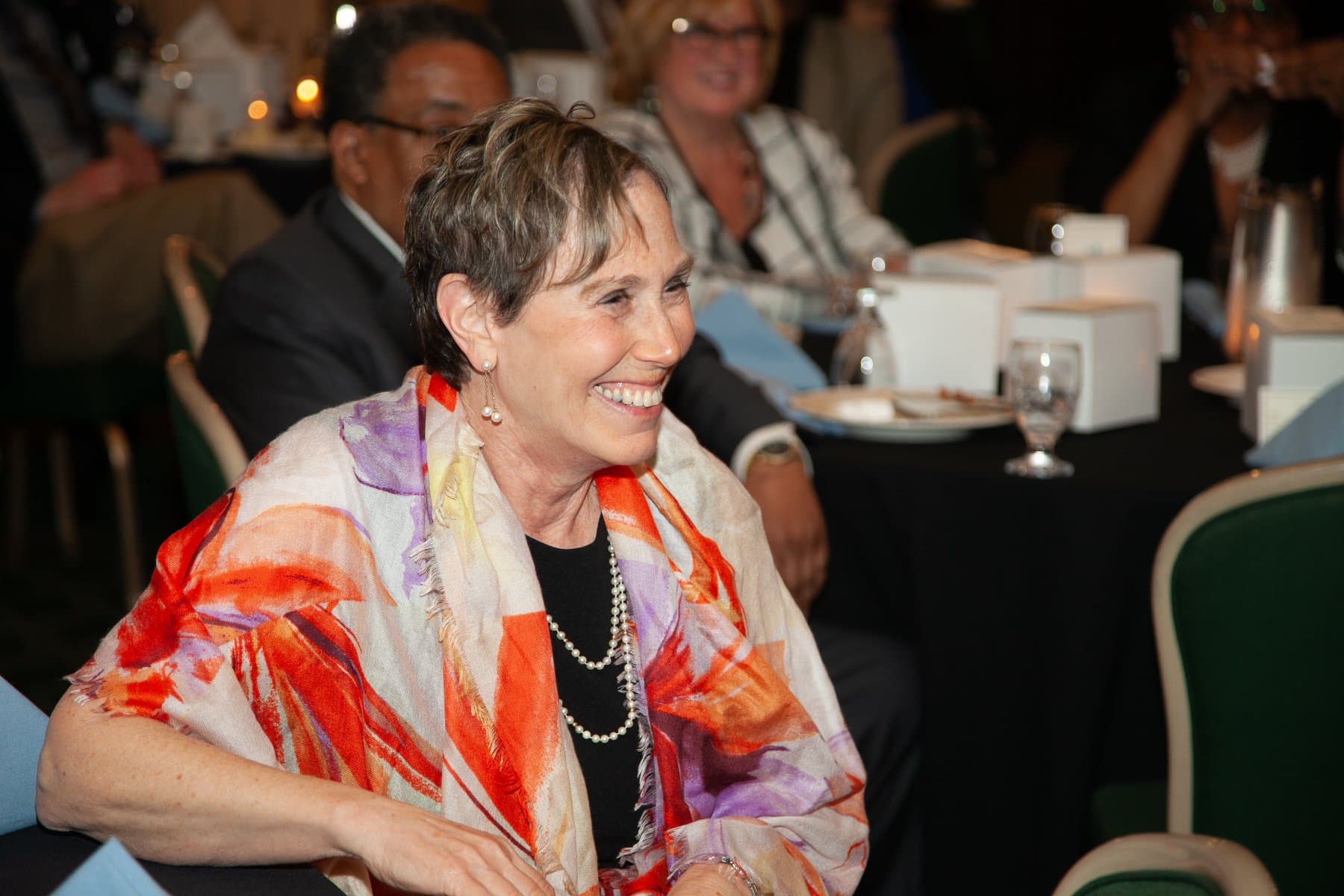

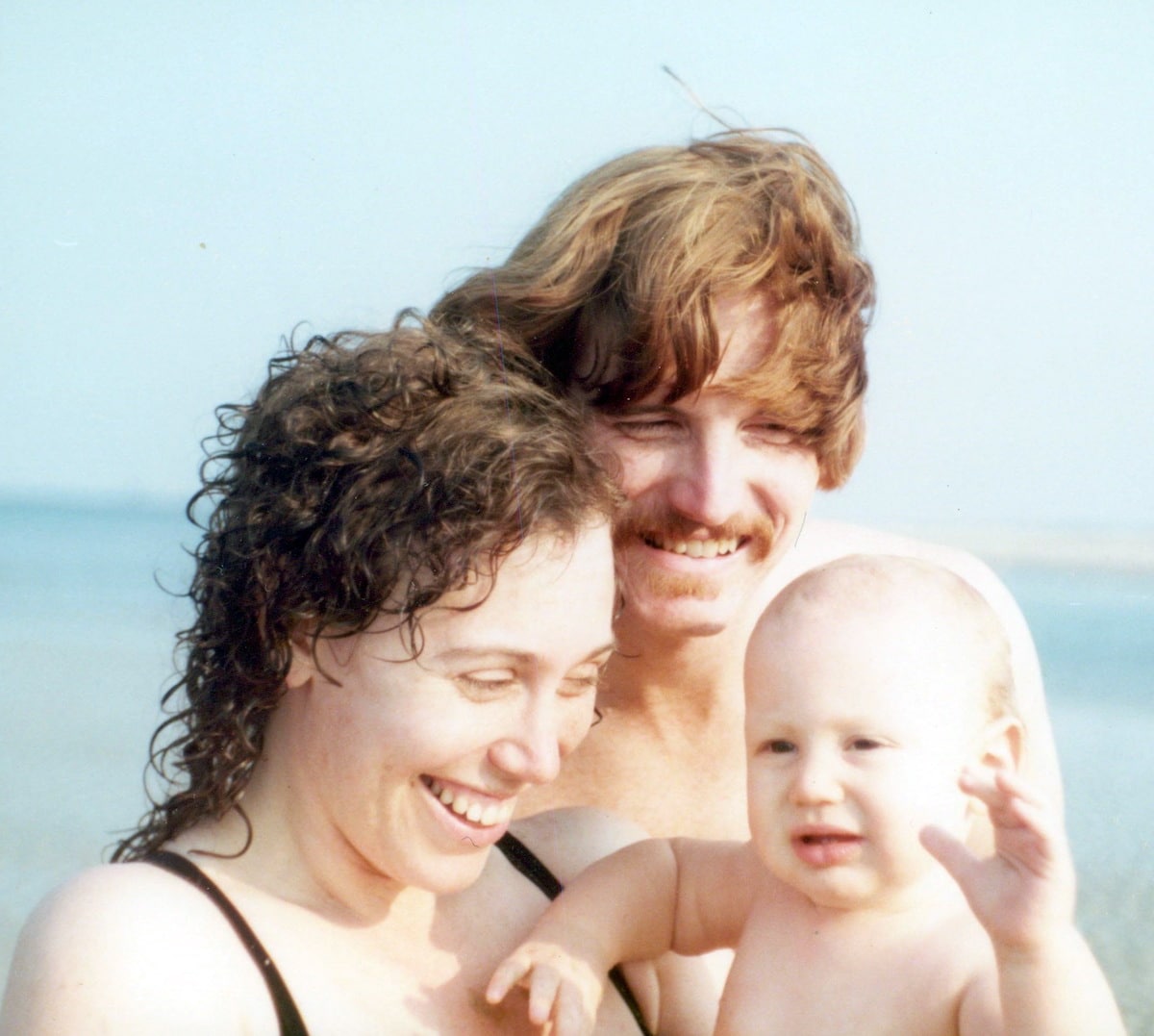
We Are Having a Baby!

Estimated reading time: 11 minutes, 35 seconds
Subway Strike

“Do you think there will be a strike,” I ask the police officer behind the desk? He is older than me, but we are the same height. However, he has sixty pounds on me. The complications of a desk job, I presume. I have arrived to get crime stats for the two precincts. I need the data for a community crime prevention program grant application. If there are no buses or subway, how will I get our application section from Crown Heights to the northwestern Bronx?”

“Throwing up his hands, the cop mumbles, “Idon’t know.”

“The voice on WINS says in a staccato voice,””No progress on negotiations, and we are eight hours away from the strike deadline. The Transport Workers Union leader said….”

“Which precincts do you want the data for?” 

I provide the two Crown Heights precincts.

“Why do you need this data?”

“We are submitting a grant application to help create and improve community-police cooperation,” I stated. It was more than that, but I did not have time to debate with the officer.  

“Holding the papers tightly, he spoke loudly, “As long as you are working with my guys on the streets and not attacking the boys in blue.”

I said yes as clearly as possible, and he handed me the paperwork.

“Thanks.”

I left the office on the fifth floor; I would typically walk to the street level in most buildings. But this is the NYC Police headquarters, so I take the elevator.

“Would the transit union go on strike on April 1st? It was the worst day to close down mass transit. I could imagine a tabloid headline:””No Subway Service Today! April Fools!”

I trudged toward the subway and reviewed our contingency plans. 

Jan’s boss had agreed to drive her to and from work, although neither of us knew John owned a car. 

I could walk to work, as could all the staff except one who planned to stay with a cousin near our office. 

The only two issues I knew were that I had to deliver our portion of the proposal by the 7th and leave for a conference in DC on the 10th. 

Would the strike be over by then?

I crossed my fingers as I boarded the D train for home.

Pages: 1 2 3 4 5

2 comments add your comment

Share your thoughts and ideas

This site uses Akismet to reduce spam. Learn how your comment data is processed.

Previous Post:

Next Post:

The Jan Lilien Education Fund!

The Hunter: A Novel

Read: March 2024

Get this book

The Hunter: A Novel

by Tana French

Today, I began reading “The Hunter: A Novel” by Tana French, often called the Queen of Irish crime fiction. The story takes place in a small village in the West of Ireland during a hot summer. Two men arrive, one returning home and the other seeking riches. However, one of them is also seeking death.

Cal Hooper is a retired Chicago police officer who moved to rural Ireland for a peaceful life. He has built a relationship with a local woman named Lena and has been mentoring Trey Reddy, a troubled teenager on a better path. But when Trey’s long-lost father returns, accompanied by an English millionaire and a plan to find gold in the townland, everything they have built is threatened. Cal and Lena are willing to do whatever it takes to protect Trey, but Trey is not interested in protection. What she wants is revenge.

This novel, written by the acclaimed author described by The New York Times as “in a class by herself,” tells a nuanced and atmospheric tale about what we are willing to do for our loved ones, what we will do for revenge, and what we may have to sacrifice when the two collide.

×
Invisible Child

Read: December 2021

Get this book

Invisible Child: Poverty, Survival & Hope in an American City

by Andrea Elliott

Invisible Child: Poverty, Survival & Hope in an American City by Andrea Elliott was a gift from my son Jon. The New York Times selected “Invisible Child” as one of the best books published this year. It is indeed one of the top books on my all-time list.

GoodReads summary provides a good overview,

The riveting, unforgettable story of a girl whose indomitable spirit is tested by homelessness, poverty, and racism in an unequal America—from Pulitzer Prize-winning journalist Andrea Elliott of The New York Times

Invisible Child follows eight dramatic years in the life of Dasani Coates, a child with imagination as soaring as the skyscrapers near her Brooklyn homeless shelter. Born at the turn of a new century, Dasani is named for the bottled water that comes to symbolize Brooklyn’s gentrification and the shared aspirations of a divided city. As Dasani grows up, moving with her tight-knit family from shelter to shelter, this story goes back to trace the passage of Dasani’s ancestors from slavery to the Great Migration north. When Dasani comes of age, New York City’s homeless crisis explodes as the chasm deepens between rich and poor.

In the shadows of this new Gilded Age, Dasani must lead her seven siblings through a thicket of problems: hunger, parental drug addiction, violence, housing instability, segregated schools, and the constant monitoring of the child-protection system. When, at age thirteen, Dasani enrolls at a boarding school in Pennsylvania, her loyalties are tested like never before. As she learns to “code switch” between the culture she left behind and the norms of her new town, Dasani starts to feel like a stranger in both places. Ultimately, she faces an impossible question: What if leaving poverty means abandoning the family you love?

By turns heartbreaking and revelatory, provocative and inspiring, Invisible Child tells an astonishing story about the power of resilience, the importance of family, and the cost of inequality. Based on nearly a decade of reporting, this book vividly illuminates some of the most critical issues in contemporary America through the life of one remarkable girl.

Jan and I were involved and knew that child poverty and homelessness needed repair. In addition, Jan lived on Washington Park across from Ft. Greene Park in 1974-75. We knew the neighborhood where much of the book’s story takes place. 

Before meeting Jan in 1973, I was both a community/tenant organizer and a youth worker. In the latter role, I made weekly hostel trips for eight to ten young boys from East Williamsburg during 1973. The trips were the first the boys had ever been outside of their neighborhood.

Many of them had imaginations like Dasani. They also had her instinct to fight. One of my first tasks was to check for any weapons.

Decades later, when I would see any of them, now adults, they would ask when we were going on another trip. I wish I had met Jan when I made those trips. She would have helped me improve them and document the impact. If I could re-write history, I would have her join me as the second adult on the hostel trips.

After that summer, it was clear my primary skills were as a community/tenant organizer. Over the next few years, my work focused on creating affordable and supportive housing.

Jan and I did meaningful work that made a difference, yet the need for a permanent solution to the crisis remains. The book highlights the crucial role of resilience, the importance of family, and the cost of inequality. As a nation, we cannot undermine those values by breaking up families, impeding resilience, and maintaining racial and economic inequality. 

The current debate in Washington over the Build Back Better legislation needs to focus not on how much we spend but on its impact on children and families

David Brooks, a conservative commentator, has supported these expenditures for what they can do to address this country’s cultural and economic crisis. 

These packages say to the struggling parents and the warehouse workers: I see you. Your work has dignity. You are paving your way. You are at the center of our national vision.

This is how you fortify a compelling moral identity, which is what all of us need if we’re going to be able to look in the mirror with self-respect. This is the cultural transformation that good policy can sometimes achieve. Statecraft is soulcraft.

If you can only read one book this year, this is the one to read. Child poverty, homelessness, and inequality impact all of us. Ending child poverty and homelessness will make us a healthier and more inclusive nation. It is time for a compelling moral call to action!

Subscribe

Contact Us

When you buy a book or product using a link on this page, I receive a commission. Thank you for supporting Sharing Jan’s Love blog.

×
Angel Down

Read: December 2025

Get this book

Angel Down: A Novel

by Daniel Kraus

Angel Down” by Daniel Kraus immerses readers in World War I, weaving a complex tale of survival, supernatural wonder, and moral conflict. Five soldiers on a mission to venture into the perilous No Man’s Land to euthanize a wounded comrade. Instead, they discover a fallen angel. “Angel Down” was recognized as one of the New York Times’ 100 Notable Books of 2025.

Private Cyril Bagger has survived the unspeakable horrors of the Great War by relying on his wits and deception, swindling fellow soldiers at every opportunity. However, his survival instincts are put to the ultimate test when he and four other soldiers are given a deadly mission: to venture into No Man’s Land to end the suffering of a wounded comrade.

What they find amidst the ruined battlefield, however, is not a man in need of mercy, but a fallen angel, seemingly struck down by artillery fire. This celestial being may hold the key to ending the brutal conflict, but the soldiers must suppress their individual desires and work together. As jealousy, greed, and paranoia take hold, the group is torn apart by their inner demons, threatening to transform their angelic encounter into a descent into hell.


Daniel Kraus is a New York Times bestselling author known for his novels, television, and film work. His novel Whalefall received a front-cover review in The New York Times Book Review, won the Alex Award, and was a finalist for the LA Times Book Prize. Recognized as one of the Best Books of 2023 by NPR, The New York Times, the Chicago Tribune, and several other publications.

Kraus coauthored The Shape of Water with Guillermo del Toro, based on the idea they developed for the Oscar-winning film. He also collaborated with del Toro on Trollhunters, which was adapted into the Emmy-winning Netflix series. Additionally, Kraus co-wrote The Living Dead and Pay the Piper with the legendary filmmaker George A. Romero. His novel The Death and Life of Zebulon Finch was named one of Entertainment Weekly’s Top 10 Books of the Year.

Throughout his career, Kraus has received numerous accolades, including the Bram Stoker Award, the Scribe Award, and two Odyssey Awards (for both Rotters and Scowler). He has been featured multiple times as a Library Guild selection and recognized by YALSA as a Best Fiction for Young Adults. His works have been translated into over twenty languages. Daniel Kraus resides in Chicago with his wife. Visit him at DanielKraus.com.


Discover your next favorite book and dive into a world of curated, exciting reads by purchasing through my links. You’ll have access to a diverse selection of books I’ve personally vetted for quality and enjoyment. Additionally, by supporting these selections, you’ll help me continue to provide you with more personalized recommendations. I earn a small commission from your purchase, which allows me to buy and share even more books with you. Your support truly makes a difference!


×
Flight: A Novel

Read: January 2023

Get this book

Flight: A Novel

by Lynn Steger Strong

Flight: A Novel by Lynn Steger Strong is a novel about family, ambition, precarity, art, and desire, forming a decisive next step from a brilliant chronicler of our time. The book has been on my to-read list for a few months. A New Yorker Best Books of 2022, it seemed like a good start on my 2023 Goodreads Reading challenge. Flight is the first book I read in 2023. Last year I read seventy-four books, and each helped me with my grief journey.

I recommend this novel as it is a page-turner highlighting the difficulty families experience after a loss. As a culture, we are experiencing declining social connections, including within families. Flight is an excellent effort to define the crisis.

Although several possible resolutions to the conflict became clear by the middle of the novel, Ms. Strong told the story so that until the end, it was unclear how or if it would be resolved. In addition, enough unresolved issues remained so that.

The Goodreads summary provides an overview,

It’s December twenty-second and siblings Henry, Kate, and Martin have converged with their spouses on Henry’s house in upstate New York. This is the first Christmas the siblings are without their mother, the first not at their mother’s Florida house. Over the course of the next three days, old resentments and instabilities arise as the siblings, with a gaggle of children afoot, attempt to perform familiar rituals, while also trying to decide what to do with their mother’s house, their sole inheritance. As tensions rise, the whole group is forced to come together unexpectedly when a local mother and daughter need help.

With the urgency and artfulness that cemented her previous novel Want as “a defining novel of our age” (Vulture), Strong once again turns her attention to the structural and systemic failings that are haunting Americans, but also to the ways in which family, friends, and strangers can support each other through the gaps


The Jan Lilien Education Fund sponsors ongoing sustainability and environmental awareness programs. Gifts made this month; I will match dollar-for-dollar. All donations are tax-deductible.

Subscribe

Contact Us

I receive a commission when you buy a book or product using a link on this page. Thank you for supporting Sharing Jan’s Love blog.


×
Luky Us

Read: March 2022

Get this book

Lucky Us: A Novel

by Amy Bloom

Having surpassed my Goodreads 2022 reading goal, I wanted a lite, historical fiction book and found this one in the e-libraryLucky Us by Amy Bloom is a book that hooked me on the opening line – “My father’s wife died. My mother said we should drive down to his place and see what might be in it for us.” I enjoyed reading it and highly recommend it.

The first section in Hollywood was the one I found less appealing. Partly that is because I identified with Eva, and she does not fulfill her leading role until the last two sections. Its depiction of how people survived the way years by sometimes is a reminder of our inner resilience.

Goodreads provides the following summary.

So begins this remarkable novel by Amy Bloom, whose critically acclaimed Away was called “a literary triumph” (The New York Times). Lucky Us is a brilliantly written, deeply moving, fantastically funny novel of love, heartbreak, and luck.

Disappointed by their families, Iris, the hopeful star and Eva the sidekick, journey through 1940s America in search of fame and fortune. Iris’s ambitions take the pair across the America of Reinvention in a stolen station wagon, from small-town Ohio to an unexpected and sensuous Hollywood, and to the jazz clubs and golden mansions of Long Island.

With their friends in high and low places, Iris and Eva stumble and shine through a landscape of big dreams, scandals, betrayals, and war. Filled with gorgeous writing, memorable characters, and surprising events, Lucky Us is a thrilling and resonant novel about success and failure, good luck and bad, the creation of a family, and the pleasures and inevitable perils of family life, conventional and otherwise. From Brooklyn’s beauty parlors to London’s West End, a group of unforgettable people love, lie, cheat, and survive in this story of our fragile, absurd, heroic species.

Register to Attend Celebrate Jan Day

Subscribe

Contact Us

When you buy a book or product using a link on this page, I receive a commission. Thank you for supporting Sharing Jan’s Love blog.

×
A Parish Chronicle

Read: February 2026

Get this book

A Parish Chronicle

by Halldór Laxness

In “A Parish Chronicle,” celebrated novelist Halldór Laxness weaves an essayistic tale about the unlikely miracles that keep a church—destined to disappear time and again—rooted on the same hillside. Laxness explores the minutiae of history, from the location of the ancient burial mound of national hero Egill Skallagrímsson to the end of the 19th century, where weak-sighted Ólafur and boisterous farmhand Gunna each play unexpected roles in the parish’s enduring survival.

1882. In the still of morning, Ólafur sharpens his scythe on the bone-dry pavestones that separate his farmhouse from the rest of Mosfell Valley, where life revolves around sheep. The sound of his hammer rings out like a high-pitched bell over the tussocky fields. Across the valley, perched on a hill that receives more sunshine than others, stands Mosfell Church. Nearby, the parish priest’s maid Gunna pours her “slosh,” a weak cup of coffee. Further afield in Reykjavík (“down south” as the locals say), the general assembly decides to revisit an old plan to cut costs by consolidating small parishes and calls for the demolition of Mosfell. Yet today a church stands on that same hillside—its sharp steeple silhouetted against the clouds, its crown bell hanging to the left of the altar.

This intimate tribute to life in Laxness‘s home valley also offers a thoughtful commentary on how the peculiarities of certain individuals can shape history. “A Parish Chronicle” is rich with life and detail.


Halldór Laxness (1902-1998) is the undisputed master of modern Icelandic fiction. He was awarded the Nobel Prize in Literature in 1955, “for his vivid epic power which has renewed the great narrative art of Iceland.” His body of work includes novels, essays, poems, plays, stories, and memoirs: more than sixty books in all. His works available in English include Independent People, The Fish Can Sing, World Light, Under the Glacier, Iceland’s Bell, and Paradise Reclaimed.

Philip Roughton has translated the work of Halldór Laxness, Jón Kalman Stefánsson, Kristín Marja Baldursdóttir, and many others. He has twice been awarded the American-Scandinavian Foundation Translation Prize for his renderings of Halldór Laxness‘s work, in 2001 for Iceland’s Bell and in 2015 for Wayward Heroes. He also received the 2016 Oxford-Weidenfeld Prize for his translation of Jón Kalman Stefánsson’s The Heart of Man. He lives in Iceland. Translator Residence: Akureyri, Iceland

Salvatore Scibona is the recipient of a Mildred and Harold Strauss Living Award from the American Academy of Arts and Letters. His first novel, The End, was a finalist for the National Book Award and winner of the Young Lions Fiction Award. His second novel, The Volunteer, was called a “masterpiece” by the New York Times and won the Ohioana Book Award. His books have been translated into ten languages. His work has won a Guggenheim Fellowship, a Pushcart Prize, an O. Henry Award, and a Whiting Award, and the New Yorker named him one of its “20 Under 40” fiction writers. He is the Sue Ann and John Weinberg Director of the Cullman Center for Scholars and Writers at the New York Public Library.


Discover your next favorite book and dive into a world of curated, exciting reads by purchasing through my links. You’ll have access to a diverse selection of books I’ve personally vetted for quality and enjoyment. Additionally, by supporting these selections, you’ll help me continue to provide you with more personalized recommendations. I earn a small commission from your purchase, which allows me to buy and share even more books with you. Your support truly makes a difference!


×

Discover more from Sharing Jan’s Love

Subscribe now to keep reading and get access to the full archive.

Continue reading