New Book: Vanishing World

Estimated reading time: 0 minutes, 0 seconds
Vanishing World

Vanishing World

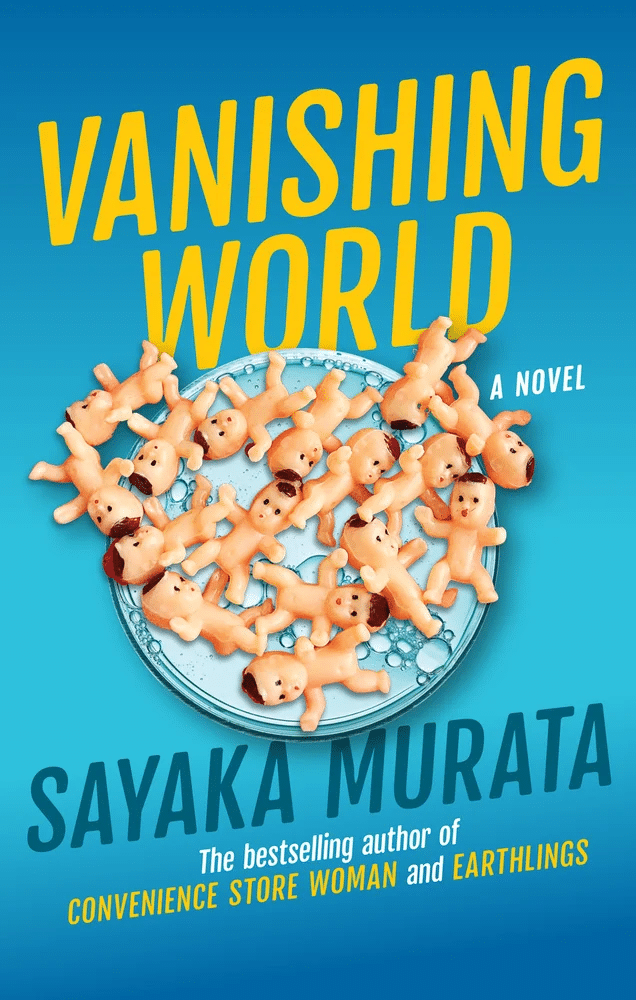
Today, I began reading Sayaka Murata's Vanishing World, translated by Ginny Tapley Takemori. This novel, from the author of the bestselling literary sensations Convenience Store Woman and Earthlings, presents a surprising and highly imaginative story set in an alternate version of Japan where sexual relations between married couples have disappeared, and all children are conceived through artificial insemination.

Read book review Get this book All books

Share your thoughts and ideas

This site uses Akismet to reduce spam. Learn how your comment data is processed.

The Jan Lilien Education Fund!

Vanishing World

Read: April 2025

Get this book

Vanishing World

by Sayaka Murata

Today, I began reading Sayaka Murata‘s Vanishing World, translated by Ginny Tapley Takemori. This novel, from the author of the bestselling literary sensations Convenience Store Woman and Earthlings, presents a surprising and highly imaginative story set in an alternate version of Japan where sexual relations between married couples have disappeared, and all children are conceived through artificial insemination.

Sayaka Murata has established herself as a remarkable observer of society’s peculiarities, delving into our contemporary world with bizarre and unsettling insights. Her portrayals of a contentedly unmarried retail worker in Convenience Store Woman and a young woman who believes she is an alien in Earthlings have resonated with millions of readers globally. In Vanishing World, Murata takes her vision to a bold new level, envisioning an alternative Japan where attitudes toward sex and procreation diverge significantly from our own.

As a girl, Amane is horrified to learn that her parents “copulated” to conceive her rather than using artificial insemination, which became the norm in the mid-twentieth century. She seeks to escape what she perceives as her mother’s indoctrination into this peculiar “system.” Despite her efforts, Amane’s attractions to both anime characters and real people carry an undeniable sexual weight.

As an adult in a suitably sexless marriage—where sex between married couples is regarded as taboo, akin to incest—Amane and her husband, Saku, decide to relocate to a mysterious new town called Experiment City, or Paradise-Eden. In this community, all children are raised collectively, and every person is considered a mother to all children. Men are beginning to experience pregnancy through artificial wombs that exist outside their bodies, resembling balloons, and children are nameless, referred to simply as “Kodomo-chan.” Will this new world finally cleanse Amane of her strangeness?


Sayaka Murata is the author of several books, including Convenience Store Woman, which won the Akutagawa Prize, Earthlings, and Life Ceremony. Freeman has recognized her as a “Future of New Writing” author, and Vogue Japan has honored her as a Woman of the Year.

Ginny Tapley Takemori has translated works from more than a dozen Japanese writers, including Ryu Murakami. She resides at the foot of a mountain in Eastern Japan.


When you purchase a book through one of my links, I earn a small commission that helps support my passion for reading. This contribution allows me to buy even more books to share with you, creating an incredible cycle of discovering great reads together! Your support truly makes a difference!

Enjoy a limited-time offer of 20% off your next book purchase at Bookshop.org!


×
She's Up to No Good

Read: July 2022

Get this book

She’s Up to No Good

by Sara Goodman Confino

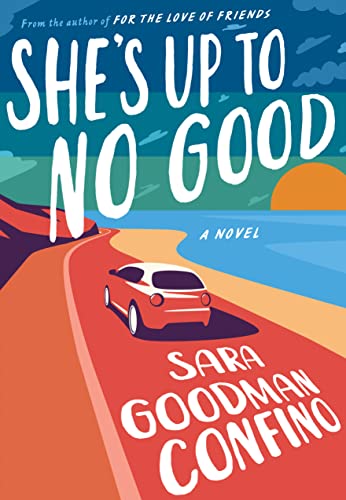
After writing Road Trippin, I needed to read about other homeward-bound journeys that help us find peace and a future after a tragedy. Today I started reading She’s Up to No Good by Sara Goodman Confino. The book is a funny, poignant, and life-affirming novel about family, secrets, and broken hearts. It may be the best read for my days in San Diego.

It was the perfect read for my time at Camp, as it was a life-affirming novel. As much as I know that life continues, She’s Up to No Good reaffirmed my belief.

I highly recommend this book.

The Goodreads summary provides an overview.

Four years into her marriage, Jenna is blindsided when her husband asks for a divorce. With time on her hands and her life in flux, she agrees to accompany her eccentric grandmother, Evelyn, on a road trip to the seaside Massachusetts town where much of their family history was shaped.

When they hit the road, Evelyn spins the tale of the star-crossed teenage romance that captured her heart more than seventy years ago and changed the course of her life. She insists the return to her hometown isn’t about that at all—no matter how much she talks about Tony, her unforgettable and forbidden first love.

Upon arrival, Jenna meets Tony’s attentive great-nephew Joe. The new friendship and fresh ocean air give her the confidence and distance she needs to begin putting the pain of a broken marriage behind her.

As the secrets and truths of Evelyn’s past unfold, Jenna discovers a new side of her grandmother and of herself that she never knew existed—and learns that the possibilities for healing can come at the most unexpected times in a woman’s life.


The Jan Lilien Education Fund sponsors ongoing sustainability and environmental awareness programs. All donations are tax-deductible.

Subscribe

Contact Us

I receive a commission when you buy a book or product using a link on this page. Thank you for supporting Sharing Jan’s Love blog.

×
Autobiography of Cotton

Read: February 2026

Get this book

Autobiography of Cotton

by Cristina Rivera Garza

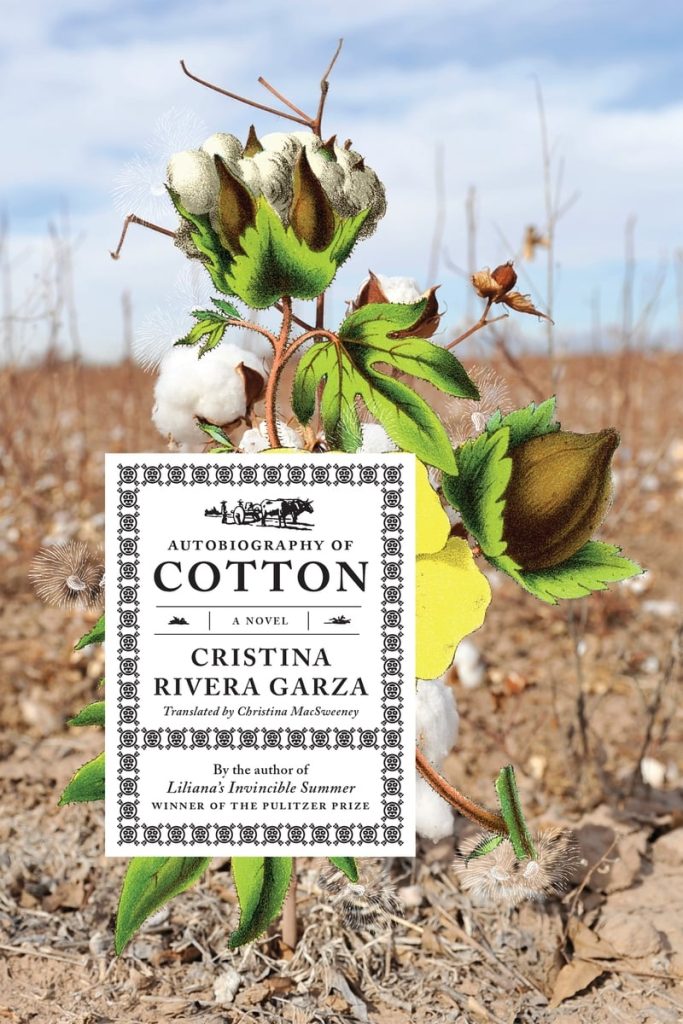
In 1934, a young José Revueltas traveled to Tamaulipas to support the cotton workers’ strike in Estación Camarón, which would later serve as the foundation for his landmark novel, Human Mourning. In her groundbreaking novel Autobiography of Cotton, Cristina Rivera Garza recounts her grandparents’ journey from mining towns to those same cotton fields. Her narrative intersects with Revueltas’s life and offers a vivid and evocative account of the history of cotton cultivation along the Mexico-U.S. border.

Through archival research and personal narrative, Rivera Garza explores how cotton transformed the borderlands by recounting the story of the cotton workers’ strike. She reveals how cycles of deprivation and environmental destruction continue to affect generations. Rivera Garza skillfully creates a new kind of border novel that illustrates how a fragile landscape drastically changed her grandparents’ lives and the territories they helped to develop. In this intimate fictionalization, Autobiography of Cotton offers a rich social history that encompasses agricultural colonization, labor activism, environmental degradation, and cross-border migration.

I recommend “Autobiography of Cotton,” but readers should be patient as the book shifts back and forth in time. Everything becomes clear as you continue reading.


Cristina Rivera Garza is the Pulitzer Prize–winning author of Liliana’s Invincible Summer. A MacArthur Fellow, she is the Hugh Roy and Lillie Cranz Cullen Distinguished Chair and founder of the University of Houston’s PhD in Creative Writing in Spanish.

Christina MacSweeney is the award-winning literary translator of works by Julián Herbert, Valeria Luiselli, and Elvira Navarro. She received the 2024 Sundial Literary Translation Award for her translation of Verónica Gerber Bicecci‘s The Company.


Discover your next favorite book and dive into a world of curated, exciting reads by purchasing through my links. You’ll have access to a diverse selection of books that I’ve personally vetted to ensure quality and enjoyment. Additionally, by supporting these selections, you’ll help me continue to provide you with more personalized recommendations. I earn a small commission from your purchase, which allows me to buy and share even more books with you. Your support truly makes a difference!


×
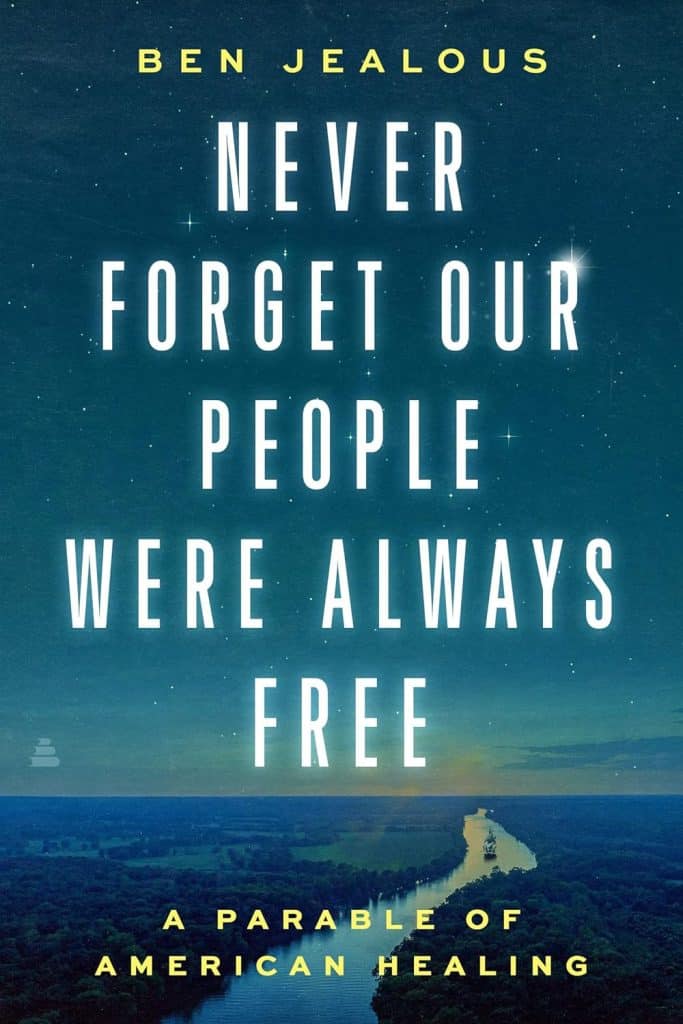
Never Forget Our People Were Always Free

Read: March 2024

Get this book

Never Forget Our People Were Always Free

by Ben Jealous

Today, I started reading “Never Forget Our People Were Always Free: A Parable of American Healing” by Ben Jealous, the Executive Director of the Sierra Club. The book highlights how the path to healing America’s broken heart begins with each of us having the courage to heal ourselves. According to Mr. Jealous, it would be transformative if every American treated each other as cousins.

Ben Jealous is the son of parents who had to leave Maryland because their cross-racial marriage was illegal.

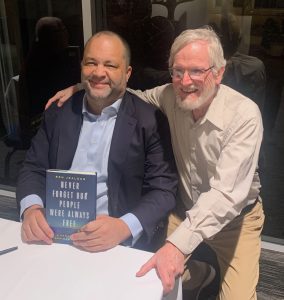
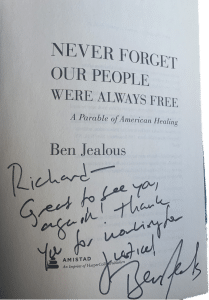
I briefly met Ben Jealous last May when I went to Washington with the Religious Action Center of Reform Judaism‘s Day of Action. When I saw Mr. Jealous speaking at Temple Emanu-El in neighboring Westfield, I immediately signed up to attend in person. He is an inspiration as an advocate for the environment, civil rights, and the healing of America’s broken heart.

His lively, courageous, and empathetic storytelling calls on every American to look past deeply cut divisions and recognize that we are all in the same boat now. Along the way, Jealous grapples with hidden American mysteries, including:

  • Why do white men die from suicide more often than black men die from murder?
  • How did racial profiling kill an American president?
  • What happens when a Ku Klux Klansman wrestles with what Jesus said?
  • How did Dave Chappelle know the DC Snipers were Black?
  • Why shouldn’t the civil rights movement give up on rednecks?
  • When is what we have collectively forgotten about race more important than what we know?
  • What do the most indecipherable things our elders say tell us about ourselves?

The book Never Forget Our People Were Always Free is told through parables. It features intimate glimpses of political and faith leaders such as Jack Kemp, Stacey Abrams, and the late Archbishop Desmond Tutu. The book also highlights unlikely heroes such as a retired constable, a female pirate from Madagascar, a long-lost Irishman, a death row inmate, and a man with a Confederate flag over his heart.
Never Forget Our People Were Always Free offers readers hope that America’s oldest wounds can heal and her oldest divisions can be overcome.

Although I have only read a handful of pages of the book, I highly recommend it!

×
The Guest

Read: May 2023

Get this book

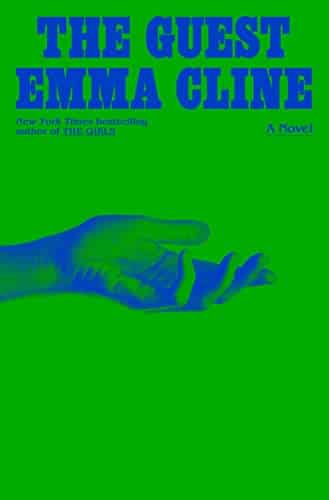
The Guest: A Novel

by Emma Cline

The Guest by Emma Cline is a highly recommended book, recognized as one of the top releases for May by The New York Times. At first, I assumed it was just another typical summer romance novel I usually don’t enjoy. However, I was surprised that it was unlike any other beach read I had encountered.

The protagonist, Alex, finds herself in a difficult situation after making a mistake at a dinner party in the East End of Long Island towards the end of summer. The man she’s been staying with dismisses her and sends her back to the city. With limited resources and a waterlogged phone, Alex decides to stay on Long Island and explore her surroundings. She wanders through exclusive neighborhoods and beaches, leaving a trail of destruction behind her.

According to The New York Times, Alex’s days and nights waiting for Labor Day might be “an entertaining series of misguided shenanigans interrupting the upper class’s summer vacation. However, under Cline’s command, every sentence is as sharp as a scalpel, portraying a woman who toes the line between welcome and unwelcome guest and becomes a fully destabilizing force for her hosts and the novel itself.

Although the book has no experience with themes, such as using sex to secure what she desires, as soon as I started reading it, I could not stop. Regardless of my unfamiliarity with the topics, I highly recommend The Guest.


The Jan Lilien Education Fund sponsors ongoing sustainability and environmental awareness programs. Gifts made this month; I will match dollar-for-dollar. All donations are tax-deductible.

Subscribe

Contact Us

I receive a commission when you buy a book or product using a link on this page. Thank you for supporting Sharing Jan’s Love blog.


×
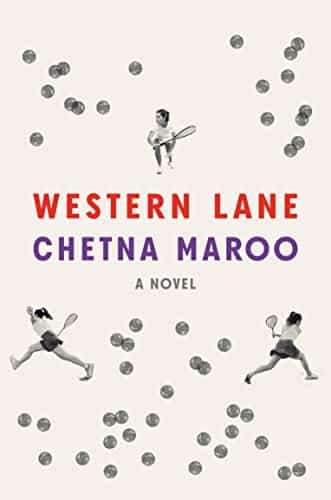
Western Lane: A Novel

Read: March 2023

Get this book

Western Lane: A Novel

by Chetna Maroo

Western Lane: A Novel by Chetna Maroo is a taut, enthralling first novel about grief, sisterhood, and a young athlete’s struggle to transcend herself. Western Lane is about three sisters who have lost their mother. Their father is encouraged to provide structure in raising his daughters. Gopi, the narrator, is a squash player, and her father imposes a brutal training regimen. I highly recommend this novel!

The following passage explains the importance of squash to Gopi and how she views the world.

In the court, your mind is not only on the shot you’re about to play and the shot with which your opponent might reply, but on the shots that will follow two, three, four moves ahead. You’re watching your opponent’s position and the game he or she is playing, making calculations. This is how you choose which way to go. Though your mind is following several paths at once, it’s not a splitting but expansion forwards and backward in time, and it happens so quickly that it feels like instinct. Sometimes, you don’t even know you are thinking.

In the first few pages, I wondered what I would have done if I had been a single parent when my sons were young. I do not believe I would have imposed on my sons what Gopi’s father did to her. However, I have found reading and art to be powerful tools to help me cope with grief. I have focused on rituals, structure, and purpose.

The Goodreads summary provides an overview,

Eleven-year-old Gopi has been playing squash since she was old enough to hold a racket. When her mother dies, her father enlists her in a quietly brutal training regimen, and the game becomes her world. Slowly, she grows apart from her sisters. Her life is reduced to the sport, guided by its rhythms: the serve, the volley, the drive, the shot, and its echo.

But on the court, she is not alone. She is with her pa. She is with Ged, a thirteen-year-old boy with formidable talent. She is with the players who have come before her. She is in awe.

An indelible coming-of-age story, Chetna Maroo’s first novel captures the ordinary and annihilates it with beauty. Western Lane is a valentine to innocence, to the closeness of sisterhood, to the strange ways we know ourselves and each other.


The Jan Lilien Education Fund sponsors ongoing sustainability and environmental awareness programs. Gifts made this month; I will match dollar-for-dollar. All donations are tax-deductible.

Subscribe

Contact Us

I receive a commission when you buy a book or product using a link on this page. Thank you for supporting Sharing Jan’s Love blog.


×
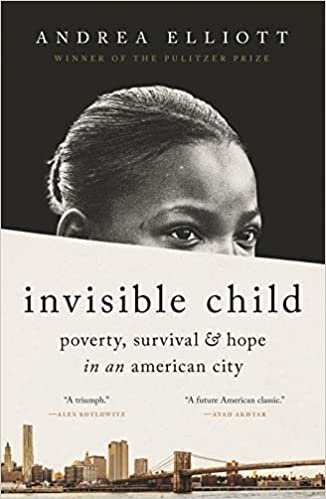
Invisible Child

Read: December 2021

Get this book

Invisible Child: Poverty, Survival & Hope in an American City

by Andrea Elliott

Invisible Child: Poverty, Survival & Hope in an American City by Andrea Elliott was a gift from my son Jon. The New York Times selected “Invisible Child” as one of the best books published this year. It is indeed one of the top books on my all-time list.

GoodReads summary provides a good overview,

The riveting, unforgettable story of a girl whose indomitable spirit is tested by homelessness, poverty, and racism in an unequal America—from Pulitzer Prize-winning journalist Andrea Elliott of The New York Times

Invisible Child follows eight dramatic years in the life of Dasani Coates, a child with imagination as soaring as the skyscrapers near her Brooklyn homeless shelter. Born at the turn of a new century, Dasani is named for the bottled water that comes to symbolize Brooklyn’s gentrification and the shared aspirations of a divided city. As Dasani grows up, moving with her tight-knit family from shelter to shelter, this story goes back to trace the passage of Dasani’s ancestors from slavery to the Great Migration north. When Dasani comes of age, New York City’s homeless crisis explodes as the chasm deepens between rich and poor.

In the shadows of this new Gilded Age, Dasani must lead her seven siblings through a thicket of problems: hunger, parental drug addiction, violence, housing instability, segregated schools, and the constant monitoring of the child-protection system. When, at age thirteen, Dasani enrolls at a boarding school in Pennsylvania, her loyalties are tested like never before. As she learns to “code switch” between the culture she left behind and the norms of her new town, Dasani starts to feel like a stranger in both places. Ultimately, she faces an impossible question: What if leaving poverty means abandoning the family you love?

By turns heartbreaking and revelatory, provocative and inspiring, Invisible Child tells an astonishing story about the power of resilience, the importance of family, and the cost of inequality. Based on nearly a decade of reporting, this book vividly illuminates some of the most critical issues in contemporary America through the life of one remarkable girl.

Jan and I were involved and knew that child poverty and homelessness needed repair. In addition, Jan lived on Washington Park across from Ft. Greene Park in 1974-75. We knew the neighborhood where much of the book’s story takes place. 

Before meeting Jan in 1973, I was both a community/tenant organizer and a youth worker. In the latter role, I made weekly hostel trips for eight to ten young boys from East Williamsburg during 1973. The trips were the first the boys had ever been outside of their neighborhood.

Many of them had imaginations like Dasani. They also had her instinct to fight. One of my first tasks was to check for any weapons.

Decades later, when I would see any of them, now adults, they would ask when we were going on another trip. I wish I had met Jan when I made those trips. She would have helped me improve them and document the impact. If I could re-write history, I would have her join me as the second adult on the hostel trips.

After that summer, it was clear my primary skills were as a community/tenant organizer. Over the next few years, my work focused on creating affordable and supportive housing.

Jan and I did meaningful work that made a difference, yet the need for a permanent solution to the crisis remains. The book highlights the crucial role of resilience, the importance of family, and the cost of inequality. As a nation, we cannot undermine those values by breaking up families, impeding resilience, and maintaining racial and economic inequality. 

The current debate in Washington over the Build Back Better legislation needs to focus not on how much we spend but on its impact on children and families. 

David Brooks, a conservative commentator, has supported these expenditures for what they can do to address this country’s cultural and economic crisis. 

These packages say to the struggling parents and the warehouse workers: I see you. Your work has dignity. You are paving your way. You are at the center of our national vision.

This is how you fortify a compelling moral identity, which is what all of us need if we’re going to be able to look in the mirror with self-respect. This is the cultural transformation that good policy can sometimes achieve. Statecraft is soulcraft.

If you can only read one book this year, this is the one to read. Child poverty, homelessness, and inequality impact all of us. Ending child poverty and homelessness will make us a healthier and more inclusive nation. It is time for a compelling moral call to action!

Subscribe

Contact Us

When you buy a book or product using a link on this page, I receive a commission. Thank you for supporting Sharing Jan’s Love blog.

×