New Book: Crow Lake

Estimated reading time: 0 minutes, 0 seconds
Crow Lake

Crow Lake

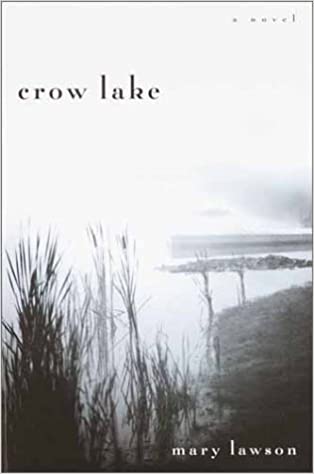
Crow Lake by Mary Lawson is set in northern Ontario's rural "badlands." The badlands are where heartbreak and hardship are mirrored in the landscape of the farming Pye family. Crow Lake is that rare find, a first novel so quietly assured, so emotionally pitch-perfect, you know from the opening page that this is the real thing – a literary experience in which to lose yourself, by an author of immense talent.

Read book review Get this book All books

Share your thoughts and ideas

This site uses Akismet to reduce spam. Learn how your comment data is processed.

The Jan Lilien Education Fund!

Crow Lake

Read: January 2022

Get this book

Crow Lake

by Mary Lawson

Crow Lake by Mary Lawson is set in northern Ontario’s rural “badlands.” The badlands are where heartbreak and hardship are mirrored in the landscape of the farming Pye family. Crow Lake is that rare find, a first novel so quietly assured, so emotionally pitch-perfect, you know from the opening page that this is the real thing – a literary experience in which to lose yourself, by an author of immense talent.

Crow Lake was a page-turner for me once I read the prologue.

Two families dominate the story.

On the one hand, it is the Greek tragedy of the Pye family. On their farm, “the sins of the fathers are visited on the sons, and terrible events occur—offstage.”

Kate Morrison has left her two brothers and sister at the lake to become a zoologist. The four siblings lost their parents and struggled to remain together. Their “tragedy looks more immediate if less brutal, but is, in reality, insidious and divisive.

As Goodreads describes the novel,

In this universal drama of family love and misunderstandings, of resentments harbored and driven underground, Lawson ratchets up the tension with heartbreaking humor and consummate control, continually overturning one’s expectations right to the very end. Tragic, funny, unforgettable, this deceptively simple masterpiece about the perils of hero worship leaped to the top of the bestseller lists only days after being released in Canada and earned glowing reviews in The New York Times and The Globe and Mail, to name a few.

I highly recommend this novel and am looking forward to reading more from Mary Lawson.

Subscribe

Contact Us

When you buy a book or product using a link on this page, I receive a commission. Thank you for supportJan’sharing Jan’s Love blog.

×
Sea of Tranquility

Read: September 2022

Get this book

Sea of Tranquility

by Emily St. John Mandel

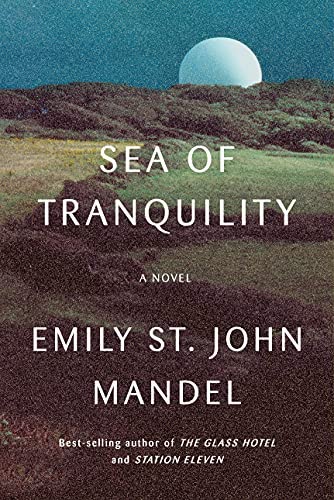
Sea of Tranquility by Emily St. John Mandel has been on my reading list for months. I recommend the book without reservations. Sea of Tranquility is a novel of art, time, love, and plague that takes the reader from Vancouver Island in 1912 to a dark colony on the moon three hundred years later, unfurling a story of humanity across centuries and space. It was a page-turner from page one.

With the delay of Artemis I, I have been thinking a lot about the Sea of Tranquility, the original lunar landing site. Sea of Tranquility reminded me of the days of my youth when we believed that NASA would colonize the moon as it is in the novel.

One of the passages that moved me was when Olive Llewellyn asked, “What if it always is the end of the world.” A second profound passage asks, “A life lived in a simulation is still a life.

The Goodreads summary provides a good overview,

Edwin St. Andrew is eighteen years old when he crosses the Atlantic by steamship, exiled from polite society following an ill-conceived diatribe at a dinner party. He enters the forest, spellbound by the beauty of the Canadian wilderness, and suddenly hears the notes of a violin echoing in an airship terminal—an experience that shocks him to his core.

Two centuries later a famous writer named Olive Llewellyn is on a book tour. She’s traveling all over Earth, but her home is the second moon colony, a place of white stone, spired towers, and artificial beauty. Within the text of Olive’s bestselling pandemic novel lies a strange passage: a man plays his violin for change in the echoing corridor of an airship terminal as the trees of a forest rise around him.

When Gaspery-Jacques Roberts, a detective in the Night City, is hired to investigate an anomaly in the North American wilderness, he uncovers a series of lives upended: The exiled son of an earl driven to madness, a writer trapped far from home as a pandemic ravages Earth, and a childhood friend from the Night City who, like Gaspery himself, has glimpsed the chance to do something extraordinary that will disrupt the timeline of the universe.


The Jan Lilien Education Fund sponsors ongoing sustainability and environmental awareness programs. Gifts made this month; I will match dollar-for-dollar. All donations are tax-deductible.

Subscribe

Contact Us

I receive a commission when you buy a book or product using a link on this page. Thank you for supporting Sharing Jan’s Love blog.

×
Vulture: A Novel

Read: September 2025

Get this book

Vulture: A Novel

by Phoebe Greenwood

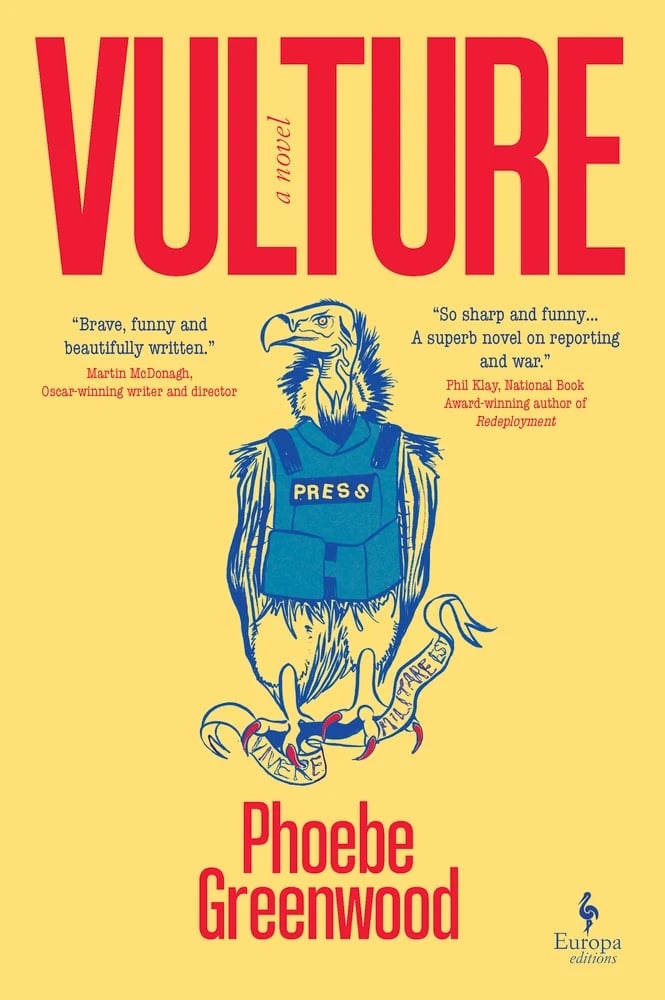
Phoebe Greenwood‘s debut novel, Vulture, immerses readers in the dark heart of Western media and boldly questions its role in the tragedies it reports. This darkly humorous and emotionally charged satire exposes the inner workings of the war news industry. Set in the Middle East, Vulture is a fast-paced critique of war reporting, blending elements of satire with a tragicomic coming-of-age story.

In November 2012, Sara Byrne, an ambitious young journalist, is sent to Gaza to cover the war from The Beach. At the four-star hotel, the staff work tirelessly to provide safety, comfort, and generator-powered internet for the world’s media, all while their own homes and families are under threat.

Sara is determined to use this war to jumpstart her stalled career and win back her lover. When her fixer, Nasser, refuses to help her set up the dangerous story she believes will make her name, she turns to Fadi, the youngest member of a powerful militant family. Driven by the demons of a troubled and entitled childhood, Sara is willing to do anything to prove herself, even if it brings disaster to those around her.


Phoebe Greenwood is a writer and journalist based in London. From 2010 to 2013, she worked as a freelance correspondent in Jerusalem, covering the Middle East for publications such as The Guardian, The Daily Telegraph, and The Sunday Times. From 2013 to 2021, she served as an editor and correspondent at The Guardian, specializing in foreign affairs.


When you purchase a book through one of my links, I earn a small commission that helps support my passion for reading. This contribution allows me to buy even more books to share with you, creating an incredible cycle of discovering great reads together! Your support truly makes a difference!

Enjoy a limited-time offer of 20% off your next book purchase at Bookshop.org!


×
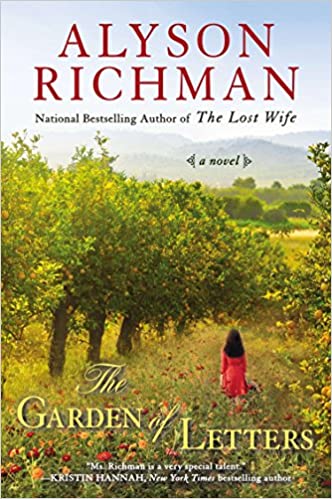
The Garden of Letters

Read: June 2021

Get this book

The Garden of Letters

by son Richman

The Garden of Letters by Alyson Richman was one of the first books I read after Jan died. It was the perfect love story to read after the loss of the love of my life. The love Jan and I shared was because we shared a portion of the soul of the other, and thus we were meant for each other from day one. 

The two primary characters – Elodie Bertolotti and Angelo Rosselli – resonated with me as they were also people who shared souls. The book “captures the hope, suspense, and romance of an uncertain era, in an epic intertwining story of first love, great tragedy, and spectacular bravery.“

As I turned every page, the story filled my heart with love and happiness as it reminded me of the love that Jan and I shared.

Portofino, Italy, 1943. A young woman steps off a boat in a scenic coastal village. Although she knows how to disappear in a crowd, Elodie is too terrified to slip by the German officers while carrying her poorly forged identity papers. She is frozen until a man she’s never met before claims to know her. In desperate need of shelter, Elodie follows him back to his home on the cliffs of Portofino.

Only months before, Elodie Bertolotti was a cello prodigy in Verona, unconcerned with world events. But when Mussolini’s Fascist regime strikes her family, Elodie is drawn into the burgeoning resistance movement by Luca, a young and passionate bookseller. As the occupation looms, she discovers that her unique musical talents, and her courage, have the power to save lives.

In Portofino, young doctor Angelo Rosselli gives the frightened and exhausted girl sanctuary. He is a man with painful secrets of his own, haunted by guilt and remorse. But Elodie’s arrival has the power to awaken a sense of hope that Angelo thought was lost to him forever.

I not only recommend this book, but I am also looking forward to reading more of her novels.

Subscribe

Contact Us

×
Heart of a Stranger

Read: February 2026

Get this book

Heart of a Stranger

by Rabbi Angela Warnick Buchdahl

In “Heart of a Stranger,” Angela Buchdahl shares her journey from feeling like an outsider to becoming an officiant. She describes her transformation from estrangement to belonging, ultimately emerging with a deep conviction that we are all connected to a larger whole and purpose. Her book serves as both a memoir and a spiritual guide for everyday living, addressing a need that many of us experience today. As the first Asian American ordained as a rabbi, she offers a compelling account of her evolution into one of the world’s most respected religious leaders.

Angela Buchdahl was born in Seoul, the daughter of a Korean Buddhist mother and Jewish American father. Profoundly spiritual from a young age, by sixteen, she felt the first stirrings to become a rabbi. Despite the naysayers and periods of self-doubt—Would a mixed-race woman ever be seen as authentically Jewish or chosen to lead a congregation?—she stayed the course, which took her first to Yale, then to rabbinical school, and finally to the pulpit of one of the largest, most influential congregations in the world.

Today, Angela Buchdahl inspires Jews and non-Jews alike with her invigorating, joyful approach to worship and her belief in the power of faith, gratitude, and responsibility for one another, regardless of religion. She does not shy away from difficult topics, from racism within the Jewish community and the sexism she confronted when she aspired to the top job, to rising antisemitism today. Buchdahl teaches how these challenges, which can make one feel like a stranger, can ultimately be the source of our greatest empathy and strength.

While reading this book, I experienced a revival and deepening of my faith. “Heart of a Stranger,” “Man’s Search for Meaning,” “Judaism is About Love,” “Hostage,” and “The Amen Effect” are all cherished titles that I will reference and reread for years to come.


Angela Buchdahl is the first Asian American rabbi. She serves as the Senior Rabbi of Central Synagogue in New York City, the first woman to lead this flagship congregation in its 185-year history. Under her leadership, Central has grown into one of the largest synagogues in the world, with live-stream viewers in more than 100 countries. She has led prayers in the White House for two U.S. presidents and has been featured on national news outlets, including Today, NPR, and The Wall Street Journal, to discuss the day’s moral issues.

Rabbi Buchdahl and her husband live in New York City and have three children.


Discover your next favorite book and dive into a world of curated, exciting reads by purchasing through my links. You’ll have access to a diverse selection of books that I’ve personally vetted to ensure quality and enjoyment. Additionally, by supporting these selections, you’ll help me continue to provide you with more personalized recommendations. I earn a small commission from your purchase, which allows me to buy and share even more books with you. Your support truly makes a difference!


×
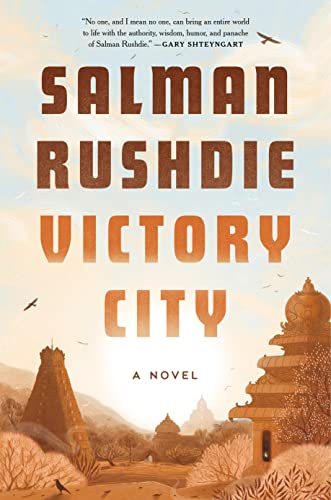
Victory City: A Novel

Read: February 2023

Get this book

Victory City: A Novel

by Salman Rushdie

Victory City: A Novel by Salman Rushdie is an epic tale of a woman who breathes a fantastical empire into existence, only to be consumed by it over the centuries from the transcendent imagination of Booker Prize-winning, internationally bestselling author Salman Rushdie. It is well written and was a page-turner from page one to the end. I highly recommend this novel and encourage everyone to read it.

Brilliantly styled as a translation of an ancient epic, this is a saga of love, adventure, and myth that is a testament to storytelling’s power. After witnessing her mother’s death, the grief-stricken Pampa Kampana becomes a vessel for the goddess Parvati, who begins to speak out of the girl’s mouth. I was hooked when Pampa Kampana provided the seeds that created Victory City out of thin air.

David Remnick’s interview with Salman Rushdie in The New Yorker provided background I would have missed.

“The first kings of Vijayanagara announced, quite seriously, that they were descended from the moon,” Rushdie said. “So when these kings, Harihara and Bukka, announce that they’re members of the lunar dynasty, they’re associating themselves with those great heroes. It’s like saying, ‘I’ve descended from the same family as Achilles.’ Or Agamemnon. And so I thought, Well, if you could say that, I can say anything.”

Above all, the book is buoyed by the character of Pampa Kampana, who, Rushdie says, “just showed up in my head” and gave him his story, his sense of direction. Rushdie’s pleasure in writing the novel was in “world building” and, at the same time, writing about a character building that world: “It’s me doing it, but it’s also her doing it.” The pleasure is infectious. “Victory City” is an immensely enjoyable novel. It is also an affirmation. At the end, with the great city in ruins, what is left is not the storyteller but her words:

I, Pampa Kampana, am the author of this book.
I have lived to see an empire rise and fall.
How are they remembered now, these kings, these queens?
They exist now only in words . . .
I myself am nothing now. All that remains is this city of words.
Words are the only victors.

The Goodreads summary provides a brief overview,

In the wake of an insignificant battle between two long-forgotten kingdoms in fourteenth-century southern India, a nine-year-old girl has a divine encounter that will change the course of history. After witnessing her mother’s death, the grief-stricken Pampa Kampana becomes a vessel for the goddess Parvati, who begins to speak out of the girl’s mouth. Granting her powers beyond Pampa Kampana’s comprehension, the goddess tells her that she will be instrumental in the rise of a great city called Bisnaga–literally victory city–the wonder of the world.

Over the next two hundred and fifty years, Pampa Kampana’s life becomes deeply interwoven with Bisnaga’s, from its literal sowing out of a bag of magic seeds to its tragic ruination in the most human of ways: the hubris of those in power. Whispering Bisnaga and its citizens into existence, Pampa Kampana attempts to make good on Parvati’s task: giving women equal agency in a patriarchal world. But all stories have a way of getting away from their creator, and Bisnaga is no exception. As years pass, rulers come and go, battles are won and lost, and allegiances shift, the very fabric of Bisnaga becomes an ever more complex tapestry–with Pampa Kampana at its center.


The Jan Lilien Education Fund sponsors ongoing sustainability and environmental awareness programs. Gifts made this month; I will match dollar-for-dollar. All donations are tax-deductible.

Subscribe

Contact Us

I receive a commission when you buy a book or product using a link on this page. Thank you for supporting Sharing Jan’s Love blog.


×
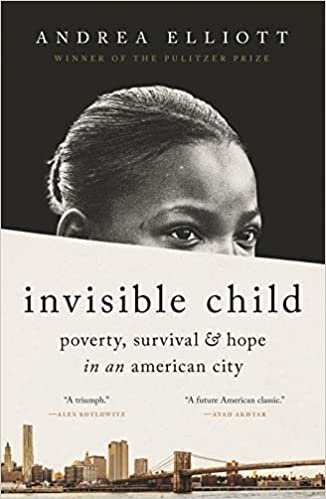
Invisible Child

Read: December 2021

Get this book

Invisible Child: Poverty, Survival & Hope in an American City

by Andrea Elliott

Invisible Child: Poverty, Survival & Hope in an American City by Andrea Elliott was a gift from my son Jon. The New York Times selected “Invisible Child” as one of the best books published this year. It is indeed one of the top books on my all-time list.

GoodReads summary provides a good overview,

The riveting, unforgettable story of a girl whose indomitable spirit is tested by homelessness, poverty, and racism in an unequal America—from Pulitzer Prize-winning journalist Andrea Elliott of The New York Times

Invisible Child follows eight dramatic years in the life of Dasani Coates, a child with imagination as soaring as the skyscrapers near her Brooklyn homeless shelter. Born at the turn of a new century, Dasani is named for the bottled water that comes to symbolize Brooklyn’s gentrification and the shared aspirations of a divided city. As Dasani grows up, moving with her tight-knit family from shelter to shelter, this story goes back to trace the passage of Dasani’s ancestors from slavery to the Great Migration north. When Dasani comes of age, New York City’s homeless crisis explodes as the chasm deepens between rich and poor.

In the shadows of this new Gilded Age, Dasani must lead her seven siblings through a thicket of problems: hunger, parental drug addiction, violence, housing instability, segregated schools, and the constant monitoring of the child-protection system. When, at age thirteen, Dasani enrolls at a boarding school in Pennsylvania, her loyalties are tested like never before. As she learns to “code switch” between the culture she left behind and the norms of her new town, Dasani starts to feel like a stranger in both places. Ultimately, she faces an impossible question: What if leaving poverty means abandoning the family you love?

By turns heartbreaking and revelatory, provocative and inspiring, Invisible Child tells an astonishing story about the power of resilience, the importance of family, and the cost of inequality. Based on nearly a decade of reporting, this book vividly illuminates some of the most critical issues in contemporary America through the life of one remarkable girl.

Jan and I were involved and knew that child poverty and homelessness needed repair. In addition, Jan lived on Washington Park across from Ft. Greene Park in 1974-75. We knew the neighborhood where much of the book’s story takes place. 

Before meeting Jan in 1973, I was both a community/tenant organizer and a youth worker. In the latter role, I made weekly hostel trips for eight to ten young boys from East Williamsburg during 1973. The trips were the first the boys had ever been outside of their neighborhood.

Many of them had imaginations like Dasani. They also had her instinct to fight. One of my first tasks was to check for any weapons.

Decades later, when I would see any of them, now adults, they would ask when we were going on another trip. I wish I had met Jan when I made those trips. She would have helped me improve them and document the impact. If I could re-write history, I would have her join me as the second adult on the hostel trips.

After that summer, it was clear my primary skills were as a community/tenant organizer. Over the next few years, my work focused on creating affordable and supportive housing.

Jan and I did meaningful work that made a difference, yet the need for a permanent solution to the crisis remains. The book highlights the crucial role of resilience, the importance of family, and the cost of inequality. As a nation, we cannot undermine those values by breaking up families, impeding resilience, and maintaining racial and economic inequality. 

The current debate in Washington over the Build Back Better legislation needs to focus not on how much we spend but on its impact on children and families. 

David Brooks, a conservative commentator, has supported these expenditures for what they can do to address this country’s cultural and economic crisis. 

These packages say to the struggling parents and the warehouse workers: I see you. Your work has dignity. You are paving your way. You are at the center of our national vision.

This is how you fortify a compelling moral identity, which is what all of us need if we’re going to be able to look in the mirror with self-respect. This is the cultural transformation that good policy can sometimes achieve. Statecraft is soulcraft.

If you can only read one book this year, this is the one to read. Child poverty, homelessness, and inequality impact all of us. Ending child poverty and homelessness will make us a healthier and more inclusive nation. It is time for a compelling moral call to action!

Subscribe

Contact Us

When you buy a book or product using a link on this page, I receive a commission. Thank you for supporting Sharing Jan’s Love blog.

×