
Flying Into a Four-letter Storm!

Flying Into a Four-letter Storm!

Estimated reading time: 1 minute, 30 seconds

Mensch in Training“I just got off of my connecting flight and wanted to check in,” I said without any anxiety.

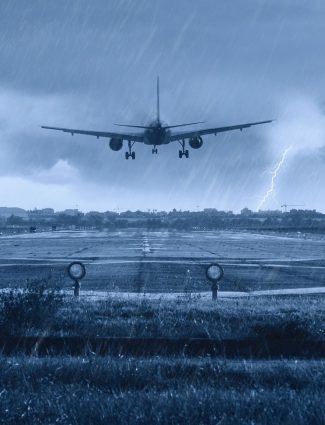
It was the first flight I had taken after September 11th, and with the stormy weather, it had been nerve-racking.

“The flight is overbooked,” the agent informed me. “We often have seats when we start boarding. If you sit in this row next to me, I will let you know.”

I thanked her and took the first seat.

Before I could get comfortable in my seat, a woman half my age approached the counter to receive the same news I had.

“I have to get on this flight,” she demanded. In the same loud voice, she started conjugating four-letter words in ways I had never contemplated.

After several minutes, she came to sit several seats away from me and continued to scream and curse.

The volume was so loud I barely heard the agent calling my name.

“We have one seat available, but it is in first class,” the agent whispered as she handed me my ticket.

I could hear the other woman screaming and cursing even louder as I entered the jetway.

Once my ticket had been scanned, I said, “Being nice has benefits.”


When I remembered that day twenty-two years ago, I often thought it was when I started training to be a mensch!


The Jan Lilien Education Fund sponsors ongoing sustainability and environmental awareness programs. Gifts made this month; I will match dollar-for-dollar. All donations are tax-deductible.

Subscribe

Contact Us

I receive a commission when you buy a book or product using a link on this page. Thank you for supporting Sharing Jan’s Love blog.



Bringing Jan With Me!

Although I focused on what I had lost in the initial hours and days after Jan died, the only way forward was to focus on what I gained, not what I lost.

My addition calculation begins with Merrit Malloy's poem Epitaph, which was read at Jan's funeral and will be a part of mine.

Love doesn't die, People do. So, when all that's left of me Is love, Give me away.

4 comments add your comment

Share your thoughts and ideas

This site uses Akismet to reduce spam. Learn how your comment data is processed.

The Jan Lilien Education Fund!

Flying Into a Four-letter Storm!
×
Stony The Road

Read: October 2019

Get this book

Stony the Road

by Henry Louis Gates Jr

Stony the Road: Reconstruction, White Supremacy, and the Rise of Jim Crow by Henry Louis Gates Jr. is a must-read book, especially with white nationalism on the rise.

I read this book when Jan began her chemotherapy. Although the book’s subject – the retreat from reconstruction – was one I studied in college, at times, I found it hard to focus on the material and my wife’s health at the same time. I stayed on the stony road as it is a subject we need to understand if we are going to correct the past failures.

As The New York Times wrote,

Henry Louis Gates Jr.’s “Stony the Road: Reconstruction, White Supremacy, and the Rise of Jim Crow,” an indispensable guide to the making of our times, addresses 2017’s mystifications. The book sets the Obama era beside Reconstruction and the Trump era beside the white supremacist terrorism of Redemption, the period beginning in 1877 during which Reconstruction’s nascent, biracial democracy was largely dismantled. Gates juxtaposes the optimism of Reconstruction, the despair of Redemption, and the promise of the New Negro movement — the effort by black Americans, starting around the turn of the 20th century, to craft a counternarrative to white supremacy. In doing so, “Stony the Road” presents a bracing alternative to Trump-era white nationalism.

Growing up in the Jim Crow south, I was well aware of white nationalism. This book is an essential read if we are going to make America a multi-racial democracy.

Subscribe

Contact Us

×
Lincoln in the Bardo: A Novel

Read: August 2024

Get this book

Lincoln in the Bardo: A Novel

by George Saunders

My journey with “Lincoln in the Bardo: A Novel” by George Saunders began with recognition as one of The New York Times’ 100 Best Books of the Century. As I turned its pages, I was immersed in its profound exploration of living and loving in the face of inevitable endings. The book, which struck a personal chord with me after a loss, is a testament to Saunders’ storytelling prowess and a must-read for those interested in Abraham Lincoln.

February 1862. The Civil War is less than one year old. The fighting has begun in earnest, and the nation has already realized it is in for a long, bloody struggle. Meanwhile, President Lincoln’s beloved eleven-year-old son, Willie, lies upstairs in the White House, gravely ill. In a matter of days, despite predictions of a recovery, Willie dies and is laid to rest in a Georgetown cemetery. “My poor boy, he was too good for this earth,” the president says at the time. “God has called him home.” Newspapers report that a grief-stricken Lincoln returns, alone, to the crypt several times to hold his boy’s body.

From a seed of historical truth, George Saunders weaves an unforgettable tale of familial love and loss that transcends its realistic, historical framework. The story takes a daring leap into a realm that is hilarious and terrifyingly supernatural. Willie Lincoln’s journey in a strange purgatory, where ghosts mingle, gripe, commiserate, quarrel, and enact bizarre acts of penance, is a testament to Saunders’ imaginative prowess. The monumental struggle over young Willie’s soul in this transitional state, known as the bardo in the Tibetan tradition, is a narrative that will leave you spellbound.

Lincoln in the Bardo is an astonishing feat of imagination and a bold step forward from one of his generation’s most important and influential writers. Formally daring, generous in spirit, and deeply concerned with matters of the heart, it is a testament to fiction’s ability to speak honestly and powerfully about the things that matter to us. Saunders has invented a thrilling new form that deploys a kaleidoscopic, theatrical panorama of voices to ask a timeless, profound question: How do we live and love when we know everything we love must end?


George Saunders is the author of thirteen books, including the novel Lincoln in the Bardo, which won the Booker Prize, and five collections of stories, including Tenth of December, which was a finalist for the National Book Award, and the recent collection Liberation Day (selected by former President Obama as one of his ten favorite books of 2022).

Three of Saunders’s books—Pastoralia, Tenth of December, and Lincoln in the Bardo—were chosen for The New York Times’s list of the 100 Best Books of the 21st Century. Saunders hosts the popular Story Club on Substack, which grew out of his book, A Swim in a Pond in the Rain. In 2013, he was named one of Time’s 100 Most Influential People. He teaches in the creative writing program at Syracuse University.


Discover your next favorite book and dive into a world of curated, exciting reads by purchasing through my links. You’ll have access to a diverse selection of books that I’ve personally vetted to ensure quality and enjoyment. Additionally, by supporting these selections, you’ll help me continue to provide you with more personalized recommendations. I earn a small commission from your purchase, which allows me to buy and share even more books with you. Your support truly makes a difference!


×
Three Summers

Read: February 2025

Get this book

Three Summers: A Novel

by Margarita Liberaki

Today, I began reading Margarita Liberaki‘s Three Summers, translated by Karen Van Dyck. This edition features a detailed introduction by Ms. Van Dyck, in which she shares her experiences meeting Ms. Liberaki and collaborating with her on the translation. The original novel, written in Greek, was titled The Straw Hats, but Ms. Van Dyck felt that this title would not resonate with foreign readers similarly.

Three Summers is the story of three sisters who grew up in the countryside near Athens before the outbreak of the Second World War. The sisters live in a large, old house surrounded by a beautiful garden. The oldest sister, Maria, is adventurous and eager to settle down and start her own family. The middle sister, Infanta, is gorgeous but emotionally distant. Katerina, the narrator, and the youngest sister is dreamy and rebellious.

Throughout three summers, the sisters share and keep secrets, fall in and out of love, and try to understand their parents and other adult figures. They also observe the peculiar behaviors of friends and neighbors while worrying about and discovering their identities. Karen Van Dyck’s translation beautifully captures the light and warmth of this modern Greek classic.

Margarita Liberaki (1919-2001) was born in Athens and raised by her grandparents, who owned the Fexis bookstore and publishing house. In addition to her novel Three Summers, she authored The Other Alexander (1950) and The Mystery (1976). She also wrote several plays, including Candaules’ Wife (1955) and The Danaïds (1956), part of a cycle she called Mythical Theater. Furthermore, she contributed screenplays, such as Jules Dassin’s Phaedra (1962) and Diaspora (1999), which focused on Greek intellectuals in exile in Paris during the junta. Her novel Three Summers is now a standard part of public education in Greece and Cyprus and was adapted into a television miniseries in 1995.

Karen Van Dyck is the Kimon A. Doukas Professor of Modern Greek Literature at Columbia University. Her research focuses on modern Greek literature, diaspora literature, gender studies, and translation. She has edited or co-edited several poetry anthologies, including A Century of Greek Poetry (2004), The Greek Poets: Homer to the Present (2010), and Austerity Measures: The New Greek Poetry (2017) for NYRB Poets. Additionally, her translations have appeared in Brooklyn Rail, Asymptote, and The Baffler.


When you purchase a book through one of my links, I earn a small commission that helps support my passion for reading. This contribution allows me to buy even more books to share with you, creating an incredible cycle of discovering great reads together! Your support truly makes a difference!


×
Sun City

Read: February 2025

Get this book

Sun City by Tove Jansson

by Tove Jansson

Today, I began reading “Sun City” by Tove Jansson, translated by Thomas Teal. I found this book mentioned in Maya Chung‘s review in The Atlantic’s Book Briefings, and as an older man, it seemed like the perfect choice for me. In “The Summer Book” and “The True Deceiver,” as well as in her many short stories, Tove Jansson consistently explores the everyday lives of older adults.

She portrays them not as a separate group but as fully fleshed individuals who experience the same jealousies, desires, and joys as any other demographic. It’s no wonder that in her travels through America in the 1970s, she became fascinated with what was then a particularly American institution, the retirement home, where older people lived in their tightly knit worlds.

In Sun City, Jansson depicts these worlds in a group portrait of residents and employees at the Berkeley Arms in St. Petersburg, Florida. As the narrative moves from character to character, the characters move through an America riven by cultural divides, facing the death of its dream. The Berkeley Arms’s newest resident finds a place among the rocking chairs and endless chatter on the veranda while other residents long for past glories, mourning their losses and killing time. Meanwhile, one of their attendants, Bounty Joe, is eagerly awaiting a letter, or even just a postcard, alerting him to the imminent return of Jesus Christ. Nobody’s normal anymore,” the bartender says, “not the old geezers and not the newborn kids.”


When you purchase a book through one of my links, I earn a small commission that helps support my passion for reading. This contribution allows me to buy even more books to share with you, creating an incredible cycle of discovering great reads together! Your support truly makes a difference!


×
Three Days in June

Read: February 2025

Get this book

Three Days in June

by Anne Tyler

Today, I dove into the enchanting world of “Three Days in June” by Anne Tyler, a novel that promises to become an instant classic. It beautifully captures the experience of a socially awkward mother-of-the-bride as she navigates the whirlwind of emotions before and after her daughter’s wedding. After shuffling through the frosty morning air on my walk, wrapping myself in the warmth of Tyler‘s words about three sun-soaked days in June felt like the perfect escape. What a delightful contrast!

Gail Baines is having a bad day. First, she loses her job—or quits, depending on whom you ask. Tomorrow, her daughter, Debbie, is getting married, and she hasn’t even been invited to the spa day organized by the groom’s mother. Then, Gail’s ex-husband, Max, arrives unannounced on her doorstep, carrying a cat, without a place to stay or even a suit.

However, the crisis occurs when Debbie shares a secret she has just learned about her husband-to-be with her parents. This will not only throw the wedding into question but also stir up Gail and Max’s past.

Told with deep sensitivity and a tart sense of humor and full of the joys and heartbreaks of love, marriage, and family life, “Three Days in June” is a triumph and shows the perennially bestselling, Pulitzer Prize-winning writer at the height of her powers.


When you purchase a book through one of my links, I earn a small commission that helps support my passion for reading. This contribution allows me to buy even more books to share with you, creating an incredible cycle of discovering great reads together! Your support truly makes a difference!


×
Godwin: A Novel

Read: February 2025

Get this book

Godwin: A Novel

by Joseph O'Neill

Today, I dove into “Godwin” by Joseph O’Neill, the brilliant mind behind “Netherland,” which snagged the title of Best Book of the Year from the New York Times Book Review. This captivating tale follows the adventure of two brothers embarking on a globe-trotting quest to find an extraordinary African soccer prodigy—someone who might transform their lives forever. The thrill of their journey and the promise of discovery have me hooked!

Mark Wolfe, a brilliant self-thwarting technical writer, lives in Pittsburgh with his wife, Sushila, and their toddler daughter. Born and raised in the United Kingdom, his half-brother Geoff is a desperate young soccer agent. He pulls Mark across the ocean into a scheme to track down an elusive prospect known as “Godwin“—an African teenager Geoff believes could be the next Lionel Messi.

Narrated in turn by Mark and his work colleague Lakesha Williams, Godwin is a tale of family and migration as well as an international adventure story that implicates the brothers in the beauty and ugliness of soccer, the perils and promises of global business, and the dark history of transatlantic money-making.

As only he can do, Joseph O’Neill investigates the legacy of colonialism in the context of family love, global capitalism, and the dreaming individual.


Mr. O’Neill was born in Ireland and grew up in Mozambique, Iran, Turkey, and Holland. His previous novels include the PEN/Faulkner Award-winning Netherland and the Booker Prize long-listed The Dog. O’Neill’s short fiction appears regularly in The New Yorker and his political essays in The New York Review of Books. He lives in New York City.


When you purchase a book through one of my links, I earn a small commission that helps support my passion for reading. This contribution allows me to buy even more books to share with you, creating an incredible cycle of discovering great reads together! Your support truly makes a difference!


×