
Jan’s Memorial Garden
Estimated reading time: 0 minutes, 0 seconds
Jan’s Memorial Garden
Jan’s Memorial Garden
Subscribe to Sharing Jan's Love Newsletter!
by Chelsea Bieker
God Shot by Chelsea Bieker, one of NPR’s Books We Love from 2020, is about the town of Peaches, California, where drought has settled in for the long term. The area of the Central Valley where fourteen-year-old Lacey May and her alcoholic mother live was once an agricultural paradise. Now it’s an environmental disaster, a place of cracked earth and barren raisin farms.
In their desperation, residents have turned to a cult leader named Pastor Vern for guidance. Everybody is praying for survival through secret “assignments” to bring the rain.
God Shot is an enjoyable read. However, I first found it challenging to accept Pastor Vern’s assignments, especially to Lacey May and her fellow teenage girls. Would people believe in a cult leader and get “assignments” that involve women fully accepting male domination in the twenty-first century? When I had doubts, I would wake up, listen to the news, or read the papers and discover that it is plausible and does happen in our world.
After being god-shot, Lacey May becomes one day at a time feminist as she has to rely on herself and other women who do not accept Pastor Vern’s divine leadership. Slowly but surely, she and her friends find a miracle to help them escape not only the environmental disaster caused by the drought but the moral depravity of Pastor Vern.
Goodreads provides this overview of the God Shot.
Lacey has no reason to doubt the pastor. But then her life explodes in a single unimaginable act of abandonment: her mother, exiled from the community for her sins, leaves Lacey and runs off with a man she barely knows. Abandoned and distraught, Lacey May moves in with her widowed grandma, Cherry, who is more concerned with her taxidermy mouse collection than her own granddaughter. As Lacey May endures the increasingly appalling acts of men who want to write all the rules and begins to uncover the full extent of Pastor Vern’s shocking plan to bring fertility back to the land, she decides she must go on a quest to find her mother no matter what it takes. With her only guidance coming from the romance novels she reads and the unlikely companionship of the women who knew her mother, she must find her own way through unthinkable circumstances.
Possessed of an unstoppable plot and a brilliantly soulful voice, Godshot is a book of grit, humor, and heart, a debut novel about female friendship and resilience, mother loss and motherhood, and seeking salvation in unexpected places. It introduces a writer who gives Flannery O’Connor’s Gothic parables a Californian twist and who emerges with a miracle that is all her own.
I recommend this novel without reservations!
When you buy a book or product using a link on this page, I receive a commission. Thank you for supporting Sharing Jan’s Love blog.
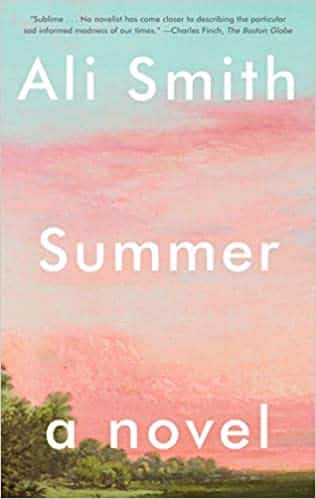
by Ali Smith
Summer: A Novel by Ali Smith is a fascinating book about the times in which we live.
In the present, Sacha knows the world’s in trouble. Her brother Robert just is trouble. Their mother and father are having trouble. Meanwhile the world’s in meltdown – and the real meltdown hasn’t even started yet.
In the past, a lovely summer. A different brother and sister know they’re living on borrowed time.
This is a story about people on the brink of change.
They’re family, but they think they’re strangers.
So: where does family begin? And what do people who think they’ve got nothing in common have in common?
Summer.
Because of the two different periods and the multiple characters, I had some difficulty following the plot until about halfway to the end. Suddenly it all fit together and made sense.
The book revealed information about the internments during World War II in England that I had not fully comprehended.
Sacha’s focus on the environmental degradation augmented by the COVID pandemic provided an emotional undertow in the book.
I now must begin to read the other three novels in this Seasonal Quartet.
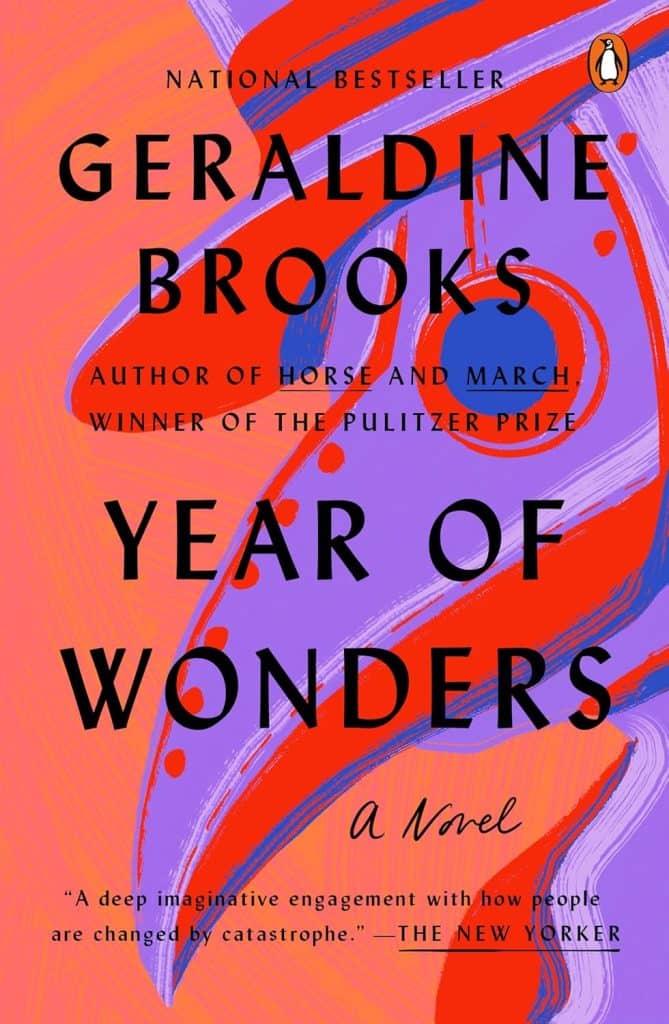
by Geraldine Brooks
I started reading “Year of Wonders: A Novel” by Geraldine Brooks today. It is a compelling story set in 17th-century England about a village that quarantines itself to stop the spread of the plague. The book is written by the author of “The Secret Chord” and “March,” both of which won the Pulitzer Prize. Inspired by the events in Eyam, a village in the rugged hill country of England, “Year of Wonders” offers a richly detailed portrayal of a significant historical moment.
The plot begins when an infected bolt of cloth arrives from London, bringing the plague to an isolated village. A housemaid named Anna Frith emerges as an unlikely heroine and healer. Through Anna’s perspective, we experience the fateful year of 1666 as she and her fellow villagers confront the outbreak of disease and the rise of superstition. As death visits each household and villagers turn from prayer to fear-driven witch-hunting, Anna must find the strength to face the breakdown of her community and the temptations of forbidden love. Her struggle for survival and growth transforms a disastrous year into an extraordinary “year of wonders.
Written with remarkable emotional depth, the novel introduces, according to The Wall Street Journal, “an inspiring heroine” and skillfully weaves themes of love and learning, loss and renewal into a captivating and unforgettable narrative.
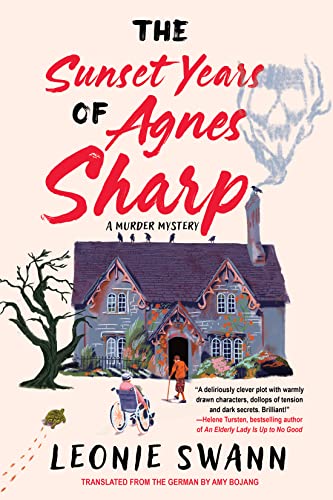
by Leonie Swann
I began reading The Sunset Years of Agnes Sharp by Leonie Swann, translated by Amy Bojang. The book follows a unique group of senior citizens as they try to solve one murder while hiding another, all with the assistance of an innovative tortoise. The mystery is full of twists and turns and is cleverly written by the same author who wrote Three Bags Full, adding a darkly humorous touch to the plot.
It has been an eventful morning for Agnes Sharp and the other inhabitants of Sunset Hall, a house shared by the old and unruly in the sleepy English countryside. Although they have had some issues (misplaced reading glasses, conflicting culinary tastes, decreasing mobility, and gluttonous grandsons), nothing prepares them for an unexpected visit from a police officer with some shocking news. A body has been discovered next door. Everyone puts on a long face for show, but they are secretly relieved the body in question is not the one they’re currently hiding in the shed (sorry, Lillith).
The answer to their little problem with Lillith may have fallen right into their laps. All they have to do is find out who murdered their neighbor so they can pin Lillith’s death on them, thus killing two (old) birds with one stone (cold killer).
Agnes and her group of elderly friends are eager to begin their plan. They believe that creating a mystery will divert suspicion away from themselves. To investigate, they will venture out of their comfort zone and into the less-than-ideal village of Duck End. Along the way, they will encounter suspicious bakers, malfunctioning stairlifts, incompetent criminals, the local authorities, and their hidden secrets.
The Jan Lilien Education Fund sponsors ongoing sustainability and environmental awareness programs. Gifts made this month; I will match dollar-for-dollar. All donations are tax-deductible.
I receive a commission when you buy a book or product using a link on this page. Thank you for supporting Sharing Jan’s Love blog.
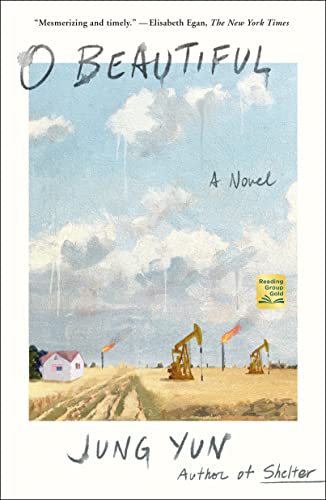
by Jung Yun
O Beautiful: A Novel by Jung Yun, the critically acclaimed author of Shelter, has written an unflinching portrayal of a woman trying to come to terms with the ghosts of her past and the tortured realities of a deeply divided America. With spare and graceful prose, O Beautiful presents an immersive portrait of a community rife with tensions, competing interests, and one woman’s attempts to reconcile her anger with her love of beautiful but troubled land. I highly recommend O Beautiful!
I finished reading O Beautiful on International Women’s Day. It might have been coincidental, but in my humble opinion, it was the perfect book to read on this important day. Ms. Yun has written a novel that touches on the intersectionality of the core issues of our divided land. The misogyny, the racism, and the impact of capitalism out of control are all related and are affecting the quality of life in the early twenty-first century.
Elinor Hanson, the protagonist, is so vividly written that she jumps off the page and becomes someone we know as a family member. When she returned home to write about the Bakken oil boom in North Dakota, I felt I had known her all my life. Unfortunately, the novel ended when she finally understood the issues and was in touch with her anger. I wish it would have continued so that the problems might have been addressed. Despite this, I highly recommend this novel.
O Beautiful is the twenty-first book I have read this year! My goal was twenty-three.
The Goodreads summary provides an overview,
Elinor Hanson, a forty-something former model, struggles to reinvent herself as a freelance writer when she receives an unexpected assignment. Her mentor from grad school offers her a chance to write for a prestigious magazine about the Bakken oil boom in North Dakota.
Elinor grew up near the Bakken, raised by an overbearing father and a distant Korean mother who met and married when he was stationed overseas. After decades from home, Elinor returns to a landscape she hardly recognizes, overrun by tens of thousands of newcomers.
Surrounded by roughnecks seeking their fortunes in oil and long-time residents worried about their changing community, Elinor experiences a profound sense of alienation and grief. She rages at the unrelenting male gaze, the locals who still see her as a foreigner, and the memories of her family’s estrangement after her mother decided to escape her unhappy marriage, leaving Elinor and her sister behind.
The longer she pursues this potentially career-altering assignment, the more her past intertwines with the story she’s trying to tell, revealing disturbing new realities that will forever change her and how she looks at the world.
The Jan Lilien Education Fund sponsors ongoing sustainability and environmental awareness programs. Gifts made this month; I will match dollar-for-dollar. All donations are tax-deductible.
I receive a commission when you buy a book or product using a link on this page. Thank you for supporting Sharing Jan’s Love blog.
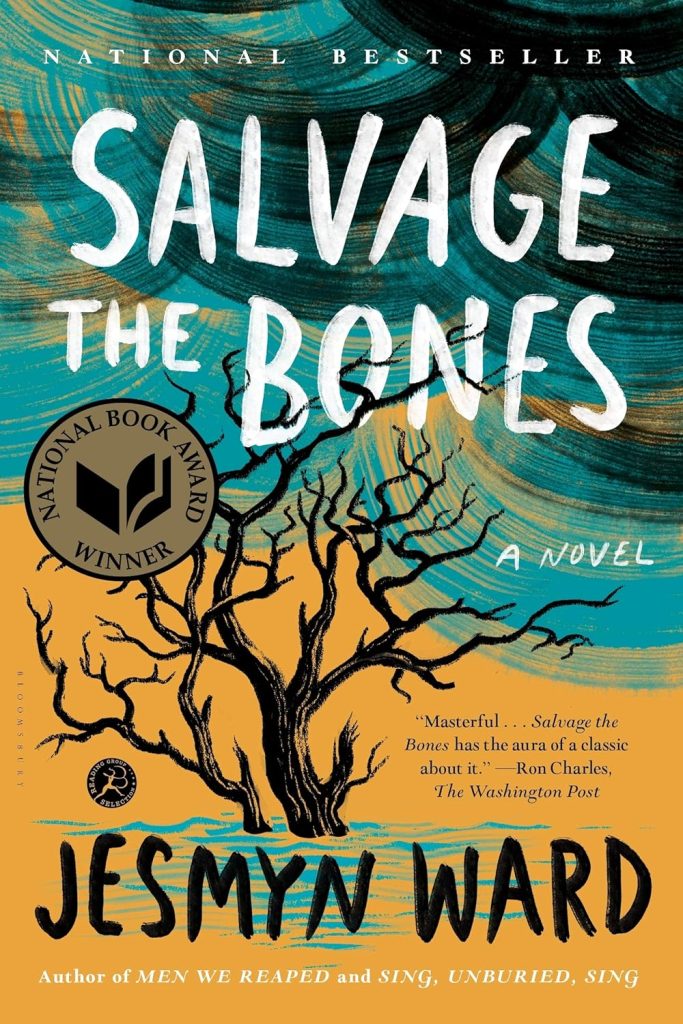
by Jesmyn Ward
I’ve started reading “Salvage the Bones: A Novel” by Jesmyn Ward, a two-time National Book Award winner and author of “Sing, Unburied, Sing.” The book delivers a gritty yet tender story about family and poverty in the days leading up to Hurricane Katrina. Hurricane Helene’s devastation makes it the perfect time to read this book. The novel is among The New York Times’ 100 Best Books of the 21st Century.
The story is set in Bois Sauvage, Mississippi, where a hurricane is building over the Gulf of Mexico, threatening the city. Esch’s father is growing concerned, although he is often absent and a heavy drinker. Esch and her three brothers are stocking food, but there is little to save. Esch, who is fourteen, is pregnant and struggling to keep down the little food she gets. Her brother Skeetah is trying to care for his pit bull’s new litter, which is dying one by one. Meanwhile, brothers Randall and Junior struggle with family dynamics and lack parental guidance.
As the twelve days that make up the novel’s framework yield their dramatic conclusion, this unforgettable family – motherless children sacrificing for one another, protecting and nurturing where love is scarce – pulls itself up to face another day. The novel is a big-hearted story about familial love and community against all odds, offering a wrenching look at the lonesome, brutal, and restrictive realities of rural poverty. “Salvage the Bones” is a revelatory, honest, and poignant exploration of social issues, filled with poetry and emotional depth.