

Gratitude

Gratitude for Everything!

Estimated reading time: 0 minutes, 34 seconds

Celebrate Jan

For my daily exercise and mental health, I do daily meditations. One that I have done several times is on gratitude. When I listened to mediations about gratitude on Apple Fitness+, I always gave Jan gratitude for all she did and her love that never dies.

This meditation by Jessica Skye provides a fresh perspective on our surroundings to inspire gratitude. She encourages us to be grateful for everything, even the simple touch of fabric.

It reminded me of how much I loved Jan and always will, but of the importance of sharing her love with others.
Subscribe

Contact Us

Gratitude Heals My Soul!

It's been three years since I buried my beloved wife, but the memories of that day remain vivid. Looking back, I realize my actions were my only option. Expressing my gratitude to family, friends, neighbors, and colleagues reminded me of our interconnectedness and the importance of finding strength in the community. Though living alone, I'm still part of this interconnected world where we're all cousins and must help each other heal. That day marked the beginning of my journey towards healing and recovery; I used my ears to listen, my arms to embrace, and tentatively took the first step towards walking into the future.

Share your thoughts and ideas

This site uses Akismet to reduce spam. Learn how your comment data is processed.

The Jan Lilien Education Fund!

Gratitude
×
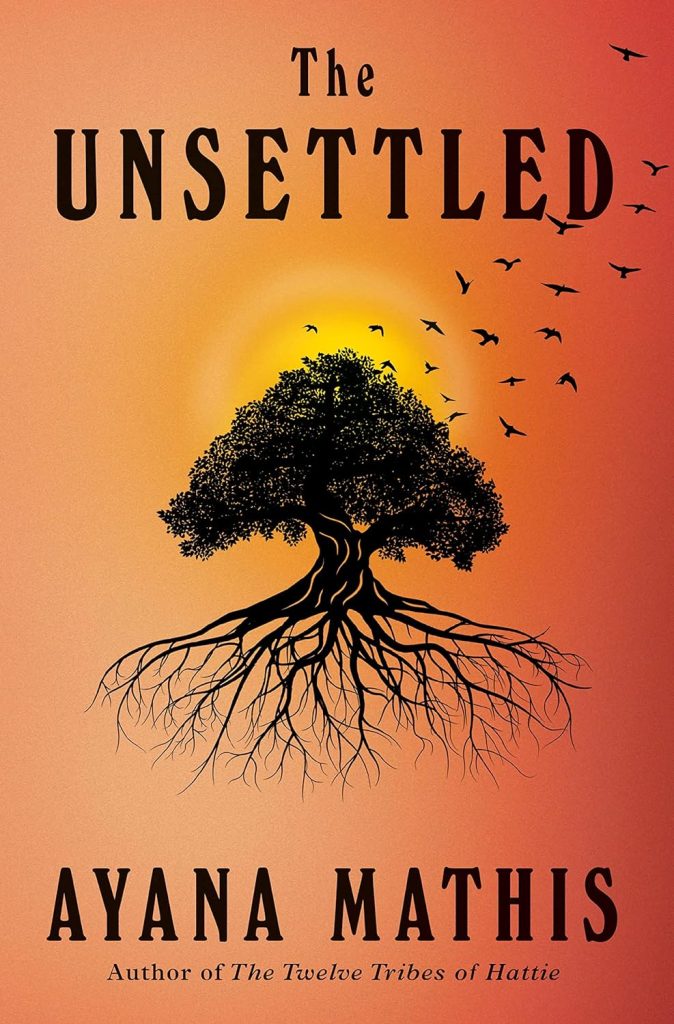
The Unsettled: A Novel

Read: October 2023

Get this book

The Unsettled: A Novel

by Ayana Mathis

I highly recommend reading “The Unsettled: A Novel” by Ayana Mathis. It’s a brilliant, explosive, and vitally crucial new work from one of America’s most fiercely talented storytellers. The story follows Ava Carson and her ten-year-old son, Toussaint, arriving at the Glenn Avenue family shelter in Philadelphia in 1985. From the outset, Ava is already thinking of a way to escape.

She is disgusted by the shelter’s squalid conditions, including a room infested with cockroaches, barely edible food, and an untrustworthy night security guard. She is resolute in her mission to rescue her son from the shelter’s dangers and humiliations and free herself from the complex past that led them there.

Ava and her mother, Dutchess, have been estranged for many years since Ava left her Alabama home as a young woman. Despite the miles between them, mother and daughter are still deeply connected. However, Ava finds it hard to forgive her mother for her sharp tongue, intractability, and bouts of despair that led to neglect and hunger during her childhood.

Ava wants to be a better mother to her son, Toussaint. However, when Toussaint’s father, Cass, suddenly reappears, Ava is drawn to his charisma and radical vision to dismantle systems of racial injustice and establish a new communal living.

Meanwhile, in Alabama, Dutchess is facing a difficult challenge. She is struggling to prevent the sale of Bonaparte to white developers, who are rapidly encroaching on the land. Bonaparte has been a beacon of Black freedom and self-determination, and it is now in the hands of its last five Black residents – families who have lived there for generations. Dutchess is fighting to preserve the venerable history of Bonaparte and the land, which she has worked hard to keep as Ava’s inheritance.

As Ava approaches Cass, Toussaint begins to sense danger around him. He worries about his mother’s erratic behavior and his father’s intense and volatile nature. Toussaint dreams of returning to Bonaparte and Dutchess, where he was born and raised. He hopes to find his way back there soon.


The Jan Lilien Education Fund sponsors ongoing sustainability and environmental awareness programs. Gifts made this month; I will match dollar-for-dollar. All donations are tax-deductible.

Subscribe

Contact Us

I receive a commission when you buy a book or product using a link on this page. Thank you for supporting Sharing Jan’s Love blog.


×
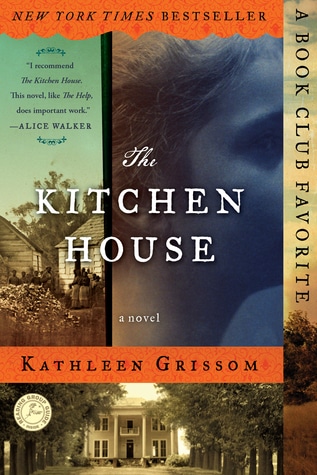
The Kitchen House

Read: August 2021

Get this book

The Kitchen House

by Kathleen Grisson

The Kitchen House by Kathleen Grissom was a book that I knew very little about who I took from our bookshelf. My wife had encouraged me to read it as it focused on the south, and she knew I ofter read both about that place and enjoyed history.

From the opening pages, It became a book that I could not put down.

Two characters narrate the book. One is Lavinia, an Irish girl orphaned and brought to the plantation by the master, a ship’s captain. She is assigned to the kitchen house to work with Belle, who is the illegitimate child of the master of the estate.

As Lavinia grows under the tutelage of Belle, the story highlights the struggles of a plantation. Lavinia finds family and love from the enslaved even though she is only indentured. The distinction that skin color would have on their lives is one that Lavinia only learns at the end.

Through the unique eyes of Lavinia and Belle, Grissom’s debut novel unfolds in a heartbreaking and ultimately hopeful story of class, race, dignity, deep-buried secrets, and familial bonds.

The Kitchen House is Ms. Grissom’s first novel and impressed me and inspired me even though I have no skills as a writer.

I strongly recommend this book.

Subscribe

Contact Us

×
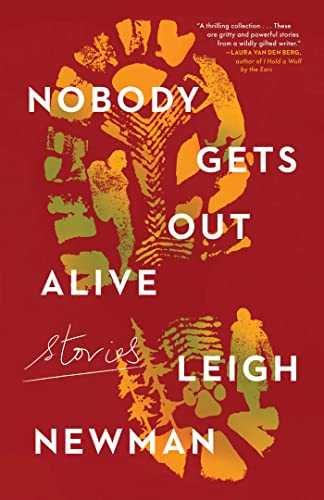
Nobody Gets Out Alive- Stories

Read: February 2023

Get this book

Nobody Gets Out Alive: Stories

by Leigh Newman

Nobody Gets Out Alive: Stories by Leigh Newman, set in Newman’s home state of Alaska and an exciting virtuosic story collection about women navigating the wilds of a male-dominated society. Nobody Gets Out Alive is a collection of dazzling, courageous stories about women struggling to survive, not just grizzly bears and charging moose but the raw, exhausting legacy of their marriages and families.

There are moments when characters in a story leap off the page and become, for a few moments, our soul mates. Ms. Newman, in each of these memorable stories, engages so fully that each character becomes so alive that I wanted to know more about their lives.

The stores span both the recent past and the founding of Anchorage. I found all of them to be stories I would happily read again. The recent stories highlight the common desire for a freer, more inclusive world for women. A woman forced to sell her home or a new bride testing limits on her return home resonates as themes of the modern world.

The final story is set in 1915 in a railroad camp. The story highlights the founding of Anchorage. As one who likes historical fiction, I was so engaged that I could not take a break. I was not expecting the outspoken heiress would stage an elaborate theatrical to seduce the wife of her husband’s employer.

I may never visit Alaska at my age, but I now know enough to feel I have lived in Seward’s Folly.

I decided to read this book after reading Ms. Newman wrote a review of The Faraway World. Ms. Newman is a skilled writer, and I highly recommend this collection and look forward to reading more of her stories in the future.

The Goodreads summary provides an overview,

In “Howl Palace”—winner of The Paris Review’s Terry Southern Prize, a Best American Short Story, and Pushcart Prize selection—an aging widow struggles with a rogue hunting dog and the memories of her five ex-husbands while selling her house after bankruptcy. In the title story, “Nobody Gets Out Alive,” newly married Katrina visits her hometown of Anchorage. She blows up her wedding reception by flirting with the host and running off with an enormous mastodon tusk.

Alongside stories set in today’s Last Frontier—rife with suburban sprawl, global warming, and opioid addiction—Newman delves into the remote wilderness of the 1970s and 80s, bringing to life young girls and single moms in search of a wilder, more accessible, more adventurous America. The final story takes place in a railroad camp in 1915, where an outspoken heiress stages an elaborate theatrical to seduce the wife of her husband’s employer, revealing how this masterful storyteller is “not only writing unforgettable, brilliantly complex characters, she’s somehow inventing souls” (Kimberly King Parsons, author of Black Light).


The Jan Lilien Education Fund sponsors ongoing sustainability and environmental awareness programs. Gifts made this month; I will match dollar-for-dollar. All donations are tax-deductible.

Subscribe

Contact Us

I receive a commission when you buy a book or product using a link on this page. Thank you for supporting Sharing Jan’s Love blog.


×
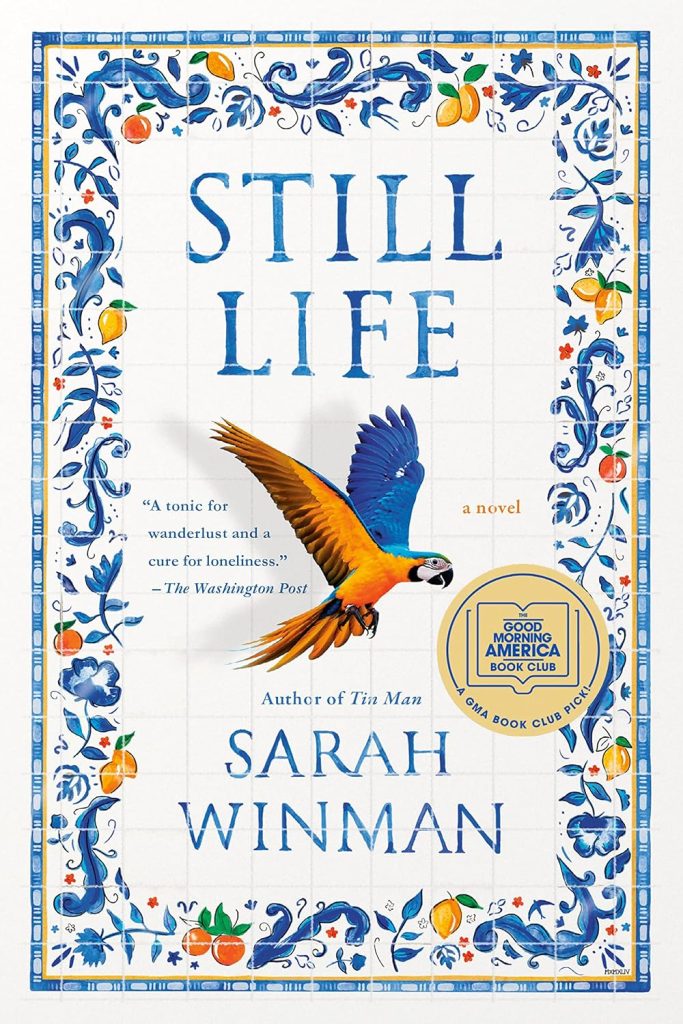
Still Life: A GMA Book Club Pick: A Novel

Read: January 2025

Get this book

Still Life: A Novel

by Sarah Winman

I began reading “Still Life,” a GMA Book Club pick by Sarah Winman. This captivating and bighearted novel weaves a rich tapestry of stories about people connected by love, war, art, flood, and the ghost of E.M. Forster. Kristen V. Brown, in The Atlantic Magazine’s Culture Survey, describes “Still Life” as the best novel she has recently read and considers it the best nonfiction work.

In Tuscany in 1944, as Allied troops advance and bombs fall around deserted villages, a young English soldier, Ulysses Temper, finds himself in the wine cellar of an abandoned villa. There, he encounters Evelyn Skinner, a middle-aged art historian who has come to Italy to salvage paintings from the ruins and recall long-forgotten memories of her youth. In each other, Ulysses and Evelyn find a kindred spirit amidst the rubble of war-torn Italy and set off on a course of events that will shape Ulysses’s life for the next four decades.

As Ulysses returns home to London, reimmersing himself in his crew at The Stoat and Parot—a motley mix of pub crawlers and eccentrics—he carries his time in Italy. And when an unexpected inheritance brings him back to where it all began, Ulysses knows better than to tempt fate and returns to the Tuscan hills.

With beautiful prose, extraordinary tenderness, and bursts of humor and light, Still Life is a sweeping portrait of unforgettable individuals who come together to make a family and a deeply drawn celebration of beauty and love in all its forms.


When you purchase a book through one of my links, I earn a small commission that helps support my passion for reading. This contribution allows me to buy even more books to share with you, creating an incredible cycle of discovering great reads together! Your support truly makes a difference!


×
How Democracies Die

Read: January 2021

Get this book

How Democracies Die: What History Reveals About Our Future

by Steven Levitsky and Daniel Ziblatt

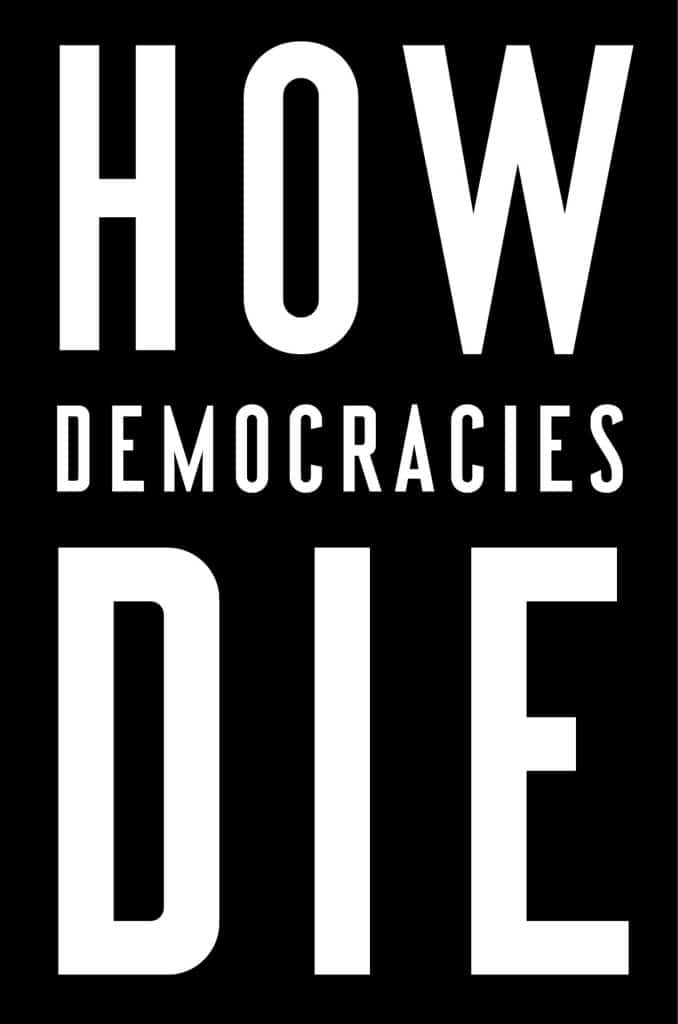
How Democracies Die: What History Reveals About Our Future by Steven Levitsky and Daniel Ziblatt was on my reading list for almost a year. In late December of last year, I started reading it and was in the final chapter on January 6, 2021. Like many of us, I never in my life expected to see a day like that in our country.

This type of event is one the authors talk about in their book.

According to the overview in GoodReads,

Donald Trump’s presidency has raised a question that many of us never thought we’d be asking: Is our democracy in danger? Harvard professors Steven Levitsky and Daniel Ziblatt have spent more than twenty years studying the breakdown of democracies in Europe and Latin America, and they believe the answer is yes. Democracy no longer ends with a bang–in a revolution or military coup–but with a whimper: the slow, steady weakening of critical institutions, such as the judiciary and the press, and the gradual erosion of long-standing political norms. The good news is that there are several exit ramps on the road to authoritarianism. The bad news is that, by electing Trump, we have already passed the first one.

Drawing on decades of research and a wide range of historical and global examples, from 1930s Europe to contemporary Hungary, Turkey, and Venezuela, to the American South during Jim Crow, Levitsky and Ziblatt show how democracies die–and how ours can be saved.

Our democracy is too valuable for us to have it die. We all need to work to preserve and strengthen it. How Democracies Die is a book that everyone needs to read!

Subscribe

Contact Us

×
Funny Story

Read: November 2024

Get this book

Funny Story: A Novel

by Emily Henry

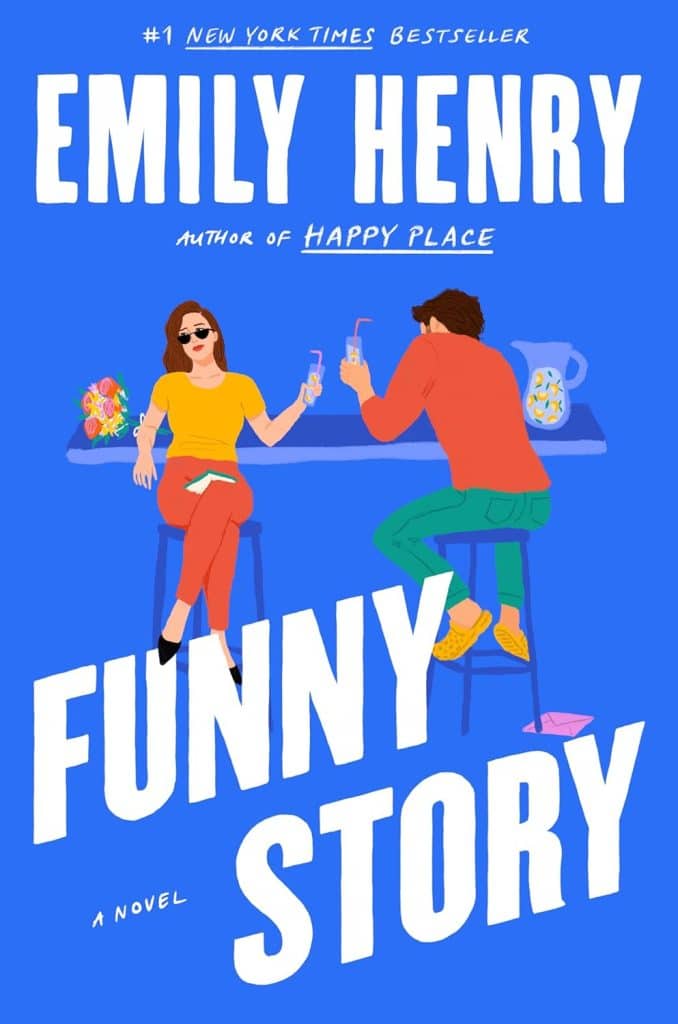
Today, I began reading Emily Henry‘s Funny Story, a delightful new novel about a pair of opposites connected by an unexpected bond. It was featured in The New York Times 100 Notable Books of 2024. The narrator, Daphne, finds herself single after being dumped following her fiancé’s bachelor party, and she ends up moving in with her ex-fiancé’s former boyfriend.

Daphne always enjoyed how her fiancé, Peter, told their love story: they met on a blustery day, fell in love over an errant hat, and moved back to his lakeside hometown to start their life together. He was great at telling their story—until he realized he was in love with his childhood best friend, Petra.

This is where Daphne begins her new chapter: stranded in beautiful Waning Bay, Michigan, without friends or family, but with a dream job as a children’s librarian (which barely pays the bills). She proposes to room with the only person who might understand her situation: Miles Nowak, Petra’s ex.

Miles is scruffy and chaotic, finding comfort in the sounds of heartbreak ballads. He is the opposite of practical, buttoned-up Daphne, whose coworkers know so little about her that they have a running bet whether she is in the FBI or witness protection. The two roommates initially avoid each other, but one day, while mourning their circumstances, they develop a fragile friendship and devise a plan. Their plan includes posting misleading photos of their summer adventures together—who could blame them for wanting to create a better story?

But it’s all just for show, of course, because there’s no way Daphne would start this new chapter by falling in love with her ex-fiancé’s new fiancée’s ex… right?


When you purchase a book through one of my links, I earn a small commission that helps support my passion for reading. This contribution allows me to buy even more books to share with you, creating an incredible cycle of discovering great reads together! Your support truly makes a difference!


×