Love

Richard’s journey of love with Jan and now without her.

Blood Cancer United (BCU): CLIMB, CONQUER, CURE CANCER

Each year, I set out on a meaningful pilgrimage to the top of the One Gateway Center in Newark, a tribute to my beloved wife, Jan, and to everyone touched by the harsh reality of blood cancers. It’s staggering to think that every three minutes, someone in the U.S. receives a diagnosis of leukemia, lymphoma, or myeloma, and heartbreakingly, someone loses their fight every nine minutes.

Continue reading →

People Die, But Love
Lives On Forever!

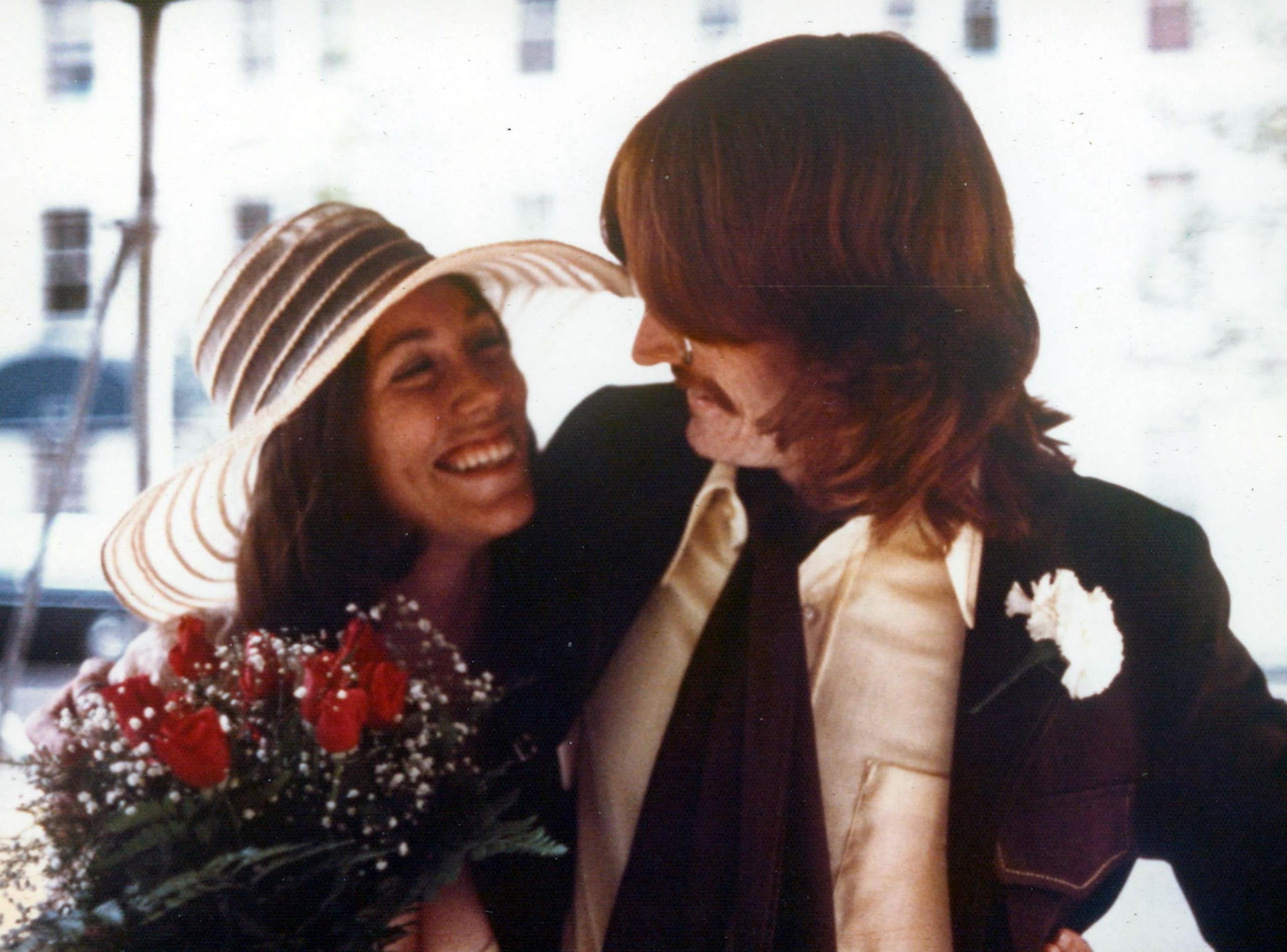
“Penthouse, please,” I requested, my finger hovering over the button of the self-service elevator. The compact space could barely accommodate three people, yet somehow, it felt roomy. Jan stepped in beside me, her eyes sparkling with anticipation, and one of her friends joined us. In that moment, I couldn’t help but admire her. She had always captivated me, but on our wedding day fifty years ago, she was nothing short of breathtaking.

Continue reading →

Will My Heel Pain Stop My Daily Walking Streak?

“Richard!” A familiar voice called out just as I was about to step into the narrow alleyway between Sofia Color Lounge and the soon-to-open coffee shop where Beadsmith once stood. I turned around and saw—Eric! A genuine smile spread across my face as I recognized him. He was pushing a stroller, his daughter peeking out with bright, curious eyes.

Continue reading →

God’s Light, the Soul of Humanity,
Illuminates the Darkness

Rituals often become another item on our to-do lists, rushed and stripped of their more profound significance. When we overlook their meaning and purpose, we hinder our ability to heal from loss and navigate the complexities of grief.

Continue reading →

The Jan Lilien Education Fund!

The Bully Pulpit

Read: October 2019

Get this book

The Bully Pulpit

by Doris Kearns Goodwin

The Bully Pulpit by Doris Kearns Goodwin is a history of the first decade of the Progressive era told by focusing on the intense friendship of Theodore Roosevelt and William Howard Taft.

Although I had read many books about Theodore Roosevelt, I had limited knowledge about Taft until I read this book. Reading about their friendship and its eventual collapse helped me to understand both of these presidents and the times in which they lived in a way I had not understood previously.

The Bully Pulpit is also the story of the muckraking press, which arouses the spirit of reform that helps Roosevelt push the government to shed its laissez-faire attitude toward robber barons, corrupt politicians, and corporate exploiters of our natural resources. The muckrakers are portrayed through the greatest group of journalists ever assembled at one magazine—Ida Tarbell, Ray Stannard Baker, Lincoln Steffens, and William Allen White—teamed under the mercurial genius of publisher S. S. McClure.

Goodwin’s narrative is founded upon a wealth of primary materials. The correspondence of more than four hundred letters between Roosevelt and Taft begins in their early thirties and ends only months before Roosevelt’s death. Edith Roosevelt and Nellie Taft kept diaries. The muckrakers wrote hundreds of letters to one another, kept journals, and wrote their memoirs. The letters of Captain Archie Butt, who served as a personal aide to both Roosevelt and Taft, provide an intimate view of both men.

I recommend this book without reservations.

Subscribe

Contact Us

×
A Seperation

Read: January 2022

Get this book

A Separation: A Novel

by Katie Kitamura

A Separation by Katie Kitamura is about a young woman who has agreed with her faithless husband: it’s time for them to separate. All I could think about from the opening page until I finished the book was how Jan and I, despite one messy period, never dealt with infidelity or separation. Our love was pure as the driven snow. The subject matter would typically not have interested me enough to read the book. However, it is written in a hypnotic manner that mesmerizes the reader into turning the next page.

I highly recommend this book.

Goodreads provides an overview.

As she begins her new life, she gets word that Christopher has gone missing in a remote region in the rugged south of Greece; she reluctantly agrees to look for him, still keeping their split to herself. As her search comes to a shocking breaking point, she discovers she understands less than she thought she did about her relationship and the man she used to love. In her heart, she’s not even sure if she wants to find him.  For the moment, it’s a private matter, a secret between the two of them.

Adrift in the wild landscape, she traces the disintegration of their relationship and discovers she understands less than she thought about the man she used to love.

A story of intimacy and infidelity, A Separation is about the gulf that divides us from the lives of others and the narratives we create for ourselves. As the narrator reflects upon her love for a man who may never have been what he appeared, Kitamura propels us into the experience of a woman on the brink of catastrophe. A Separation is a riveting stylistic masterpiece of absence and presence that will leave the reader astonished and transfixed.

In closing, I highly recommend this book.

Subscribe

Contact Us

When you buy a book or product using a link on this page, I receive a commission. Thank you for supporting Sharing Jan’s Love blog.

×
Autobiography of Cotton

Read: February 2026

Get this book

Autobiography of Cotton

by Cristina Rivera Garza

In 1934, a young José Revueltas traveled to Tamaulipas to support the cotton workers’ strike in Estación Camarón, which would later serve as the foundation for his landmark novel, Human Mourning. In her groundbreaking novel Autobiography of Cotton, Cristina Rivera Garza recounts her grandparents’ journey from mining towns to those same cotton fields. Her narrative intersects with Revueltas’s life and offers a vivid and evocative account of the history of cotton cultivation along the Mexico-U.S. border.

Through archival research and personal narrative, Rivera Garza explores how cotton transformed the borderlands by recounting the story of the cotton workers’ strike. She reveals how cycles of deprivation and environmental destruction continue to affect generations. Rivera Garza skillfully creates a new kind of border novel that illustrates how a fragile landscape drastically changed her grandparents’ lives and the territories they helped to develop. In this intimate fictionalization, Autobiography of Cotton offers a rich social history that encompasses agricultural colonization, labor activism, environmental degradation, and cross-border migration.

I recommend “Autobiography of Cotton,” but readers should be patient as the book shifts back and forth in time. Everything becomes clear as you continue reading.


Cristina Rivera Garza is the Pulitzer Prize–winning author of Liliana’s Invincible Summer. A MacArthur Fellow, she is the Hugh Roy and Lillie Cranz Cullen Distinguished Chair and founder of the University of Houston’s PhD in Creative Writing in Spanish.

Christina MacSweeney is the award-winning literary translator of works by Julián Herbert, Valeria Luiselli, and Elvira Navarro. She received the 2024 Sundial Literary Translation Award for her translation of Verónica Gerber Bicecci‘s The Company.


Discover your next favorite book and dive into a world of curated, exciting reads by purchasing through my links. You’ll have access to a diverse selection of books that I’ve personally vetted to ensure quality and enjoyment. Additionally, by supporting these selections, you’ll help me continue to provide you with more personalized recommendations. I earn a small commission from your purchase, which allows me to buy and share even more books with you. Your support truly makes a difference!


×
1944: FDR and the Year That Changed History

Read: October 2019

Get this book

1944: FDR and the Year That Changed History

by Jay Winik

1944: FDR and the Year That Changed History by Jay Winik is a book that I had put off reading several times. When I finally did read it, I could not remember why I had not read it sooner. Had I gone to graduate school and become a professor, it might have been the type of book I might write, and I certainly would have had on my list of books for my classes. 

As The NY Times wrote, “Jay Winik brings to life in gripping detail the year 1944, which determined the outcome of World War II and put more pressure than any other on an ailing yet determined President Roosevelt.” Reading a book about events five years before my birth that transformed the world I live in becomes an easy page-turner.

It was not inevitable that World War II would end as it did or that it would even end well. Nineteen forty-four was a year that could have stymied the Allies and cemented Hitler’s waning power. Instead it saved those democracies – but with a fateful cost. Now, in a superbly told story, Jay Winik, the acclaimed author of April 1865 and The Great Upheaval, captures the epic images and extraordinary history as never before.

1944 witnessed a series of titanic events: FDR at the pinnacle of his wartime leadership as well as his reelection, the planning of Operation Overlord with Churchill and Stalin, the unprecedented D-Day invasion, the liberation of Paris, and the horrific Battle of the Bulge, and the tumultuous conferences that finally shaped the coming peace. But on the way, millions of more lives were still at stake as President Roosevelt was exposed to mounting evidence of the most grotesque crime in history, the Final Solution. Just as the Allies were landing in Normandy, the Nazis were accelerating the killing of millions of European Jews.

Winik shows how escalating pressures fell on an all but dying Roosevelt, whose rapidly deteriorating health was a closely guarded secret. Here then, as with D-Day, was a momentous decision for the president. Was winning the war the best way to rescue the Jews? Was a rescue even possible? Or would it get in the way of defeating Hitler? In a year when even the most audacious undertakings were within the world’s reach, including the liberation of Europe, one challenge – saving Europe’s Jews – seemed to remain beyond Roosevelt’s grasp.

I recommend this book.

Subscribe

Contact Us

×
Do You Remember Being Born?: A Novel

Read: September 2023

Get this book

Do You Remember Being Born?

by Sean Michaels

I started reading “Do You Remember Being Born?” by Sean Michaels, a writer who won the Scotiabank Giller Prize. The novel is about an aging poet named Marian Ffarmer, a legend in the world of poetry. However, despite her success, she struggles with financial issues and her son’s inability to buy a house. Marian has sacrificed her personal relationships and happiness to pursue her career but questions whether it is worth it.

One day, she receives an invitation from a Tech Company to travel to California and work with their poetry AI, Charlotte. The company wants her to co-author a poem with their bot in a historic partnership, which clashes with Marian’s beliefs about the individual pursuit of art. However, she decides to take this opportunity, even though it makes her feel like a sell-out and a skeptic. The encounter in California changes her life, work, and understanding of kinship.

The book explores the nature of language, art, labor, capital, family, and community. It’s a response to some of the most disquieting questions of our time. The author, Sean Michaels, is a winner of the Scotiabank Giller Prize, and his book is a love letter to and interrogation of the creative legacy. It’s a joyful recognition that belonging to one’s art must mean belonging to the world to survive meaningfully.


The Jan Lilien Education Fund sponsors ongoing sustainability and environmental awareness programs. Gifts made this month; I will match dollar-for-dollar. All donations are tax-deductible.

Subscribe

Contact Us

I receive a commission when you buy a book or product using a link on this page. Thank you for supporting Sharing Jan’s Love blog.


×
The Kitchen House

Read: August 2021

Get this book

The Kitchen House

by Kathleen Grisson

The Kitchen House by Kathleen Grissom was a book that I knew very little about who I took from our bookshelf. My wife had encouraged me to read it as it focused on the south, and she knew I ofter read both about that place and enjoyed history.

From the opening pages, It became a book that I could not put down.

Two characters narrate the book. One is Lavinia, an Irish girl orphaned and brought to the plantation by the master, a ship’s captain. She is assigned to the kitchen house to work with Belle, who is the illegitimate child of the master of the estate.

As Lavinia grows under the tutelage of Belle, the story highlights the struggles of a plantation. Lavinia finds family and love from the enslaved even though she is only indentured. The distinction that skin color would have on their lives is one that Lavinia only learns at the end.

Through the unique eyes of Lavinia and Belle, Grissom’s debut novel unfolds in a heartbreaking and ultimately hopeful story of class, race, dignity, deep-buried secrets, and familial bonds.

The Kitchen House is Ms. Grissom’s first novel and impressed me and inspired me even though I have no skills as a writer.

I strongly recommend this book.

Subscribe

Contact Us

×