
When No One is Watching

Estimated reading time: 1 minute, 27 seconds

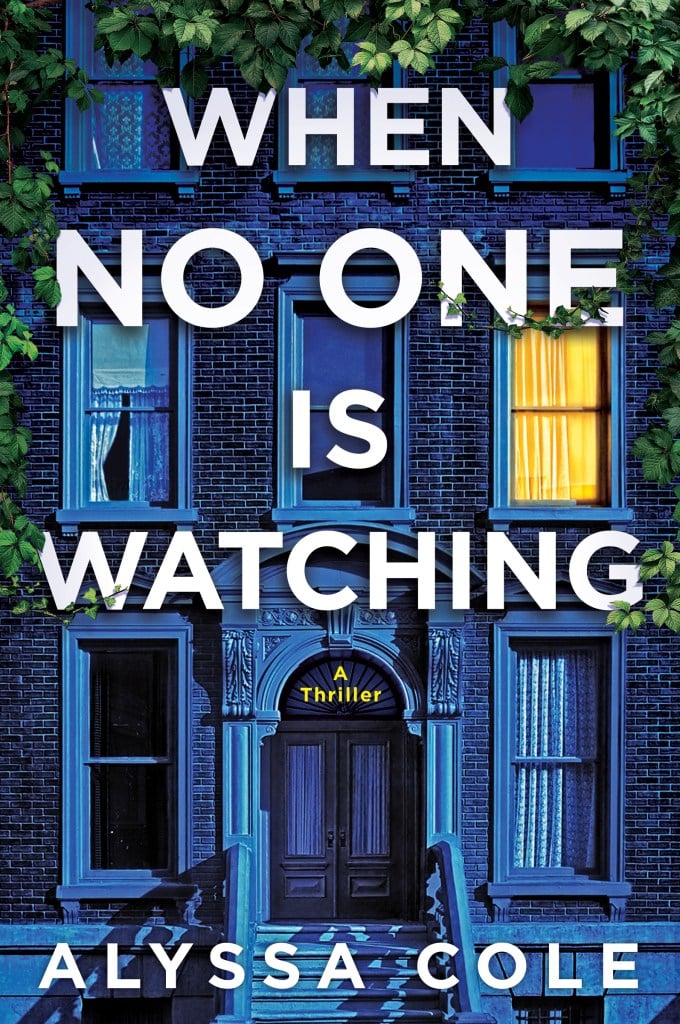
When No One Is Watching by Alyssa Cole is a novel where the gentrification of a Brooklyn neighborhood takes on a sinister new meaning.

Sydney Green is Brooklyn-born and raised, but her beloved neighborhood seems to change every time she blinks. Condos are sprouting like weeds, FOR SALE signs are popping up overnight, and the neighbors she’s known all her life are disappearing. To hold onto her community’s past and present, Sydney channels her frustration into a walking tour and finds an unlikely and unwanted assistant in one of the new arrivals to the block—her neighbor Theo.

But Sydney and Theo’s deep dive into history quickly becomes a dizzying descent into paranoia and fear. After all, their neighbors may not have moved to the suburbs, and the push to revitalize the community may be more deadly than advertised.

When does coincidence become a conspiracy? Where do people go when gentrification pushes them out? Can Sydney and Theo trust each other—or themselves—long enough to find out before they too disappear?

Having lived in Brooklyn and seen the impacts of gentrification, redlining, and other practices, I found this book one that I truly enjoyed. The book will provide a detailed history lesson if you are like Theo and have no thought of these issues.

I enjoyed the visit to Weeksville, as I have been there on several professional occasions. The history of that community needs to be told.

I recommend this book.

Subscribe

Contact Us

When you buy a book or product using a link on this page, I receive a commission. Thank you for supporting Sharing Jan’s Love blog.

The Jan Lilien Education Fund!

A Parish Chronicle

Read: February 2026

Get this book

A Parish Chronicle

by Halldór Laxness

In “A Parish Chronicle,” celebrated novelist Halldór Laxness weaves an essayistic tale about the unlikely miracles that keep a church—destined to disappear time and again—rooted on the same hillside. Laxness explores the minutiae of history, from the location of the ancient burial mound of national hero Egill Skallagrímsson to the end of the 19th century, where weak-sighted Ólafur and boisterous farmhand Gunna each play unexpected roles in the parish’s enduring survival.

1882. In the still of morning, Ólafur sharpens his scythe on the bone-dry pavestones that separate his farmhouse from the rest of Mosfell Valley, where life revolves around sheep. The sound of his hammer rings out like a high-pitched bell over the tussocky fields. Across the valley, perched on a hill that receives more sunshine than others, stands Mosfell Church. Nearby, the parish priest’s maid Gunna pours her “slosh,” a weak cup of coffee. Further afield in Reykjavík (“down south” as the locals say), the general assembly decides to revisit an old plan to cut costs by consolidating small parishes and calls for the demolition of Mosfell. Yet today a church stands on that same hillside—its sharp steeple silhouetted against the clouds, its crown bell hanging to the left of the altar.

This intimate tribute to life in Laxness‘s home valley also offers a thoughtful commentary on how the peculiarities of certain individuals can shape history. “A Parish Chronicle” is rich with life and detail.


Halldór Laxness (1902-1998) is the undisputed master of modern Icelandic fiction. He was awarded the Nobel Prize in Literature in 1955, “for his vivid epic power which has renewed the great narrative art of Iceland.” His body of work includes novels, essays, poems, plays, stories, and memoirs: more than sixty books in all. His works available in English include Independent People, The Fish Can Sing, World Light, Under the Glacier, Iceland’s Bell, and Paradise Reclaimed.

Philip Roughton has translated the work of Halldór Laxness, Jón Kalman Stefánsson, Kristín Marja Baldursdóttir, and many others. He has twice been awarded the American-Scandinavian Foundation Translation Prize for his renderings of Halldór Laxness‘s work, in 2001 for Iceland’s Bell and in 2015 for Wayward Heroes. He also received the 2016 Oxford-Weidenfeld Prize for his translation of Jón Kalman Stefánsson’s The Heart of Man. He lives in Iceland. Translator Residence: Akureyri, Iceland

Salvatore Scibona is the recipient of a Mildred and Harold Strauss Living Award from the American Academy of Arts and Letters. His first novel, The End, was a finalist for the National Book Award and winner of the Young Lions Fiction Award. His second novel, The Volunteer, was called a “masterpiece” by the New York Times and won the Ohioana Book Award. His books have been translated into ten languages. His work has won a Guggenheim Fellowship, a Pushcart Prize, an O. Henry Award, and a Whiting Award, and the New Yorker named him one of its “20 Under 40” fiction writers. He is the Sue Ann and John Weinberg Director of the Cullman Center for Scholars and Writers at the New York Public Library.


Discover your next favorite book and dive into a world of curated, exciting reads by purchasing through my links. You’ll have access to a diverse selection of books I’ve personally vetted for quality and enjoyment. Additionally, by supporting these selections, you’ll help me continue to provide you with more personalized recommendations. I earn a small commission from your purchase, which allows me to buy and share even more books with you. Your support truly makes a difference!


×
Flight: A Novel

Read: January 2023

Get this book

Flight: A Novel

by Lynn Steger Strong

Flight: A Novel by Lynn Steger Strong is a novel about family, ambition, precarity, art, and desire, forming a decisive next step from a brilliant chronicler of our time. The book has been on my to-read list for a few months. A New Yorker Best Books of 2022, it seemed like a good start on my 2023 Goodreads Reading challenge. Flight is the first book I read in 2023. Last year I read seventy-four books, and each helped me with my grief journey.

I recommend this novel as it is a page-turner highlighting the difficulty families experience after a loss. As a culture, we are experiencing declining social connections, including within families. Flight is an excellent effort to define the crisis.

Although several possible resolutions to the conflict became clear by the middle of the novel, Ms. Strong told the story so that until the end, it was unclear how or if it would be resolved. In addition, enough unresolved issues remained so that.

The Goodreads summary provides an overview,

It’s December twenty-second and siblings Henry, Kate, and Martin have converged with their spouses on Henry’s house in upstate New York. This is the first Christmas the siblings are without their mother, the first not at their mother’s Florida house. Over the course of the next three days, old resentments and instabilities arise as the siblings, with a gaggle of children afoot, attempt to perform familiar rituals, while also trying to decide what to do with their mother’s house, their sole inheritance. As tensions rise, the whole group is forced to come together unexpectedly when a local mother and daughter need help.

With the urgency and artfulness that cemented her previous novel Want as “a defining novel of our age” (Vulture), Strong once again turns her attention to the structural and systemic failings that are haunting Americans, but also to the ways in which family, friends, and strangers can support each other through the gaps


The Jan Lilien Education Fund sponsors ongoing sustainability and environmental awareness programs. Gifts made this month; I will match dollar-for-dollar. All donations are tax-deductible.

Subscribe

Contact Us

I receive a commission when you buy a book or product using a link on this page. Thank you for supporting Sharing Jan’s Love blog.


×
1944: FDR and the Year That Changed History

Read: October 2019

Get this book

1944: FDR and the Year That Changed History

by Jay Winik

1944: FDR and the Year That Changed History by Jay Winik is a book that I had put off reading several times. When I finally did read it, I could not remember why I had not read it sooner. Had I gone to graduate school and become a professor, it might have been the type of book I might write, and I certainly would have had on my list of books for my classes. 

As The NY Times wrote, “Jay Winik brings to life in gripping detail the year 1944, which determined the outcome of World War II and put more pressure than any other on an ailing yet determined President Roosevelt.” Reading a book about events five years before my birth that transformed the world I live in becomes an easy page-turner.

It was not inevitable that World War II would end as it did or that it would even end well. Nineteen forty-four was a year that could have stymied the Allies and cemented Hitler’s waning power. Instead it saved those democracies – but with a fateful cost. Now, in a superbly told story, Jay Winik, the acclaimed author of April 1865 and The Great Upheaval, captures the epic images and extraordinary history as never before.

1944 witnessed a series of titanic events: FDR at the pinnacle of his wartime leadership as well as his reelection, the planning of Operation Overlord with Churchill and Stalin, the unprecedented D-Day invasion, the liberation of Paris, and the horrific Battle of the Bulge, and the tumultuous conferences that finally shaped the coming peace. But on the way, millions of more lives were still at stake as President Roosevelt was exposed to mounting evidence of the most grotesque crime in history, the Final Solution. Just as the Allies were landing in Normandy, the Nazis were accelerating the killing of millions of European Jews.

Winik shows how escalating pressures fell on an all but dying Roosevelt, whose rapidly deteriorating health was a closely guarded secret. Here then, as with D-Day, was a momentous decision for the president. Was winning the war the best way to rescue the Jews? Was a rescue even possible? Or would it get in the way of defeating Hitler? In a year when even the most audacious undertakings were within the world’s reach, including the liberation of Europe, one challenge – saving Europe’s Jews – seemed to remain beyond Roosevelt’s grasp.

I recommend this book.

Subscribe

Contact Us

×
Stone Yard Devotional: A Novel

Read: February 2025

Get this book

Stone Yard Devotional: A Novel

by Charlotte Wood

Today, I dove into Charlotte Wood‘s captivating novel, “Stone Yard Devotional.” I couldn’t resist picking it up after discovering a glowing review by Joumana Khatib. She expressed her fondness for the book in the New York Times Book Review Newsletter, saying, “I’m still so enamored of Charlotte Wood’s novel.” It’s impressive that this work was a finalist for the Booker Prize last year! I’m eager to read the book to determine if it is a “love story,” as Ms. Khatib believes.

Burnt out and needing a retreat, a middle-aged woman leaves Sydney to return to her childhood home, taking refuge in a small religious community hidden away on the stark plains of rural Australia. She does not believe in God and is unfamiliar with the concept of prayer, finding herself living this strange, reclusive existence almost by accident.

However, her secluded life is disrupted by three significant events. First, a terrible mouse plague marks a new battle against the growing infestation daily. Second, the skeletal remains of a sister who disappeared decades ago and was presumed murdered return. Finally, a troubling visitor brings her further into her past.

Meditative, moving, and finely observed, “Stone Yard Devotional” is a seminal novel from a writer of rare power. It explores the meaning of retreating from the world, forgiveness’s true nature, and grief‘s lasting effects on the human soul.


When you purchase a book through one of my links, I earn a small commission that helps support my passion for reading. This contribution allows me to buy even more books to share with you, creating an incredible cycle of discovering great reads together! Your support truly makes a difference!


×
Come and Get It

Read: February 2024

Get this book

Come and Get It

by Kiley Reid

I recently started reading “Come and Get It” by Kiley Reid, a celebrated New York Times bestselling author known for her book Such a Fun Age. The novel is about a senior resident assistant named Millie Cousins, who, in 2017, attended the University of Arkansas. Millie aspires to graduate, get a job, and buy a house.

She is offered an unusual opportunity by Agatha Paul, a visiting professor and writer, which she accepts. Unfortunately, Strange new friends, dorm pranks, and illicit behavior undermine Millie’s ambition.

Overall, “Come and Get It” is a gripping story about desire, consumption, and recklessness. It explores themes of money, indiscretion, and bad behavior through Millie’s eyes. The novel is highly anticipated, given that Kiley Reid is an acclaimed and award-winning author.

×
Trust

Read: December 2022

Get this book

Trust by Hernan Diaz

by Hernan Diaz

Trust by Hernan Diaz is an elegant, multifaceted epic that recovers the voices buried under the myths that justify our foundational inequality; Trust is a literary triumph with a beating heart and urgent stakes. The novel is divided into four sections, each engaging and reminding us of the tremendous costs a fortune imposes on those who accumulate wealth. I highly recommend this novel as it is one of the best books I have ever read!

The first section is from Bonds, a successful novel about Benjamin and Helen Rask. Before finishing this section, I was so engrossed that I wanted their story to continue. The second is a memoir of Andrew Bevel, a successful fourth-generation financier, with notations on edits and corrections.

The third section is about Ida Partenza, an Italian-American novelist hired to flesh out Bevel’s memoir. The dynamics between her and Bevel, as well as her father and boyfriend, clarify the storyline and give it depth. Ms. Partenza seeks to find the truth, revealed in the fourth section, comprised of excerpts from Mildred’s diary. Suffice it to say; the admitted fact underscores the burdens of wealth and the antiquated views that limited women’s roles.

Trust is one of the NY Times’ top five fiction books of 2022. I have read four of them, Demon Copperhead, The Candy House, The Furrows, and Checkout 19. Trust was the fifth and the seventy-second book I have read this year. 

The Goodreads summary provides an overview.

Even though the roar and effervescence of the 1920s, everyone in New York has heard of Benjamin and Helen Rask. He is a legendary Wall Street tycoon; she is the brilliant daughter of eccentric aristocrats. Together, they have risen to the very top of seemingly endless wealth. But the secrets around their affluence and grandeur incite gossip. At what cost have they acquired their immense fortune? Rumors about Benjamin’s financial maneuvers and Helen’s reclusiveness start to spread–all as a decade of excess and speculation draws to an end.

This is the mystery at the center of a successful 1938 novel, Bonds, which all of New York seems to have read. But it isn’t the only version.

Hernan Diaz’s Trust brilliantly puts the story of these characters into conversation with other accounts–and in tension with the life and perspective of a young woman bent on disentangling fact from fiction. Provocative and propulsive, Trust engages the reader in a quest for the truth while confronting the reality-warping gravitational pull of money and how power often manipulates facts. The result is a novel that becomes more exhilarating and profound with each new layer and revelation.


The Jan Lilien Education Fund sponsors ongoing sustainability and environmental awareness programs. Gifts made this month; I will match dollar-for-dollar. All donations are tax-deductible.

Subscribe

Contact Us

I receive a commission when you buy a book or product using a link on this page. Thank you for supporting Sharing Jan’s Love blog.


×