
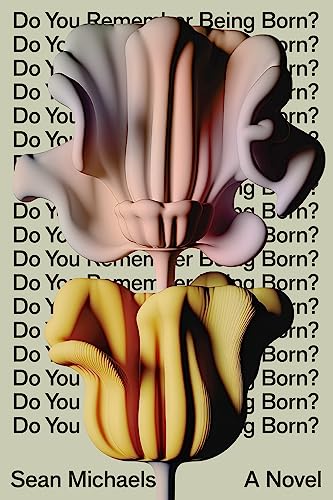
Do You Remember Being Born?

Estimated reading time: 1 minute, 29 seconds

I started reading “Do You Remember Being Born?” by Sean Michaels, a writer who won the Scotiabank Giller Prize. The novel is about an aging poet named Marian Ffarmer, a legend in the world of poetry. However, despite her success, she struggles with financial issues and her son’s inability to buy a house. Marian has sacrificed her personal relationships and happiness to pursue her career but questions whether it is worth it.

One day, she receives an invitation from a Tech Company to travel to California and work with their poetry AI, Charlotte. The company wants her to co-author a poem with their bot in a historic partnership, which clashes with Marian’s beliefs about the individual pursuit of art. However, she decides to take this opportunity, even though it makes her feel like a sell-out and a skeptic. The encounter in California changes her life, work, and understanding of kinship.

The book explores the nature of language, art, labor, capital, family, and community. It’s a response to some of the most disquieting questions of our time. The author, Sean Michaels, is a winner of the Scotiabank Giller Prize, and his book is a love letter to and interrogation of the creative legacy. It’s a joyful recognition that belonging to one’s art must mean belonging to the world to survive meaningfully.


The Jan Lilien Education Fund sponsors ongoing sustainability and environmental awareness programs. Gifts made this month; I will match dollar-for-dollar. All donations are tax-deductible.

Subscribe

Contact Us

I receive a commission when you buy a book or product using a link on this page. Thank you for supporting Sharing Jan’s Love blog.


The Jan Lilien Education Fund!

Maggie; or, A Man and a Woman Walk Into a Bar

Read: December 2025

Get this book

Maggie, or A Man and a Woman Walk Into a Bar

by Katie Yee

In the style of Jenny Offill and inspired by Nora Ephron‘s humorous and poignant writing on heartbreak and womanhood, “Maggie, or A Man and a Woman Walk Into a Bar” by Katie Yee is a masterclass in transforming personal tragedy into bold comedy. This debut novel has been recognized as a New York Times Notable Book and in Time’s list of 100 Must-Read Books of 2025, along with features in many other publications.

A man and a woman walk into a restaurant. The woman expects a lovely night filled with endless plates of samosas. Instead, she finds out her husband is having an affair with a woman named Maggie.

A short while after, her chest starts to ache. She walks into an examination room, where she finds out the pain in her breast isn’t just heartbreak—it’s cancer. She decides to call the tumor Maggie.

Unfolding in fragments over the following months, Maggie, or a Man and a Woman Walk Into a Bar follows the narrator as she embarks on a journey of grief, healing, and reclamation. She starts talking to Maggie (the tumor), getting acquainted with her body’s new inhabitant. She overgenerously creates a “Guide to My Husband: A User’s Manual” for Maggie (the other woman), hoping to ease the process of discovering her ex-husband’s whims and quirks. She turns her children’s bedtime stories into retellings of Chinese folklore passed down by her mother, in an attempt to help them fall in love with their shared culture—and perhaps save herself in the process.


Katie Yee is a writer based in Brooklyn. She has received fellowships from the Center for Fiction, the Asian American Writers’ Workshop, and Kundiman. Her work has been published in the Los Angeles Review of Books, No Tokens, The Believer, Washington Square Review, Triangle House, Epiphany, and Literary Hub. During the day, she works at the Brooklyn Museum, and at night, she writes—often under the watchful eye of her judgmental rescue dog, Ollie.


Discover your next favorite book and dive into a world of curated, exciting reads by purchasing through my links. You’ll have access to a diverse selection of books that I’ve personally vetted to ensure quality and enjoyment. Additionally, by supporting these selections, you’ll help me continue to provide you with more personalized recommendations. I earn a small commission from your purchase, which allows me to buy and share even more books with you. Your support truly makes a difference!


×
1944: FDR and the Year That Changed History

Read: October 2019

Get this book

1944: FDR and the Year That Changed History

by Jay Winik

1944: FDR and the Year That Changed History by Jay Winik is a book that I had put off reading several times. When I finally did read it, I could not remember why I had not read it sooner. Had I gone to graduate school and become a professor, it might have been the type of book I might write, and I certainly would have had on my list of books for my classes. 

As The NY Times wrote, “Jay Winik brings to life in gripping detail the year 1944, which determined the outcome of World War II and put more pressure than any other on an ailing yet determined President Roosevelt.” Reading a book about events five years before my birth that transformed the world I live in becomes an easy page-turner.

It was not inevitable that World War II would end as it did or that it would even end well. Nineteen forty-four was a year that could have stymied the Allies and cemented Hitler’s waning power. Instead it saved those democracies – but with a fateful cost. Now, in a superbly told story, Jay Winik, the acclaimed author of April 1865 and The Great Upheaval, captures the epic images and extraordinary history as never before.

1944 witnessed a series of titanic events: FDR at the pinnacle of his wartime leadership as well as his reelection, the planning of Operation Overlord with Churchill and Stalin, the unprecedented D-Day invasion, the liberation of Paris, and the horrific Battle of the Bulge, and the tumultuous conferences that finally shaped the coming peace. But on the way, millions of more lives were still at stake as President Roosevelt was exposed to mounting evidence of the most grotesque crime in history, the Final Solution. Just as the Allies were landing in Normandy, the Nazis were accelerating the killing of millions of European Jews.

Winik shows how escalating pressures fell on an all but dying Roosevelt, whose rapidly deteriorating health was a closely guarded secret. Here then, as with D-Day, was a momentous decision for the president. Was winning the war the best way to rescue the Jews? Was a rescue even possible? Or would it get in the way of defeating Hitler? In a year when even the most audacious undertakings were within the world’s reach, including the liberation of Europe, one challenge – saving Europe’s Jews – seemed to remain beyond Roosevelt’s grasp.

I recommend this book.

Subscribe

Contact Us

×
Atonement: A Novel

Read: August 2024

Get this book

Atonement: A Novel

by Ian McEwan

Today, I started reading “Atonement: A Novel” by Ian McEwan, an acclaimed Booker Prize-winning author. This symphonic novel explores complex themes, including love and war, childhood and class, guilt and forgiveness. It has been recognized as one of the New York Times’s 100 Best Books of the 21st Century, making it a must-read for those interested in these profound themes.

The story begins on a scorching summer day in 1935, when thirteen-year-old Briony Tallis witnesses a moment of flirtation between her older sister, Cecilia, and Robbie Turner, the son of a servant and Cecilia’s childhood friend. Briony’s incomplete understanding of adult motives and her literary gifts lead to a crime that significantly impacts their lives, taking them on an emotional journey of love, guilt, and forgiveness.

The narrative tracks the repercussions of this crime through the chaos and carnage of World War II, a vivid historical backdrop that immerses the reader into the twentieth century’s close. “Atonement” has been acclaimed for engaging readers on multiple levels, marking it a genuine masterpiece from the Booker Prize-winning, internationally bestselling author Ian McEwan.


Ian McEwan is a critically acclaimed author known for his nineteen novels and two short story collections. His first published work, a collection of short stories titled “First Love, Last Rites,” won the Somerset Maugham Award.

His notable novels include “The Child in Time,” which won the Whitbread Novel of the Year Award in 1987; “The Cement Garden“; “Enduring Love;” “Amsterdam;” which won the Booker Prize in 1998; “Atonement;” “Saturday;” “On Chesil Beach;” “Solar;” “Sweet Tooth;” “The Children Act;” “Nutshell;” and “Machines Like Me,” which became a number-one bestseller.

Several of his works, including “Atonement,” “Enduring Love,” “The Children Act;,” and “On Chesil Beach,” have been adapted into films.


Discover your next favorite book and dive into a world of curated, exciting reads by purchasing through my links. You’ll have access to a diverse selection of books that I’ve personally vetted to ensure quality and enjoyment. Additionally, by supporting these selections, you’ll help me continue to provide you with more personalized recommendations. I earn a small commission from your purchase, which allows me to buy and share even more books with you. Your support truly makes a difference!


×
Station Eleven: A Novel

Read: August 2024

Get this book

Station Eleven: A Novel

by Emily St. John Mandel

Station Eleven: A Novel by Emily St. John Mandel, one of The New York Times’ 100 Best Books of the Century, is set in the unsettling days of civilization’s collapse and tells the captivating story of a Hollywood star, his potential savior, and a nomadic group of actors traveling through the scattered outposts of the Great Lakes region. They risk everything for art and humanity, reminding us of the enduring power of culture even in the most dire circumstances.

Kirsten Raymonde will never forget the night Arthur Leander, the famous Hollywood actor, had a heart attack on stage during a production of King Lear. That night, a devastating flu pandemic arrived in the city, and within weeks, civilization as we know it came to an end. Little did she know that this event would set events to shape the world’s future.

Twenty years later, Kirsten, a key figure in the story, traverses the settlements of the altered world with a small troupe of actors and musicians. They are The Traveling Symphony, a group that has made it their mission to keep the remnants of art and humanity alive. Their encounters, particularly in St. Deborah by the Water, with a violent prophet threatening their existence, form a crucial part of the narrative. The story’s unique structure, moving back and forth in time, vividly depicts life before and after the pandemic, and the strange twist of fate that connects them all will keep you on the edge of your seat.

×
Stony The Road

Read: October 2019

Get this book

Stony the Road

by Henry Louis Gates Jr

Stony the Road: Reconstruction, White Supremacy, and the Rise of Jim Crow by Henry Louis Gates Jr. is a must-read book, especially with white nationalism on the rise.

I read this book when Jan began her chemotherapy. Although the book’s subject – the retreat from reconstruction – was one I studied in college, at times, I found it hard to focus on the material and my wife’s health at the same time. I stayed on the stony road as it is a subject we need to understand if we are going to correct the past failures.

As The New York Times wrote,

Henry Louis Gates Jr.’s “Stony the Road: Reconstruction, White Supremacy, and the Rise of Jim Crow,” an indispensable guide to the making of our times, addresses 2017’s mystifications. The book sets the Obama era beside Reconstruction and the Trump era beside the white supremacist terrorism of Redemption, the period beginning in 1877 during which Reconstruction’s nascent, biracial democracy was largely dismantled. Gates juxtaposes the optimism of Reconstruction, the despair of Redemption, and the promise of the New Negro movement — the effort by black Americans, starting around the turn of the 20th century, to craft a counternarrative to white supremacy. In doing so, “Stony the Road” presents a bracing alternative to Trump-era white nationalism.

Growing up in the Jim Crow south, I was well aware of white nationalism. This book is an essential read if we are going to make America a multi-racial democracy.

Subscribe

Contact Us

×
Neighbors and Other Stories

Read: February 2024

Get this book

Neighbors and Other Stories

by Diane Oliver

Today, I began reading Diane Oliver‘s Neighbors and Other Stories. It’s a powerful and eerie debut collection of stories that portrays the struggles of different characters as they face the everyday dangers of racism during the Jim Crow era. The book features an introduction by Tayari Jones.

Diane Oliver is an important yet often overlooked figure in African American literature of the 20th century. She was a gifted writer, ahead of her time, whose talent was cut short by her untimely death at 22 in 1966. Nevertheless, she left behind a remarkable collection of crisply written and often chilling tales that delve into race and racism in America during the 1950s and 60s. Oliver’s insightful stories remain relevant today; this is the only existing collection of her works. She has rightfully earned her place in the literary canon as a masterful storyteller.

The passage below describes several short stories with different themes. The first story, “The Closet on the Top Floor,” tells the story of Winifred, the first Black student in a newly integrated college. In this story, Winifred begins to disappear, creating a nightmarish scenario. The second story is titled “Mint Juleps not Served Here.” It’s about a couple who live deep in a forest with their son. They will go to bloody lengths to protect him from any danger. The third story, “Spiders Cry without Tears,” features a couple named Meg and Walt. They must confront prejudices and strains of interracial and extramarital love. Finally, the last story is the titular one, and it’s a high-tension narrative that follows a nervous older sister the night before her younger brother is set to desegregate his school.

These are powerful and personal depictions of African American families everyday struggles and moments of distress, illustrating how they utilize their abilities to overcome challenges. “Neighbors” is an enthralling compilation and a valuable historical and social document, displaying the remarkable literary skills of a previously overlooked author.

×