
Flowers Convert Apartment 3B Into a Home
Estimated reading time: 0 minutes, 2 seconds
Flowers Convert Apartment 3B Into a Home
Flowers Convert Apartment 3B Into a Home
Subscribe to Sharing Jan's Love Newsletter!
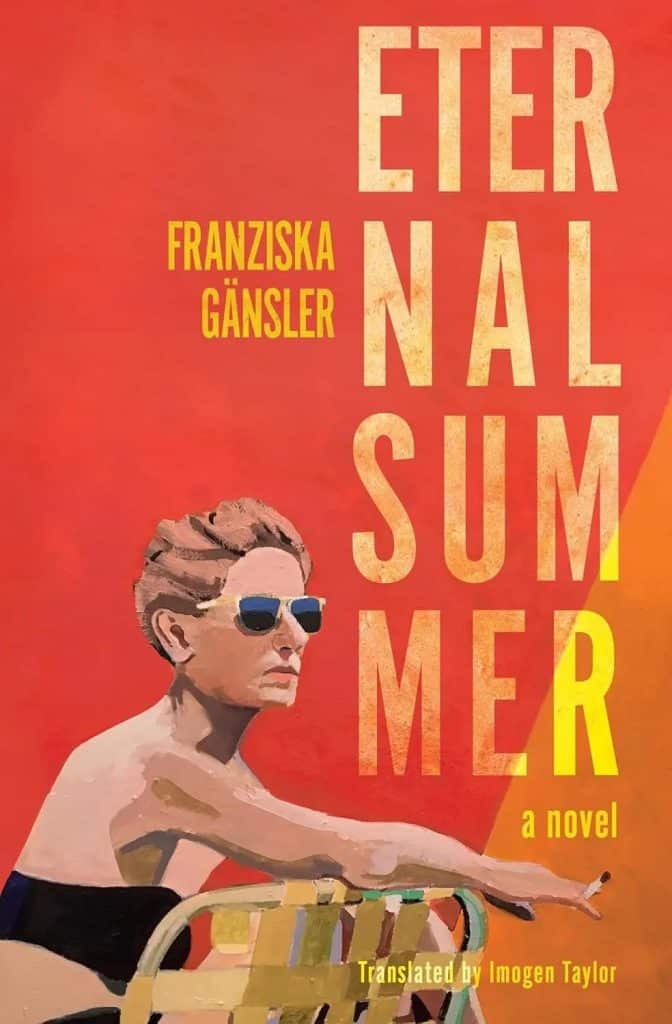
by Franziska Gänsler
Today, I plunged into Eternal Summer, the captivating debut novel by Franziska Gänsler, beautifully translated by Imogen Taylor. Set against the urgent backdrop of a German spa town grappling with the harsh realities of climate change, this gripping story weaves a tale of trust, abuse, and solidarity. It explores the profound and unexpected bond that forms between two women, drawing readers into an intense emotional journey that’s both compelling and thought-provoking.
When Iris took over the family hotel from her grandfather, Bad Heim was still a popular spa destination. However, fierce wildfires rage in the area, filling the air with smoke. The summers have become dry and unbearably hot, seemingly endless. Guests have become a rare sight. Suddenly, a young mother arrives with her small daughter and asks for a room. Something feels off about her. Does she need help, or could she be a threat?
Franziska Gänsler’s debut novel vividly captures the intensity of the fires, the ashes falling on skin, and the pervasive smell of smoke. Despite the inhospitable setting, you will be inspired by the resilience of these women as they grow closer and prepare to fight for their freedom.
Franziska Gänsler was born in Augsburg in 1987. She studied art and English in Berlin, Vienna, and Augsburg. In 2020, she was short-listed for the Blogbuster Prize and was a finalist at Berlin’s 28th Open Mike competition. Gänsler lives in Augsburg and Berlin. Eternal Summer is her debut novel.
Imogen Taylor was born in London in 1978 and has lived in Berlin since 2001. She is the translator of Sascha Arango, Dirk Kurbjuweit, and Melanie Raabe. Her translation of Sasha Marianna Salzmann’s Beside Myself (Other Press, 2020) was short-listed for the 2021 Helen & Kurt Wolff Translator’s and 2020 Schlegel-Tieck prizes.
When you purchase a book through one of my links, I earn a small commission that helps support my passion for reading. This contribution allows me to buy even more books to share with you, creating an incredible cycle of discovering great reads together! Your support truly makes a difference!
Enjoy a limited-time offer of 20% off your next book purchase at Bookshop.org!
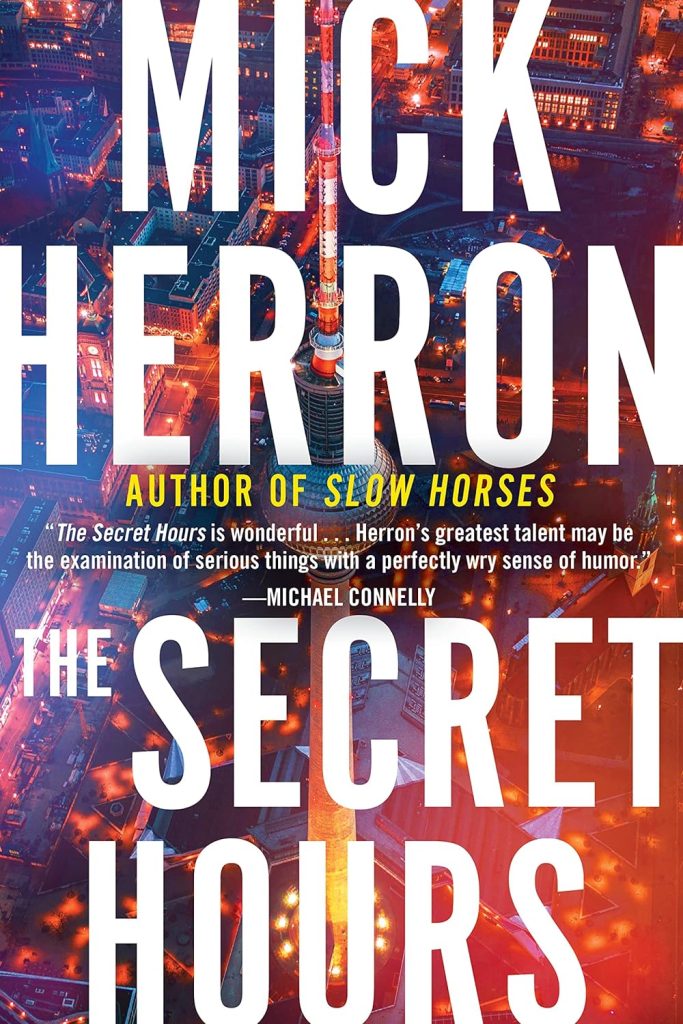
by Mick Herron
Today, I started reading “The Secret Hours” by Mick Herron, a gripping spy thriller about a disastrous MI5 mission in Cold War Berlin. This book is a must-read for fans of “Slow Horses.” “The Secret Hours” is a standalone spy thriller that is both unnerving and poignant yet also has laugh-out-loud moments. It is the breathtaking secret history that Slough House fans have been waiting for.
Two years ago, a hostile prime minister launched the Monochrome inquiry, which aimed to investigate “historical over-reaching” by the British Secret Service. Griselda Fleet and Malcolm Kyle, two civil servants seconded to the project, were given unfettered access to all confidential information in the Service archives to ferret any hint of misconduct by any MI5 officer.
However, MI5’s formidable First Desk did not become Britain’s top spy by accident, and she has successfully thwarted the inquiry at every turn. The administration that created Monochrome has been ousted, and the investigation is a total bust. Griselda and Malcolm are stuck watching as the pounding London rain washes away their career prospects.
On the eve of Monochrome’s shuttering, an MI5 case file appears without explanation. It is the buried history of a classified operation in 1994 Berlin, which ended in tragedy and scandal, whose cover-up has rewritten thirty years of Service history.
The Jan Lilien Education Fund sponsors ongoing sustainability and environmental awareness programs. Regarding gifts made this month, I will match dollar for dollar. All donations are tax-deductible.
I receive a commission when you buy a book or product using a link on this page. Thank you for supporting Sharing Jan’s Love blog.
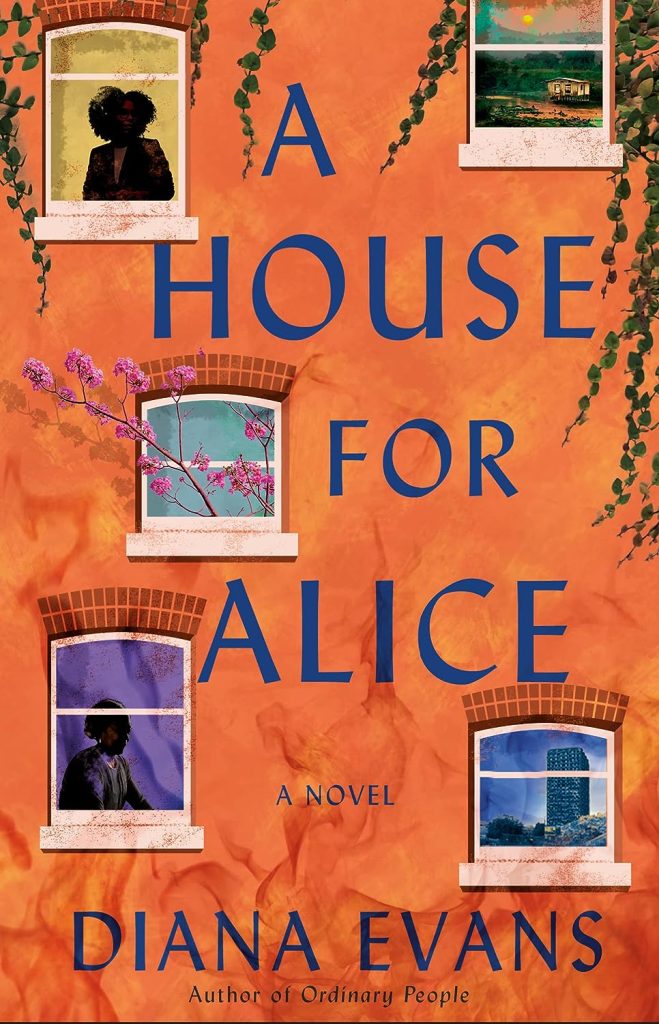
by Diana Evans
I just started reading A House for Alice: A Novel by Diana Evans. The story is set against a complicated political backdrop but is filled with hope, humor, and humanity. A House for Alice explores the scars of grief and betrayal across generations and reveals the secrets we keep from our loved ones.
The novel opens with two tragedies that occur in London. The first is the Grenfell Tower fire, which took many lives. The second is the death of Cornelius Winston Pitt, a family patriarch who dies alone. A House for Alice is a beautiful and poignant story about a family of women shaken by loss and searching for closure.
The family matriarch, Alice, has lived in England for fifty years but longs to spend her remaining years in her homeland, Nigeria. Her three daughters are divided on the matter. The youngest daughter, Melissa, is also struggling with the aftermath of her failed relationship. The family’s foundational pillars of trust, love, and cultural identity begin to weaken as they navigate these difficult times.
The Jan Lilien Education Fund sponsors ongoing sustainability and environmental awareness programs. Gifts made this month; I will match dollar-for-dollar. All donations are tax-deductible.
I receive a commission when you buy a book or product using a link on this page. Thank you for supporting Sharing Jan’s Love blog.
by Natasha Stagg
Natasha Stagg‘s “Grand Rapids” is a coming-of-age story set in the Michigan suburbs in the early 2000s. Alexander Calder’s public sculpture, “La Grande Vitesse”, installed alongside the Grand River in downtown Grand Rapids, has become a symbol of the city. Tess moved there from Ypsilanti, Michigan, in 2001—the same year her mother passed away, marking the beginning of a time when everything felt like it was moving in slow motion for her.
Thrust into adolescence nearly rudderless, fifteen-year-old Tess is intoxicated, angsty, and sexually awake. A decade later, inspired by diary entries and TV reruns, she remembers this summer in the suburbs as the one that redefined her. Its echoes of death are frozen in time, like the waves represented in Calder’s sculpture or the concrete steps leading down to the churning river. She sees Grand Rapids as a collection of architecture and emblems, another home to which she cannot return.
Natasha Stagg is the author of Surveys: A Novel (2016), Sleeveless: Fashion, Image, Media, New York 2011–2019 (2019), and Artless: Stories 2019–2023 (2023). She lives in New York City.
Discover your next favorite book and dive into a world of curated, exciting reads by purchasing through my links. You’ll have access to a diverse selection of books that I’ve personally vetted to ensure quality and enjoyment. Additionally, by supporting these selections, you’ll help me continue to provide you with more personalized recommendations. I earn a small commission from your purchase, which allows me to buy and share even more books with you. Your support truly makes a difference!
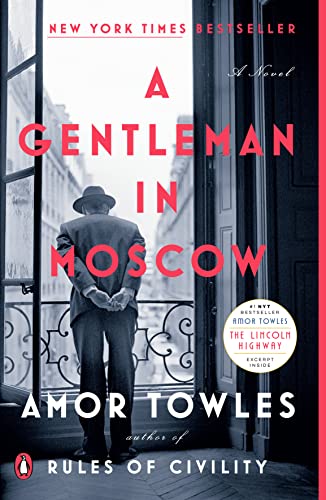
by Amor Towles
A Gentleman in Moscow by Amor Towles is a transporting novel about a man sentenced by the government to spend the rest of his life inside a luxury hotel. In 1922, a Bolshevik tribunal deemed Count Alexander Rostov an unrepentant aristocrat. His house arrest in the Metropol, a grand hotel across the street from the Kremlin. Rostov, an indomitable man of erudition and wit, has never worked a day and must now live in an attic room while some of the most tumultuous decades in Russian history are unfolding outside the hotel’s doors.
During my grief journey, I have on occasion felt as if I was a prisoner in my apartment, so I found this novel to be one that provided me an alternative to understanding what it would have been like to be under house arrest as Count Rostov was.
A Gentleman in Moscow was a page-turner. The plot captures a unique historical time and how Count Rostov makes the best of a bad situation. I highly recommend this novel.
The Goodreads summary provides an overview.
With his breakout debut novel, Rules of Civility, Amor Towles established himself as a master of absorbing, sophisticated fiction, bringing late 1930s Manhattan to life with a splendid atmosphere and an excellent command of style. As NPR commented, readers and critics were enchanted, “Towles writes with grace and verve about the mores and manners of a society on the cusp of radical change.”
A Gentleman in Moscow immerses us in another elegantly drawn era with the story of Count Alexander Rostov. When, in 1922, he is deemed an unrepentant aristocrat by a Bolshevik tribunal, the count is sentenced to house arrest in the Metropol, a grand hotel across the street from the Kremlin. Rostov, an indomitable man of erudition and wit, has never worked a day. He must now live in an attic room while some of the most tumultuous decades in Russian history are unfolding outside the hotel’s doors. Unexpectedly, his reduced circumstances provide him a doorway into a much larger world of emotional discovery.
Brimming with humor, a glittering cast of characters, and one beautifully rendered scene after another, this singular novel casts a spell as it relates to the count’s endeavor to gain a deeper understanding of what it means to be a man of purpose.
The Jan Lilien Education Fund sponsors ongoing sustainability and environmental awareness programs. Gifts made this month; I will match dollar-for-dollar. All donations are tax-deductible.
I receive a commission when you buy a book or product using a link on this page. Thank you for supporting Sharing Jan’s Love blog.
Read: August 2022
by Marie NDiaye
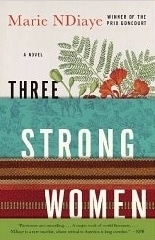
Three Strong Women by Marie NDiaye is a novel that focuses on three women who say no. Winner of the coveted Prix Goncourt, the first by a black woman, Marie NDiaye, creates a luminous narrative triptych as harrowing as beautiful. With lyrical intensity, Marie NDiaye masterfully evokes the relentless denial of dignity, to say nothing of happiness, in these lives caught between Africa and Europe. I highly recommend this novel.
John Fletcher translated the Kindle version.
The Goodreads summary provides an overview,
This is the story of three women who say no: Norah, a French-born lawyer who finds herself in Senegal, summoned by her estranged, tyrannical father to save another victim of his paternity; Fanta, who leaves a modest but contented life as a teacher in Dakar to follow her white boyfriend back to France, where his delusional depression and sense of failure poison everything; and Khady, an impoverished widow put out by her husband’s family with nothing but the name of a distant cousin (the Fanta above) who lives in France, a place Khady can scarcely conceive of but toward which she must now take desperate flight.
With lyrical intensity, Marie NDiaye masterfully evokes the relentless denial of dignity, to say nothing of happiness, in these lives caught between Africa and Europe. We see with stunning emotional exactitude how ordinary women discover unimagined reserves of strength, even as their humanity is chipped away. Three Strong Women admits to an immigrant experience rarely, if ever, examined in fiction, but even more into the depths of the suffering heart.
The Jan Lilien Education Fund sponsors ongoing sustainability and environmental awareness programs. Gifts made this month are matched dollar-for-dollar. All donations are tax-deductible.
I receive a commission when you buy a book or product using a link on this page. Thank you for supporting Sharing Jan’s Love blog.