
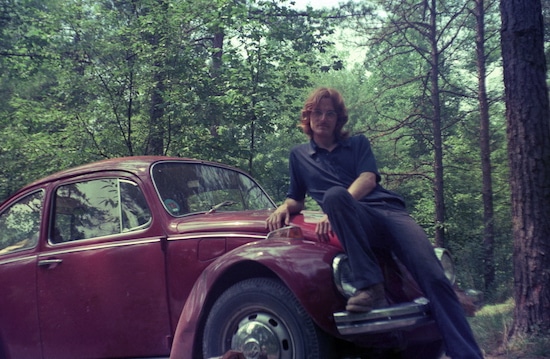
Road Trippin in 1973

Estimated reading time: 14 minutes, 25 seconds
Gramercy Park Altercation

Not sure how I got thru the last few days,” I said as the group of twenty of us entered the soul food restaurant in Gramercy Park. “It still hurts, but I have been looking forward to this dinner for weeks,” I mumbled. As we found our seats, I felt a surge of pain and grimaced. Looking at the menu, I could not focus as the pain intensified. 

Are you sure you are OK,” my friend Mia asked? If you need to go home, everyone will understand.”

I wanted to stay but knew that was not a good idea.

I pulled myself up and apologized for leaving so abruptly. A cacophony of voices said take care, we understand. Do you need help?

I waved them off and hobbled out of the restaurant and toward the subway. My legs were moving so slowly that I was unsure if I could make it the two blocks to the subway before my friends finished dinner. 

As I approached the stairs to the subway, a couple around my age was arguing very loudly. I went behind the woman as it was the easiest way to the entrance and a spot where I could hold onto the railing, but as I passed her, she stepped backward and bumped into me. 

I thought I recognized her, especially her voice.

“Sorry, are you OK,” she asked.

I nodded yes and then asked, “I am more concerned about you. Are you OK?”

“I am fine. We are just having a conversation.”

“If you need my help, let me know.”

The man said they were fine, but the woman looked nervous and fearful.

I started down the stairs like a man sixty years older than I was. About halfway down the stairs, I heard the woman scream.

“Keep your hands off of me!

“Jan, you are a bitch!”

Immediately, I remembered who she was. I met Jan at the VISTA training last December. I had spoken about my experience in the community. I had given her my number, but she had never called me. I had liked her when we met, but my relationship with the imaginary girlfriend had kept me from reaching out to her.

I stopped to hear what was said next, but even though his words were loud and angry, I could not understand them as a train entered the station.

I turned toward the railing on my right side, but the pain stopped me. I twisted to the left and began a slow walk up the stairs. Healthy, I would have taken the steps two at a time. Now I took half steps to get myself back up to the street. 

When I got to the street, I looked around and could not see Jan or the man. The anger in his voice disturbed me. 

I should have recognized her immediately and intervened. But what could I have done? Why had I walked down the stairs?

Like a jilted lover, I called out her name.

Jan, where are you? Are you OK?”


Next Page

Pages: 1 2 3 4 5 6

7 comments add your comment

Share your thoughts and ideas

This site uses Akismet to reduce spam. Learn how your comment data is processed.

Previous Post:

Next Post:

The Jan Lilien Education Fund!

Tenth of December: Stories

Read: July 2024

Get this book

Tenth of December: Stories

by George Saunders

One of the most important and blazingly original writers of his generation, George Saunders, is an undisputed master of the short story. The Tenth of December is his most honest, accessible, and moving collection yet. It is one of the New York Times’ 100 Best Books of the Century. The book is structured as a collection of short stories, each offering a unique and compelling narrative.

In the taut opener, “Victory Lap,” a boy witnesses the attempted abduction of the girl next door and is faced with a harrowing choice: Does he ignore what he sees or override years of smothering advice from his parents and act?

In “Home,” a combat-damaged soldier moves back in with his mother and struggles to reconcile the world he left behind with the one he has returned to.

In the title story, a stunning meditation on imagination, memory, and loss, a middle-aged cancer patient walks into the woods to commit suicide, only to encounter a troubled young boy who, throughout a fateful morning, gives the dying man a final chance to recall who he is.

An unfortunate, deluded owner of an antique store; two mothers struggling to do the right thing; a teenage girl whose idealism is challenged by a brutal brush with reality; a man tormented by a series of pharmaceutical experiments that force him to lust, to love, to kill—the unforgettable characters that populate the pages of Tenth of December are vividly and lovingly infused with Saunders’s signature blend of exuberant prose, deep humanity, and stylistic innovation.

Writing brilliantly and profoundly about class, sex, love, loss, work, despair, and war, Saunders cuts to the core of the contemporary experience. These stories take on the big questions and explore the fault lines of our morality, delving into what makes us suitable and what makes us human. They are not just stories but profound explorations that will stimulate your intellect and make you ponder.

Unsettling, insightful, and hilarious, the stories in Tenth of December—through their manic energy, their focus on what is redeemable in human beings, and their generosity of spirit—not only entertain and delight but also fulfill Chekhov’s dictum that art should “prepare us for tenderness.” The humor in these stories will keep you entertained and laughing, even as they delve into profound themes.


George Saunders is the author of thirteen books, including the novel Lincoln in the Bardo, which won the Booker Prize, and five collections of stories, including Tenth of December, which was a finalist for the National Book Award, and the recent collection Liberation Day (selected by former President Obama as one of his ten favorite books of 2022).

Three of Saunders’s books—Pastoralia, Tenth of December, and Lincoln in the Bardo—were chosen for The New York Times’s list of the 100 Best Books of the 21st Century. Saunders hosts the popular Story Club on Substack, which grew out of his book, A Swim in a Pond in the Rain. In 2013, he was named one of Time’s 100 Most Influential People. He teaches in the creative writing program at Syracuse University.


When you purchase a book through one of my links, I earn a small commission that helps support my passion for reading. This contribution allows me to buy even more books to share with you, creating an incredible cycle of discovering great reads together! Your support truly makes a difference!


×
How Democracies Die

Read: January 2021

Get this book

How Democracies Die: What History Reveals About Our Future

by Steven Levitsky and Daniel Ziblatt

How Democracies Die: What History Reveals About Our Future by Steven Levitsky and Daniel Ziblatt was on my reading list for almost a year. In late December of last year, I started reading it and was in the final chapter on January 6, 2021. Like many of us, I never in my life expected to see a day like that in our country.

This type of event is one the authors talk about in their book.

According to the overview in GoodReads,

Donald Trump’s presidency has raised a question that many of us never thought we’d be asking: Is our democracy in danger? Harvard professors Steven Levitsky and Daniel Ziblatt have spent more than twenty years studying the breakdown of democracies in Europe and Latin America, and they believe the answer is yes. Democracy no longer ends with a bang–in a revolution or military coup–but with a whimper: the slow, steady weakening of critical institutions, such as the judiciary and the press, and the gradual erosion of long-standing political norms. The good news is that there are several exit ramps on the road to authoritarianism. The bad news is that, by electing Trump, we have already passed the first one.

Drawing on decades of research and a wide range of historical and global examples, from 1930s Europe to contemporary Hungary, Turkey, and Venezuela, to the American South during Jim Crow, Levitsky and Ziblatt show how democracies die–and how ours can be saved.

Our democracy is too valuable for us to have it die. We all need to work to preserve and strengthen it. How Democracies Die is a book that everyone needs to read!

Subscribe

Contact Us

×
Transcription

Read: May 2026

Get this book

Transcription: A Novel

by Ben Lerner

Transcription” by Ben Lerner has been named one of The New York Times’ Best Books of the Year (So Far). Hailed as “the most talented writer of his generation” by The New York Times Magazine, Lerner presents a gripping emotional drama that also serves as a brilliant exploration of the digital and literary devices we use to store or erase our memories.

The narrator of Ben Lerner‘s new novel has traveled to Providence, Rhode Island, to conduct what will be the final published interview with Thomas, his ninety-year-old mentor and the father of his college friend Max. Thomas is a giant in the arts who seems to hail from the future and the past simultaneously and who reenchants the air when he speaks. But the narrator drops his smartphone in the hotel sink. He arrives at Thomas’s house without a recording device, a fact he is mysteriously unable to admit.

What unfolds from this dreamlike circumstance is the unforgettable story of the triangle formed by Thomas, Max, and the narrator, as well as an exploration of fathers and sons, male friendship and rivalry, and the challenges of parenting in a burning world. One of the first great novels about the early days of COVID, it is also a brilliant meditation on those technologies that enrich or impoverish our connection to one another, that store or obliterate memory. Full of startling insight, but summoning the intensity of a séance, Lerner’s writing shows us how the air is full of messages, full of ghosts. Ultimately, Transcription demonstrates what only a work of fiction can record.


Ben Lerner is the author of several poetry and prose books, as well as collaborative works with visual artists. He has received fellowships from the Fulbright, Guggenheim, and MacArthur Foundations. Lerner has been a finalist for the National Book Award for Poetry and the Pulitzer Prize for Fiction, along with many other honors. He is a Distinguished Professor of English at Brooklyn College.


Discover your next favorite book and dive into a world of curated, exciting reads by purchasing through my links. You’ll have access to a diverse selection of books I’ve personally vetted for quality and enjoyment. Supporting these selections not only helps me continue to provide you with personalized recommendations but also ensures you have access to meaningful stories that enrich your life. Your support truly makes a difference in helping me share more books and insights with you!


×
Orbital

Read: December 2023

Get this book

Orbital: A Novel

by Samantha Harvey

Today, I started reading “Orbital” by Samantha Harvey. “Orbital” is a slender novel with epic power that captures a single day in the lives of six women and men hurtling through space. The author’s prose is poetic and impossible to put aside. Watching the Earth through the eyes of space travelers is refreshing. If I finish reading it by Sunday, it will be the 78th book I’ve read this year or the first one of 2024.

They are not going towards the moon or the vast unknown but are orbiting our planet. These astronauts and cosmonauts come from various countries, including America, Russia, Italy, Britain, and Japan. They are selected for one of the last space station missions before the program is dismantled. They have left their lives behind to travel over seventeen thousand miles an hour as the earth reels below.

Throughout the book, we catch glimpses of their earthly lives through brief communications with their families, photos, and talismans. We watch them whip up dehydrated meals, float in gravity-free sleep, and exercise in regimented routines to prevent their muscles from atrophying. We also witness them form bonds that will stand between them and utter solitude. Most importantly, we are with them as they behold and record their silent blue planet. Their experiences of sixteen sunrises and sunsets and the bright, blinking constellations of the galaxy are breathtakingly beautiful and surprisingly intimate. Additionally, we get to see the marks of civilization far below, encrusted on the planet on which we live.

It is a profound, contemplative, and gorgeous book that eloquently meditates on space. Moreover, it is a moving elegy reflecting our humanity, environment, and planet.


The Jan Lilien Education Fund sponsors ongoing sustainability and environmental awareness programs. For gifts made this month, I will match dollar for dollar. All donations are tax-deductible.

Subscribe

Contact Us

I receive a commission when you buy a book or product using a link on this page. Thank you for supporting Sharing Jan’s Love blog.


×
Don't Be a Stranger: A Novel

Read: October 2024

Get this book

Don’t Be a Stranger: A Novel

by Susan Minot

Today, I began reading “Don’t Be a Stranger: A Novel” by Susan Minot, a captivating new work by the author of ‘Evening.’ Known for her lyrical prose and exploration of complex human relationships, Minot’s latest novel revolves around a woman involved in a love affair during midlife. It is a radiant tale that explores themes of erotic obsession, the desire for intimacy, communication, and oblivion, which will resonate with fans of Miranda July‘s ‘All Fours,’ a book I have also read.

Ivy Cooper is 52 years old when Ansel Fleming first enters her life. Twenty years her junior, a musician newly released from prison on a minor drug charge, Ansel’s beguiling good looks and quiet intensity instantly seduce her. Despite the gulf between their ages and experience, their physical chemistry is overpowering. Over the heady weeks and months that follow, Ivy finds her life bifurcated by his presence: On the surface, she is a responsible mother, managing the demands of friends, an ex-husband, and home, but emotionally, psychologically, sexually, she is consumed by desire and increasingly alive only in the stolen moments-out-of-time, with Ansel in her bed.

Don’t Be a Stranger is a gripping, sensual, and provocative work from one of the most remarkable voices in contemporary fiction.

×
Camp Zero

Read: April 2023

Get this book

Camp Zero: A Novel

by Michelle Min Sterling

I recently read an incredible novel called Camp Zero by Michelle Min Sterling. The book tells the story of several climate change survivors in a near-future northern settlement and explores the intersection of gender, class, and migration. The novel is a page-turner and a masterful exploration of who and what will survive in a warming world.

The story follows Rose, a young woman who agrees to spy on the architect of an American building project in exchange for housing. She arrives at the same time as Grant, a college professor who is trying to escape his wealthy family’s dark legacy. As they begin to investigate the mysterious architect, they uncover a disturbing mystery lurking beneath the surface of the camp.

One of the most fascinating aspects of the novel is the inclusion of an elite group of women soldiers living and working at a nearby Cold War-era climate research station. The rumors surrounding their presence add more intrigue to an already compelling story.

If you’re looking for a captivating novel that will keep you on the edge of your seat, I highly recommend Camp Zero. The book is a mesmerizing and transportive read, perfect for fans of Station Eleven and The Power.


The Jan Lilien Education Fund sponsors ongoing sustainability and environmental awareness programs. Gifts made this month; I will match dollar-for-dollar. All donations are tax-deductible.

Subscribe

Contact Us

I receive a commission when you buy a book or product using a link on this page. Thank you for supporting Sharing Jan’s Love blog.


×

Discover more from Sharing Jan’s Love

Subscribe now to keep reading and get access to the full archive.

Continue reading