New Book: What We Can Know

Estimated reading time: 0 minutes, 0 seconds
What We Can Know

What We Can Know

"What We Can Know" by Ian McEwan, the critically acclaimed author of nineteen novels and two short story collections, is a remarkable work of fiction and a love story that celebrates both individuals and the words they leave behind. This literary detective story reclaims the present from our sense of impending catastrophe and envisions a future world where not everything is lost.

Read book review Get this book All books

The Jan Lilien Education Fund!

What We Can Know

Read: September 2025

Get this book

What We Can Know: A Novel

by Ian McEwan

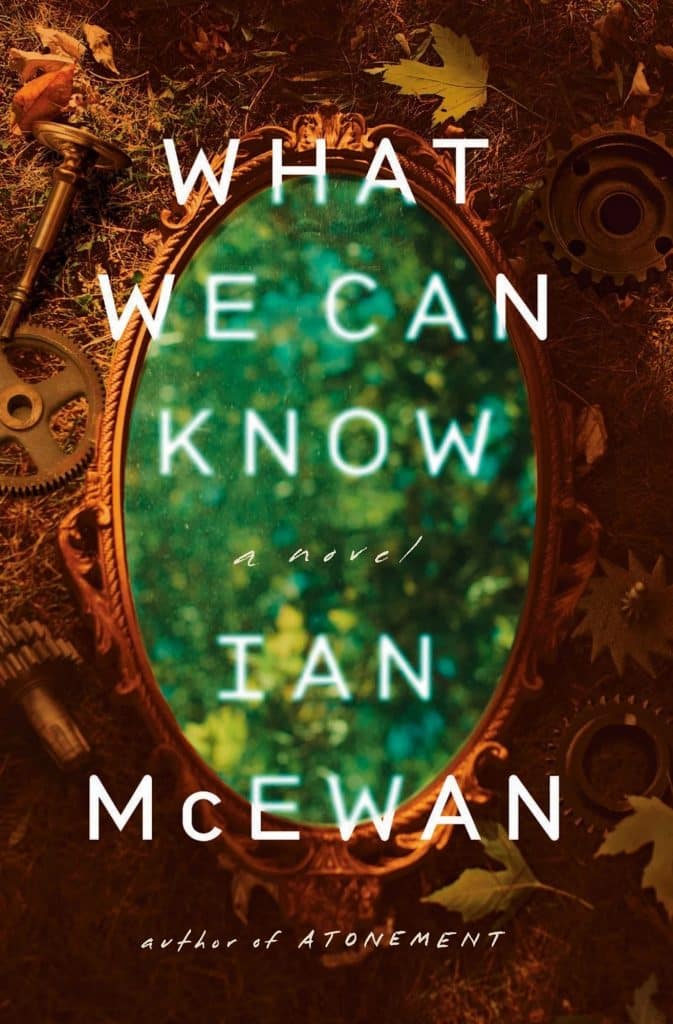
What We Can Know” by Ian McEwan, the critically acclaimed author of nineteen novels and two short story collections, is a remarkable work of fiction and a love story that celebrates both individuals and the words they leave behind. This literary detective story reclaims the present from our sense of impending catastrophe and envisions a future world where not everything is lost.

In 2014, during a dinner for close friends and colleagues, renowned poet Francis Blundy honored his wife’s birthday by reading aloud a new poem dedicated to her, titled “A Corona for Vivien.” As the guests enjoy a delicious meal and drink plenty of wine, little do they know that people will speculate about the meaning of this poem for generations to come. A copy of the poem was never published, and it remains an enduring mystery.

Fast forward to 2119: over one hundred years in the future, rising seas following a catastrophic nuclear accident have submerged much of the Western world. The survivors tormented by the memory of the vibrant world research the world that once existed. In the waterlogged south of what was once England, Thomas Metcalfe, a lonely scholar and researcher, longs for the early twenty-first century as he searches for the elusive poem “A Corona for Vivien.”

Thomas reflects on how wild and full of risk their lives were, captivated by the freedoms and possibilities of human life at its zenith. When he stumbles upon a clue that may lead to the poem’s discovery, he uncovers a story of entangled loves and a brutal crime that shatters his assumptions about people he thought he knew intimately.


Ian McEwan is a critically acclaimed author known for his nineteen novels and two short story collections. His first published work, a collection of short stories titled “First Love, Last Rites,” won the Somerset Maugham Award.

His notable novels include “The Child in Time,” which won the Whitbread Novel of the Year Award in 1987; “The Cement Garden“; “Enduring Love;” “Amsterdam;” which won the Booker Prize in 1998; “Atonement;” “Saturday;” “On Chesil Beach;” “Solar;” “Sweet Tooth;” “The Children Act;” “Nutshell;” and “Machines Like Me,” which became a number-one bestseller.

Several of his works, including “Atonement,” “Enduring Love,” “The Children Act;,” and “On Chesil Beach,” have been adapted into films.


Discover your next favorite book and dive into a world of curated, exciting reads by purchasing through my links. You’ll have access to a diverse selection of books that I’ve personally vetted to ensure quality and enjoyment. Additionally, by supporting these selections, you’ll help me continue to provide you with more personalized recommendations. I earn a small commission from your purchase, which allows me to buy and share even more books with you. Your support truly makes a difference!


×
Death Takes Me

Read: December 2025

Get this book

Death Takes Me: A Novel

by Cristina Rivera Garza

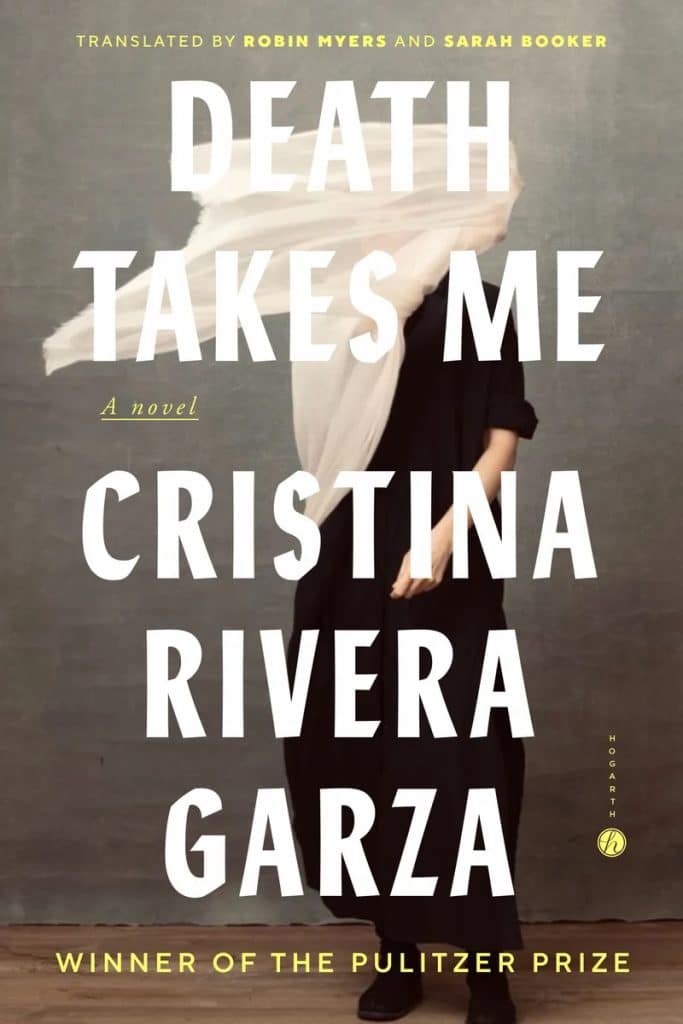
Originally written in Spanish by Cristina Rivera Garza, Death Takes Me is a thrilling masterpiece of literary fiction that turns the traditional crime narrative of gendered violence on its head. As sharp as the cuts on the bodies of the victims, the story unfolds with the dreamlike logic of a surreal experience, transitioning from the police station to a professor’s classroom and through the intricate worlds of Latin American poetry and art. It invites readers to explore the unstable terrains of desire and sexuality.

A city is always a cemetery.

In the narrative, a professor named Cristina Rivera Garza stumbles upon the corpse of a mutilated man in a dark alley and promptly reports it to the police. When shown a crime scene photo, she discovers a stark warning written in tiny print with coral nail polish on the brick wall beside the body: “Beware of me, my love / beware of the silent woman in the desert.”

The professor becomes the primary informant in the case, which is led by a detective who is newly obsessed with poetry and haunted by a list of past failures. But what has the professor truly witnessed? As more bodies of castrated men alongside lines of verse, the detective attempts to decipher the meaning of the poems in hopes of stopping the spreading violence throughout the city.


Cristina Rivera Garza is an acclaimed author known for works such as The Taiga Syndrome and The Iliac Crest. Her memoir, Liliana’s Invincible Summer, won the Pulitzer Prize and was a finalist for the National Book Award. She has received the MacArthur Fellowship and the Sor Juana Inés de la Cruz Prize. Currently, Rivera Garza holds the Hugh Roy and Lillie Cranz Cullen Distinguished Chair and serves as director of the PhD program in Creative Writing in Spanish at the University of Houston.

Sarah Booker is a teacher and a literary translator. Her translations include novels by Mónica Ojeda, Cristina Rivera Garza, and Gabriela Ponce. She is also an associate editor at Southwest Review.

Robin Myers is a poet and translator. Her translations encompass Andrés Neuman’s Bariloche, Claudia Peña Claros’s The Trees, Isabel Zapata’s In Vitro, Eliana Hernández-Pachón’s The Brush, and Cristina Rivera Garza’s The Restless Dead: Necrowriting and Disappropriation.


Discover your next favorite book and dive into a world of curated, exciting reads by purchasing through my links. You’ll have access to a diverse selection of books I’ve personally vetted for quality and enjoyment. Additionally, by supporting these selections, you’ll help me continue to provide you with more personalized recommendations. I earn a small commission from your purchase, which allows me to buy and share even more books with you. Your support truly makes a difference!


×
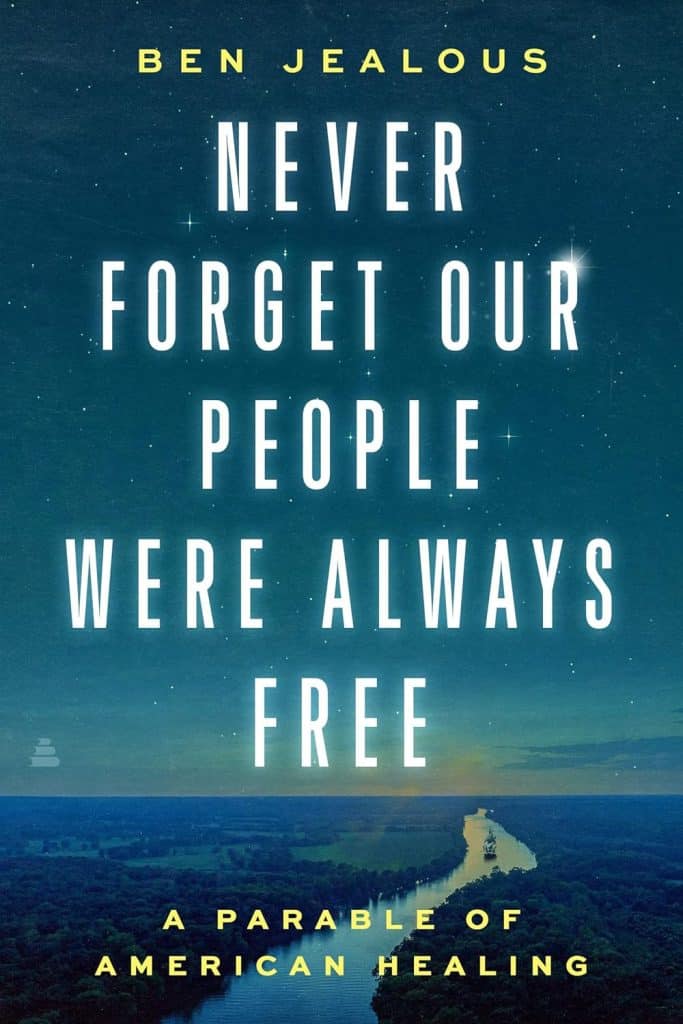
Never Forget Our People Were Always Free

Read: March 2024

Get this book

Never Forget Our People Were Always Free

by Ben Jealous

Today, I started reading “Never Forget Our People Were Always Free: A Parable of American Healing” by Ben Jealous, the Executive Director of the Sierra Club. The book highlights how the path to healing America’s broken heart begins with each of us having the courage to heal ourselves. According to Mr. Jealous, it would be transformative if every American treated each other as cousins.

Ben Jealous is the son of parents who had to leave Maryland because their cross-racial marriage was illegal.

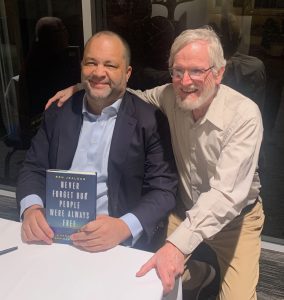
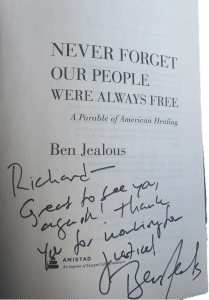
I briefly met Ben Jealous last May when I went to Washington with the Religious Action Center of Reform Judaism‘s Day of Action. When I saw Mr. Jealous speaking at Temple Emanu-El in neighboring Westfield, I immediately signed up to attend in person. He is an inspiration as an advocate for the environment, civil rights, and the healing of America’s broken heart.

His lively, courageous, and empathetic storytelling calls on every American to look past deeply cut divisions and recognize that we are all in the same boat now. Along the way, Jealous grapples with hidden American mysteries, including:

  • Why do white men die from suicide more often than black men die from murder?
  • How did racial profiling kill an American president?
  • What happens when a Ku Klux Klansman wrestles with what Jesus said?
  • How did Dave Chappelle know the DC Snipers were Black?
  • Why shouldn’t the civil rights movement give up on rednecks?
  • When is what we have collectively forgotten about race more important than what we know?
  • What do the most indecipherable things our elders say tell us about ourselves?

The book Never Forget Our People Were Always Free is told through parables. It features intimate glimpses of political and faith leaders such as Jack Kemp, Stacey Abrams, and the late Archbishop Desmond Tutu. The book also highlights unlikely heroes such as a retired constable, a female pirate from Madagascar, a long-lost Irishman, a death row inmate, and a man with a Confederate flag over his heart.
Never Forget Our People Were Always Free offers readers hope that America’s oldest wounds can heal and her oldest divisions can be overcome.

Although I have only read a handful of pages of the book, I highly recommend it!

×
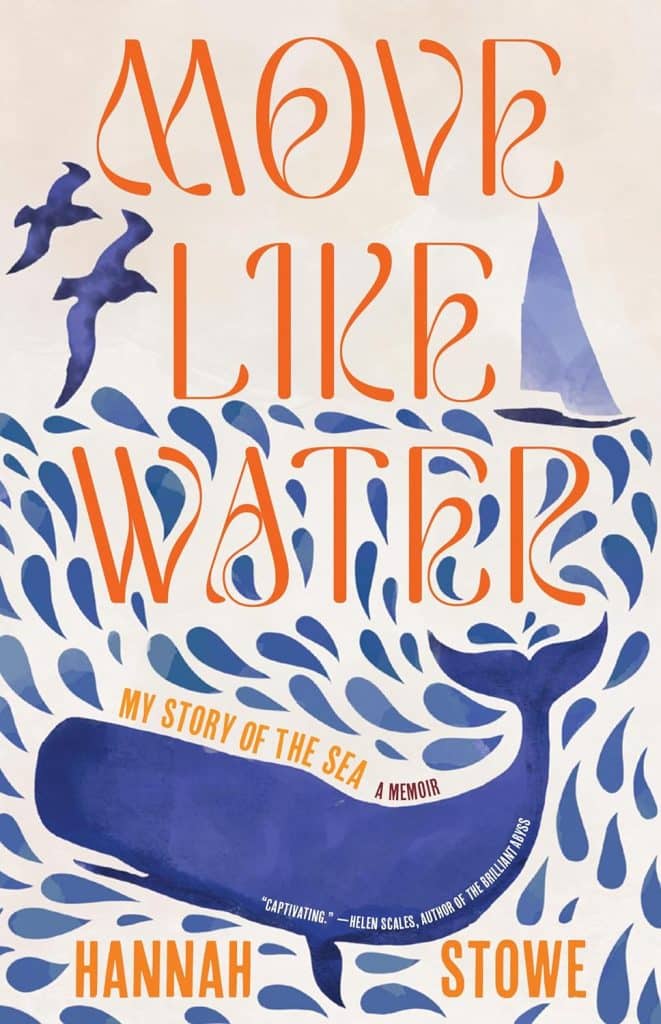
Move Like Water: My Story of the Sea

Read: October 2023

Get this book

Move Like Water: My Story of the Sea

by Hannah Stowe

I recently started reading a book called “Move Like Water: My Story of the Sea” by Hannah Stowe. It’s a captivating book that immerses you in a world of water, whales, storms, and starlight, allowing you to experience what it’s like to sail for weeks and live life to a new rhythm.

Hannah Stowe, a marine biologist and sailor in her mid-twenties, grew up on the Pembrokeshire coast of Wales, where she fell asleep to the sound of the lighthouse beam. Drawing upon her experiences sailing tens of thousands of miles in various seas, including the North Sea, North Atlantic, Mediterranean, Celtic Sea, and the Caribbean, she explores the human connection to the wild waters. Stowe ponders why she and others are drawn to life at sea and what we can learn from the water around us.

Stowe intertwines her narrative and illustrations with stories of six keystone marine creatures: the fire crow, sperm whale, wandering albatross, humpback whale, shearwater, and barnacle. Through these stories, she invites readers to fall in love with the sea and its inhabitants and to discover the majesty, wonder, and fragility of the underwater world.

If you enjoy the works of Rachel Carson and Annie Dillard, then “Move Like Water: My Story of the Sea” is a must-read. It’s an inspiring and heartfelt tribute to the sea, a testimony to pursuing and achieving a dream, and an unforgettable introduction to a talented new nature writer.


The Jan Lilien Education Fund sponsors ongoing sustainability and environmental awareness programs. Gifts made this month; I will match dollar-for-dollar. All donations are tax-deductible.

Subscribe

Contact Us

I receive a commission when you buy a book or product using a link on this page. Thank you for supporting Sharing Jan’s Love blog.


×
The Café with No Name

Read: May 2025

Get this book

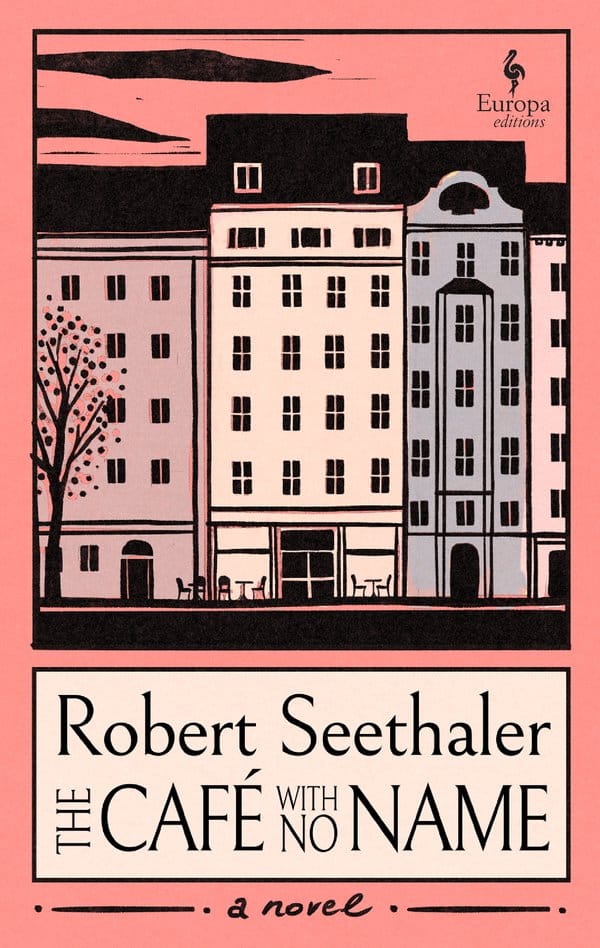
The Café with No Name

by Robert Seethaler

Today, I started reading The Café with No Name by Robert Seethaler, translated by Katy Derbyshire. It’s a vibrant story of love, companionship, and renewal in 1960s Vienna. With warm prose and tender humor, Seethaler has created a delightful parable about human existence, brought to life by unforgettable characters and a rich tapestry of narratives.

In the summer of 1966, Robert Simon was in his early thirties and had a dream. Raised in a home for war orphans, he has grown into a warm-hearted, hard-working, and determined man. When the former owners of the corner café in Carmelite Market Square close the business, Robert sees an opportunity to realize his dream.

The café, dark and dilapidated, is located in an impoverished neighborhood of the Austrian capital. However, a new energy is beginning to fill the air, signaling a desire for renewal. In the newspapers that fishmongers use to wrap char and trout from the Danube, one can read about the great things to come, heralding a bright future emerging from the shadows of the past.

Inspired by this optimism, Robert refurbishes the café. His efforts pay off as customers arrive, drawn to a congenial space where they can gather, talk, read, or sit and reflect. Each visitor brings their passion, friendship, loss, and heartache stories. Some search for companionship, while others long for love or a place to feel understood. As the city transforms, Robert’s café becomes a haven—a refuge from which to observe life, mourn, and rejoice.


Robert Seethaler was born in Vienna in 1966 and is the author of eight novels. In 2017, he was a finalist for the Man Booker International Prize with A Whole Life (FSG, 2016). He also works as an actor, most recently in Paolo Sorrentino’s Youth. He lives in Berlin.

Katy Derbyshire translates contemporary German writers, including Christa Wolf, Heike Geissler, and Olga Grjasnowa. Her translation of Clemens Meyer‘s While We Were Dreaming was longlisted for the 2023 International Booker Prize. She was born in London and has been based in Berlin for over twenty years.


When you purchase a book through one of my links, I earn a small commission that helps support my passion for reading. This contribution allows me to buy even more books to share with you, creating an incredible cycle of discovering great reads together! Your support truly makes a difference!

Enjoy a limited-time offer of 20% off your next book purchase at Bookshop.org!


×
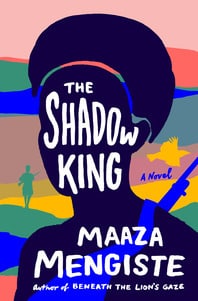
The Shadow King: A Novel

Read: April 2022

Get this book

The Shadow King: A Novel

by Maaza Mengiste

The Shadow King: A Novel by Maaza Mengiste is a book happened to offer two often overlooked threads of history. The first is Mussolini’s 1935 invasion of Ethiopia. The second one I am most interested in is the women soldiers who were left out of the historical record. I highly recommend The Shadow King. It is a gorgeously crafted and unputdownable exploration of female power and what it means to be a woman at war.

Hirut and Aster come alive in Maaza Mengiste talented writing. Their struggles to be seen as equal in a society at war is engaging. Hirut’s plan to create a shadow kingpin the absence of Emperor Haile Selassie is one that turns defeat into victory.

Goodreads provides a good overview of the book.

With the threat of Mussolini’s army looming, recently orphaned Hirut struggles to adapt to her new life as a maid in Kidane and his wife Aster’s household. Kidane, an officer in Emperor Haile Selassie’s army, rushes to mobilize his most muscular men before the Italians invaded. His initial kindness to Hirut shifts into flinty cruelty when she resists his advances. Hirut finds herself tumbling into a new world of thefts and violations, betrayals, and overwhelming rage. Meanwhile, Mussolini’s technologically advanced army prepared for an easy victory. Hundreds of thousands of Italians―Jewish photographer Ettore among them―march on Ethiopia seeking adventure.

As the war begins in earnest, Hirut, Aster, and the other women long to do more than care for the wounded and bury the dead. When Emperor Haile Selassie goes into exile and Ethiopia quickly loses hope, Hirut offers a plan to maintain morale. She helps disguise a gentle peasant as the emperor and soon becomes his guard, inspiring other women to take arms against the Italians. But how could she have predicted her war as a prisoner of one of Italy’s most vicious officers, who would force her to pose before Ettore’s camera?

What follows is a gorgeously crafted and unputdownable exploration of female power, with Hirut as the fierce, original, and brilliant voice at its heart. In incandescent, lyrical prose, Maaza Mengiste breathes life into complicated characters on both sides of the battle line, shaping a heartrending, unforgettable exploration of what it means to be a woman at war.

Subscribe

Contact Us

When you buy a book or product using a link on this page, I receive a commission. Thank you for supporting Sharing Jan’s Love blog.

×
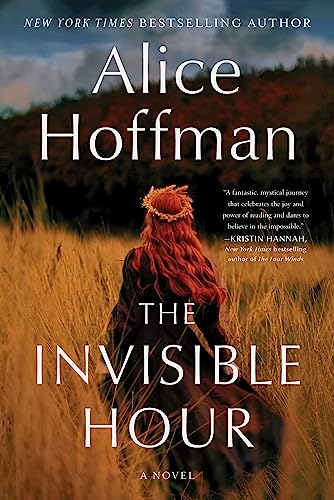
The Invisible Hour: A Novel

Read: August 2023

Get this book

The Invisible Hour: A Novel

by Alice Hoffman

Today I started reading The Invisible Hour by Alice Hoffman. It’s a story about love, heartbreak, self-discovery, and the magic of books. The Invisible Hour is the story of one woman’s dream. For a little while, it came true. Nathaniel Hawthorne wrote: “A single dream is more powerful than a thousand realities.

Mia Jacob finds hope in the power of words on a brilliant June day. She reads The Scarlet Letter, a novel written almost two hundred years earlier, which mirrors her life. Mia and her mother, Ivy, live inside an oppressive cult in western Massachusetts called the Community, where contact with the outside world is forbidden, and books are considered evil. Nathaniel Hawthorne’s words perfectly capture the pain and loss that Mia carries inside her.

As Mia journeys through heartbreak and time, she breaks free from the rules of her Community. Along the way, she discovers the power of reading to transport and connect people, the fluidity of time, and the strength of love to overcome any obstacle.

As a young girl, Mia fell in love with a book. Now as a woman, she falls for a writer as she travels back in time. But what if Nathaniel Hawthorne never wrote “The Scarlet Letter”? What if Mia never found the book on the day she planned to end her life?


The Jan Lilien Education Fund sponsors ongoing sustainability and environmental awareness programs. Gifts made this month; I will match dollar-for-dollar. All donations are tax-deductible.

Subscribe

Contact Us

I receive a commission when you buy a book or product using a link on this page. Thank you for supporting Sharing Jan’s Love blog.


×