New Book: Sea of Tranquility

Estimated reading time: 0 minutes, 0 seconds
Sea of Tranquility

Sea of Tranquility

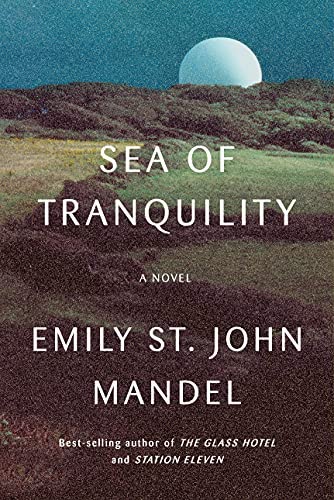
Sea of Tranquility by Emily St. John Mandel has been on my reading list for months. I recommend the book without reservations. Sea of Tranquility is a novel of art, time, love, and plague that takes the reader from Vancouver Island in 1912 to a dark colony on the moon three hundred years later, unfurling a story of humanity across centuries and space. It was a page-turner from page one.

Read book review Get this book All books

Share your thoughts and ideas

This site uses Akismet to reduce spam. Learn how your comment data is processed.

The Jan Lilien Education Fund!

Sea of Tranquility

Read: September 2022

Get this book

Sea of Tranquility

by Emily St. John Mandel

Sea of Tranquility by Emily St. John Mandel has been on my reading list for months. I recommend the book without reservations. Sea of Tranquility is a novel of art, time, love, and plague that takes the reader from Vancouver Island in 1912 to a dark colony on the moon three hundred years later, unfurling a story of humanity across centuries and space. It was a page-turner from page one.

With the delay of Artemis I, I have been thinking a lot about the Sea of Tranquility, the original lunar landing site. Sea of Tranquility reminded me of the days of my youth when we believed that NASA would colonize the moon as it is in the novel.

One of the passages that moved me was when Olive Llewellyn asked, “What if it always is the end of the world.” A second profound passage asks, “A life lived in a simulation is still a life.

The Goodreads summary provides a good overview,

Edwin St. Andrew is eighteen years old when he crosses the Atlantic by steamship, exiled from polite society following an ill-conceived diatribe at a dinner party. He enters the forest, spellbound by the beauty of the Canadian wilderness, and suddenly hears the notes of a violin echoing in an airship terminal—an experience that shocks him to his core.

Two centuries later a famous writer named Olive Llewellyn is on a book tour. She’s traveling all over Earth, but her home is the second moon colony, a place of white stone, spired towers, and artificial beauty. Within the text of Olive’s bestselling pandemic novel lies a strange passage: a man plays his violin for change in the echoing corridor of an airship terminal as the trees of a forest rise around him.

When Gaspery-Jacques Roberts, a detective in the Night City, is hired to investigate an anomaly in the North American wilderness, he uncovers a series of lives upended: The exiled son of an earl driven to madness, a writer trapped far from home as a pandemic ravages Earth, and a childhood friend from the Night City who, like Gaspery himself, has glimpsed the chance to do something extraordinary that will disrupt the timeline of the universe.


The Jan Lilien Education Fund sponsors ongoing sustainability and environmental awareness programs. Gifts made this month; I will match dollar-for-dollar. All donations are tax-deductible.

Subscribe

Contact Us

I receive a commission when you buy a book or product using a link on this page. Thank you for supporting Sharing Jan’s Love blog.

×
The Corrections: A Novel

Read: September 2024

Get this book

The Corrections: A Novel

by Jonathan Franzen

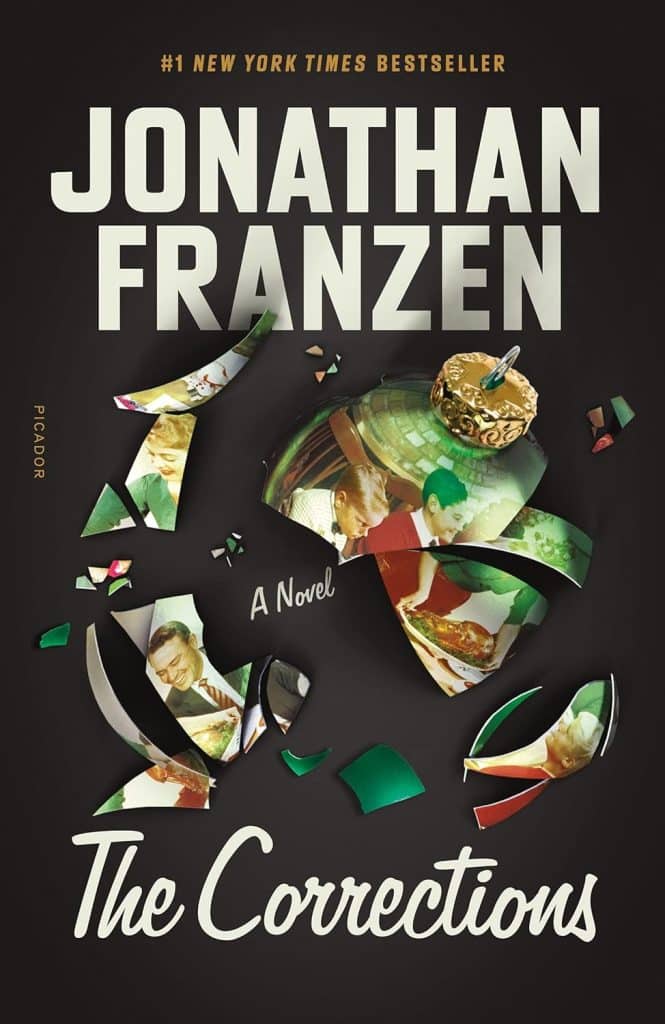
Today, I embarked on a profound exploration of the human condition through Jonathan Franzen‘s ‘The Corrections: A Novel.’ It guides us from the heart of the Midwest in the mid-century to the bustling streets of Wall Street and the enigmatic landscapes of Eastern Europe. It’s no surprise that it’s hailed as one of The New York Times 100 Best Books of the 21st Century.

Jonathan Franzen‘s ‘The Corrections: A Novel‘ is not just a family saga but a profound critique of our modern society. It’s a work of art that delves into the issues of our new century, enlightening us with its insights. Franzen masterfully juxtaposes the old-fashioned America of freight trains, civic responsibility, and holiday treats with the modern absurdities of neuroscience, home surveillance, hands-off parenting, DIY mental health care, and the anti-gravity New Economy. It’s a narrative that will evoke laughter, tears, and deep contemplation. Through ‘The Corrections,’ Franzen establishes himself as one of the leading interpreters of American society and the American spirit.

Enid Lambert is distraught. She conceals her anxiety from her neighbors and adult children, but her husband, Alfred, is slipping into a world of his own. Whether it’s the medication for his Parkinson’s disease or his pessimism, he’s becoming increasingly detached. His days are spent brooding in the basement, engaging in mysterious, unsettling actions, and struggling to understand Enid’s words. The depth of their struggle is palpable, drawing the reader into their world.

Trouble also brews in the lives of Enid’s children. Her eldest son, Gary, a banker in Philadelphia, has become callous and materialistic, trying to push his parents out of their old home and into a small apartment. The middle child, Chip, has abruptly quit his exciting job as a professor at D—— College for no discernible reason. He moved to New York City, seemingly embracing a “transgressive” lifestyle while working on a screenplay. Meanwhile, the youngest, Denise, has left her disastrous marriage only to waste her youth and beauty on an affair with a married man—or so Gary implies.

Enid, a lover of life’s pleasures, still looks forward to a final family Christmas and the upcoming Nordic Pleasurelines Luxury Fall Color Cruise with Alfred. However, his growing confusion and instability threaten these remaining joys. As Alfred’s condition worsens, the Lamberts must confront their family’s past failures, secrets, and long-buried wounds. Yet, in this journey of confrontation and reconciliation, the hope for a better future emerges.

×
Autocorrect

Read: August 2025

Get this book

Autocorrect: Stories

by Etgar Keret

“Autocorrect” by Etgar Keret, a prominent figure in Israeli literature and film, is a darkly humorous collection of stories that delves into themes of identity, reality, and meaning. These narratives resonate with our current times, characterized by uncertainty and fragility, marked by misunderstandings and miscommunications, as we seek reasons and the strength to foster hope.

Etgar Keret‘s stories reveal the fault lines and uncomfortable truths in our society, all delivered in a style that is uniquely his own. He is the world’s most renowned living Israeli writer, known for his lean and accessible short stories that often blend whimsy, surrealism, and dark humor. Keret’s work explores the most minor and seemingly mundane aspects of life in profound and unusual ways.

The characters in his fiction face relatable challenges in work and relationships. They inhabit a world filled with rapidly advancing technology, yet the base nature of human passions and brutality repeatedly undermines this world. For instance, one character’s partner is a reality show contestant from a parallel dimension. At the same time, another discovers that the asteroid he paid to have named after his wife is on a collision course with Earth. In another story, an elderly widow persuades a popular AI program to commit suicide.


Etgar Keret, born in Ramat Gan in 1967, is a prominent figure in Israeli literature and film. Translated into more than forty languages, his writing has appeared in well-known publications such as The New York Times, Le Monde, and The New Yorker. He has received several prestigious awards, including the Caméra d’Or at the Cannes Film Festival in 2007, the Charles Bronfman Prize in 2016, and the esteemed Sapir Prize in 2018.

More than a hundred captivating short films and several remarkable feature films have brought his stories to life on the big screen. Keret teaches creative writing at Ben-Gurion University of the Negev. Since 2021, he has also been publishing a weekly newsletter titled “Alphabet Soup” on Substack.


When you purchase a book through one of my links, I earn a small commission that helps support my passion for reading. This contribution allows me to buy even more books to share with you, creating an incredible cycle of discovering great reads together! Your support truly makes a difference!

Enjoy a limited-time offer of 20% off your next book purchase at Bookshop.org!


×
There Is No Place for Us

Read: April 2025

Get this book

There Is No Place for Us

by Brian Goldstone

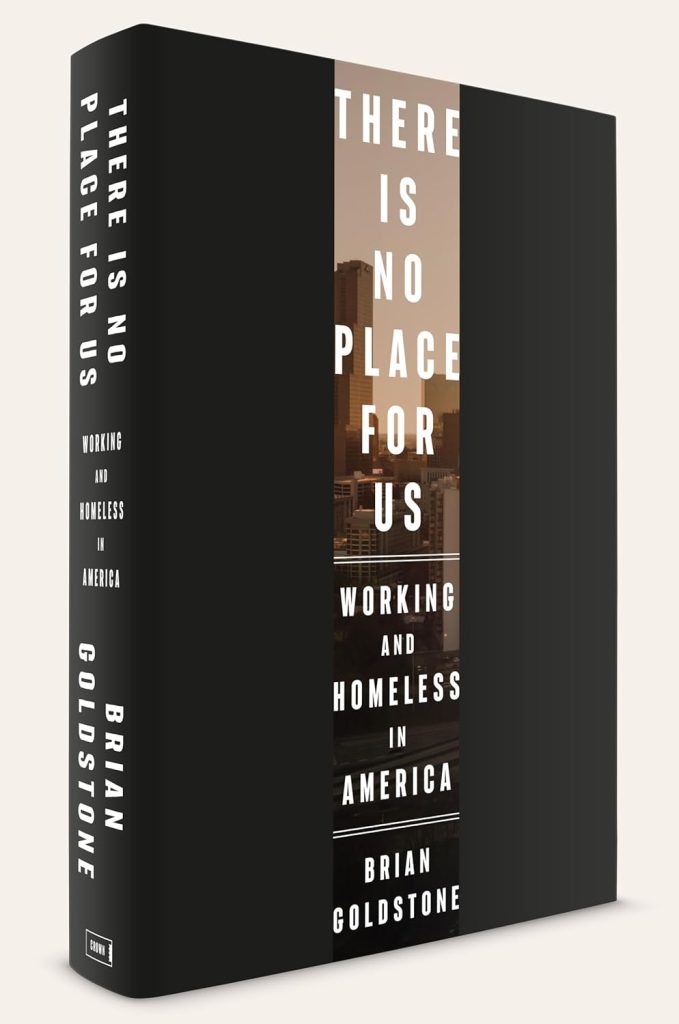
Today, I delved into There Is No Place for Us by Brian Goldstone, a poignant exploration of America’s escalating homelessness crisis. Goldstone’s examination of the issue’s scale, root causes, and consequences is a wake-up call, passionately arguing that housing must be recognized as a fundamental human right. His compelling narrative demands our immediate attention and action.

The phrase “the working homeless” serves as a stark reminder of the urgency of America’s homelessness crisis. In a country where hard work and determination are expected to lead to success, it is scandalous that individuals with full-time jobs struggle to maintain stable housing. Rising rents, low wages, and insufficient tenant rights have contributed to this alarming trend. Families are facing homelessness not due to a failing economy but because of a thriving one.

In his compelling and thoroughly researched book, Brian Goldstone explores the lives of five families in Atlanta. Maurice and Natalia attempt to rebuild their lives in the country’s “Black Mecca” after being priced out of Washington, D.C. Kara aspires to become an entrepreneur while working at a public hospital. Britt has secured a much-coveted housing voucher. Michelle is studying to become a social worker. Celeste works tirelessly at her warehouse job while battling ovarian cancer. Each of these individuals strives to provide a decent life for their children. Yet, one by one, they find themselves among the nation’s working homeless, demonstrating their resilience and the system’s failures.

Through intimate, novelistic portrayals, Goldstone exposes the human cost of this crisis, following parents and their children as they sleep in cars or squalid extended-stay hotel rooms, then head to their jobs and schools the next day. These are the nation’s hidden homeless—people often omitted from official statistics—showing that overflowing shelters and street encampments represent only the most visible aspects of a much larger problem.


Brian Goldstone is a journalist whose long-form reporting and essays have appeared in The New York Times, Harper’s Magazine, The New Republic, The California Sunday Magazine, and Jacobin, among other publications. He has a PhD in anthropology from Duke University and was a Mellon Research Fellow at Columbia University. In 2021, he was a National Fellow at New America. He lives in Atlanta with his family.


When you purchase a book through one of my links, I earn a small commission that helps support my passion for reading. This contribution allows me to buy even more books to share with you, creating an incredible cycle of discovering great reads together! Your support truly makes a difference!

Enjoy a limited-time offer of 20% off your next book purchase at Bookshop.org!


×
Lessons in Chemistry

Read: January 2023

Get this book

Lessons in Chemistry: A Novel

by Bonnie Garmus

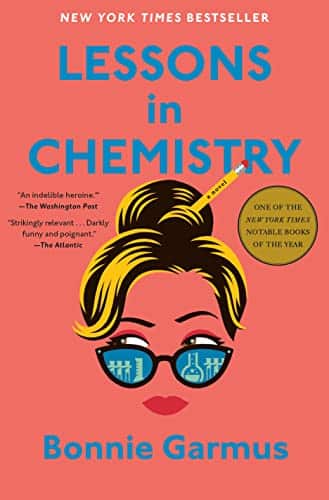
Lessons in Chemistry: A Novel by Bonnie Garmus is a must-read book as it reimagines the gender dynamics of the 1950s and early 1960s. Elizabeth Zott, a chemist, struggles in a male-dominated world where her work is not taken seriously until she meets Calvin Evans. She describes their relationship, “Calvin and I were soulmates,” like Jan and I viewed ours.

What underlies their love affair was “a mutual respect for the other’s capabilities.” “Do you know how extraordinary that is?” she said. That a man would treat his lover’s work as seriously as his own?” Of course, every relationship should be based on the same dynamics, but even after seventy years, we still struggle to achieve equality in our society.

I highly recommend this novel. Reading the story, the Zott/Evans relationship reminded me of the love that Jan and I shared. I know that Jan would have loved this book.

Laugh-out-loud funny, shrewdly observant, and studded with a dazzling cast of supporting characters, Lessons in Chemistry is as original and vibrant as its protagonist. Like Jan, Elizabeth Zott, the protagonist, would be the first to point out that there is no such thing as an average woman. Chemist Elizabeth Zott is not your average woman.

Although Jan and Elizabeth had much in common, I felt Madeline (aka Mad), Elizabeth’s daughter, was Jan’s alter ego in this novel. Jan was smart and ahead of her classmates, just like Mad was. She was breaking barriers when she was Mad’s age.

I also connected to Six Thirty, the dog. Like Oscar, Six Thirty was more intelligent than the average dog.

Lessons in Chemistry has been the number one best-selling book in the New York Times for thirty-four weeks.

The Goodreads summary provides an overview,

It’s the early 1960s and Elizabeth Zott’s all-male team at Hastings Research Institute takes a very unscientific view of equality. Except for one: Calvin Evans, the lonely, brilliant, Nobel–prize-nominated grudge-holder who falls in love with—of all things—her mind. True chemistry results.

But like science, life is unpredictable. Which is why a few years later Elizabeth Zott finds herself not only a single mother, but the reluctant star of America’s most beloved cooking show Supper at Six. Elizabeth’s unusual approach to cooking (“combine one tablespoon acetic acid with a pinch of sodium chloride”) proves revolutionary. But as her following grows, not everyone is happy. Because as it turns out, Elizabeth Zott isn’t just teaching women to cook. She’s daring them to change the status quo.


The Jan Lilien Education Fund sponsors ongoing sustainability and environmental awareness programs. Gifts made this month; I will match dollar-for-dollar. All donations are tax-deductible.

Subscribe

Contact Us

I receive a commission when you buy a book or product using a link on this page. Thank you for supporting Sharing Jan’s Love blog.


×
A Sovereign People: The Crises of the 1790s and the Birth of American Nationalism

Read: February 2019

Get this book

A Sovereign People: The Crises of the 1790s and the Birth of American Nationalism

by Carol Berkin

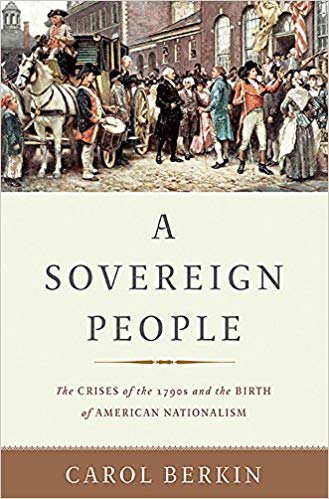
A Sovereign People: The Crises of the 1790s and the Birth of American Nationalism by Carol Berkin, Presidential Professor American Colonial and Revolutionary History; Women’s History Professor at Baruch College, focuses on four crises in the first decade. Most historians view these are part of the early partisan debates in America.

Professor Berkin takes a different perspective. She focuses on how the Whiskey Rebellion, the Genet Affair, the XYZ Affair, and the Alien and Sedition Acts helped build nationalism. Despite the partisan divisions, both sides could find solutions that helped America survive its first decade. The failure to resolve anyone of these could have doomed America to failure.

The Federalists – Washington, Hamilton, and Adams – were the leaders of that first decade and managed the successive crisis of sovereignty.

A Sovereign People is one of four books from my first One Day University class.

Subscribe

Contact Us

×
Corey Fah Does Social Mobility

Read: February 2024

Get this book

Corey Fah Does Social Mobility

by Isabel Waidner

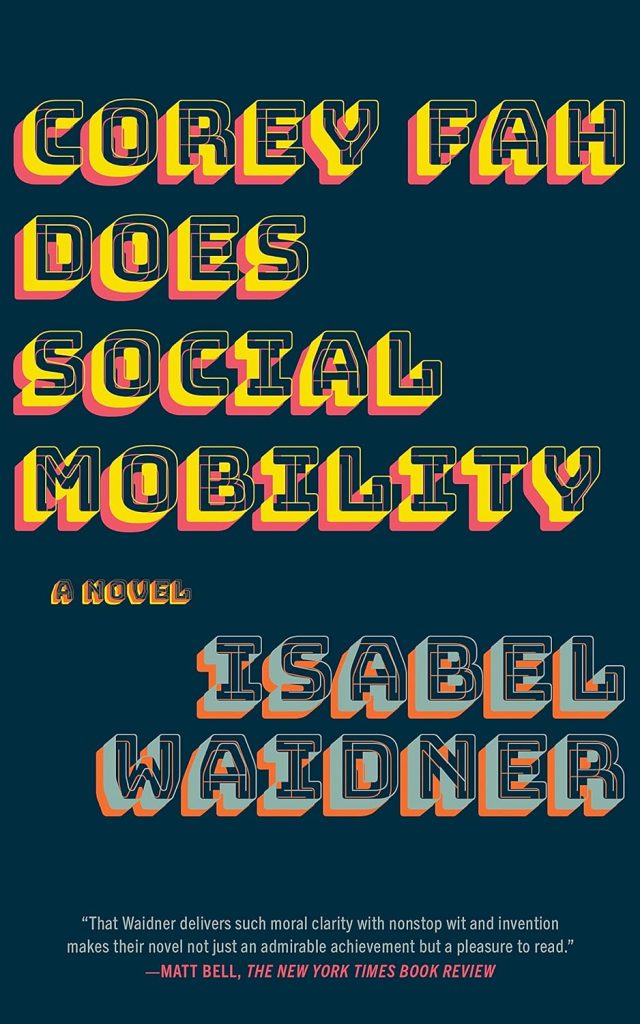
Today, I began reading “Corey Fah Does Social Mobility: A Novel” by Isabel Waidner. The book is about Corey Fah, a writer whose novel has just won the Fictionalization of Social Evils prize. Despite this achievement, the trophy and funds with the award still need to be in reach. The novel celebrates radical queer survival and challenges false notions of success.

Corey, their partner Drew, and their pet spider, Bambi Pavok, embark on a quest to find an elusive trophy with neon-beige color and UFO-like qualities. This journey takes them back to their childhood in the forest and includes a stint on a reality TV show. While facing the horrors of wormholes and time loops, Corey discovers the difference between a prize and a gift in a complex way.

Following the Goldsmiths Prize–winning Sterling Karat Gold, Isabel Waidner’s bold and buoyant new novel is about coming into one’s own, the labor of love, the tendency of history to repeat itself, and what ensues when a large amount of cultural capital is suddenly deposited in a place it has never been before.

×