

Passover

Living in the Present

Estimated reading time: 1 minute, 25 seconds

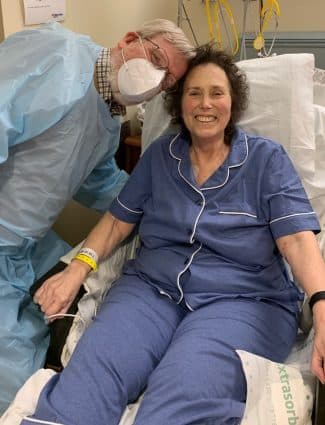
On the first night of Passover in 2021, Jan, my wife, was hospitalized, and I was not allowed to visit her due to COVID-19 restrictions. She came home on the fourth night, but unfortunately, on the seventh night, she had to be re-admitted, and I was again not allowed to stay with her. I left the hospital feeling helpless and alone, thinking that I might never see her alive again.

As we gather for our Passover Seders this week, let us remember that this is a story of liberation. As Jews, we were once enslaved, but now we are free people. As I sat down to read the Haggadah, I found myself initially just looking at the photographs as if they were a picture book, but as I continued, the words of our liberation from Egypt began to come into focus. I prayed for my wife’s return, and when she did come back home a week later, it was for hospice care as she was in her final days.

Grief has been my most outstanding teacher. Through the pain of losing my wife, I have learned that God gave us three incredible gifts: ears to listen, arms to embrace, and feet to walk into the future. Though the future is unknowable, I choose to listen, embrace, and walk into it with strength and courage.

The story of liberation is not only about our struggle to leave Egypt but also about our need to live in the present, not the past, and to embrace the future. As we celebrate Passover, let us remember that it is a time of freedom and liberation, and may we all find hope and strength in our stories of resilience and perseverance.
Learning From Grief

Though grief was a challenging experience, I found the courage to move forward and learn more about myself and the world around me. As a result, I gained a greater appreciation for my resilience and growth potential as I navigated the world alone.

Show thread (1)

1 comment add your comment

Share your thoughts and ideas

This site uses Akismet to reduce spam. Learn how your comment data is processed.

The Jan Lilien Education Fund!

Passover
×
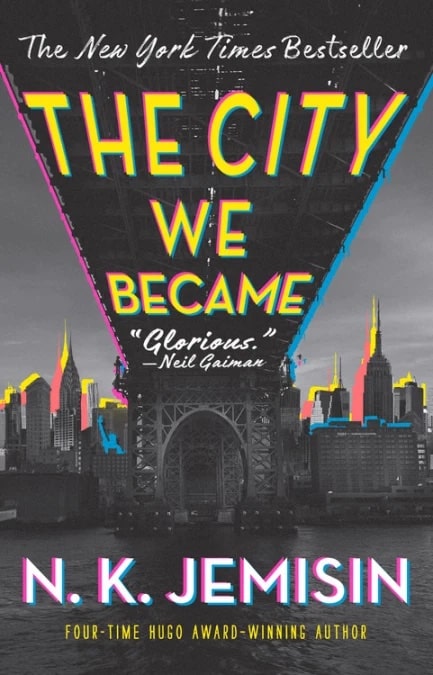
The City We Became

Read: October 2021

Get this book

The City We Became: A Novel

by N. K. Jemisin

The City We Became: A Novel by N. K. Jemisin is my first science fiction and urban fantasy novel in quite some time. It is a story of culture, identity, magic, and myths in contemporary New York City. Jan and I had lived in New York City, and the book brought back fond memories.

Every great city has a soul. Some are ancient as myths, and others are as new and destructive as children.

But every City also has a dark side. A roiling, ancient evil stirs beneath the earth, threatening to destroy the City and her five protectors unless they can come together and stop it once and for all.

As Jemisin writes:

A city is never alone, not really — and this city seems less solitary than most. More like a family: many parts, frequently squabbling … but in the end, against enemies, they come together to protect one another. They must, or die.

The challenge is when evil forces threaten the City; the entire community needs to unite, and the City’s avatars for each of the five boroughs.

Initially, this is supposed to be one for each borough and one for the entire City. In the end, one of the avatars for the five boroughs chooses not to unite with the others. Without all six, they stand no chance to defeat the forces of evil.

How do they solve this? By adding the sixth borough – Jersey City.

I recommend this book without reservation.

When you buy a book or product using a link on this page, I receive a commission. Thank you for supporting Sharing Jan’s Love blog.

Subscribe

Contact Us

×
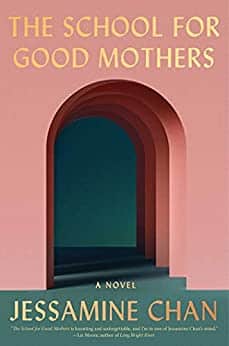
The School for Good Mothers

Read: February 2023

Get this book

The School for Good Mothers

by Jessamine Chan

The School for Good Mothers by Jessamine Chan is a searing page-turner that is also a transgressive novel of ideas about the perils of “perfect” upper-middle-class parenting; the violence enacted upon women by both the state and, at times, one another; the systems that separate families; and the boundlessness of love, The School for Good Mothers introduces, in Frida, an everywoman for the ages.

Although it has been forty-two years since I became a parent, I still remember the anxiety of being a father. What if I could not be a good dad? Fortunately, I never had a bad like Frida. or lived in an age where parents would be sent to “a Big Brother-like institution that measures the success or failure of a mother’s devotion.”

Reading The School for Good Mothers was a reminder that solutions like this are possible unless we are willing to invest in families so that the skills and support are there to resolve any issues in the home. As a widow, I found Frida’s inner dialogue comparable to the early stages of my grief journey—the total isolation and fear of failing dominated my first months of mourning.

The School for Good Mothers had been on my book list since the middle of last year. I recommend it without reservations! Jan would have already read it, and we would be debating its fine points.

The Goodreads summary provides an overview,

In this taut and explosive debut novel, one lapse in judgement lands a young mother in a government reform program where custody of her child hangs in the balance.

Frida Liu is struggling. She doesn’t have a career worthy of her Chinese immigrant parents’ sacrifices. She can’t persuade her husband, Gust, to give up his wellness-obsessed younger mistress. Only with Harriet, their cherubic daughter, does Frida finally attain the perfection expected of her. Harriet may be all she has, but she is just enough.

Until Frida has a very bad day.

The state has its eyes on mothers like Frida. The ones who check their phones, letting their children get injured on the playground; who let their children walk home alone. Because of one moment of poor judgment, a host of government officials will now determine if Frida is a candidate for a Big Brother-like institution that measures the success or failure of a mother’s devotion.

Faced with the possibility of losing Harriet, Frida must prove that a bad mother can be redeemed. That she can learn to be good.

Using dark wit to explore the pains and joys of the deepest ties that bind us, Chan has written a modern literary classic.


The Jan Lilien Education Fund sponsors ongoing sustainability and environmental awareness programs. Gifts made this month; I will match dollar-for-dollar. All donations are tax-deductible.

Subscribe

Contact Us

I receive a commission when you buy a book or product using a link on this page. Thank you for supporting Sharing Jan’s Love blog.


×
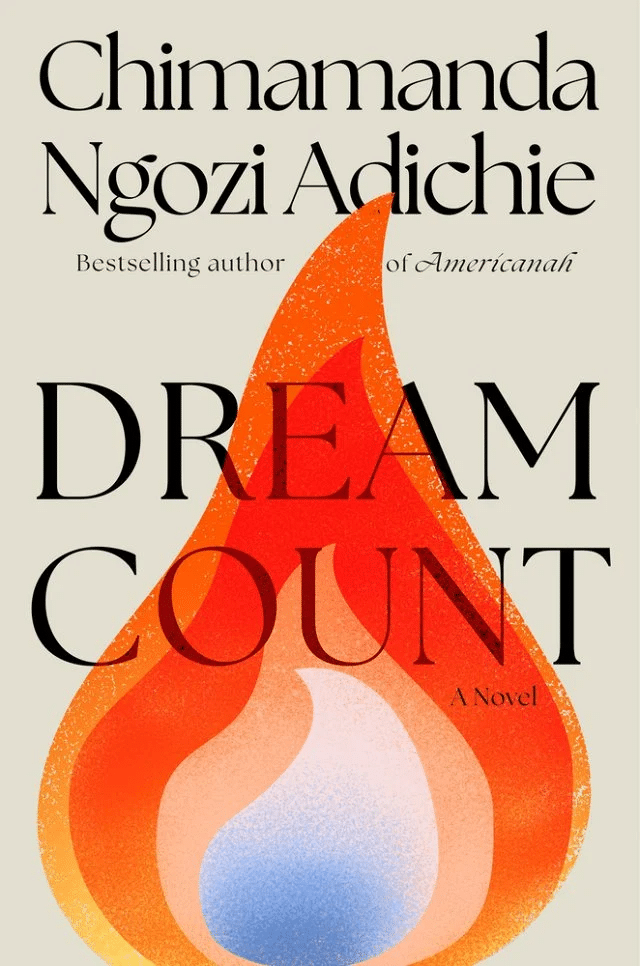
Dream Count

Read: March 2025

Get this book

Dream Count: A Novel

by Chimamanda Ngozi Adichie

Today, I dove into “Dream Count” by Chimamanda Ngozi Adichie, and I couldn’t be more excited! A decade in the making, this novel promises to be a captivating journey. Known for her bestselling works like “Americanah” and “We Should All Be Feminists,” Adichie brings her trademark brilliance to this story of four women exploring their loves, longings, and desires. I can’t wait to see how their lives unfold!

Chiamaka is a Nigerian travel writer living in America. During the pandemic, feeling alone, she reflects on her past lovers and grapples with her choices and regrets. Her best friend Zikora, a successful lawyer, faces betrayal and heartbreak, leading her to turn to the person she thought she needed the least. Omelogor, Chiamaka’s bold and outspoken cousin, is a financial powerhouse in Nigeria who begins to question how well she truly knows herself. Meanwhile, Kadiatou, Chiamaka’s housekeeper, proudly raises her daughter in America yet must confront an unimaginable hardship that threatens everything she has worked to achieve.

In “Dream Count,” Chimamanda Ngozi Adichie focuses on these women’s lives in a captivating and profound novel that explores the very nature of love. Is true happiness ever attainable, or is it merely a fleeting state? How honest must we be with ourselves to love and be loved? The story profoundly reflects on our choices and those made for us, mothers and daughters, and our interconnected world. “Dream Count” resonates with emotional urgency and provides poignant, unflinching observations of the human heart, all conveyed in beautifully powerful language. This work reaffirms Adichie’s status as one of contemporary literature’s most exciting and dynamic writers.


Chimamanda Ngozi Adichie grew up in Nigeria. Her work has been translated into more than fifty-five languages. She is the author of the novels “Purple Hibiscus,” which won the Commonwealth Writers’ Prize; “Half of a Yellow Sun,” which was the recipient of the Women’s Prize for Fiction “Best of the Best” award; Americanah, which won the National Book Critics Circle Award; the story collection “The Thing Around Your Neck” and the essays We Should All Be Feminists and Dear Ijeawele, or A Feminist Manifesto in Fifteen Suggestions. Her most recent work is an essay about losing her father, Notes on Grief, and Mama’s Sleeping Scarf, a children’s book by Nwa Grace-James. A recipient of a MacArthur Fellowship, she divides her time between the United States and Nigeria.


When you purchase a book through one of my links, I earn a small commission that helps support my passion for reading. This contribution allows me to buy even more books to share with you, creating an incredible cycle of discovering great reads together! Your support truly makes a difference!

×
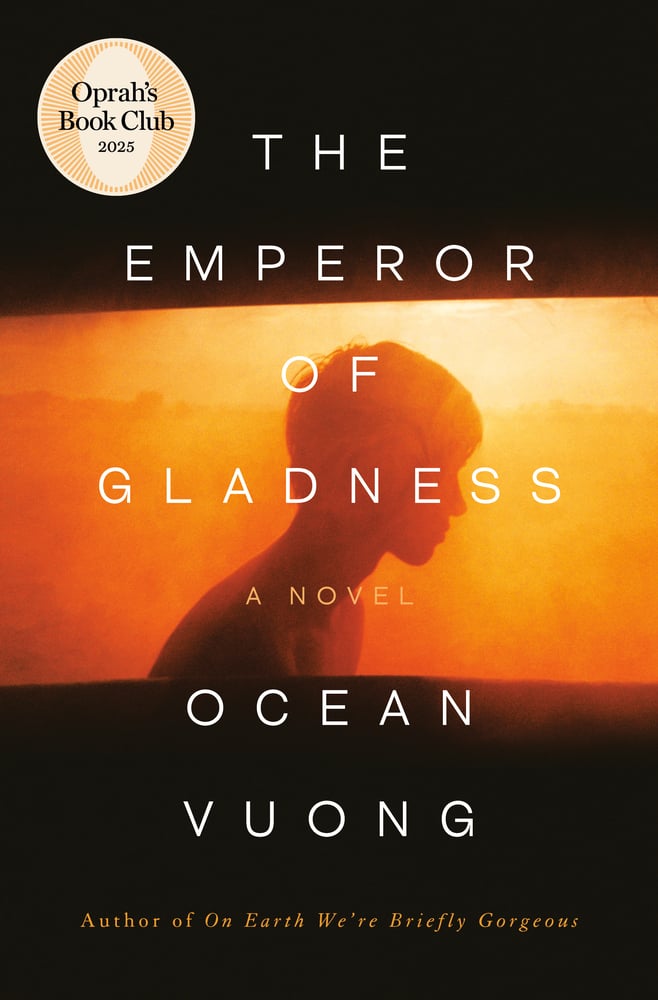
The Emperor of Gladness

Read: May 2025

Get this book

The Emperor of Gladness

by Ocean Vuong

In “The Emperor of Gladness,” Ocean Vuong explores the interconnected themes of history, memory, and time, revealing how love, labor, and loneliness are the foundation of American life. At its core, the narrative presents a courageous epic that examines what it means to live on the margins of society and confront the wounds that affect our shared humanity. It highlights the lengths we are willing to go to grasp one of life’s most fleeting gifts: a second chance.

One late summer evening in the post-industrial town of East Gladness, Connecticut, nineteen-year-old Hai stands on the edge of a bridge in pelting rain, ready to jump, when he hears someone shout across the river. The voice belongs to Grazina, an elderly widow succumbing to dementia, who convinces him to take another path. Bereft and out of options, he quickly becomes her caretaker. Over the year, the unlikely pair develops a life-altering bond, one built on empathy, spiritual reckoning, and heartbreak, with the power to transform Hai’s relationship with himself, his family, and a community on the brink.

Hallmarks of Ocean Vuong‘s writing—formal innovation, syntactic dexterity, and the ability to twin grit with grace through tenderness—are on full display in this story.


Ocean Vuong is the author of the critically acclaimed poetry collections Night Sky with Exit Wounds and Time Is a Mother, as well as the New York Times bestselling novel On Earth We’re Briefly Gorgeous. A recipient of the MacArthur Fellowship and the American Book Award, he once worked as a fast-food server, which inspired The Emperor of Gladness. Born in Saigon, Vietnam, he currently splits his time between Northampton, Massachusetts, and New York City.


When you purchase a book through one of my links, I earn a small commission that helps support my passion for reading. This contribution allows me to buy even more books to share with you, creating an incredible cycle of discovering great reads together! Your support truly makes a difference!


×
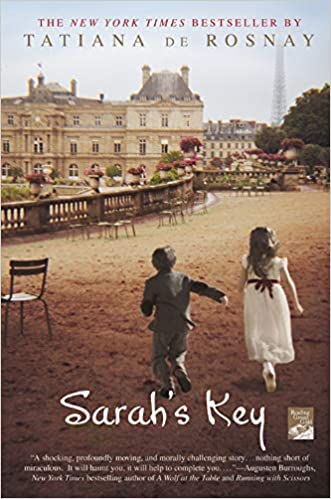
Sarah's Key

Read: January 2022

Get this book

Sarah’s Key

by Tatiana de Rosnay

Sarah’s Key by Tatiana de Rosnay is the untold story of the roundup of the Jews in Paris in July 1942. The novel focuses on how the French were complicit in rounding up thousands of Jews in 1942. It is also a reminder that we can never allow another genocide. I finished this book the day before Holocaust Remembrance Day, January 27, the date on which the Auschwitz-Birkenau concentration and death camp complex was liberated in 1945.

Ten-year-old Sarah is brutally arrested with her family in the Vel’ d’Hiv’ roundup, the most notorious act of French collaboration with the Nazis. But before the police come to take them, Sarah locks her younger brother, Michel, in their favorite hiding place, a cupboard in the family’s apartment. She keeps the key, thinking she will be back within a few hours.

Paris, May 2002: On Vel’ d’Hiv’s sixtieth anniversary, Julia Jarmond, an American journalist, is asked by her Paris-based American magazine to write an article about this black day in France’s past. Julia has lived in Paris for nearly twenty-five years and married a Frenchman, and she is shocked both by her ignorance about the event and the silence that still surrounds it.

The twin narratives of Sarah and Julia hold the first two-thirds of the book together and make it a page-turner. Sarah’s memory reminds us during the final third of the book and ensures that the complete story of the Vel’ d’Hiv’ roundup and its lasting impact are told.

As Goodreads describes the novel,

In the course of her investigation, she stumbles onto a trail of long-hidden family secrets that connects her to Sarah. Julia finds herself compelled to retrace the girl’s ordeal, from the terrible days spent shut in at the Vel’ d’Hiv’ to the camps and beyond. As she probes into Sarah’s past, she begins to question her own place in France and to reevaluate her marriage and her life.

Writing about the fate of her country with a pitiless clarity, Tatiana de Rosnay offers us a brilliantly subtle, compelling portrait of France under occupation and reveals the taboos and denial surrounding this painful episode in French history.

I highly recommend the book.

Subscribe

Contact Us

When you buy a book or product using a link on this page, I receive a commission. Thank you for supporting Sharing Jan’s Love blog.

×
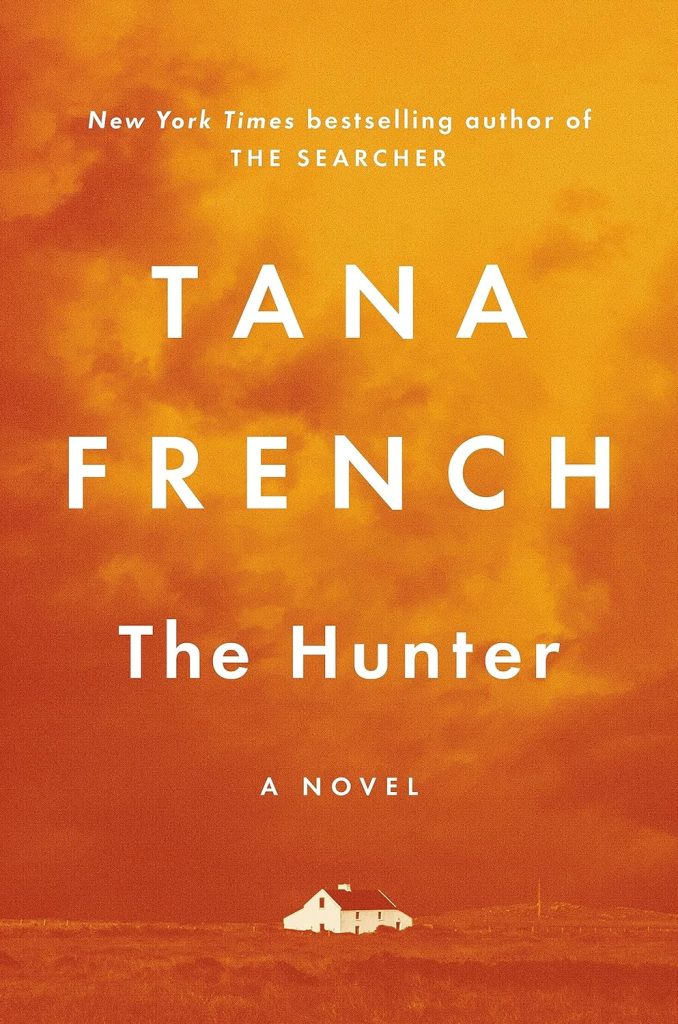
The Hunter: A Novel

Read: March 2024

Get this book

The Hunter: A Novel

by Tana French

Today, I began reading “The Hunter: A Novel” by Tana French, often called the Queen of Irish crime fiction. The story takes place in a small village in the West of Ireland during a hot summer. Two men arrive, one returning home and the other seeking riches. However, one of them is also seeking death.

Cal Hooper is a retired Chicago police officer who moved to rural Ireland for a peaceful life. He has built a relationship with a local woman named Lena and has been mentoring Trey Reddy, a troubled teenager on a better path. But when Trey’s long-lost father returns, accompanied by an English millionaire and a plan to find gold in the townland, everything they have built is threatened. Cal and Lena are willing to do whatever it takes to protect Trey, but Trey is not interested in protection. What she wants is revenge.

This novel, written by the acclaimed author described by The New York Times as “in a class by herself,” tells a nuanced and atmospheric tale about what we are willing to do for our loved ones, what we will do for revenge, and what we may have to sacrifice when the two collide.

×