
I need to Be as Confident as Wes!

I Need to Be as Confident as Wes!

Living Fully and Managing Risk After Loss

Estimated reading time: 1 minute, 54 seconds
I need to Be as Confident as Wes!

I need to Be as Confident as Wes!

On Sunday, September 3, 2023, my grandson Wes will turn fourteen months old. This day will also mark twenty-eight months since the passing of my wife. Since Wes was born, I have chosen to celebrate his life instead of focusing on the loss of my wife.

It has been over two years, but I still remember feeling overwhelmed and unsure of what to do after my wife passed away. I was scared to take risks and missed opportunities that could have helped me return to my everyday life. Fear of failure and moving on too quickly kept me from progressing.

Throughout my life, I have always taken risks. One of the most significant risks I ever took was teaming up with Hanson Park to create a beautiful memorial garden for my late wife. It was a great decision, and I gained more self-confidence and made new friends.

However, since my wife’s passing, I have become more cautious and tend to ask myself what Jan would want me to do. But the truth is, I already know the answer to that question. Jan wants me to continue living my life, being a good parent, and improving the world.

As the double commemoration draws near this Sunday, I am inspired to take risks and embrace the confidence of my grandson, Wes. His fearless crawl through the tunnel, guided by his father’s encouragement and support, has instilled in me a belief in myself. With the unwavering support of my loved ones, including my family, chosen family, friends, and neighbors, I am prepared to seize every opportunity and live life to the fullest. I will honor my wife by living with courage and conviction, just as she would have wanted.


The Jan Lilien Education Fund sponsors ongoing sustainability and environmental awareness programs. Gifts made this month; I will match dollar-for-dollar. All donations are tax-deductible.

Subscribe

Contact Us

I receive a commission when you buy a book or product using a link on this page. Thank you for supporting Sharing Jan’s Love blog.


Jan’s Memorial Garden

Working with the Hanson Park Conservancy, we have taken significant steps in building Jan's Memorial Triangle Garden at Hanson Park including installing the Wind Sculpture.

Show thread (1)

I Choose to Live Fully

Living Fully and Managing Risk After Loss

Estimated reading time: 1 minute, 54 seconds

I Choose to Live Fully

As I prepare to attend the High Holiday services for the third time since my loved one passed away, I reflect on my choice to live. It is a simple choice but one that carries great significance. I choose life so that future generations may also have the opportunity to live and thrive. I refuse to be consumed by death and negativity. Instead, I strive to make the most of the life I have been given. My mantra is always to be kind, to lend my strength to others, and to never dwell on weakness. I choose, now and daily, to live with purpose and intention.

1 comment add your comment

Share your thoughts and ideas

This site uses Akismet to reduce spam. Learn how your comment data is processed.

The Jan Lilien Education Fund!

I need to Be as Confident as Wes!
×
Hostage: A Memoir

Read: October 2025

Get this book

Hostage: A Memoir

by Eli Sharabi

In a raw and unflinching memoir, Eli Sharabi, a survivor of 491 days in Hamas captivity, recounts his harrowing ordeal in “Hostage: A Memoir.” He was abducted from Kibbutz Be’eri on October 7, 2023. In this powerful narrative, he shares the profound loss of his wife and daughters along with his unwavering determination to survive. Comparisons can be drawn to Elie Wiesel‘s “Night” and Laura Hillenbrand‘s “Unbroken.” “Hostage” stands as a significant testimony to history, ensuring that his experience will neither be forgotten nor erased.

“I refuse to let myself drown in pain. I am surviving. I am a hostage in the heart of Gaza, a stranger in this unfamiliar land, living with a family that supports Hamas. And I am getting out of here. I have to. I’m getting out of here. I’m coming home.” — Eli Sharabi.

On October 7, 2023, Hamas terrorists stormed Kibbutz Be’eri, shattering the peaceful life Eli Sharabi had built with his British wife, Lianne, and their teenage daughters, Noiya and Yahel. Dragged barefoot out his front door while his family watched in horror, Sharabi was plunged deep into the suffocating darkness of Gaza’s tunnels. As war raged above him, he endured a grueling 491 days in captivity, all the while holding onto the hope that he would one day be reunited with his loved ones.

Eli Sharabi‘s story is one of hunger and heartache, of physical pain, longing, loneliness, and a helplessness that threatens to destroy the soul. But it is also a story of strength, of resilience, and of the human spirit’s refusal to surrender. It is about the camaraderie forged in captivity, the quiet power of faith, and one man’s unrelenting decision to choose life, time and time again.

In the first memoir by a released Israeli hostage, and the fastest-selling book in Israel’s history, Sharabi offers a searing firsthand account of survival under unimaginable conditions—starvation, isolation, physical beatings, and psychological abuse at the hands of his captors.


Franklin Foer‘s essay –The Existential Heroism of the Israeli Hostages – was written about Hostage. His closing paragraph eloquently summarizes how hope can persist even in our darkest days. 

“This weekend, on the cusp of the release of the last 20 living hostages in Gaza, Donald Trump’s son-in-law Jared Kushner stood in the plaza in front of the Tel Aviv Museum of Art, dubbed Hostages Square, to address a jubilant throng. He called the hostages’ release the end of a nightmare. In reality, the nightmare never ends; trauma that endures for generations is the surest outcome of this war. But we also know that the hostages are going home, living proof that hope can persist even in the darkest hole.”


Eli Sharabi is a former hostage who survived 491 days in Hamas captivity after being abducted from Kibbutz Be’eri on October 7, 2023. Since his release, Sharabi has become a global advocate for the remaining hostages. He has met with world leaders, including former US President Donald Trump, spoken at the United Nations, and shared his story with audiences around the world. His memoir, *Hostage*, which is the first published account by a released Israeli hostage, quickly became a number one bestseller in Hebrew and the fastest-selling book in Israeli history.

Born in Tel Aviv to Yemenite and Moroccan parents, Sharabi moved to Be’er Sheva as a teenager. He later married Lianne, a British woman, and they have two daughters, Noiya and Yahel, aged sixteen and thirteen. A longtime resident of Be’eri, Sharabi worked as the Kibbutz’s business manager and served as the Chief Financial Officer for Be’eri Printing and other private companies in Israel. He continues to work tirelessly as a leader in the campaign for the release of captives.


Discover your next favorite book and dive into a world of curated, exciting reads by purchasing through my links. You’ll have access to a diverse selection of books that I’ve personally vetted to ensure quality and enjoyment. Additionally, by supporting these selections, you’ll help me continue to provide you with more personalized recommendations. I earn a small commission from your purchase, which allows me to buy and share even more books with you. Your support truly makes a difference!


×
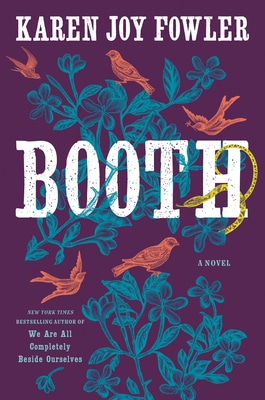
Booth

Read: January 2023

Get this book

Booth: A Novel

by Karen Joy Fowler

Booth by Karen Joy Fowler was on my to-read list for several months. Booth is an epic and intimate novel about the family behind one of the most infamous figures in American history: John Wilkes Booth. I have always been fascinated by history, especially the Civil War. Booth is a startling portrait of a country in the throes of change and a vivid exploration of the ties that make and break a family. It is the second book I have read this year.

Ms. Fowler struggled with how to write this novel without focusing on the cruelest member of the Booth family. She succeeded, but I sometimes felt confused about the type of book I was reading. Was it historical fiction or a textbook?

In the afterword, she admits that there is more of the story in the children of the siblings of John Wilkes Booth. I wish I knew more about that generation and how they responded to the notoriety. A family tree would have helped as there are many family members.

I recommend Booth as history is a dynamic lesson we must keep studying.

The Goodreads summary provides an overview,

In 1822, a secret family moved into a secret cabin some thirty miles northeast of Baltimore to farm, hide, and bear ten children over the next sixteen years. Junius Booth–breadwinner, celebrated Shakespearean actor, and master of the house in more ways than one–is at once a mesmerizing talent and a man of terrifying instability. One by one, the children arrive, as year by year, the country draws frighteningly closer to the boiling point of secession and civil war.

As the tenor of the world shifts, the Booths emerge from their hidden lives to cement their place as one of the country’s leading theatrical families. But behind the curtains of the many stages they have graced, multiple scandals, family triumphs, and criminal disasters begin to take their toll, and the solemn siblings of John Wilkes Booth are left to reckon with the truth behind the destructively specious promise of an early prophecy.


The Jan Lilien Education Fund sponsors ongoing sustainability and environmental awareness programs. Gifts made this month; I will match dollar-for-dollar. All donations are tax-deductible.

Subscribe

Contact Us

I receive a commission when you buy a book or product using a link on this page. Thank you for supporting Sharing Jan’s Love blog.


×
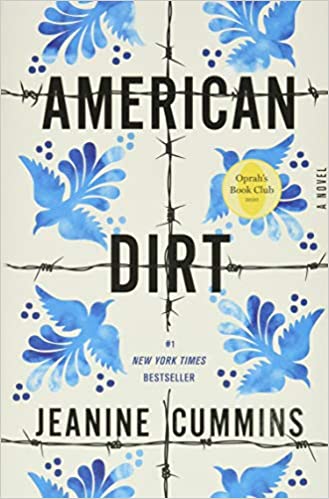
American Dirt

Read: September 2021

Get this book

American Dirt

by Jeanine Cummins

American Dirt by Jeanine Cummins is one of the best books I have read this year.

American Dirt is a “cross-genre novel that combines elements of a commercial thriller, literary fiction, suspense, and romance.” American Dirt refers to the land that is the United States of America and to the difficulty undocumented migrants face both before and after crossing the border.

According to SuperSummary,

Lydia Quixano Pérez, a bookstore owner in Acapulco, saves her son Luca from a massacre that wipes out their entire family at a quinceañera cookout. The perpetrators are three sicarios, killers for Los Jardineros, a violent local cartel. Javier Crespo Fuentes, Lydia’s close friend and the jefe of Los Jardineros, ordered the hit in retaliation for an exposé written by Lydia’s husband, a journalist named Sebastián Pérez Delgado. Javier’s murderous rage stems not from the article itself, but from the impact it has on his daughter, Marta, who commits suicide when she learns of her father’s true identity. Lydia and Luca spend the rest of the novel running from Javier’s men, encountering a diverse cast of migrants along the road to the US.

I read the book at the same time that Haitian migrants were being deported at the border. Ms. Cummins writes passionately about the plight of migrants and the difficulties they face as they seek a new life in the US. This book highlighted this to me in ways that I understood intellectually but not emotionally.

Ms. Cummins refers to a sign she saw in Spanish in Tijuana while she was researching this book:

También de este lado hay sueños.

On this side, too, there are dreams.

All of our ancestors were migrants, and they all had dreams of a better life. We need to find a better way to help those who now have goals find a home so that their hopes for a better future can come true.

Subscribe

Contact Us

×
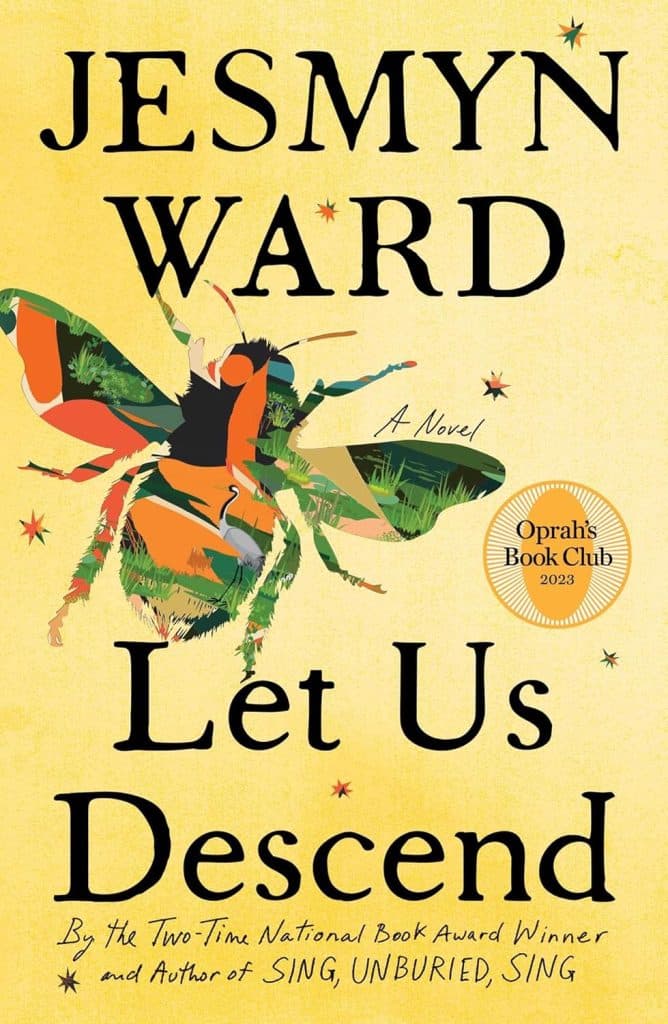
Let Us Descend: A Novel

Read: November 2023

Get this book

Let Us Descend: A Novel

by Jesmyn Ward

Today, I started reading Let Us Descend: A Novel by Jesmyn Ward. She is a two-time National Book Award winner, the youngest winner of the Library of Congress Prize for American Fiction, and a MacArthur Fellow. The book is a haunting masterpiece that is sure to become an instant classic. It tells the story of an enslaved girl in the years before the Civil War.

The book’s title is from Dante Alighieri’s Inferno: “‘Let us descend,’ the poet now began, ‘and enter this blind world.” Let Us Descend is a reimagining of American slavery, beautifully rendered yet heart-wrenching. The novel takes us on a journey from the rice fields of the Carolinas to the slave markets of New Orleans and into the fearsome heart of a Louisiana sugar plantation.

Annis is the reader’s guide through this hellscape, sold south by the white enslaver who fathered her. As Annis struggles through the miles-long march, she turns inward, seeking comfort from memories of her mother and stories of her African warrior grandmother. Throughout the journey, she opens herself to a world beyond this world, one teeming with spirits: of earth and water, of myth and history, spirits who nurture and give, and those who manipulate and take. While Ward leads readers through the descent, this, her fourth novel, is ultimately a story of rebirth and reclamation.

Let Us Descend is a magnificent novel that inscribes Black American grief and joy in the very land of the American South. Ward’s writing takes you through the rich but unforgiving forests, swamps, and rivers of the South, making this novel a masterwork for the ages.


The Jan Lilien Education Fund sponsors ongoing sustainability and environmental awareness programs. Gifts made this month; I will match dollar-for-dollar. All donations are tax-deductible.

Subscribe

Contact Us

I receive a commission when you buy a book or product using a link on this page. Thank you for supporting Sharing Jan’s Love blog.


×
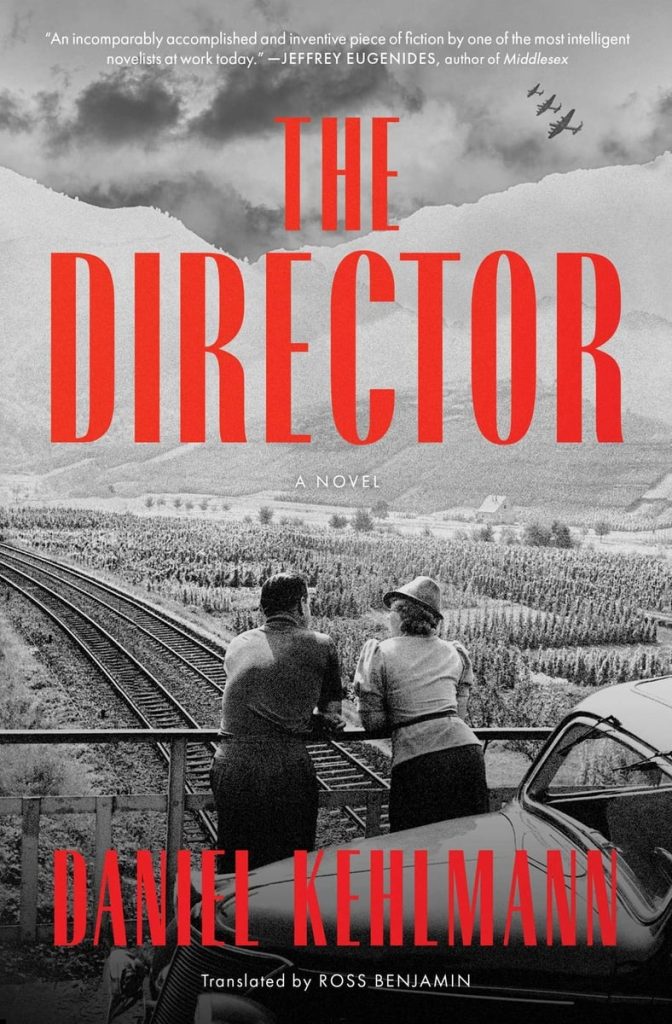
The Director

Read: December 2025

Get this book

The Director: A Novel

by Daniel Kehlmann

“The Director” by Daniel Kehlmann, translated by Ross Benjamin, is a thought-provoking novel inspired by the life of film director G.W. Pabst. Pabst fled to Hollywood to escape the Nazis but later returned to Germany to produce propaganda films for the German Reich. The novel is a New York Times Top 10 Book of the Year, an NYPL Best Book of the Year, and a notable book by the Washington Post.

An artist’s life, a pact with the devil, and the dangerous illusions of the silver screen.

G.W. Pabst, one of cinema’s greatest directors of the 20th century, was filming in France when the Nazis seized power. To escape the horrors of the new and unrecognizable Germany, he fled to Hollywood. But now, under the blinding California sun, the world-famous director suddenly looks like a nobody. Not even Greta Garbo, the Hollywood actress whom he made famous, can help him.

When he learns that his elderly mother is ill, he finds himself back in his homeland of Austria, now called Ostmark. Pabst, his wife, and his young son are suddenly confronted with the barbaric nature of the regime. So, when Joseph Goebbels—the minister of propaganda in Berlin—sees the potential for using the European film icon for his directorial genius and makes big promises to Pabst and his family, Pabst must consider Goebbels’s thinly veiled order. While Pabst still believes that he will be able to resist these advances, that he will not submit to any dictatorship other than art, he has already taken the first steps into a hopeless entanglement.

Kehlmann’s latest oeuvre explores the complicated relationships and distinctions between art and power, beauty and barbarism, cog and conspirator.


Daniel Kehlmann was born in Munich in 1975. His novels and plays have won numerous prizes, including the Candide Prize, the Doderer Prize, the Kleist Prize, the Welt Literature Prize, and the Thomas Mann Prize. His novel Tyll, shortlisted for the 2020 International Booker Prize, and Measuring the World have been translated into more than forty languages and are among the biggest successes in post-war German literature. He currently lives in Berlin and New York.

Ross Benjamin is the translator of numerous works of German-language literature, including Franz Kafka’s Diaries, Clemens J. Setz’s Indigo, Joseph Roth’s Job, Kevin Vennemann’s Close to Jedenew, Friedrich Hölderlin’s Hyperion, and Daniel Kehlmann’s Tyll and You Should Have Left. The recipient of a 2015 Guggenheim Fellowship, Benjamin was also awarded the 2010 Helen and Kurt Wolff Translator’s Prize for his rendering of Michael Maar’s Speak, Nabokov. His translation of Tyll was shortlisted for the 2020 International Booker Prize.


Discover your next favorite book and dive into a world of curated, exciting reads by purchasing through my links. You’ll have access to a diverse selection of books that I’ve personally vetted to ensure quality and enjoyment. Additionally, by supporting these selections, you’ll help me continue to provide you with more personalized recommendations. I earn a small commission from your purchase, which allows me to buy and share even more books with you. Your support truly makes a difference!


×
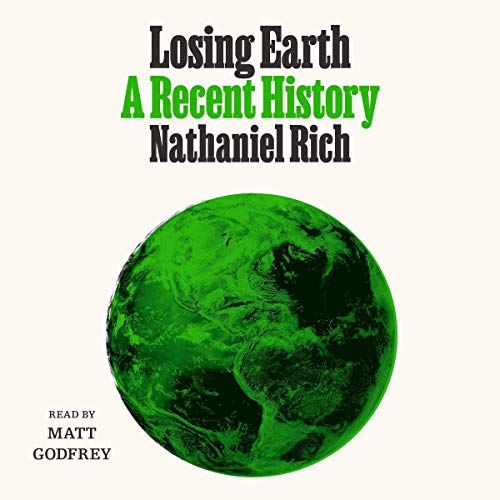
Losing Earth: A Recent History

Read: October 2019

Get this book

Losing Earth: A Recent History

by Nathaniel Rich

Losing Earth: A Recent History by Nathaniel Rich reminds us how close we were to halting the climate emergency, and our failure has resulted in our passing the tilting point. The book “reveals, in previously unreported detail, the birth of climate denialism and the genesis of the fossil-fuel industry’s coordinated effort to thwart climate policy through misinformation propaganda and political influence.”

By 1979, we knew nearly everything we understand today about climate change – including how to stop it. Over the next decade, a handful of scientists, politicians, and strategists, led by two unlikely heroes, risked their careers in a desperate, escalating campaign to convince the world to act before it was too late. Losing Earth is their story and ours.

The New York Times Magazine devoted an entire issue to Nathaniel Rich’s groundbreaking chronicle of that decade, which became an instant journalistic phenomenon – the subject of news coverage, editorials, and conversations all over the world. In its emphasis on the lives of the people who grappled with the significant existential threat of our age, it made vivid the moral dimensions of our shared plight.

Losing Earth tells the human story of climate change in even richer, more intimate terms. It reveals, in previously unreported detail, the birth of climate denialism and the genesis of the fossil-fuel industry’s coordinated effort to thwart climate policy through misinformation propaganda and political influence. The audiobook carries the story into the present day, wrestling with the long shadow of our past failures and asking crucial questions about how we make sense of our past, our future, and ourselves.

Like John Hersey’s Hiroshima and Jonathan Schell’s The Fate of the Earth, Losing Earth is the rarest of achievements: a riveting work of dramatic history that articulates a moral framework for understanding how we got here and how we must go forward.

Losing Earth is a must-read book!

Subscribe

Contact Us

×