
Garden8
Estimated reading time: 0 minutes, 0 seconds
Subscribe to Sharing Jan's Love Newsletter!
by Philip Roth
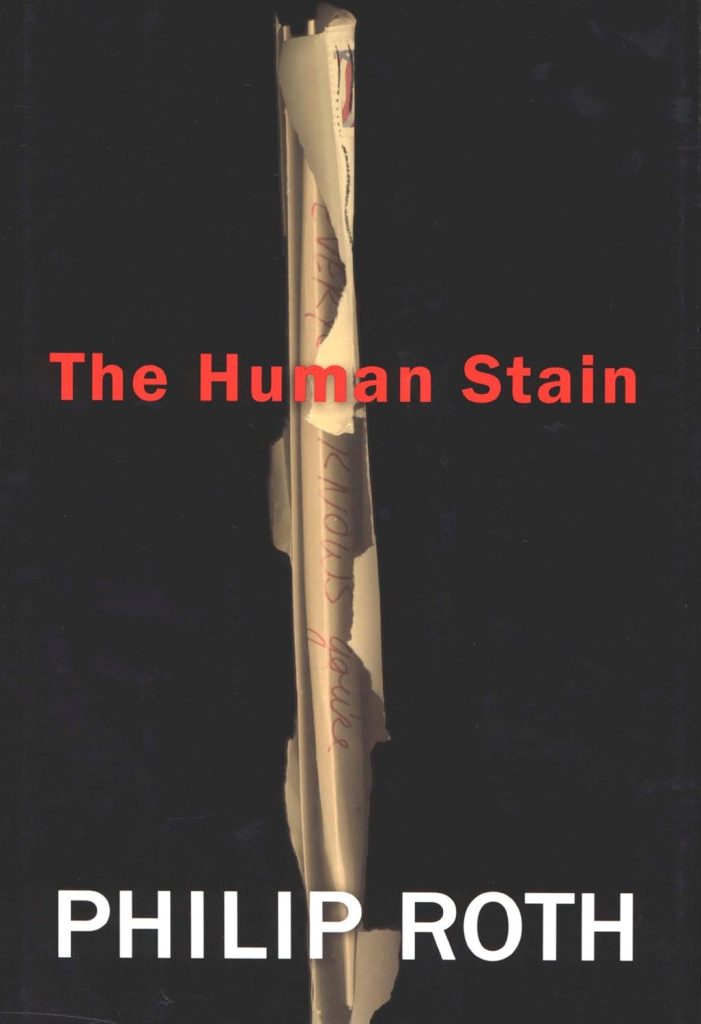
Today, I started reading The Human Stain: A Novel by Philip Roth. This book is considered a masterpiece and has earned its place among The New York Times’ 100 Best Books of the 21st Century. The story takes place in 1998, a significant year marked by a presidential impeachment that affected the entire nation. In a peaceful New England town, the respected classics professor Coleman Silk is forced into retirement due to false accusations of racism by his colleagues.
This accusation triggers a series of events that bring to light shocking revelations about Coleman, revelations that carry a profound societal significance. Coleman Silk harbors a secret, a secret that is not about his affair with Faunia Farley, a woman half his age with a troubled past, or the alleged racism that led to his downfall at the college where he was once a respected dean. It’s not even about misogyny, despite Professor Delphine Roux’s attempts to portray him as such. Coleman’s true secret, a secret he has guarded for fifty years from everyone in his life, including his wife, children, colleagues, and friends, is a defining aspect of his character and his relationships.
The Human Stain is a compelling portrayal of 1990s America, a time of clashing moralities and ideological divisions. Through public denunciations and rituals of purification, it delves into how the nation’s destiny and the ‘human stain’ that marks human nature shape the lives of postwar Americans. This potent and captivating novel is a fitting continuation of Philip Roth‘s earlier works, each set in a distinct historical period.
by Mark Haddon
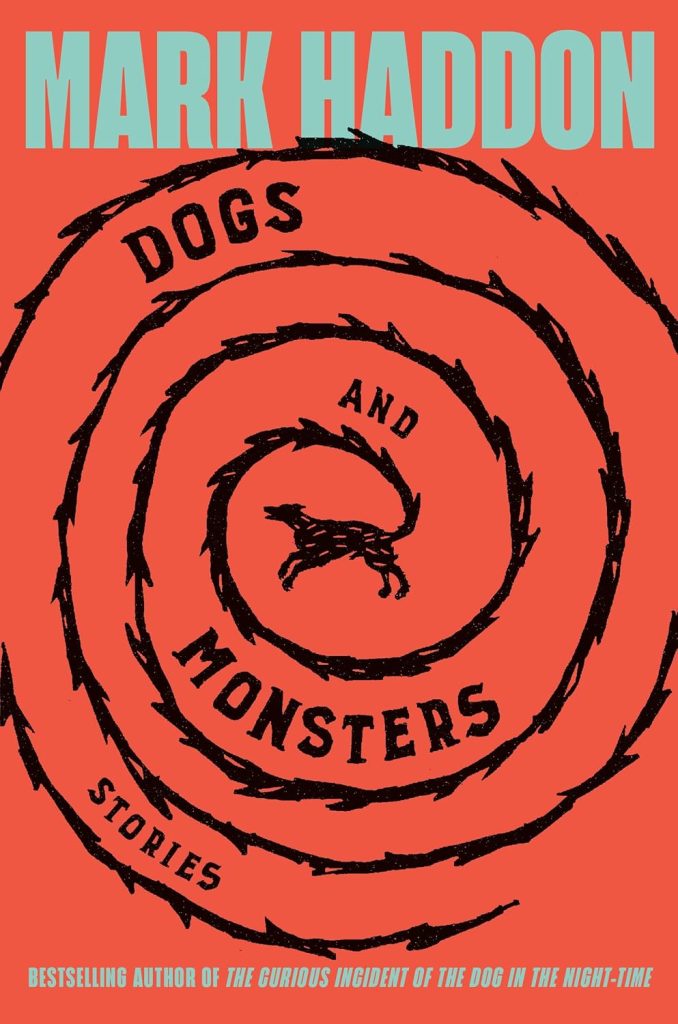
Today, I started reading Dogs and Monsters: Stories by Mark Haddon. The collection features eight captivating and imaginative stories that blend Greek myths with contemporary dystopian narratives. The stories explore themes of mortality, moral choices, and various forms of love, including romantic, familial, and self-love. Haddon’s clear-eyed vision is infused with deep empathy.
In addition, Haddon’s fluid prose showcases his remarkable powers of observation, both of the physical world and the inner workings of the human psyche. Greek myths have fascinated people for millennia with their timeless appeal and enduring lessons about fate, hubris, and life’s uncertainties. In Dogs and Monsters: Stories, Mark Haddon delves into the heart of these ancient fables and presents them in a fresh light. For instance, in one story, the dawn goddess Eos requests that Zeus grant her lover Tithonus eternal life but forgets to ask for eternal youth. In “The Quiet Limit of the World,” Haddon imagines Tithonus’s life as he ages over thousands of years, transforming this cautionary tale about tempting the gods into a spellbinding meditation on observing death from the outside. This tale ultimately explores how carnal love evolves into something more profound and poignant over time.
In “The Mother‘s Story,” Haddon reinterprets the myth of the Minotaur, born of the monstrous lust of King Minos’s wife, Pasiphaë. He turns it into a heartbreaking parable of a mother’s love for a damaged child and the more tangible monstrosities of patriarchy. In “D.O.G.Z.,” the story of Actaeon, who was transformed into a stag after glimpsing the naked goddess Diana and was subsequently torn apart by his hunting dogs, becomes a visceral metaphor for the continuum of human and animal behavior.
Other stories in Dogs and Monsters: Stories play with contemporary mythic tropes—such as genetic engineering, attempts to escape the future, and the cruelty of adolescent ostracism. These stories showcase how modern humans are subject to the same capriciousness that concerned the Greeks but in a fresh and intriguing light. Haddon‘s tales cover a wide range of themes, from the mythic to the domestic, from ancient Greece to the present day, and explore love alongside stories of cruelty. They take readers from battlefields to bed and breakfasts and from dogs in space to doors between worlds, all bound together by profound sympathy and an insight into how human beings think, feel, and act when pushed to their limits.
by Jay Winik
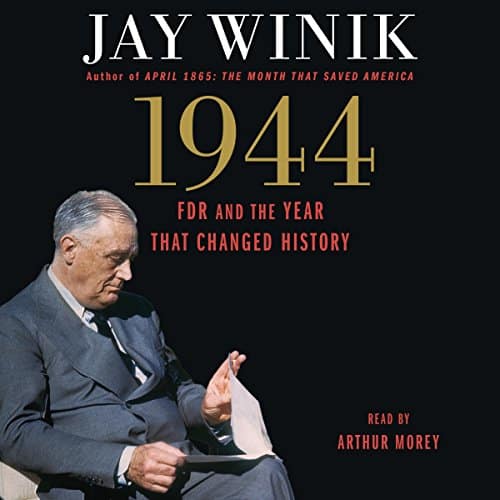
1944: FDR and the Year That Changed History by Jay Winik is a book that I had put off reading several times. When I finally did read it, I could not remember why I had not read it sooner. Had I gone to graduate school and become a professor, it might have been the type of book I might write, and I certainly would have had on my list of books for my classes.
As The NY Times wrote, “Jay Winik brings to life in gripping detail the year 1944, which determined the outcome of World War II and put more pressure than any other on an ailing yet determined President Roosevelt.” Reading a book about events five years before my birth that transformed the world I live in becomes an easy page-turner.
It was not inevitable that World War II would end as it did or that it would even end well. Nineteen forty-four was a year that could have stymied the Allies and cemented Hitler’s waning power. Instead it saved those democracies – but with a fateful cost. Now, in a superbly told story, Jay Winik, the acclaimed author of April 1865 and The Great Upheaval, captures the epic images and extraordinary history as never before.
1944 witnessed a series of titanic events: FDR at the pinnacle of his wartime leadership as well as his reelection, the planning of Operation Overlord with Churchill and Stalin, the unprecedented D-Day invasion, the liberation of Paris, and the horrific Battle of the Bulge, and the tumultuous conferences that finally shaped the coming peace. But on the way, millions of more lives were still at stake as President Roosevelt was exposed to mounting evidence of the most grotesque crime in history, the Final Solution. Just as the Allies were landing in Normandy, the Nazis were accelerating the killing of millions of European Jews.
Winik shows how escalating pressures fell on an all but dying Roosevelt, whose rapidly deteriorating health was a closely guarded secret. Here then, as with D-Day, was a momentous decision for the president. Was winning the war the best way to rescue the Jews? Was a rescue even possible? Or would it get in the way of defeating Hitler? In a year when even the most audacious undertakings were within the world’s reach, including the liberation of Europe, one challenge – saving Europe’s Jews – seemed to remain beyond Roosevelt’s grasp.
I recommend this book.
by Tana French
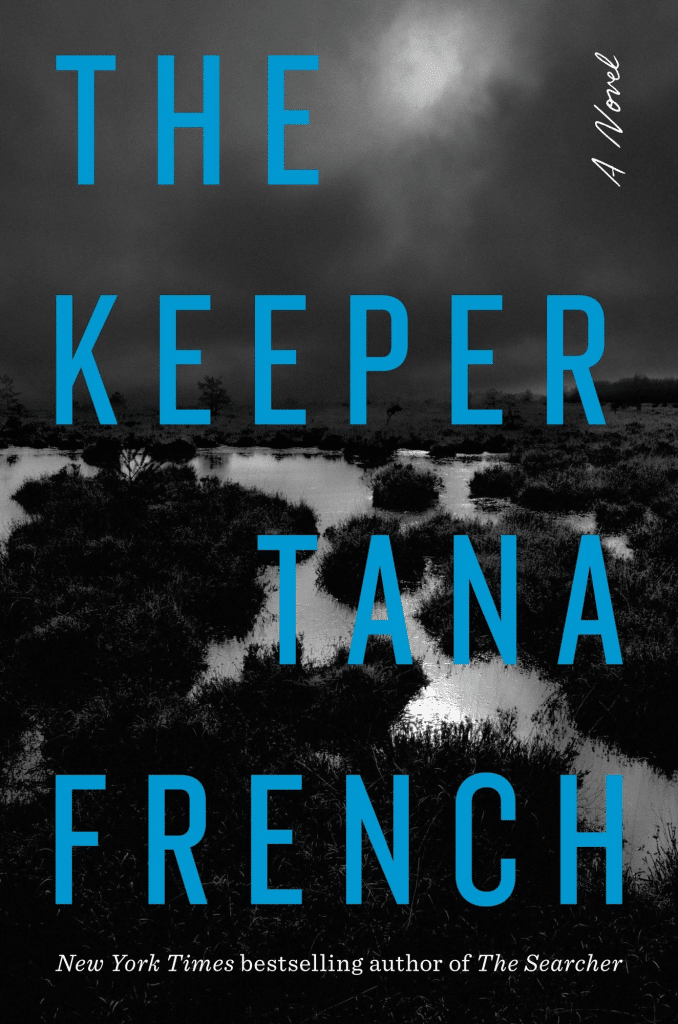
Before I finished the last page of The Keeper by Tana French, I found myself missing Cal, Lena, and Trey, along with the other characters from the Irish village of Ardnakelty. Tana French is a renowned crime writer who has inspired a devoted following among readers and has been described as “incandescent” by Stephen King. She is releasing the third and final book in the million-copy bestselling Cal Hooper trilogy.
On a cold night in the remote Irish village of Ardnakelty, a girl goes missing. Sweet, loving Rachel Holohan was about to be engaged to the son of the local big shot. Instead, she’s dead in the river.
In a close-knit small town, a death like this isn’t simple. It comes wrapped in generations-old grudges and power struggles, splitting the townland in two. Retired Chicago detective Cal Hooper has friends here now, and he owes them loyalty, but his fiancée Lena wants nothing to do with Ardnakelty’s tangles. As the feud becomes more vicious, their settled peace begins to crack. And when they uncover a scheme that casts a new light on Rachel’s death and threatens the whole village, they find themselves in the firing line.
“One of the greatest crime novelists writing today,” according to Vox, crafts a masterwork of atmospheric suspense that brings the story of one of her most beloved characters to a spellbinding conclusion.
Tana French is the New York Times–bestselling author of nine previous books, including In the Woods, The Searcher, and The Hunter. Her novels have sold over eight million copies worldwide and won numerous awards, including the Edgar, Anthony, Macavity, and Barry Awards, the Los Angeles Times Book Prize for Best Mystery/Thriller, and the Irish Book Award for Crime Fiction. She lives in Dublin with her family.
Discover your next favorite book and dive into a world of curated, exciting reads by purchasing through my links. You’ll have access to a diverse selection of books I’ve personally vetted for quality and enjoyment. Supporting these selections not only helps me continue to provide you with personalized recommendations but also ensures you have access to meaningful stories that enrich your life. Your support truly makes a difference in helping me share more books and insights with you!
by Charlotte Mendelson
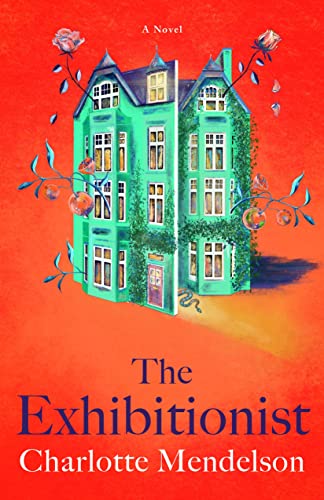
I began reading Charlotte Mendelson‘s novel, The Exhibitionist, today. The book tells the story of Lucia and Ray, two artists whose marriage starts to fall apart over a weekend. It explores themes such as art, sacrifice, family dynamics, queer desire, and personal freedom. Charlotte Mendelson has created yet another exceptional novel with The Exhibitionist, ranked as the year’s novel by The Times of London, and described as “furiously funny.”
The Hanrahan family is coming together for an important weekend. Ray Hanrahan, a well-known artist with a big ego, is preparing for his first exhibition in many years. His eldest daughter, Leah, is his biggest supporter. His son, Patrick, has decided to pursue his own path. His youngest daughter, Jess, has a big decision to make. Ray’s wife, Lucia, is also an artist but has always prioritized her roles as a wife and mother. She is keeping secrets of her own and must decide which desires to pursue as the weekend progresses and the exhibition approaches.
The Jan Lilien Education Fund sponsors ongoing sustainability and environmental awareness programs. Gifts made this month; I will match dollar-for-dollar. All donations are tax-deductible.
I receive a commission when you buy a book or product using a link on this page. Thank you for supporting Sharing Jan’s Love blog.
by Elena Ferrante
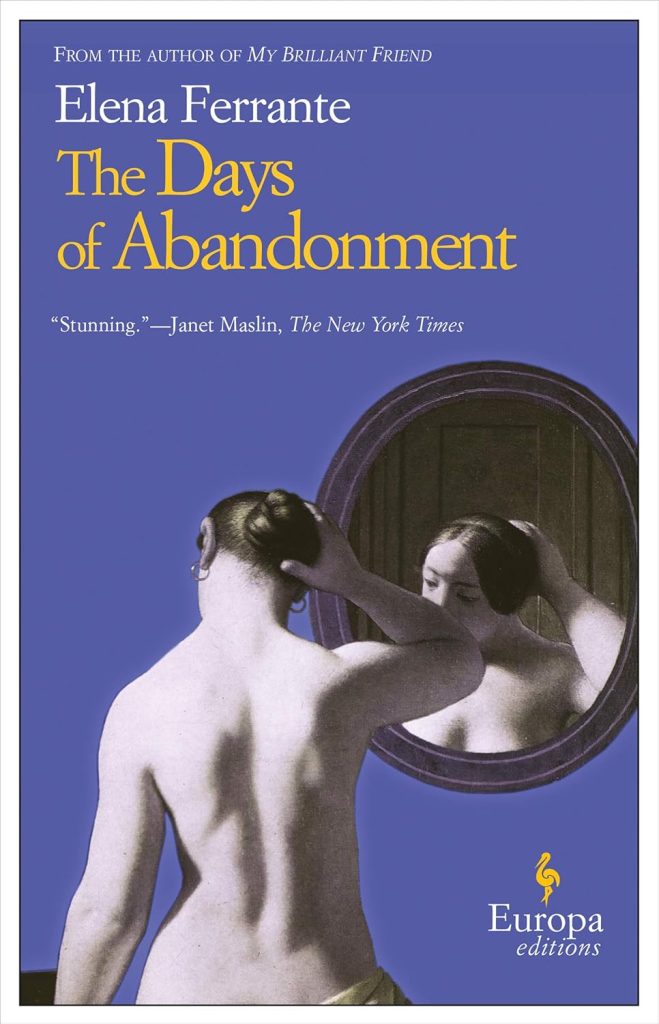
I’ve just started reading The Days of Abandonment by Elena Ferrante after finishing My Brilliant Friend. This book is among the New York Times’s 100 Best Books of the 21st Century. I chose to read it after watching An Undoing, a documentary about healing from an abusive 20-year marriage using unstitching wedding garments, one stitch at a time.
The film was part of the first night of the International Women’s Film Festival in Cranford. Although, except for one brief moment, I have never been in the same situation as the woman in the short video or Olga, the protagonist in the novel, I choose this as my next book to read. Of course, Ferrante’s writing is known for rich character development and powerful prose.
The Days of Abandonment follows the gripping story of an Italian woman named Olga, whose husband suddenly leaves after fifteen years of marriage. With two young children to care for, Olga finds it increasingly difficult to maintain her previous lifestyle of keeping a spotless house, cooking creative meals, and controlling her temper. After encountering her husband with his much younger lover in public, she even resorts to physically assaulting him.
In a “raging, torrential voice,” according to The New York Times, Olga describes her journey from denial to devastating emptiness. Trapped within the four walls of their high-rise apartment, she confronts her ghosts, the potential loss of her identity, and the possibility that life may never return to normal.