
Garden3
Estimated reading time: 0 minutes, 0 seconds
Subscribe to Sharing Jan's Love Newsletter!
by Daniel Kraus
“Angel Down” by Daniel Kraus immerses readers in World War I, weaving a complex tale of survival, supernatural wonder, and moral conflict. Five soldiers on a mission to venture into the perilous No Man’s Land to euthanize a wounded comrade. Instead, they discover a fallen angel. “Angel Down” was recognized as one of the New York Times’ 100 Notable Books of 2025.
Private Cyril Bagger has survived the unspeakable horrors of the Great War by relying on his wits and deception, swindling fellow soldiers at every opportunity. However, his survival instincts are put to the ultimate test when he and four other soldiers are given a deadly mission: to venture into No Man’s Land to end the suffering of a wounded comrade.
What they find amidst the ruined battlefield, however, is not a man in need of mercy, but a fallen angel, seemingly struck down by artillery fire. This celestial being may hold the key to ending the brutal conflict, but the soldiers must suppress their individual desires and work together. As jealousy, greed, and paranoia take hold, the group is torn apart by their inner demons, threatening to transform their angelic encounter into a descent into hell.
Daniel Kraus is a New York Times bestselling author known for his novels, television, and film work. His novel Whalefall received a front-cover review in The New York Times Book Review, won the Alex Award, and was a finalist for the LA Times Book Prize. Recognized as one of the Best Books of 2023 by NPR, The New York Times, the Chicago Tribune, and several other publications.
Kraus coauthored The Shape of Water with Guillermo del Toro, based on the idea they developed for the Oscar-winning film. He also collaborated with del Toro on Trollhunters, which was adapted into the Emmy-winning Netflix series. Additionally, Kraus co-wrote The Living Dead and Pay the Piper with the legendary filmmaker George A. Romero. His novel The Death and Life of Zebulon Finch was named one of Entertainment Weekly’s Top 10 Books of the Year.
Throughout his career, Kraus has received numerous accolades, including the Bram Stoker Award, the Scribe Award, and two Odyssey Awards (for both Rotters and Scowler). He has been featured multiple times as a Library Guild selection and recognized by YALSA as a Best Fiction for Young Adults. His works have been translated into over twenty languages. Daniel Kraus resides in Chicago with his wife. Visit him at DanielKraus.com.
Discover your next favorite book and dive into a world of curated, exciting reads by purchasing through my links. You’ll have access to a diverse selection of books I’ve personally vetted for quality and enjoyment. Additionally, by supporting these selections, you’ll help me continue to provide you with more personalized recommendations. I earn a small commission from your purchase, which allows me to buy and share even more books with you. Your support truly makes a difference!
by Yrsa Daley-Ward
In “The Catch,” her captivating debut novel, Yrsa Daley-Ward creates a vibrant multiverse that delves into the complexities of daughterhood and mother-want. She explores the sacrifices women often make in their pursuit of self-actualization. The result is a remarkable novel that boldly poses the question: “How can it ever be a crime to choose yourself?”
Twin sisters Clara and Dempsey have always struggled to connect, their familial bond severed after their mother vanished into the Thames. As infants, they were adopted by different families: Clara went to live with a successful, upper-class couple, while a distant and unaffectionate city councilor took in Dempsey. As adults, the sisters have settled into a comfortable estrangement until Clara spots a woman on the streets of London who looks exactly like their mother. The twist? This version of Serene appears ageless and has lived a childless life — the very life she might have had if the girls had never been born.
As with most things, Clara and Dempsey cannot agree on the strange appearance of this woman. Clara, a celebrity author with a penchant for excessive drinking and one-night stands, is eager to welcome the confident and temperamental Serene into her home. In contrast, reclusive Dempsey, who makes a modest living doing menial data entry work from her apartment, is suspicious of the entire situation, believing it to be a cunning scheme by a con woman.
As the sisters clash over this stranger who increasingly intrudes into their lives, they hurtle toward a confrontation that threatens their very existence, ultimately forcing them to face their shared past together.
Yrsa Daley-Ward is a poet, writer, and actress. She is the author of The How, bone, and The Terrible, for which she won the PEN Ackerley Prize. She lives in Los Angeles.
When you purchase a book through one of my links, I earn a small commission that helps support my passion for reading. This contribution allows me to buy even more books to share with you, creating an incredible cycle of discovering great reads together! Your support truly makes a difference!
Enjoy a limited-time offer of 20% off your next book purchase at Bookshop.org!
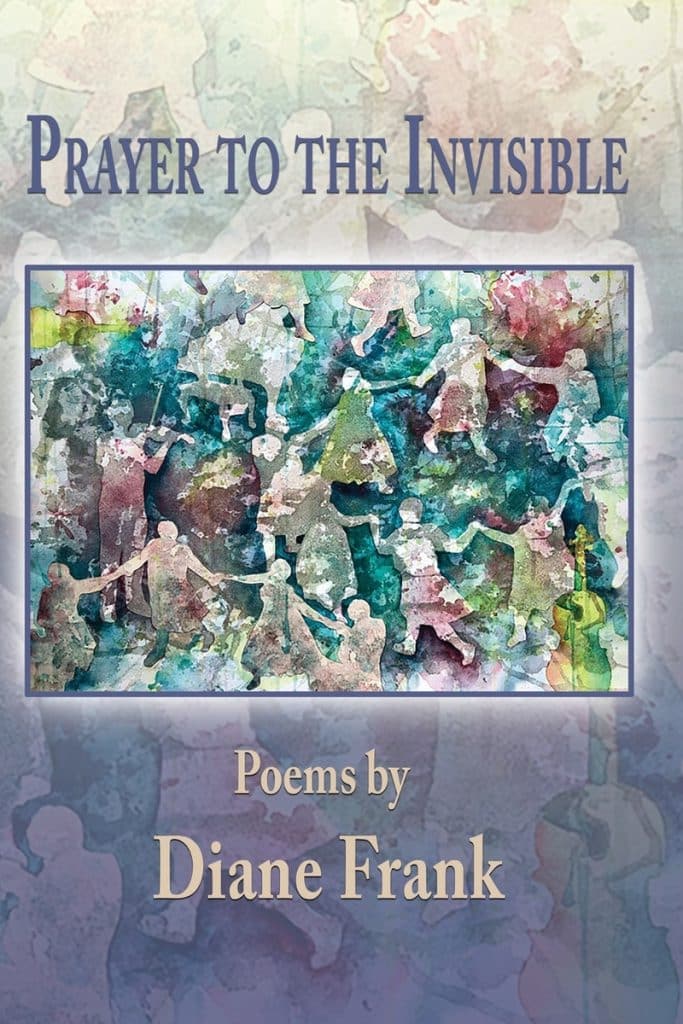
by Diane Frank
Diane Frank, a poet and author of “Prayer to the Invisible,” was a childhood friend of my wife, Jan, in Springfield, NJ. Both were gifted and talented young women who excelled as students and were also musicians, dreamers, and diarists. I met Diane at a poetry reading in NYC, where Jan insisted that we meet her brilliant friend. Diane often referred to Jan as her “Angel.”
In her luminous 9th collection, Prayer to the Invisible, poet Diane Frank fully unmasks her wild and loving imagination. With a river-deep range in subject matter and voice, Frank guides us through terrains both difficult and joyous – her Jewish mother’s love of Christmas carols, a grace-filled visitation from a victim of ethnic violence, a ballerina-in-disguise on public transit, and many transcendent visions from dreams. According to Prartho Sereno, Poet Laureate Emerita of Marin County, California. Author of Starfall in the Temple, “Diane Frank is the wise and wonder-struck, barefoot-dancing companion we all long for in these precarious times.”
Each poem was thought-provoking and a blessing for these uncertain times. The title poem, “Prayer to the Invisible,” was written in memory of Dr. Jerry Rabinowitz, who died during the attack at the Tree of Life Synagogue in Pittsburgh on October 27, 2018. He was a fellow alumnus of Jonathan Dayton Regional High School, as were Diane and my wife. The poem is a moving tribute to Dr. Rabinowitz as its words brought tears to my eyes.
The poem is a moving tribute that brought tears to my eyes for Dr. Rabinowitz, and one stanza echoed how I felt when my wife died.
I carry your spirit on my shoulders
as I walk into the synagogue
where we played music for you,
as I follow an eclipse north
as I walk into a dream.
I write your name in the sky after midnight
in the Leonid meteor showers,
in the penumbra of an eclipse
of the wolf moon.
Diane Frank is a poet and musician, author of nine books of poems, three novels, and a photo memoir of her 400-mile trek in the Nepal Himalayas. Listening to the Enigma Variations: New and Selected Poems won the 2022 Next Generation Indie Book Award for Poetry. She is the editor of three bestselling anthologies: River of Earth and Sky: Poems for the Twenty-First Century; Fog and Light: San Francisco through the Eyes of the Poets Who Live Here; and Pandemic Puzzle Poems. Her first novel, Blackberries in the Dream House, was nominated for the Pulitzer Prize.
Discover your next favorite book and dive into a world of curated, exciting reads by purchasing through my links. You’ll have access to a diverse selection of books I’ve personally vetted for quality and enjoyment. Additionally, by supporting these selections, you’ll help me continue to provide you with more personalized recommendations. I earn a small commission from your purchase, which allows me to buy and share even more books with you. Your support truly makes a difference!
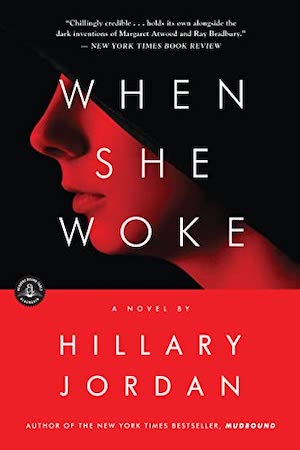
by Hillary Jordan
When She Woke, a fable about a stigmatized woman struggling to navigate an America of a not-too-distant future by Hillary Jordan, Bellwether Prize Winner. Hannah Payne, the protagonist, embarks on a path of self-discovery that forces her to question the values she once held and the righteousness of a country that politicizes faith. The premise of When She Woke seems to be happening as I read the novel. It is also the one hundred books I have read since the beginning of 2019 and the forty-fifth this year.
Hannah Payne, like Hester Prynne, is attacked for her actions by extreme religious beliefs. Instead of wearing a scarlet letter, Hannah’s chroming (i.e., having her skin altered) makes her skin red from head to toe. The chroming might have been a good theme for a science fiction novel. Still, Ms. Jordan has written a captivating book in which Hannah confronts who she is and, after questioning the values she once had, discovers that Hannah is more vital than she believed she could be.
I highly recommend this novel.
As Ms. Jordan describes the book,
Hannah Payne’s life has been devoted to church and family. But after she’s convicted of murder, she awakens to a nightmare: she finds herself lying on a table in a solitary confinement cell, her skin turned bright red. Cameras are broadcasting her every move to millions at home, for whom observing newly made “Chromes”—criminals whose skin color has been genetically altered to reflect their crime—is a sinister form of entertainment. Hannah is a Red, a murderess. The victim, says the state of Texas, was her unborn child, and she’s determined to protect the identity of the father, a public figure with whom she shared a fierce and forbidden love.
A powerful reimagining of The Scarlet Letter, When She Woke is a timely fable about a stigmatized woman struggling to navigate a dystopian America. In this not-too-distant future, the line between church and state has been eradicated and convicted felons are no longer imprisoned, but “chromed” and released back into the population to survive as best they can.
As she seeks a path to safety in an alien and hostile world, Hannah unknowingly embarks on a journey of self-discovery that forces her to question the values she once held true and the righteousness of a country that politicizes faith and love.
The Jan Lilien Education Fund sponsors ongoing sustainability and environmental awareness programs. All donations are tax-deductible.
I receive a commission when you buy a book or product using a link on this page. Thank you for supporting Sharing Jan’s Love blog.
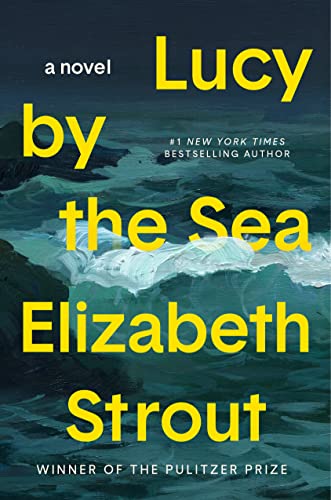
by Elizabeth Strout
Lucy by the Sea: A Novel by Elizabeth Strout is a poignant, pitch-perfect novel about a divorced couple stuck together during lockdown–and the love, loss, despair, and hope that animate us even as the world seems to be falling apart. Having lost Jan during Covid, I was apprehensive about reading this book. However, it was not only a page-turner but also a novel that gave me a new perspective on loss which helped me manage my grief.
With her trademark spare, crystalline prose, Elizabeth Strout turns her exquisitely tuned eye to the inner workings of the human heart, following the indomitable heroine of My Name Is Lucy Barton through the early days of the pandemic.
I highlighted several passages that specifically spoke to me.
We all live with people—and places—and things—that we have given great weight to. But we are weightless, in the end.
Who knows why people are different? We are born with a certain nature, I think. And then the world takes its swings at us.
It has been said that the second year of widowhood is worse than the first—the idea being, I think, that the shock has worn off and now one has to live with the loss, and I had been finding that to be true, even before I came to Maine with William. But now there were times I felt that I was just learning of David’s death again for the first time. And I would be privately staggered by grief. And to be in this place where David had never been (!)—I was really dislocated is what I mean.
And I also understood: Grief is a private thing. God, is it a private thing.
We are all in lockdown, all the time. We just don’t know it, that’s all. But we do the best we can. Most of us are just trying to get through.
The Goodreads summary provides an overview,
As a panicked world goes into lockdown, Lucy Barton is uprooted from her life in Manhattan and bundled away to a small town in Maine by her ex-husband and on-again, off-again friend, William. For the next several months, it’s just Lucy, William, and their complex past together in a little house nestled against the moody, swirling sea.
Rich with empathy and emotion, Lucy by the Sea vividly captures the fear and struggles that come with isolation, as well as the hope, peace, and possibilities that those long, quiet days can inspire. At the heart of this story are the deep human connections that unite us even when we’re apart–the pain of a beloved daughter’s suffering, the emptiness that comes from the death of a loved one, the promise of a new friendship, and the comfort of an old, enduring love.
The Jan Lilien Education Fund sponsors ongoing sustainability and environmental awareness programs. Gifts made this month; I will match dollar-for-dollar. All donations are tax-deductible.
I receive a commission when you buy a book or product using a link on this page. Thank you for supporting Sharing Jan’s Love blog.
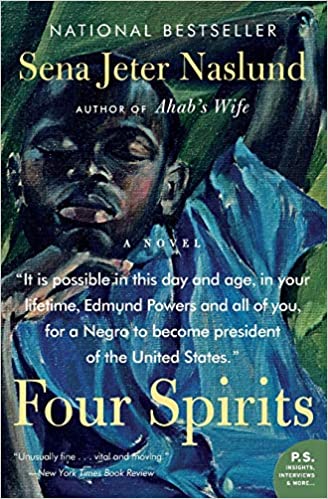
by Sena Jeter Naslund
Four Spirits by Sena Jeter Naslund is a book that I could not put down. It is a page-turner. The title is from the four girls killed at Sunday School in Birmingham. When that happened in 1963, I was only a few years older and the impact brought home to me that we lived in a broken world that required repair. Like Stella Silver in the novel, my life changed as a result of the bombing.
As my reading list may indicate, I have always preferred non-fiction with a preference for history. Picking this novel up combined my prior reading habits with my desire to read books that my wife, Jan, recommended.
Weaving together the lives of blacks and whites, racists and civil rights advocates, and the events of peaceful protest and violent repression, Sena Jeter Naslund creates a tapestry of American social transformation at once intimate and epic.
In Birmingham, Alabama, twenty-year-old Stella Silver, an idealistic white college student, is sent reeling off her measured path by the events of 1963. Combining political activism with single parenting and night-school teaching, African American Christine Taylor discovers she must heal her own bruised heart to actualize meaningful social change. Inspired by the courage and commitment of the civil rights movement, the child Edmund Powers embodies hope for future change. In this novel of maturation and growth, Naslund makes vital the intersection of spiritual, political, and moral forces that have redefined America.
Stella’s idealism reminded me of how I became the person I am. Change is not easy but, it takes all of us to risk our lives to repair the world so, it works for all of us.
The book’s critical focus on the “intersection of spiritual, political, and moral forces that have redefined America” makes this a must-read. The redefinition has made America a better country but, we may be retreating from that ideal.