
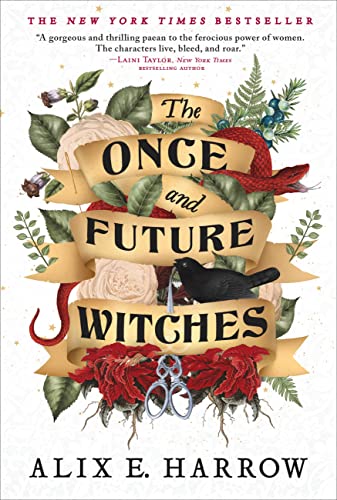
The Once and Future Witches

Estimated reading time: 1 minute, 35 seconds

The Once and Future Witches by Alix E. Harrow was on hold at my library for several weeks. It arrived today, and I could not imagine a better book to read for Women’s History Month. An homage to women’s invincible power and persistence, The Once and Future Witches reimagines stories of revolution, motherhood, and women’s suffrage—the lost ways are calling.

Although I found the book at times a slow read, I enjoyed it very much and highly recommend it. My only regret is that it had less to do with the suffrage movement than expected. In the late 1800s, three sisters used witchcraft to change the course of history in this powerful novel of magic, family, and the suffragette movement.

Goodreads summary provides an overview.

In 1893, there was no such thing as witches. There used to be, in the wild, dark days before the burnings began, but now witching is nothing but tidy charms and nursery rhymes. If the modern woman wants any measure of power, she must find it at the ballot box.

But when the Eastwood sisters―James Juniper, Agnes Amaranth, and Beatrice Belladonna―join the suffragists of New Salem, they begin to pursue the forgotten words and ways that might turn the women’s movement into the witch’s movement. Stalked by shadows and sickness, hunted by forces who will not suffer a witch to vote―and perhaps not even to live―the sisters will need to delve into the oldest magics, draw new alliances, and heal the bond between them if they want to survive.

There’s no such thing as witches. But there will be.

Register to Attend Celebrate Jan Day

Subscribe

Contact Us

When you buy a book or product using a link on this page, I receive a commission. Thank you for supporting Sharing Jan’s Love blog.

The Jan Lilien Education Fund!

How the Word is Passed

Read: December 2021

Get this book

How the Word Is Passed: A Reckoning with the History of Slavery Across America

by Clint Smith

How the Word Is Passed: A Reckoning with the History of Slavery Across America by Clint Smith. This book was a gift from my son Jon. The New York Times selected How the Word is Passed as one of the best books published this year. Beginning in his hometown of New Orleans, Clint Smith leads the reader on an unforgettable tour of monuments and landmarks—those that are honest about the past and those that are not—that offer an intergenerational story of how slavery has been central in shaping our nation’s collective history, and ourselves.

How the Word is Passed is one of the best books I have read in 2021. I had read an excerpt in The Atlantic on the Whitney Plantation, one of the only former plantations devoted to preserving the experience of the enslaved people whose lives and work sustained it. Like most of us, I had placed the book on my to-read list, where it remained lost in the cobwebs. Fortunately, my son Jon purchased the book for me.

Secondly, the book rekindled my long-lost dream of being an American Studies professor. As soon as Jan and I met, I dropped plans to leave Brooklyn and start graduate school in the fall of 1974. I made that decision primarily because of how much I loved Jan. But it was also partly that I did not have a clear vision of what my life would be like as a professor. The book provided clear examples of people like Yvonne Holden at The Whitney Plantation redefining history to be more accurate and inclusive. I probably could not have done as well as she did, but I can now see that it might have resulted in a career for me that could have been impactful.

Goodreads provides this overview for those who still need to be convinced to read this book.

It is the story of the Monticello Plantation in Virginia, the estate where Thomas Jefferson wrote letters espousing the urgent need for liberty while enslaving over 400 people on the premises. It is the story of the Whitney Plantation, one of the only former plantations devoted to preserving the experience of the enslaved people whose lives and work sustained it. It is the story of Angola Prison in Louisiana, a former plantation named for the country from which most of its enslaved people arrived and which has since become one of the most gruesome maximum-security prisons in the world. And it is the story of Blandford Cemetery, the final resting place of tens of thousands of Confederate soldiers.

In a deeply researched and transporting exploration of the legacy of slavery and its imprint on centuries of American history, How the Word Is Passed illustrates how some of our country’s most essential stories are hidden in plain view-whether in places we might drive by on our way to work, holidays such as Juneteenth, or entire neighborhoods—like downtown Manhattan—on which the brutal history of the trade in enslaved men, women and children has been deeply imprinted.

Informed by scholarship and brought alive by the story of people living today, Clint Smith’s debut work of nonfiction is a landmark work of reflection and insight that offers a new understanding of the hopeful role that memory and history can play in understanding our country.

How the Word is Passed is one of the best books I have read this year and many prior ones. I encourage you to read it and share your comments.

Subscribe

Contact Us

When you buy a book or product using a link on this page, I receive a commission. Thank you for supporting Sharing Jan’s Love blog.
×
Us Fools

Read: November 2024

Get this book

Us Fools: A Novel

by Nora Lange

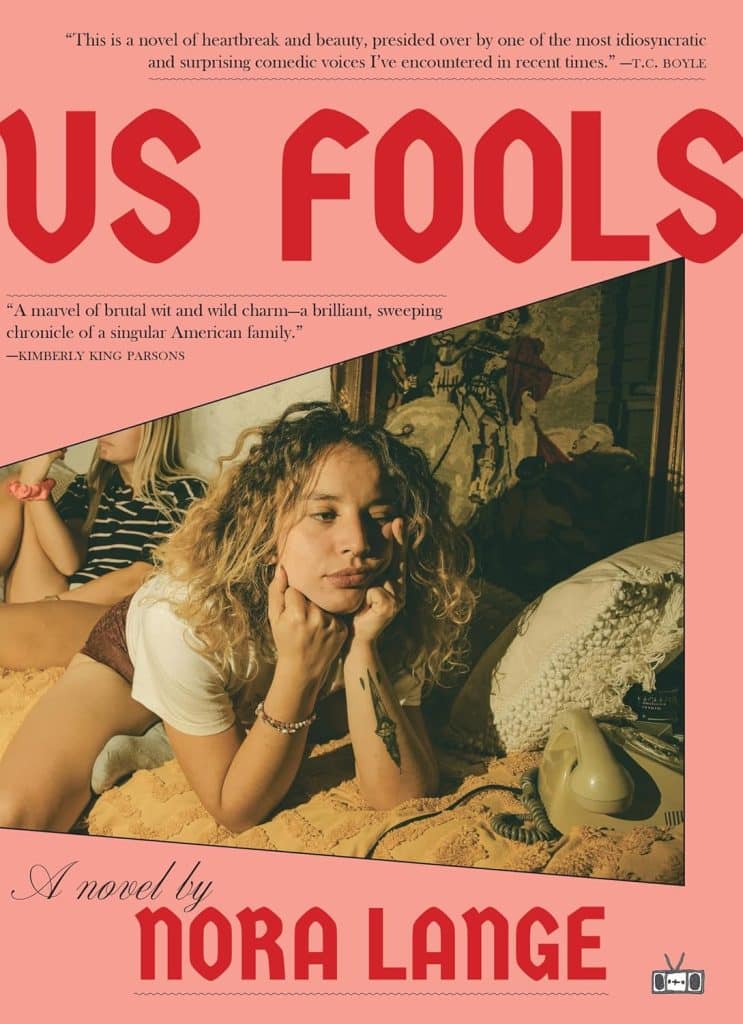
Today, I embarked on the journey of Us Fools by Nora Lange. This poignant and personal American narrative is about two remarkable sisters who, against all odds, come of age during the Midwestern farm crisis of the 1980s. In her debut novel, Nora Lange has crafted a lively, ambitious, and heart-wrenching portrait of two unique sisters determined to persevere despite the harsh realities of capitalism and their circumstances. After a pivotal national election, this seemed like the perfect book to read.

Joanne and Bernadette Fareown, born and raised on a family farm in rural Illinois, are deeply impacted by their parents’ tumultuous relationship and mounting financial debt, haunted by the unsettling history of the women in their family. Left to fend for themselves, the sisters delve into Greek mythology, feminism, and Virginia Woolf. As they grapple with these trying circumstances, they must devise unique coping mechanisms and question the validity of the American Dream. At the same time, the rest of the nation disregards their struggling community.

Jo and Bernie’s imaginative efforts to escape their parents’ harsh realities ultimately fall short, prompting the family to relocate to Chicago. There, Joanne—free-spirited, reckless, and struggling to manage her inner turmoil—rebels in increasingly desperate ways. After undergoing her most significant breakdown yet, Jo goes into exile in Deadhorse, Alaska. Bernadette takes it upon herself to apply everything she has learned from her sister to rekindle a sense of hope in a failing world.

×
American Dirt

Read: September 2021

Get this book

American Dirt

by Jeanine Cummins

American Dirt by Jeanine Cummins is one of the best books I have read this year.

American Dirt is a “cross-genre novel that combines elements of a commercial thriller, literary fiction, suspense, and romance.” American Dirt refers to the land that is the United States of America and to the difficulty undocumented migrants face both before and after crossing the border.

According to SuperSummary,

Lydia Quixano Pérez, a bookstore owner in Acapulco, saves her son Luca from a massacre that wipes out their entire family at a quinceañera cookout. The perpetrators are three sicarios, killers for Los Jardineros, a violent local cartel. Javier Crespo Fuentes, Lydia’s close friend and the jefe of Los Jardineros, ordered the hit in retaliation for an exposé written by Lydia’s husband, a journalist named Sebastián Pérez Delgado. Javier’s murderous rage stems not from the article itself, but from the impact it has on his daughter, Marta, who commits suicide when she learns of her father’s true identity. Lydia and Luca spend the rest of the novel running from Javier’s men, encountering a diverse cast of migrants along the road to the US.

I read the book at the same time that Haitian migrants were being deported at the border. Ms. Cummins writes passionately about the plight of migrants and the difficulties they face as they seek a new life in the US. This book highlighted this to me in ways that I understood intellectually but not emotionally.

Ms. Cummins refers to a sign she saw in Spanish in Tijuana while she was researching this book:

También de este lado hay sueños.

On this side, too, there are dreams.

All of our ancestors were migrants, and they all had dreams of a better life. We need to find a better way to help those who now have goals find a home so that their hopes for a better future can come true.

Subscribe

Contact Us

×
Life After Life

Read: August 2024

Get this book

Life After Life

by Kate Atkinson

Today, I embarked on the journey of Kate Atkinson‘s ‘Life After Life,’ a novel that has secured its place among The New York Times 100 Best Books of the Century. The book presents a unique and thought-provoking premise: What if you could live multiple lives until you found the perfect one? With its darkly comic, startlingly poignant, and utterly original narrative, it’s a testament to Kate Atkinson‘s unparalleled storytelling prowess.

The story unfolds in a unique narrative structure, beginning on a cold and snowy night in 1910 when Ursula Todd is born to an English banker and his wife. She dies before drawing her first breath. However, on that same night, Ursula Todd is born again, lets out a loud cry, and starts a life that will be pretty unusual. As she grows up, she also dies repeatedly in various ways while the young century moves inexorably toward its second cataclysmic world war.

Could Ursula’s seemingly endless life be the key to altering the world’s inevitable destiny? The prospect is both thrilling and hopeful. Yet, the question lingers – if she possesses this power, will she choose to wield it?

×
Still Life: A GMA Book Club Pick: A Novel

Read: January 2025

Get this book

Still Life: A Novel

by Sarah Winman

I began reading “Still Life,” a GMA Book Club pick by Sarah Winman. This captivating and bighearted novel weaves a rich tapestry of stories about people connected by love, war, art, flood, and the ghost of E.M. Forster. Kristen V. Brown, in The Atlantic Magazine’s Culture Survey, describes “Still Life” as the best novel she has recently read and considers it the best nonfiction work.

In Tuscany in 1944, as Allied troops advance and bombs fall around deserted villages, a young English soldier, Ulysses Temper, finds himself in the wine cellar of an abandoned villa. There, he encounters Evelyn Skinner, a middle-aged art historian who has come to Italy to salvage paintings from the ruins and recall long-forgotten memories of her youth. In each other, Ulysses and Evelyn find a kindred spirit amidst the rubble of war-torn Italy and set off on a course of events that will shape Ulysses’s life for the next four decades.

As Ulysses returns home to London, reimmersing himself in his crew at The Stoat and Parot—a motley mix of pub crawlers and eccentrics—he carries his time in Italy. And when an unexpected inheritance brings him back to where it all began, Ulysses knows better than to tempt fate and returns to the Tuscan hills.

With beautiful prose, extraordinary tenderness, and bursts of humor and light, Still Life is a sweeping portrait of unforgettable individuals who come together to make a family and a deeply drawn celebration of beauty and love in all its forms.


When you purchase a book through one of my links, I earn a small commission that helps support my passion for reading. This contribution allows me to buy even more books to share with you, creating an incredible cycle of discovering great reads together! Your support truly makes a difference!


×
Do You Remember Being Born?: A Novel

Read: September 2023

Get this book

Do You Remember Being Born?

by Sean Michaels

I started reading “Do You Remember Being Born?” by Sean Michaels, a writer who won the Scotiabank Giller Prize. The novel is about an aging poet named Marian Ffarmer, a legend in the world of poetry. However, despite her success, she struggles with financial issues and her son’s inability to buy a house. Marian has sacrificed her personal relationships and happiness to pursue her career but questions whether it is worth it.

One day, she receives an invitation from a Tech Company to travel to California and work with their poetry AI, Charlotte. The company wants her to co-author a poem with their bot in a historic partnership, which clashes with Marian’s beliefs about the individual pursuit of art. However, she decides to take this opportunity, even though it makes her feel like a sell-out and a skeptic. The encounter in California changes her life, work, and understanding of kinship.

The book explores the nature of language, art, labor, capital, family, and community. It’s a response to some of the most disquieting questions of our time. The author, Sean Michaels, is a winner of the Scotiabank Giller Prize, and his book is a love letter to and interrogation of the creative legacy. It’s a joyful recognition that belonging to one’s art must mean belonging to the world to survive meaningfully.


The Jan Lilien Education Fund sponsors ongoing sustainability and environmental awareness programs. Gifts made this month; I will match dollar-for-dollar. All donations are tax-deductible.

Subscribe

Contact Us

I receive a commission when you buy a book or product using a link on this page. Thank you for supporting Sharing Jan’s Love blog.


×