
Flowers Convert Apartment 3B Into a Home
Estimated reading time: 0 minutes, 2 seconds
Flowers Convert Apartment 3B Into a Home
Flowers Convert Apartment 3B Into a Home
Subscribe to Sharing Jan's Love Newsletter!
by Sena Jeter Naslund
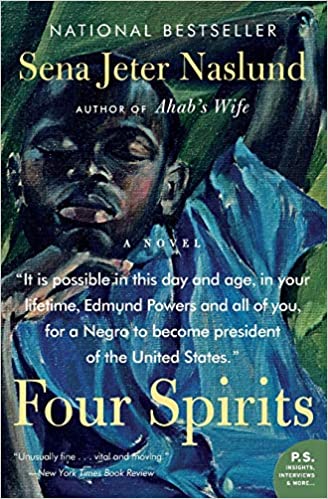
Four Spirits by Sena Jeter Naslund is a book that I could not put down. It is a page-turner. The title is from the four girls killed at Sunday School in Birmingham. When that happened in 1963, I was only a few years older and the impact brought home to me that we lived in a broken world that required repair. Like Stella Silver in the novel, my life changed as a result of the bombing.
As my reading list may indicate, I have always preferred non-fiction with a preference for history. Picking this novel up combined my prior reading habits with my desire to read books that my wife, Jan, recommended.
Weaving together the lives of blacks and whites, racists and civil rights advocates, and the events of peaceful protest and violent repression, Sena Jeter Naslund creates a tapestry of American social transformation at once intimate and epic.
In Birmingham, Alabama, twenty-year-old Stella Silver, an idealistic white college student, is sent reeling off her measured path by the events of 1963. Combining political activism with single parenting and night-school teaching, African American Christine Taylor discovers she must heal her own bruised heart to actualize meaningful social change. Inspired by the courage and commitment of the civil rights movement, the child Edmund Powers embodies hope for future change. In this novel of maturation and growth, Naslund makes vital the intersection of spiritual, political, and moral forces that have redefined America.
Stella’s idealism reminded me of how I became the person I am. Change is not easy but, it takes all of us to risk our lives to repair the world so, it works for all of us.
The book’s critical focus on the “intersection of spiritual, political, and moral forces that have redefined America” makes this a must-read. The redefinition has made America a better country but, we may be retreating from that ideal.
by Ta-Nehisi Coates
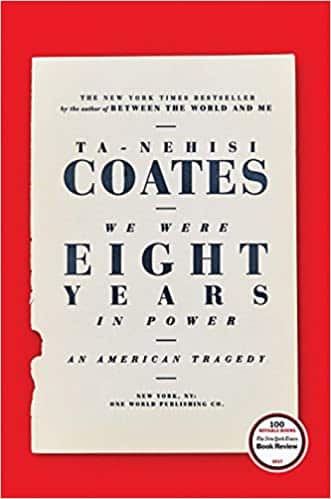
We Were Eight Years in Power by Ta-Nehisi Coates is a collection featuring the landmark essay The Case for Reparations he wrote for The Atlantic. Even though I am a subscriber to The Atlantic and have read many of the pieces, this is a must-read book as it reflects on race, Barack Obama’s presidency, and its jarring aftermath, including the election of Donald Trump.
We were eight years in power as the lament of Reconstruction-era black politicians as the American experiment in multiracial democracy ended with the return of white supremacist rule in the South. In this sweeping collection of new and selected essays, Ta-Nehisi Coates explores the tragic echoes of that history in our own time: the unprecedented election of a black president followed by a vicious backlash that fueled the election of the man Coates argues is America’s first white president.
But the story of these present-day eight years is not just about presidential politics. This book also examines the new voices, ideas, and movements for justice that emerged over this period and the effects of the persistent, haunting shadow of our nation’s old and unreconciled history. Coates powerfully examines the events of the Obama era from his intimate and revealing perspective:” the point of view of a young writer who begins the journey in an unemployment office in Harlem and ends it in the Oval Office, interviewing a president.
We Were Eight Years in Power features Coatesa’s iconic essays first published in The Atlantic, including Fear of a Black President, The Case for Reparations, and The Black Family in the Age of Mass Incarceration, along with eight fresh essays that revisit each year of the Obama administration through Coate’s own experiences, observations, and intellectual development, capped by a bracingly original assessment of the election that fully illuminated the tragedy of the Obama era. We Were Eight Years in Power is a vital account of modern America, from one of the definitive voices of this historic moment.
I recommend this book to all readers.
by Mathias Énard
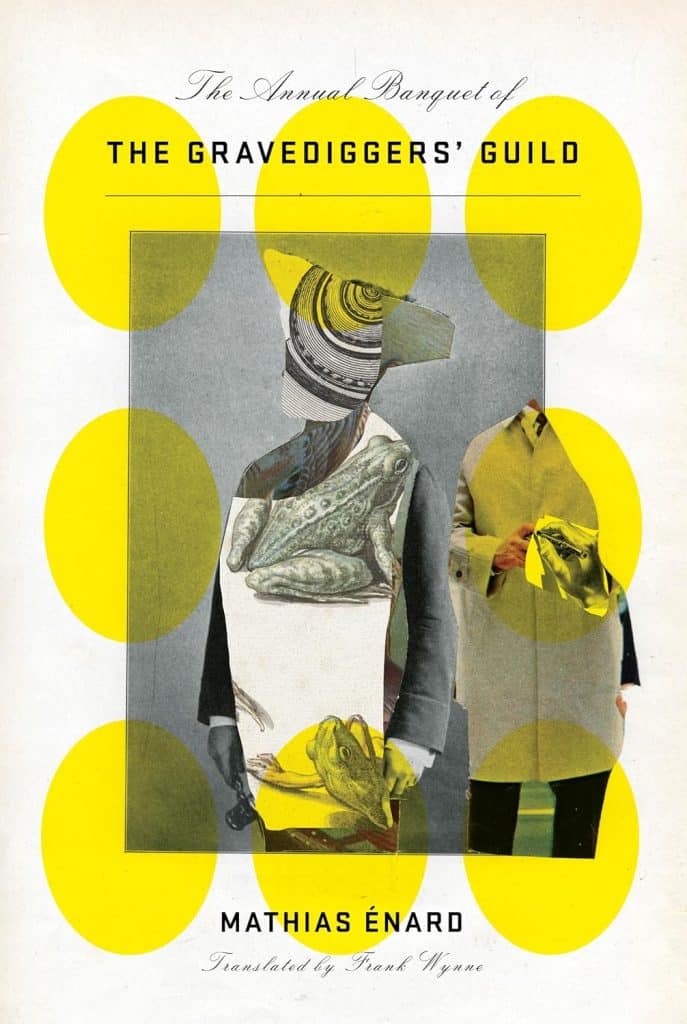
Today, I started reading “The Annual Banquet of the Gravediggers’ Guild” by Mathias Énard. The book has been translated into English by Frank Wynne. This novel is full of Mathias Énard‘s characteristic humor and extensive knowledge. It is a lively book where the boundaries between past and present are constantly blurred, set against a backdrop of excess reminiscent of Rabelais’ writing.
David Mazon, an anthropology student, moves from Paris to La Pierre-Saint-Christophe, a village in the marshlands of western France, to research his thesis on contemporary agrarian life. He is determined to understand the essence of the local culture and spends his time scurrying around on his moped to interview the residents.
David must be made aware of the extraordinary events in an ordinary location. This place, where wars and revolutions once occurred, is now a dancefloor for Death. When something dies, its soul is recycled by the Wheel of Life and thrown back into the world as a microbe, human, or wild animal – sometimes in the past and sometimes in the future. Once a year, Death and the living agree to a temporary truce, during which gravediggers indulge in a three-day feast filled with food, drink, and conversation.
Mathias Énard’s novel, The Annual Banquet of the Gravediggers’ Guild, is a riotous and exciting comic masterpiece that won the prestigious Prix Goncourt award. The novel is set in the French countryside and is filled with Énard’s characteristic wit and encyclopedic brilliance. Against a backdrop of excess, the story blurs the lines between past and present, creating a Rabelaisian world of chaos and humor.
The Jan Lilien Education Fund sponsors ongoing sustainability and environmental awareness programs. Gifts made this month; I will match dollar-for-dollar. All donations are tax-deductible.
I receive a commission when you buy a book or product using a link on this page. Thank you for supporting Sharing Jan’s Love blog.
by Katie Yee
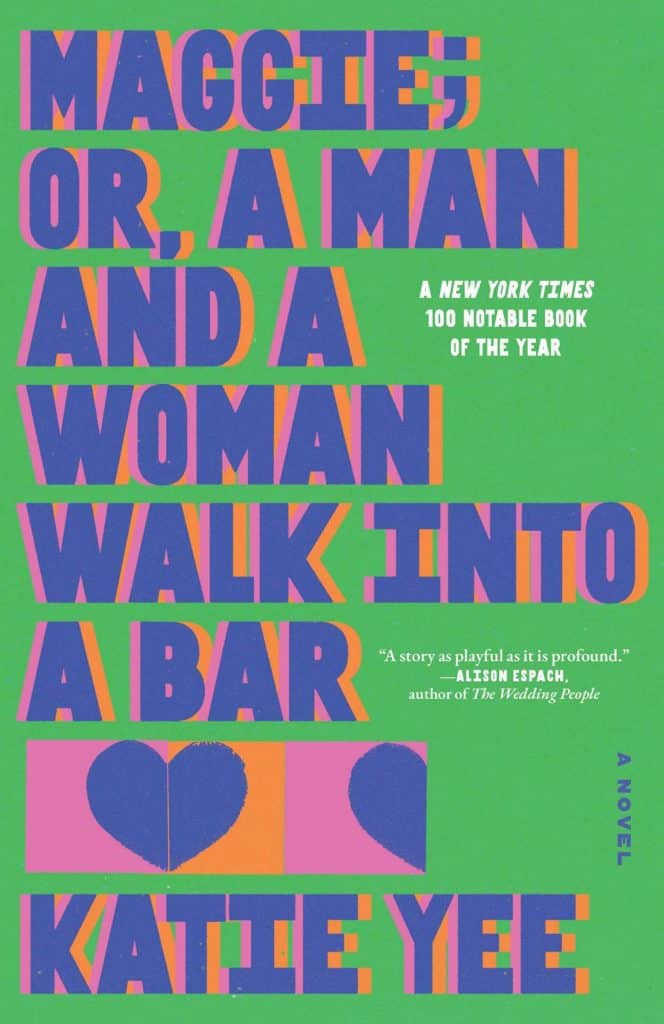
In the style of Jenny Offill and inspired by Nora Ephron‘s humorous and poignant writing on heartbreak and womanhood, “Maggie, or A Man and a Woman Walk Into a Bar” by Katie Yee is a masterclass in transforming personal tragedy into bold comedy. This debut novel has been recognized as a New York Times Notable Book and in Time’s list of 100 Must-Read Books of 2025, along with features in many other publications.
A man and a woman walk into a restaurant. The woman expects a lovely night filled with endless plates of samosas. Instead, she finds out her husband is having an affair with a woman named Maggie.
A short while after, her chest starts to ache. She walks into an examination room, where she finds out the pain in her breast isn’t just heartbreak—it’s cancer. She decides to call the tumor Maggie.
Unfolding in fragments over the following months, Maggie, or a Man and a Woman Walk Into a Bar follows the narrator as she embarks on a journey of grief, healing, and reclamation. She starts talking to Maggie (the tumor), getting acquainted with her body’s new inhabitant. She overgenerously creates a “Guide to My Husband: A User’s Manual” for Maggie (the other woman), hoping to ease the process of discovering her ex-husband’s whims and quirks. She turns her children’s bedtime stories into retellings of Chinese folklore passed down by her mother, in an attempt to help them fall in love with their shared culture—and perhaps save herself in the process.
Katie Yee is a writer based in Brooklyn. She has received fellowships from the Center for Fiction, the Asian American Writers’ Workshop, and Kundiman. Her work has been published in the Los Angeles Review of Books, No Tokens, The Believer, Washington Square Review, Triangle House, Epiphany, and Literary Hub. During the day, she works at the Brooklyn Museum, and at night, she writes—often under the watchful eye of her judgmental rescue dog, Ollie.
Discover your next favorite book and dive into a world of curated, exciting reads by purchasing through my links. You’ll have access to a diverse selection of books that I’ve personally vetted to ensure quality and enjoyment. Additionally, by supporting these selections, you’ll help me continue to provide you with more personalized recommendations. I earn a small commission from your purchase, which allows me to buy and share even more books with you. Your support truly makes a difference!
by Timothy Egan
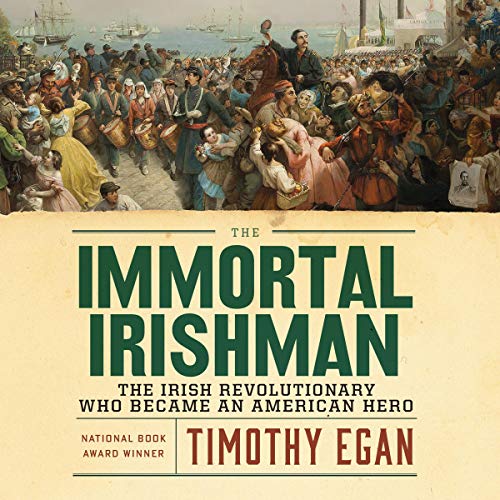
The Immortal Irishman: The Irish Revolutionary Who Became an American Hero by Timothy Egan is a book I started reading as The Worst Hard Timesincluded the first fifty pages.
I often only read a few pages and then return the book to the e-library. The Immortal Irishman was not the case, and I could not stop reading and borrowed the book immediately.
I had never heard of Thomas Francis Meagher or his life in Ireland or America. The story was fascinating, unique, and essential.
The Irish-American story, with all its twists and triumphs, is told through the improbable life of one man. A dashing young orator during the Great Famine of the 1840s, in which a million of his Irish countrymen died, Thomas Francis Meagher led a failed uprising against British rule, for which he was banished to a Tasmanian prison colony. He escaped and six months later was heralded in the streets of New York – the revolutionary hero, back from the dead, at the dawn of the great Irish immigration to America.
Meagher’s rebirth in America included his leading the newly formed Irish Brigade from New York in many of the fiercest battles of the Civil War – Bull Run, Antietam, Fredericksburg. Twice shot from his horse while leading charges, left for dead in the Virginia mud, Meagher’s dream was that Irish-American troops, seasoned by war, would return to Ireland and liberate their homeland from British rule.
The hero’s last chapter, as territorial governor of Montana, was a romantic quest for a true home in the far frontier. His death has long been a mystery to which Egan brings haunting, colorful new evidence.
I recommend this book.
by Emily St. John Mandel
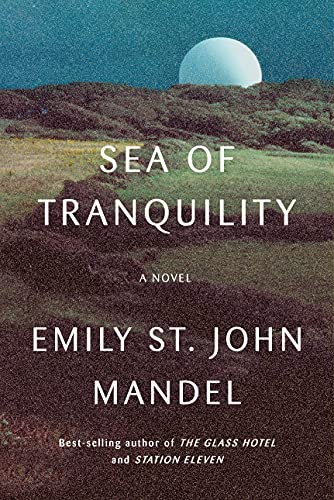
Sea of Tranquility by Emily St. John Mandel has been on my reading list for months. I recommend the book without reservations. Sea of Tranquility is a novel of art, time, love, and plague that takes the reader from Vancouver Island in 1912 to a dark colony on the moon three hundred years later, unfurling a story of humanity across centuries and space. It was a page-turner from page one.
With the delay of Artemis I, I have been thinking a lot about the Sea of Tranquility, the original lunar landing site. Sea of Tranquility reminded me of the days of my youth when we believed that NASA would colonize the moon as it is in the novel.
One of the passages that moved me was when Olive Llewellyn asked, “What if it always is the end of the world.” A second profound passage asks, “A life lived in a simulation is still a life.
The Goodreads summary provides a good overview,
Edwin St. Andrew is eighteen years old when he crosses the Atlantic by steamship, exiled from polite society following an ill-conceived diatribe at a dinner party. He enters the forest, spellbound by the beauty of the Canadian wilderness, and suddenly hears the notes of a violin echoing in an airship terminal—an experience that shocks him to his core.
Two centuries later a famous writer named Olive Llewellyn is on a book tour. She’s traveling all over Earth, but her home is the second moon colony, a place of white stone, spired towers, and artificial beauty. Within the text of Olive’s bestselling pandemic novel lies a strange passage: a man plays his violin for change in the echoing corridor of an airship terminal as the trees of a forest rise around him.
When Gaspery-Jacques Roberts, a detective in the Night City, is hired to investigate an anomaly in the North American wilderness, he uncovers a series of lives upended: The exiled son of an earl driven to madness, a writer trapped far from home as a pandemic ravages Earth, and a childhood friend from the Night City who, like Gaspery himself, has glimpsed the chance to do something extraordinary that will disrupt the timeline of the universe.
The Jan Lilien Education Fund sponsors ongoing sustainability and environmental awareness programs. Gifts made this month; I will match dollar-for-dollar. All donations are tax-deductible.
I receive a commission when you buy a book or product using a link on this page. Thank you for supporting Sharing Jan’s Love blog.