
My French Granddaughter

Estimated reading time: 1 minute, 41 seconds

Joy in Retirement is Spending Time with My Granddaughter

One joy I have found in retirement is spending time with my granddaughter. Every moment with her is a joy. Currently, I pick her from school afternoons a week. But I did this when I was working, to even though it is a joy to spend time with her, it is not a benefit of being retired.

This photo was from one of the visits when she was wearing a French beret. We stopped at the Gourmet Deli and got a croissant and hot chocolate. I introduced her to my deli friends and neighbors as my “French Granddaughter.

This summer she will visit Paris and Italy. Even though I have never been across the pond, I am very happy for her. It will help by expanding her horizons and support her as she grows into a young adult.

But I worry about her and her generation. What will we leave her generation? An overheated world? Homelessness? Housing poverty?

My son Mike has, for the last several years, documented her life in short videos. Each one was a pleasure to watch.

I am very proud of both of my sons! What Mike is doing for his daughter makes me incredibly proud. What a remarkable record of her life. As I watch each year’s video, it makes me cry, and it is such a remarkable testament to her life.

All we had when our sons were young were photos we had to get developed, and they are primarily in boxes. What if we had been able to do videos? What if my childhood had videos like this?

All I have in my childhood are aging 8 mm films! One day maybe I will convert them, but still, they are not the same.

Retirement is a work in progress. But every day with my granddaughter is a moment of true joy and pleasure.

Subscribe
Contact Us
Creative Commons License

This work is licensed under a Creative Commons Attribution-NonCommercial 4.0 International License.

2 comments add your comment

Share your thoughts and ideas

This site uses Akismet to reduce spam. Learn how your comment data is processed.

The Jan Lilien Education Fund!

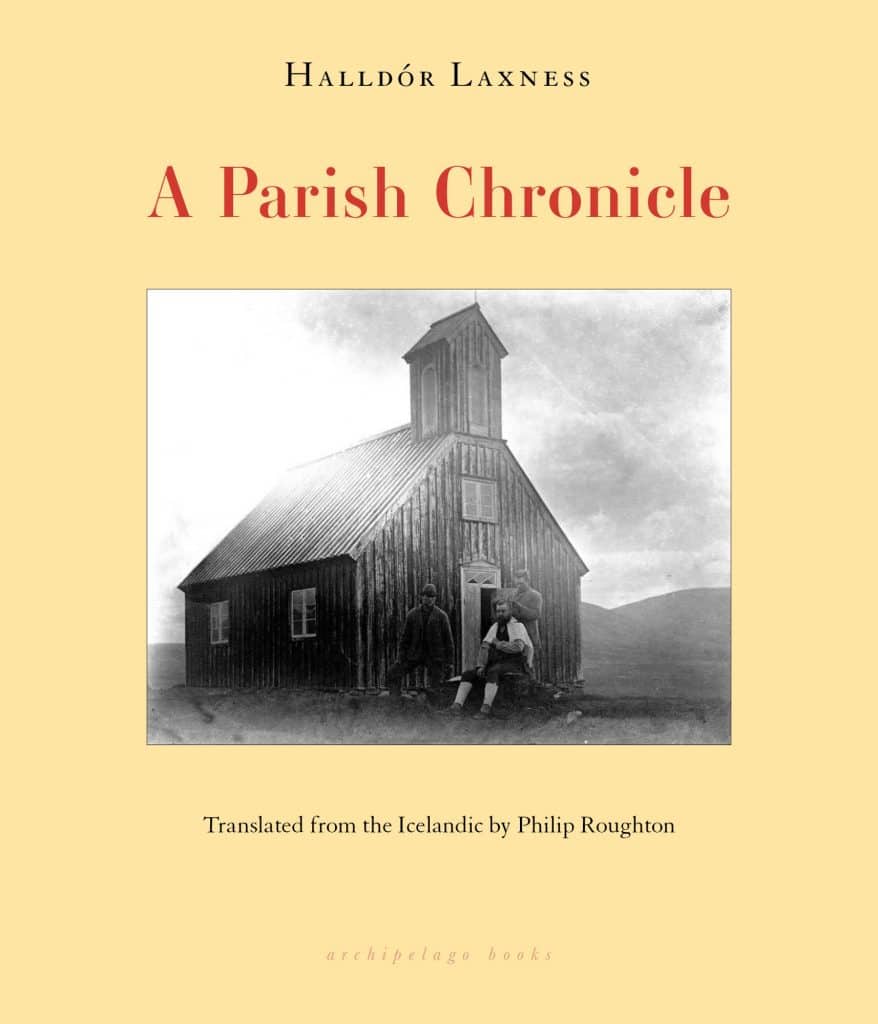
A Parish Chronicle

Read: February 2026

Get this book

A Parish Chronicle

by Halldór Laxness

In “A Parish Chronicle,” celebrated novelist Halldór Laxness weaves an essayistic tale about the unlikely miracles that keep a church—destined to disappear time and again—rooted on the same hillside. Laxness explores the minutiae of history, from the location of the ancient burial mound of national hero Egill Skallagrímsson to the end of the 19th century, where weak-sighted Ólafur and boisterous farmhand Gunna each play unexpected roles in the parish’s enduring survival.

1882. In the still of morning, Ólafur sharpens his scythe on the bone-dry pavestones that separate his farmhouse from the rest of Mosfell Valley, where life revolves around sheep. The sound of his hammer rings out like a high-pitched bell over the tussocky fields. Across the valley, perched on a hill that receives more sunshine than others, stands Mosfell Church. Nearby, the parish priest’s maid Gunna pours her “slosh,” a weak cup of coffee. Further afield in Reykjavík (“down south” as the locals say), the general assembly decides to revisit an old plan to cut costs by consolidating small parishes and calls for the demolition of Mosfell. Yet today a church stands on that same hillside—its sharp steeple silhouetted against the clouds, its crown bell hanging to the left of the altar.

This intimate tribute to life in Laxness‘s home valley also offers a thoughtful commentary on how the peculiarities of certain individuals can shape history. “A Parish Chronicle” is rich with life and detail.


Halldór Laxness (1902-1998) is the undisputed master of modern Icelandic fiction. He was awarded the Nobel Prize in Literature in 1955, “for his vivid epic power which has renewed the great narrative art of Iceland.” His body of work includes novels, essays, poems, plays, stories, and memoirs: more than sixty books in all. His works available in English include Independent People, The Fish Can Sing, World Light, Under the Glacier, Iceland’s Bell, and Paradise Reclaimed.

Philip Roughton has translated the work of Halldór Laxness, Jón Kalman Stefánsson, Kristín Marja Baldursdóttir, and many others. He has twice been awarded the American-Scandinavian Foundation Translation Prize for his renderings of Halldór Laxness‘s work, in 2001 for Iceland’s Bell and in 2015 for Wayward Heroes. He also received the 2016 Oxford-Weidenfeld Prize for his translation of Jón Kalman Stefánsson’s The Heart of Man. He lives in Iceland. Translator Residence: Akureyri, Iceland

Salvatore Scibona is the recipient of a Mildred and Harold Strauss Living Award from the American Academy of Arts and Letters. His first novel, The End, was a finalist for the National Book Award and winner of the Young Lions Fiction Award. His second novel, The Volunteer, was called a “masterpiece” by the New York Times and won the Ohioana Book Award. His books have been translated into ten languages. His work has won a Guggenheim Fellowship, a Pushcart Prize, an O. Henry Award, and a Whiting Award, and the New Yorker named him one of its “20 Under 40” fiction writers. He is the Sue Ann and John Weinberg Director of the Cullman Center for Scholars and Writers at the New York Public Library.


Discover your next favorite book and dive into a world of curated, exciting reads by purchasing through my links. You’ll have access to a diverse selection of books I’ve personally vetted for quality and enjoyment. Additionally, by supporting these selections, you’ll help me continue to provide you with more personalized recommendations. I earn a small commission from your purchase, which allows me to buy and share even more books with you. Your support truly makes a difference!


×
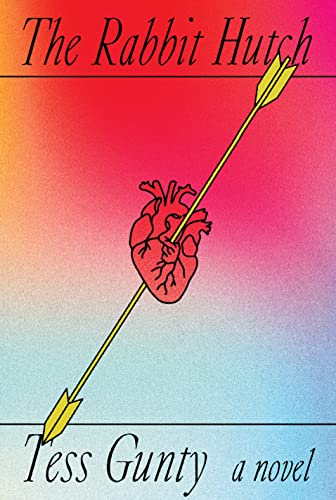
The Rabbit Hutch

Read: October 2022

Get this book

The Rabbit Hutch

by Tess Gunty

My sixtieth book this year, The Rabbit Hutch, was a page-turner that I highly recommend. The Rabbit Hutch by Tess Gunty is a debut novel that won the 2022 National Book Award for fiction. It is a novel about four teenagers—recently aged out of the state foster-care system—living together in an apartment building in the post-industrial Midwest, exploring the quest for transcendence and the desire for love.

As Viktor Frankl wrote in Man’s Search for Meaning, “love is the ultimate and highest goal to which man can aspire. Then I grasped the meaning of the greatest secret that human poetry and human thought and belief have to impart: The salvation of man is through love and in love.

Ms. Gunty’s book focuses on that ultimate and higher goal. If you can read only one book this year, I recommend The Rabbit Hutch!

“This week is the ceremony for the National Book Award, and one of the finalists is Tess Gunty, whose debut novel, The Rabbit Hutch, is a finalist in the fiction category,” said Kerry Nolan as she spoke with Ms. Gunty.

The Goodreads summary provides an overview,

The automobile industry has abandoned Vacca Vale, Indiana, leaving the residents behind, too. In a run-down apartment building on the edge of town, commonly known as the Rabbit Hutch, several people now reside quietly, looking for ways to live in a dying city. Apartment C2 is lonely and detached. C6 is aging and stuck. C8 harbors a great fear. But C4 is of particular interest.

Here live four teenagers who have recently aged out of the state foster-care system: three boys and one girl, Blandine, who The Rabbit Hutch centers around. Hauntingly beautiful and unnervingly bright, Blandine is plagued by the structures, people, and places that not only failed her but actively harmed her. Now all Blandine wants is an escape, a true bodily escape like the mystics describe in the books she reads.

Set across one week and culminating in a shocking act of violence, The Rabbit Hutch chronicles a town on the brink, desperate for rebirth. How far will its residents—especially Blandine—go to achieve it? Does one person’s gain always come at another’s expense? Tess Gunty’s The Rabbit Hutch is a gorgeous and provocative tale of loneliness and community, entrapment and freedom. It announces a major new voice in American fiction, one bristling with intelligence and vulnerability.


The Jan Lilien Education Fund sponsors ongoing sustainability and environmental awareness programs. Gifts made this month; I will match dollar-for-dollar. All donations are tax-deductible.

Subscribe

Contact Us

I receive a commission when you buy a book or product using a link on this page. Thank you for supporting Sharing Jan’s Love.

×
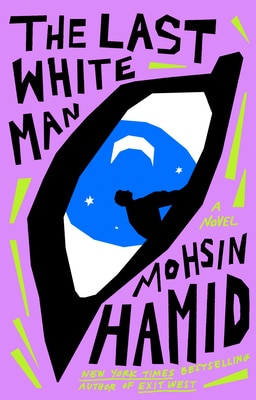
The Last White Man

Read: August 2022

Get this book

The Last White Man: A Novel

by Mohsin Hamid

The Last White Man by Mohsin Hamid is a story of love, loss, and rediscovery in a time of unsettling change. One morning, Anders, the novel’s protagonist,  wakes to find that his skin has turned dark, his reflection a stranger to him. At first, he tells only Oona, an old friend, newly a lover. Soon, reports of similar occurrences surface across the land.

In Mohsin Hamid’s “lyrical and urgent” prose (O Magazine), The Last White Man powerfully uplifts our capacity for empathy and the transcendence over bigotry, fear, and anger it can achieve.

I highly recommend this book. It was a page-turner that kept me thinking about love, loss, and rediscovery. All three are subjects close to my heart since Jan’s death.

I decided to read the book after hearing an interview with the author on All of It on WNYC.

The Goodreads summary provides a good overview,

One morning, Anders wakes to find that his skin has turned dark, his reflection a stranger to him. At first he tells only Oona, an old friend, newly a lover. Soon, reports of similar occurrences surface across the land. Some see in the transformations the long-dreaded overturning of an established order, to be resisted to a bitter end. In many, like Anders’s father and Oona’s mother, a sense of profound loss wars with profound love. As the bond between Anders and Oona deepens, change takes on a different shading: a chance to see one another, face to face, anew.

Hamid’s The Last White Man invites us to envision a future – our future – that dares to reimagine who we think we are, and how we might yet be together.


The Jan Lilien Education Fund sponsors ongoing sustainability and environmental awareness programs. Gifts made this month; I will match dollar-for-dollar. All donations are tax-deductible.

Subscribe

Contact Us

I receive a commission when you buy a book or product using a link on this page. Thank you for supporting Sharing Jan’s Love blog.

×
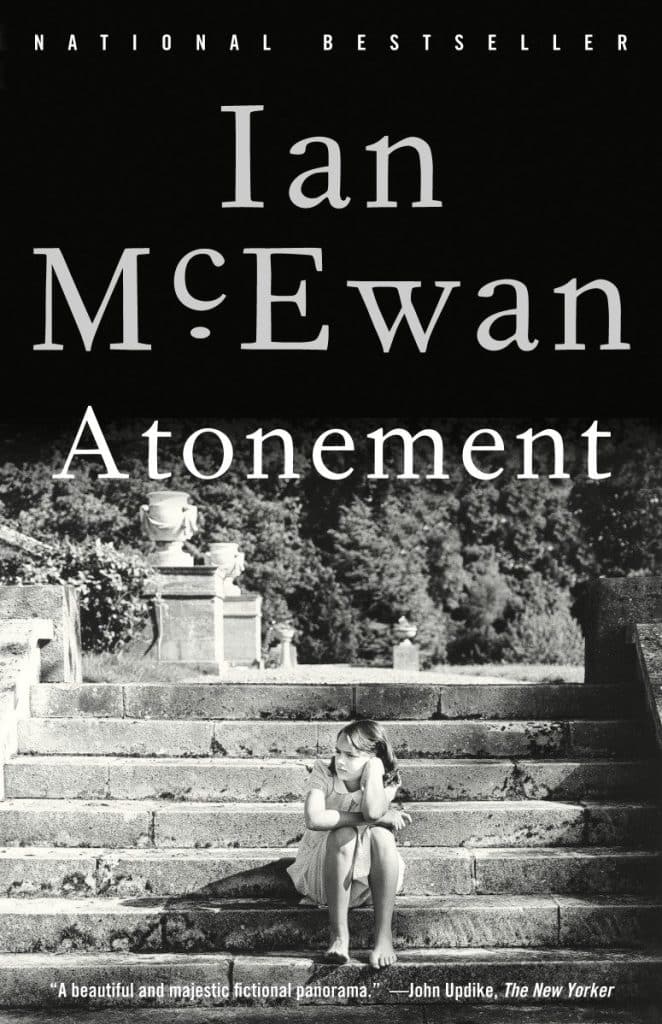
Atonement: A Novel

Read: August 2024

Get this book

Atonement: A Novel

by Ian McEwan

Today, I started reading “Atonement: A Novel” by Ian McEwan, an acclaimed Booker Prize-winning author. This symphonic novel explores complex themes, including love and war, childhood and class, guilt and forgiveness. It has been recognized as one of the New York Times’s 100 Best Books of the 21st Century, making it a must-read for those interested in these profound themes.

The story begins on a scorching summer day in 1935, when thirteen-year-old Briony Tallis witnesses a moment of flirtation between her older sister, Cecilia, and Robbie Turner, the son of a servant and Cecilia’s childhood friend. Briony’s incomplete understanding of adult motives and her literary gifts lead to a crime that significantly impacts their lives, taking them on an emotional journey of love, guilt, and forgiveness.

The narrative tracks the repercussions of this crime through the chaos and carnage of World War II, a vivid historical backdrop that immerses the reader into the twentieth century’s close. “Atonement” has been acclaimed for engaging readers on multiple levels, marking it a genuine masterpiece from the Booker Prize-winning, internationally bestselling author Ian McEwan.


Ian McEwan is a critically acclaimed author known for his nineteen novels and two short story collections. His first published work, a collection of short stories titled “First Love, Last Rites,” won the Somerset Maugham Award.

His notable novels include “The Child in Time,” which won the Whitbread Novel of the Year Award in 1987; “The Cement Garden“; “Enduring Love;” “Amsterdam;” which won the Booker Prize in 1998; “Atonement;” “Saturday;” “On Chesil Beach;” “Solar;” “Sweet Tooth;” “The Children Act;” “Nutshell;” and “Machines Like Me,” which became a number-one bestseller.

Several of his works, including “Atonement,” “Enduring Love,” “The Children Act;,” and “On Chesil Beach,” have been adapted into films.


Discover your next favorite book and dive into a world of curated, exciting reads by purchasing through my links. You’ll have access to a diverse selection of books that I’ve personally vetted to ensure quality and enjoyment. Additionally, by supporting these selections, you’ll help me continue to provide you with more personalized recommendations. I earn a small commission from your purchase, which allows me to buy and share even more books with you. Your support truly makes a difference!


×
The Rest Is Memory: A Novel

Read: January 2025

Get this book

The Rest Is Memory: A Novel

by Lily Tuck

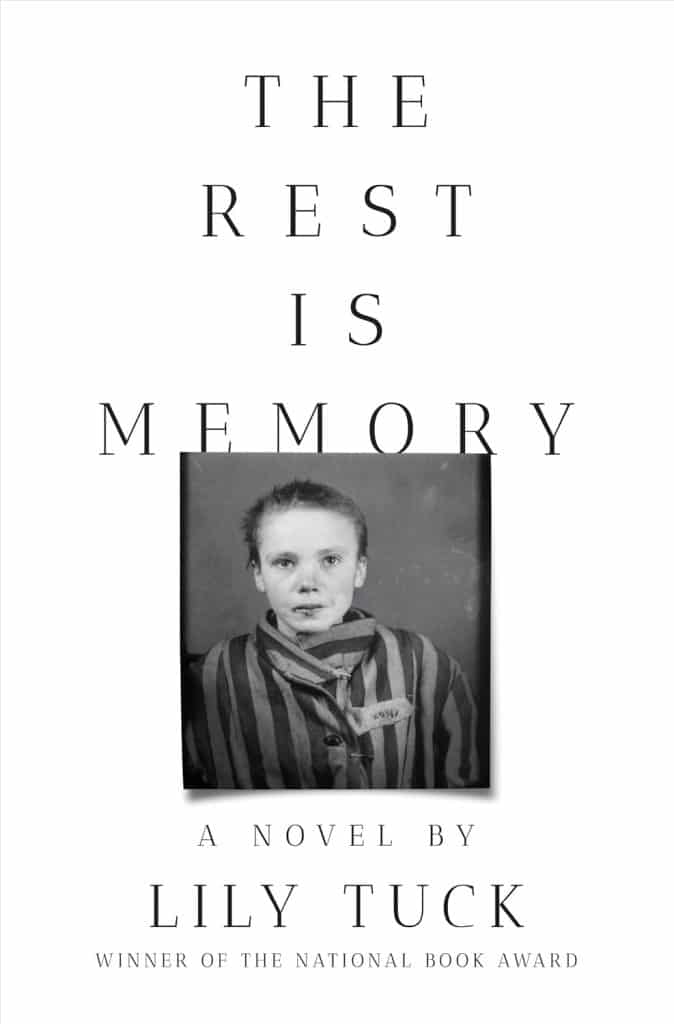
Today, I dove into “The Rest Is Memory: A Novel” by Lily Tuck, and it’s already leaving a powerful impression. This poignant tale follows a young Catholic girl’s harrowing journey to Auschwitz, woven in a captivating Rashomon-style narrative showcasing Tuck’s brilliance as a storyteller. Esquire has rightly placed it on their list of Best Books for Fall 2024, and I can see why.

In Tuck‘s skilled hands, “The Rest Is Memory” transforms into an unforgettable piece of historical reclamation, breathing life into an innocent soul who has long been remembered only through a haunting triptych of photographs. It’s a journey that promises to linger in my thoughts long after I’ve turned the last page.

In this mesmerizing novel by Lily Tuck, we first glimpse fourteen-year-old Czeslawa riding on the back of a boy’s motorcycle. Tuck imagines Czeslawa’s upbringing in a small Polish village before her world imploded in late 1942. Stripped of her modest belongings, she arrives at Auschwitz shorn and bearing the tattoo number 26947. Shortly after, she is photographed. Three months later, she is dead.

How did this happen to an ordinary Polish citizen? This is the question Tuck grapples with in this haunting narrative, which frames Czeslawa’s story within the tragic context of the six million Poles who perished during the German occupation. A decade before writing The Rest Is Memory“, Tuck read an obituary of the photographer Wilhelm Brasse, who took over 40,000 pictures of Auschwitz prisoners—including three of Czeslawa Kwoka, a Catholic girl from rural southeastern Poland. Tuck cut out these photos and kept them, determined to learn more about Czeslawa. However, she could only gather the barest facts: the village she came from, the transport she was on, that she was accompanied by her mother and neighbors, her tattoo number, and the date of her death. Tuck crafts a remarkable kaleidoscope of imagination from this scant evidence, something only our greatest novelists can achieve.

Susanna Moore described the novel as “Beautifully written, all the while instilling a sense of horror.” Tuck’s language swirls around the reader, yet no word is out of place. The subtly rotating images tumble forth, accelerating as we learn about Czeslawa’s tragic time in Auschwitz, as well as the lives of real individuals, including the brutal Commandant Rudolf Höss, his unconscionable wife Hedwig, psychiatrist and child rescuer Janusz Korczak, and the sharp Polish short story writer Tadeusz Borowski. Although we know Czeslawa’s fate, we must keep turning the pages, thoroughly captivated by Tuck’s nearly otherworldly prose.


When you purchase a book through one of my links, I earn a small commission that helps support my passion for reading. This contribution allows me to buy even more books to share with you, creating an incredible cycle of discovering great reads together! Your support truly makes a difference!


×
The Sellout: A Novel

Read: August 2024

Get this book

The Sellout: A Novel

by Paul Beatty

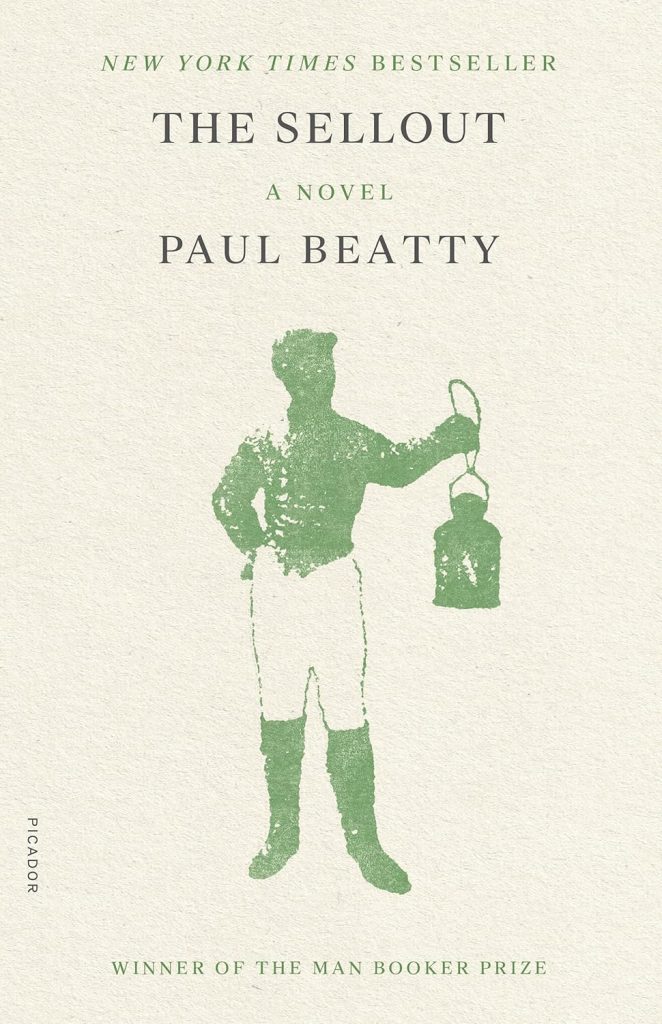
Today, I embarked on the unique narrative journey of The Sellout: A Novel by Paul Beatty. This biting satire, which revolves around a young man’s isolated upbringing and the race trial that takes him to the Supreme Court, is a testament to Paul Beattys comic genius. The Sellout, a part of The New York Times’ 100 Best Books of the Century, is a must-read for those who appreciate a distinct narrative style.

The Sellout is a bold and thought-provoking work that challenges the sacred tenets of the United States Constitution, urban life, and the civil rights movement. It also explores the father-son relationship and the pursuit of racial equality, symbolized by the black Chinese restaurant. This social commentary is a vital aspect of The Sellout, making it a relevant and engaging read for those interested in contemporary issues.

Born in the “agrarian ghetto” of Dickens—on the southern outskirts of Los Angeles—the narrator of The Sellout resigns himself to the fate of lower-middle-class Californians: “I’d die in the same bedroom I’d grown up in, looking up at the cracks in the stucco ceiling that’s been there since ’68 quake.”

Raised by a single father, a controversial sociologist, he spent his childhood as the subject of racially charged psychological studies. Despite these challenges, he believes his father’s pioneering work will result in a memoir that will solve his family’s financial woes. But when his father is killed in a police shoot-out, he realizes there never was a memoir. All that’s left is the bill for a drive-thru funeral.

Fuelled by this deceit and the general disrepair of his hometown, the narrator sets out to right another wrong: Dickens has been removed from the map to save California from further embarrassment. Enlisting the help of the town’s most famous resident—the last surviving Little Rascal, Hominy Jenkins—he initiates the most outrageous action conceivable: reinstating slavery and segregating the local high school, which lands him in the Supreme Court. His determination to fight injustice is a powerful force that drives the narrative forward.

×

Discover more from Sharing Jan’s Love

Subscribe now to keep reading and get access to the full archive.

Continue reading