New Book: Yellowface: A Novel

Estimated reading time: 0 minutes, 0 seconds
Yellowface

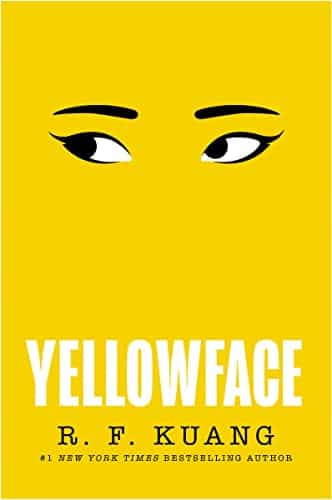
Yellowface: A Novel

I began reading Yellowface, a novel by R.F. Kuang, today. The storyline has been captivating as I scroll through the pages on my Kindle App. The book explores important themes such as cultural diversity, racism, the negative impact of cultural appropriation, and the alienation caused by social media. I find the protagonist, June Hayward, relatable and enjoyable to read about while experiencing Yellowface on my Kindle App.

Read book review Get this book All books

Share your thoughts and ideas

This site uses Akismet to reduce spam. Learn how your comment data is processed.

The Jan Lilien Education Fund!

Yellowface

Read: June 2023

Get this book

Yellowface: A Novel

by R.F. Kuang

I began reading Yellowface, a novel by R.F. Kuang, today. The storyline has been captivating as I scroll through the pages on my Kindle App. The book explores important themes such as cultural diversity, racism, the negative impact of cultural appropriation, and the alienation caused by social media. I find the protagonist, June Hayward, relatable and enjoyable to read about while experiencing Yellowface on my Kindle App.

June and Athena were both talented writers, but Athena’s success overshadowed June’s. After Athena’s sudden death, June rashly steals her completed manuscript, a groundbreaking novel about the Chinese laborers who contributed to World War I. June edits the book and takes credit for it, even going so far as to change her name and ethnicity for marketing purposes. She believes the story deserves to be told, regardless of who tells it.

As June’s book becomes a bestseller, she is haunted by the guilt of stealing Athena’s work. Her secret becomes harder to keep as evidence of her theft surfaces. June must confront her actions and decide how far she will go to protect her newfound success.


The Jan Lilien Education Fund sponsors ongoing sustainability and environmental awareness programs. Gifts made this month; I will match dollar-for-dollar. All donations are tax-deductible.

Subscribe

Contact Us

I receive a commission when you buy a book or product using a link on this page. Thank you for supporting Sharing Jan’s Love blog.


×
The Amen Effect

Read: March 2025

Get this book

The Amen Effect

by Sharon Brous

Sharon Brous, a prominent American rabbi, argues in The Amen Effect: Ancient Wisdom to Heal Our Hearts and Mend Our Broken World that the essential spiritual work of our time—though instinctual and often countercultural—focuses on connecting through celebration, sorrow, and solidarity. We must support one another in times of joy and pain, embracing vulnerability and possibility, nurturing relationships with shared purposes, and creating communities centered on care.

From one of our country’s most prominent rabbis comes this inspiring book about the power of community, based on one of her most impactful sermons. What will it take to mend our broken hearts and rebuild our society in a time of loneliness, isolation, social rupture, and alienation?

Brous contends that honoring our most basic human instinct—the yearning for authentic connection—is the way to reawaken our shared humanity and begin the healing process. This kind of sacred presence is captured by the word amen, a powerful ancient idea that we affirm the fullness of one another’s experience by demonstrating, in body and word: “I see you. You are not alone.”

An acclaimed preacher and storyteller, Brous pairs heart-driven anecdotes from her experience building and pastoring to a leading-edge faith community over the past two decades with ancient Jewish wisdom and contemporary science. The result is a clarion call: the sense of belonging engendered by our genuine presence is both a social and biological need, as well as a moral and spiritual necessity.

With original insights and practical tools, The Amen Effect translates foundational ideas into simple practices that connect us to our better angels, offering a blueprint for a more meaningful life and a more connected and caring world.

As she writes in the preface, after listing the joys and pains of life, weddings, births, and death,

It’s in these times that I feel the weight of the work, the privilege of being alive, the blessing of being so close to such raw beauty and pain. It’s there that I have learned the power of saying ‘Amen‘ to one another’s grief and joy, sorrow and celebration with our very presence. Of bearing witness to profound suffering and protesting injustice with our very presence. Of comforting and consoling, surviving and thriving with our very presence. What I’ve learned, during the years, is the meaning of sacred companionship. I have seen, in ways subtle and pronounced, a longing to connect with others who can help hold the pain, a need to share what we’ve learned in the trenches, and a desire to give, even when we ourselves have barely caught our breath. And I have seen how knowing that we’re not alone can both heighten our joy and help us endure unimaginable hardship.

Click here to read about my experience listening to Rabbi Brous at the Kol Tzedek Speakers Series at Temple Emanu-El in Westfield.


Sharon Brous is the senior and founding rabbi of IKAR, a leading-edge Jewish community based in Los Angeles, and the author of The Amen Effect: Ancient Wisdom to Heal Our Hearts and Mend Our Broken World, a national bestseller.

In 2013, Brous blessed President Obama and Vice President Biden at the Inaugural National Prayer Service, and in 2021, returned to bless President Biden and Vice President Harris and then led the White House Passover Seder 2021 and the Hanukkah candle lighting with the Vice President and Second Gentleman in 2023. She was ranked as the number one most influential Rabbi in America by Newsweek/The Daily Beast. She has also been recognized by The Forward and the Jerusalem Post as one of the most influential Jews alive today. Her work has appeared in prominent publications, including The New York Times, The Los Angeles Times, and The Washington Post. Additionally, her TED talk, “Reclaiming Religion,” has been viewed by over 1.5 million people.

Brous is part of the inaugural cohort of Auburn Seminary’s Senior Fellows program, which brings together top faith leaders working on the frontlines for justice. She sits on the faculty of REBOOT and serves on the International Council of the New Israel Fund, as well as the national steering committee for the Poor People’s Campaign.

A Columbia University graduate (holding both undergraduate and M.A. degrees in Human Rights), she was ordained by the Jewish Theological Seminary and resides in Los Angeles with her husband and children.


When you purchase a book through one of my links, I earn a small commission that helps support my passion for reading. This contribution allows me to buy even more books to share with you, creating an incredible cycle of discovering great reads together! Your support truly makes a difference!


×
We Do Not Part

Read: March 2025

Get this book

We Do Not Part: A Novel

by Han Kang

Today, I explored “We Do Not Part,” the latest novel by Han Kang, the 2024 Nobel Prize in Literature laureate. Translated by the talented e. yaewon and Paige Aniyah Morris, this book offers a remarkable journey. The New York Times has called it Kang’s most revealing work since her acclaimed novel, “The Vegetarian.” What captivates me the most is how it intricately weaves the story of two women’s friendship while shedding light on a hidden chapter of Korean history.

One winter morning, Kyungha receives an urgent message from her friend Inseon, asking her to visit a hospital in Seoul. Inseon has injured herself in an accident and begs Kyungha to return to Jeju Island, where she lives, to save her beloved pet—a white bird named Ama. A snowstorm hits the island when Kyungha arrives. At all costs, she must reach Inseon’s house, but the icy wind and blizzards slow her down as night falls. She wonders if she will arrive in time to save the animal—or even survive the terrible cold that envelops her with every step. Lost in a world of snow, she does not yet suspect the vertiginous plunge into darkness that awaits her at her friend’s house.

Blurring the boundaries between dream and reality, “We Do Not Part” powerfully illuminates a forgotten chapter of Korean history buried for decades, bringing to light the lost voices of the past to prevent them from fading into oblivion. It is both a tribute to enduring friendship and a plea for remembrance. The novel tells a story of profound love in the face of unspeakable violence and celebrates life, however fragile.


Han Kang was born in 1970 in South Korea. She is the author of The Vegetarian, which I have read, and winner of the International Booker Prize,  Human ActsThe White BookGreek Lessons, and We Do Not Part. In 2024, she received the Nobel Prize in Literature.

e. yaewon is based in Korea and translates from and into Korean, including titles by Hwang Jungeun, Deborah Levy, and Samuel Beckett.

Paige Aniyah Morris divides her time between the United States and Korea. Recent translations include works by Pak Kyongni, Ji-min Lee, and Chang Kang-myoung.


When you purchase a book through one of my links, I earn a small commission that helps support my passion for reading. This contribution allows me to buy even more books to share with you, creating an incredible cycle of discovering great reads together! Your support truly makes a difference!


×
1944: FDR and the Year That Changed History

Read: October 2019

Get this book

1944: FDR and the Year That Changed History

by Jay Winik

1944: FDR and the Year That Changed History by Jay Winik is a book that I had put off reading several times. When I finally did read it, I could not remember why I had not read it sooner. Had I gone to graduate school and become a professor, it might have been the type of book I might write, and I certainly would have had on my list of books for my classes. 

As The NY Times wrote, “Jay Winik brings to life in gripping detail the year 1944, which determined the outcome of World War II and put more pressure than any other on an ailing yet determined President Roosevelt.” Reading a book about events five years before my birth that transformed the world I live in becomes an easy page-turner.

It was not inevitable that World War II would end as it did or that it would even end well. Nineteen forty-four was a year that could have stymied the Allies and cemented Hitler’s waning power. Instead it saved those democracies – but with a fateful cost. Now, in a superbly told story, Jay Winik, the acclaimed author of April 1865 and The Great Upheaval, captures the epic images and extraordinary history as never before.

1944 witnessed a series of titanic events: FDR at the pinnacle of his wartime leadership as well as his reelection, the planning of Operation Overlord with Churchill and Stalin, the unprecedented D-Day invasion, the liberation of Paris, and the horrific Battle of the Bulge, and the tumultuous conferences that finally shaped the coming peace. But on the way, millions of more lives were still at stake as President Roosevelt was exposed to mounting evidence of the most grotesque crime in history, the Final Solution. Just as the Allies were landing in Normandy, the Nazis were accelerating the killing of millions of European Jews.

Winik shows how escalating pressures fell on an all but dying Roosevelt, whose rapidly deteriorating health was a closely guarded secret. Here then, as with D-Day, was a momentous decision for the president. Was winning the war the best way to rescue the Jews? Was a rescue even possible? Or would it get in the way of defeating Hitler? In a year when even the most audacious undertakings were within the world’s reach, including the liberation of Europe, one challenge – saving Europe’s Jews – seemed to remain beyond Roosevelt’s grasp.

I recommend this book.

Subscribe

Contact Us

×
Being Mortal

Read: August 2019

Get this book

Being Mortal

by Atul Gawande

Before departing for Toronto to celebrate our 44th Wedding Anniversary, I went through the e-library. Everything on my list that I wanted to read was not available except for this book. Being Mortal by Atul Gawande is the book I read on our vacation before Jan’s diagnosis of non-Hodgkin Large B-cell Lymphoma.

Selecting Being Mortal might seem an accidental choice to some, and I believe it was a divine intervention. It prepared me to be a caregiver to my wife over the nineteen months of her fight with cancer. It helped me focus on the good life that my wife lived and not the pain and suffering.

Atul Gawande describes his book as “riveting, honest, and humane. Being Mortal shows that the ultimate goal is not a good death but a good life – to the very end.”

When I read the book, I wondered what I could have done to help my mother in her final years. The book offers an excellent overview of how nursing homes and assisted living facilities have struggled to meet the needs of their residents.

Dr. Gawande provides an in-depth overview of the benefits of hospice care. Although I knew of this option, reading this book helped me understand that I was ready for hospice when my wife came home for the last time.

He reminds us that “when it comes to the inescapable realities of aging and death, what medicine can do often runs counter to what it should.” As he writes in the book, the current system does not work and, in many cases, actually shortens life.

This book has had a lasting impact on my life. It allowed me to be a loving caregiver to my wife when she needed it more than anything else. I read it when it would be most beneficial to me.

I highly recommend this book.


Atul Gawande is the author of several bestselling books: Complications, a finalist for the National Book Award; Better; The Checklist Manifesto; and Being Mortal. He is also a surgeon at Brigham and Women’s Hospital in Boston, a staff writer for The New Yorker, and a professor at Harvard Medical School and the Harvard School of Public Health. He has won the Lewis Thomas Prize for Writing about Science, a MacArthur Fellowship, and two National Magazine Awards. In his work in public health, he is the Founder and Chair of Ariadne Labs, a joint center for health systems innovation, and Lifebox, a nonprofit organization dedicated to making surgery safer globally. He is also the chair of Haven, where he served as CEO from 2018 to 2020. He and his wife have three children and live in Newton, Massachusetts.


When you purchase a book through one of my links, I earn a small commission that helps support my passion for reading. This contribution allows me to buy even more books to share with you, creating an incredible cycle of discovering great reads together! Your support truly makes a difference!

Enjoy a limited-time offer of 20% off your next book purchase at Bookshop.org!


×
Memorial Days: A Memoi

Read: March 2025

Get this book

Memorial Days: A Memoir

by Geraldine Brooks

Today, I started reading “Memorial Days: A Memoir” by Geraldine Brooks, the bestselling Pulitzer Prize-winning author of Horse”. In this poignant and beautifully written memoir, she explores sudden loss and the journey toward healing. Why do I choose to read novels and memoirs about loss and grief? Perhaps it’s because, as Martín Prechtel wrote in his book The Smell of Rain on Dust”, “Grief is praise because it is the natural way love honors what it misses.”

Many cultural and religious traditions expect grieving people to withdraw from the world. In modern life, we frequently encounter bureaucratic obstacles and lengthy to-do lists. This is precisely what happened to Geraldine Brooks when her partner of more than thirty years, Tony Horwitz—just sixty years old and, to her knowledge, vigorous and healthy—collapsed and died on a sidewalk in Washington, D.C.

After spending their early years together in conflict zones as foreign correspondents, Geraldine and Tony settled down to raise two sons on Martha’s Vineyard. They lived a fulfilling life filled with meaningful work, good humor, and tenderness. Geraldine and Tony spent their days writing and evenings cooking family dinners or enjoying sunsets with friends at the beach. Their peaceful existence abruptly ended on Memorial Day 2019 when Geraldine received the dreaded phone call we all fear. The demands of life became immediate and overwhelming, leaving little room for grief. The sudden loss created a profound void in their lives.

Three years later, she booked a flight to a remote island off the coast of Australia to give herself the time to mourn finally. She often spent days alone in a shack on the pristine, rugged coast without seeing another person. It was a space for her to reflect on the various ways cultures grieve and consider which rituals might help her rebuild her life in the wake of Tony’s death.

Memorial Days,” a spare and profoundly moving memoir, portrays a larger-than-life man and the timeless love between two souls. It exquisitely captures the joy, agony, and mystery of life.


Geraldine Brooks is the author of six novels, including “Horse,” “People of the Book,” “Year of Wonders,” and the Pulitzer Prize-winning “March.” She has also written acclaimed nonfiction works, including “Nine Parts of Desire” and “Foreign Correspondence.” Her books have been translated into more than thirty languages and have sold millions of copies worldwide. Born and raised in Australia, Brooks now divides her time between Sydney and Martha’s Vineyard.


My journey through grief has significantly helped me grow as a person by focusing on conscientious resilience. I make it a point to read and walk daily, engage in worship, and actively participate as a volunteer and a good neighbor in my community. Fourteen hundred days ago, I wasn’t sure if I could continue living or how to move forward. However, by concentrating on strengthening my resilience, I now lead a life filled with meaning and purpose. I choose to look back not on what I lost but on what I have gained.

As my friend Danny said nearly a year ago, “You are an incredible person! You are a new person! A better person! Although Jan is not here physically, she has done so much for you!

My Rabbi, Rav Uri, echoed similar sentiments during his remarks when I received the Rev. Dr. Martin Luther King, Jr. Distinguished Service Award. If their beliefs are true, much of my progress directly results from my conscientious resilience!


When you purchase a book through one of my links, I earn a small commission that helps support my passion for reading. This contribution allows me to buy even more books to share with you, creating an incredible cycle of discovering great reads together! Your support truly makes a difference!


×
The Rabbit Hutch

Read: October 2022

Get this book

The Rabbit Hutch

by Tess Gunty

My sixtieth book this year, The Rabbit Hutch, was a page-turner that I highly recommend. The Rabbit Hutch by Tess Gunty is a debut novel that won the 2022 National Book Award for fiction. It is a novel about four teenagers—recently aged out of the state foster-care system—living together in an apartment building in the post-industrial Midwest, exploring the quest for transcendence and the desire for love.

As Viktor Frankl wrote in Man’s Search for Meaning, “love is the ultimate and highest goal to which man can aspire. Then I grasped the meaning of the greatest secret that human poetry and human thought and belief have to impart: The salvation of man is through love and in love.

Ms. Gunty’s book focuses on that ultimate and higher goal. If you can read only one book this year, I recommend The Rabbit Hutch!

“This week is the ceremony for the National Book Award, and one of the finalists is Tess Gunty, whose debut novel, The Rabbit Hutch, is a finalist in the fiction category,” said Kerry Nolan as she spoke with Ms. Gunty.

The Goodreads summary provides an overview,

The automobile industry has abandoned Vacca Vale, Indiana, leaving the residents behind, too. In a run-down apartment building on the edge of town, commonly known as the Rabbit Hutch, several people now reside quietly, looking for ways to live in a dying city. Apartment C2 is lonely and detached. C6 is aging and stuck. C8 harbors a great fear. But C4 is of particular interest.

Here live four teenagers who have recently aged out of the state foster-care system: three boys and one girl, Blandine, who The Rabbit Hutch centers around. Hauntingly beautiful and unnervingly bright, Blandine is plagued by the structures, people, and places that not only failed her but actively harmed her. Now all Blandine wants is an escape, a true bodily escape like the mystics describe in the books she reads.

Set across one week and culminating in a shocking act of violence, The Rabbit Hutch chronicles a town on the brink, desperate for rebirth. How far will its residents—especially Blandine—go to achieve it? Does one person’s gain always come at another’s expense? Tess Gunty’s The Rabbit Hutch is a gorgeous and provocative tale of loneliness and community, entrapment and freedom. It announces a major new voice in American fiction, one bristling with intelligence and vulnerability.


The Jan Lilien Education Fund sponsors ongoing sustainability and environmental awareness programs. Gifts made this month; I will match dollar-for-dollar. All donations are tax-deductible.

Subscribe

Contact Us

I receive a commission when you buy a book or product using a link on this page. Thank you for supporting Sharing Jan’s Love.

×