New Book: Seascraper

Estimated reading time: 0 minutes, 0 seconds
Seascraper

Seascraper

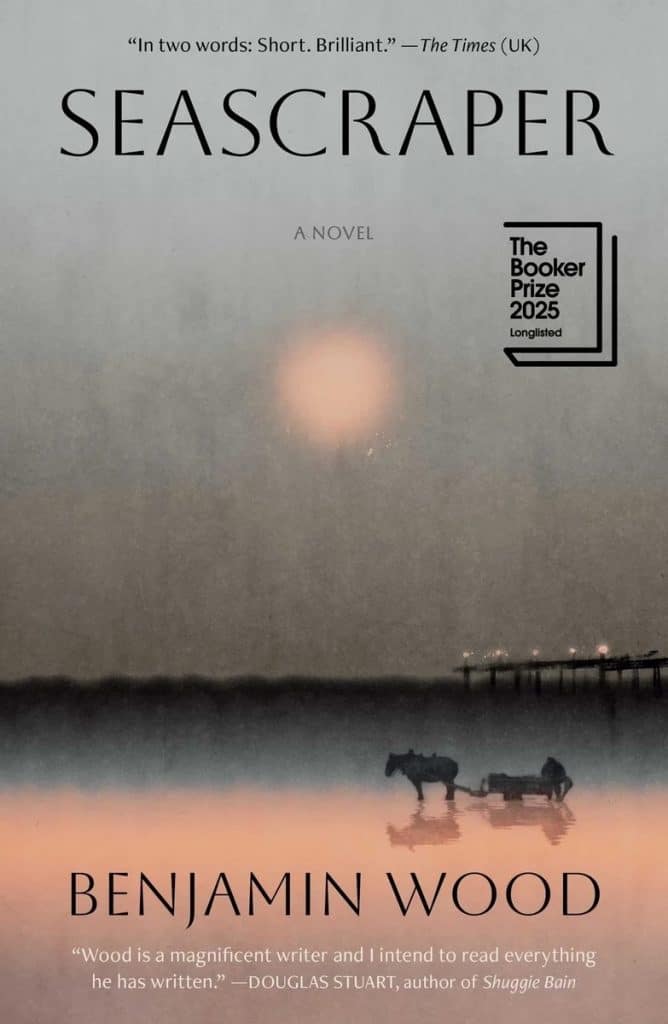
Haunting, timeless, and stunningly atmospheric, Seascraper by Benjamin Wood explores the story of a young man whose quiet existence is dramatically altered in just one day. His circumstances confine him, yet he yearns for a sense of fulfillment that extends far beyond the world he knows. The novel has been longlisted for the 2025 Booker Prize.

Read book review Get this book All books

The Jan Lilien Education Fund!

Seascraper

Read: November 2025

Get this book

Seascraper: A Novel

by Benjamin Wood

Haunting, timeless, and stunningly atmospheric, Seascraper by Benjamin Wood explores the story of a young man whose quiet existence is dramatically altered in just one day. His circumstances confine him, yet he yearns for a sense of fulfillment that extends far beyond the world he knows. The novel has been longlisted for the 2025 Booker Prize.

Twenty-year-old Thomas Flett lives a slow, deliberate life with his mother in Longferry, Northern England, working his grandpa’s trade as a shanker. He rises early to take his horse and cart to the drizzly shore to scrape for shrimp, and spends the afternoon selling his wares, trying to wash away the salt and sea-scum, pining for his neighbor, Joan Wyeth, and playing songs on his guitar. At heart, he is a folk musician, but this remains a private dream.

Then a mysterious American arrives in town and enlists Thomas’s help in finding a perfect location for his next movie. Though skeptical at first, Thomas learns to trust the stranger, Edgar, and, shaken from the drudgery of his days by the promise of Hollywood glamour, begins to see a different future for himself. But how much of what Edgar claims is true, and how far can his inspiration carry Thomas?


Benjamin Wood was born in 1981 and grew up in Merseyside. Seascraper is his fifth novel. His previous works were shortlisted for the Costa First Novel Award, the Commonwealth Book Prize, the Sunday Times Young Writer of the Year Award, the RSL Encore Award, the CWA Gold Dagger Award, and the European Union Prize for Literature. In 2014, he won France’s Prix du Roman Fnac.

He is a senior lecturer in creative writing at King’s College, London, and lives in Surrey with his wife and sons.


Discover your next favorite book and dive into a world of curated, exciting reads by purchasing through my links. You’ll have access to a diverse selection of books that I’ve personally vetted to ensure quality and enjoyment. Additionally, by supporting these selections, you’ll help me continue to provide you with more personalized recommendations. I earn a small commission from your purchase, which allows me to buy and share even more books with you. Your support truly makes a difference!


×
Stony The Road

Read: October 2019

Get this book

Stony the Road

by Henry Louis Gates Jr

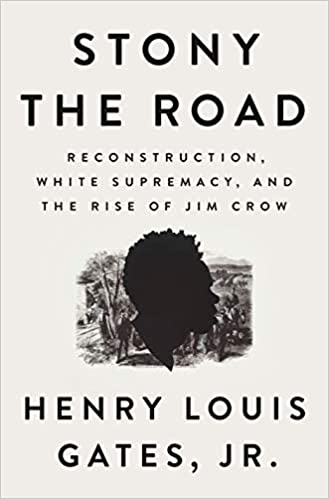
Stony the Road: Reconstruction, White Supremacy, and the Rise of Jim Crow by Henry Louis Gates Jr. is a must-read book, especially with white nationalism on the rise.

I read this book when Jan began her chemotherapy. Although the book’s subject – the retreat from reconstruction – was one I studied in college, at times, I found it hard to focus on the material and my wife’s health at the same time. I stayed on the stony road as it is a subject we need to understand if we are going to correct the past failures.

As The New York Times wrote,

Henry Louis Gates Jr.’s “Stony the Road: Reconstruction, White Supremacy, and the Rise of Jim Crow,” an indispensable guide to the making of our times, addresses 2017’s mystifications. The book sets the Obama era beside Reconstruction and the Trump era beside the white supremacist terrorism of Redemption, the period beginning in 1877 during which Reconstruction’s nascent, biracial democracy was largely dismantled. Gates juxtaposes the optimism of Reconstruction, the despair of Redemption, and the promise of the New Negro movement — the effort by black Americans, starting around the turn of the 20th century, to craft a counternarrative to white supremacy. In doing so, “Stony the Road” presents a bracing alternative to Trump-era white nationalism.

Growing up in the Jim Crow south, I was well aware of white nationalism. This book is an essential read if we are going to make America a multi-racial democracy.

Subscribe

Contact Us

×
Tomorrow, and Tomorrow, and Tomorrow: A Novel

Read: July 2024

Get this book

Tomorrow, and Tomorrow, and Tomorrow: A Novel

by Gabrielle Zevin

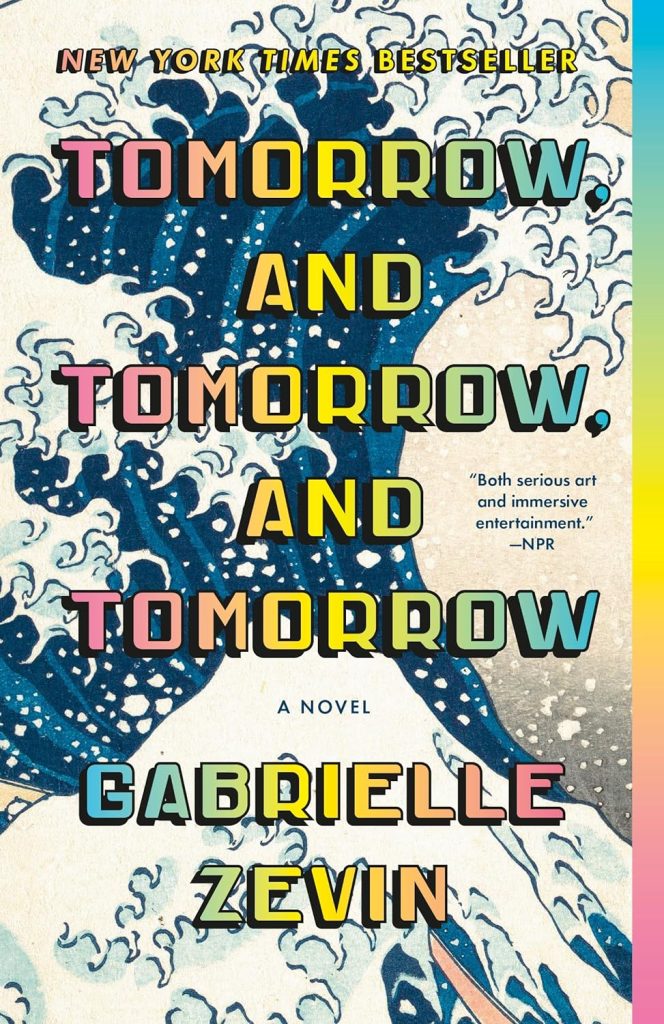
I delved into the pages of “Tomorrow, and Tomorrow, and Tomorrow: A Novel” by Gabrielle Zevin. The narrative unfolds the lives of Sam and Sadie, two college friends who evolve into creative partners in video game design. Their journey is a tapestry of fame, joy, tragedy, duplicity, and a form of immortality, all woven into a unique love story that captivated me like no other.

This love story uniquely portrays the challenges and triumphs of a relationship in the context of their shared creative endeavors.

On a bitter-cold day in December of his junior year at Harvard, Sam Masur exits a subway car and sees Sadie Green amid the hordes of people waiting on the platform. He calls her name. For a moment, she pretends she hasn’t heard him, but then, she turns, and a game begins: a legendary collaboration that will launch them to stardom.

These friends, who have been close since childhood, take bold steps, borrow money, and seek favors. Even before they graduate from college, they have birthed their first blockbuster, Ichigo. In a blink, the world is at their feet. Sam and Sadie, not yet twenty-five, are shining with brilliance, success, and wealth. But these attributes can’t shield them from their emotional rollercoaster of creative aspirations and the heartbreaks that come with it.

Spanning thirty years, from Cambridge, Massachusetts, to Venice Beach, California, and lands in between and far beyond, Gabrielle Zevin‘s Tomorrow, Tomorrow, and Tomorrow provides a profound exploration of the diverse nature of identity, disability, failure, the redemptive possibilities in play, and above all, our deep-seated need to connect: to be loved and to love. It’s a journey that will make you reflect on your life and relationships.


When you purchase a book through one of my links, I earn a small commission that helps support my passion for reading. This contribution allows me to buy even more books to share with you, creating an incredible cycle of discovering great reads together! Your support truly makes a difference!


×
Never Forget Our People Were Always Free

Read: March 2024

Get this book

Never Forget Our People Were Always Free

by Ben Jealous

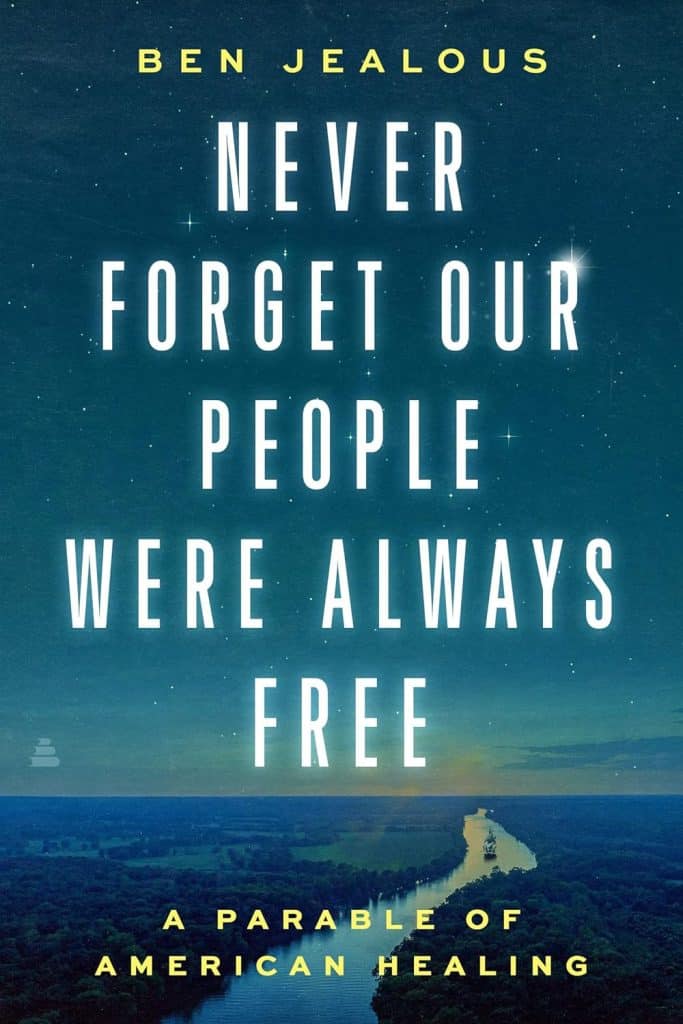
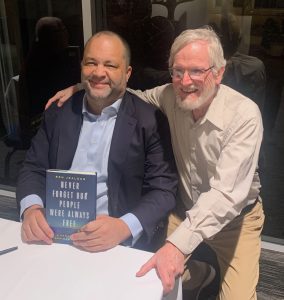
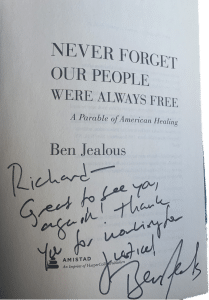
Today, I started reading “Never Forget Our People Were Always Free: A Parable of American Healing” by Ben Jealous, the Executive Director of the Sierra Club. The book highlights how the path to healing America’s broken heart begins with each of us having the courage to heal ourselves. According to Mr. Jealous, it would be transformative if every American treated each other as cousins.

Ben Jealous is the son of parents who had to leave Maryland because their cross-racial marriage was illegal.

I briefly met Ben Jealous last May when I went to Washington with the Religious Action Center of Reform Judaism‘s Day of Action. When I saw Mr. Jealous speaking at Temple Emanu-El in neighboring Westfield, I immediately signed up to attend in person. He is an inspiration as an advocate for the environment, civil rights, and the healing of America’s broken heart.

His lively, courageous, and empathetic storytelling calls on every American to look past deeply cut divisions and recognize that we are all in the same boat now. Along the way, Jealous grapples with hidden American mysteries, including:

  • Why do white men die from suicide more often than black men die from murder?
  • How did racial profiling kill an American president?
  • What happens when a Ku Klux Klansman wrestles with what Jesus said?
  • How did Dave Chappelle know the DC Snipers were Black?
  • Why shouldn’t the civil rights movement give up on rednecks?
  • When is what we have collectively forgotten about race more important than what we know?
  • What do the most indecipherable things our elders say tell us about ourselves?

The book Never Forget Our People Were Always Free is told through parables. It features intimate glimpses of political and faith leaders such as Jack Kemp, Stacey Abrams, and the late Archbishop Desmond Tutu. The book also highlights unlikely heroes such as a retired constable, a female pirate from Madagascar, a long-lost Irishman, a death row inmate, and a man with a Confederate flag over his heart.
Never Forget Our People Were Always Free offers readers hope that America’s oldest wounds can heal and her oldest divisions can be overcome.

Although I have only read a handful of pages of the book, I highly recommend it!

×
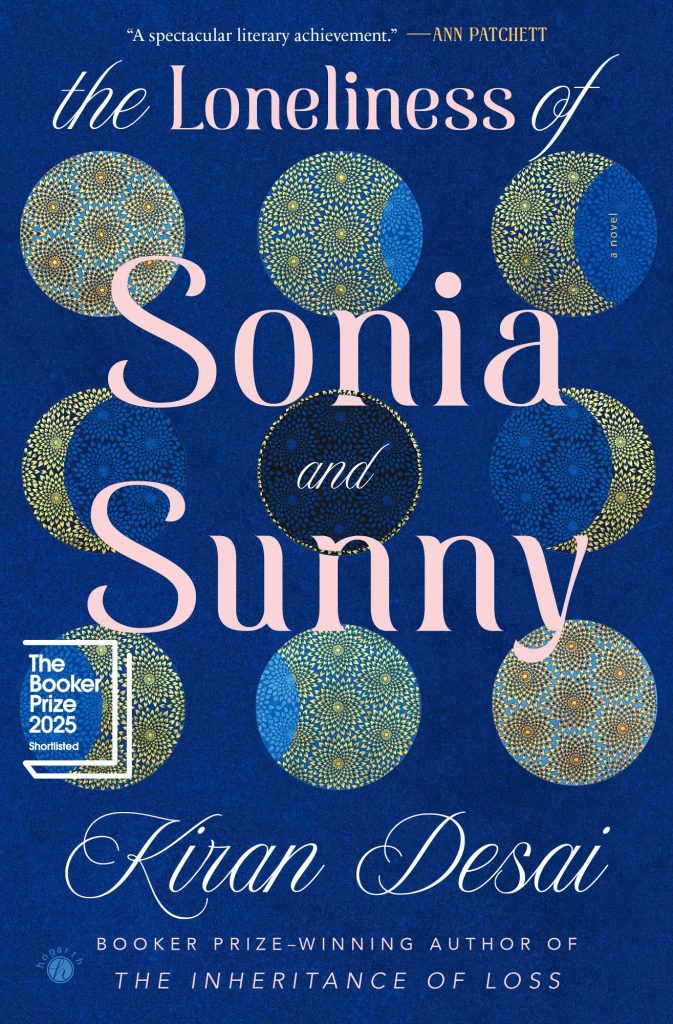
The Loneliness of Sonia and Sunny

Read: October 2025

Get this book

The Loneliness of Sonia and Sunny

by Kiran Desai

“The Loneliness of Sonia and Sunny” by Kiran Desai is a remarkable and accomplished novel that showcases the talent of one of our greatest contemporary writers. It was shortlisted for the Booker Prize and is a finalist for the Kirkus Prize. The story follows two young individuals as they navigate the various influences that shape their lives, including their country, class, race, history, and the complex relationships that connect different generations.

This novel combines a love story, a family saga, and an exploration of profound themes. When Sonia and Sunny first catch sight of each other on an overnight train, they find themselves captivated yet embarrassed; their grandparents once tried to matchmake them, a well-meaning effort that only drove them apart.

Sonia is an aspiring novelist who has recently completed her studies in the snowy mountains of Vermont and has returned to her family in India. Sonia fears she is cursed by a dark spell cast by an artist who sought intimacy and inspiration from her. Meanwhile, Sunny, a struggling journalist who has relocated to New York City, is trying to escape his domineering mother and the violence of his feuding family.

Uncertain about their futures, Sonia and Sunny embark on a journey to find happiness together as they confront the various forms of alienation present in our modern world.


Kiran Desai is renowned for her novels, “Hullabaloo in the Guava Orchard” and “The Inheritance of Loss,” the latter of which won both the Booker Prize and the National Book Critics Circle Award. Born in India, she moved to the United States at the age of sixteen and currently resides in New York City.


Discover your next favorite book and dive into a world of curated, exciting reads by purchasing through my links. You’ll have access to a diverse selection of books I’ve personally vetted for quality and enjoyment. Additionally, by supporting these selections, you’ll help me continue to provide you with more personalized recommendations. I earn a small commission from your purchase, which allows me to buy and share even more books with you. Your support truly makes a difference!


×
A Gentleman in Moscow

Read: November 2022

Get this book

A Gentleman in Moscow

by Amor Towles

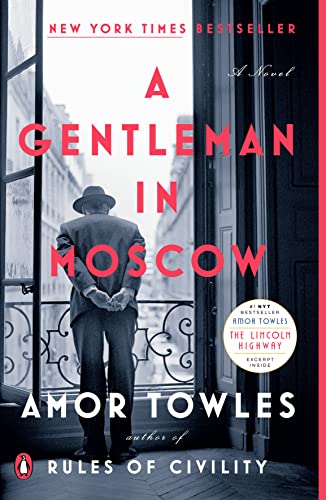
A Gentleman in Moscow by Amor Towles is a transporting novel about a man sentenced by the government to spend the rest of his life inside a luxury hotel. In 1922, a Bolshevik tribunal deemed Count Alexander Rostov an unrepentant aristocrat. His house arrest in the Metropol, a grand hotel across the street from the Kremlin. Rostov, an indomitable man of erudition and wit, has never worked a day and must now live in an attic room while some of the most tumultuous decades in Russian history are unfolding outside the hotel’s doors.

During my grief journey, I have on occasion felt as if I was a prisoner in my apartment, so I found this novel to be one that provided me an alternative to understanding what it would have been like to be under house arrest as Count Rostov was.

A Gentleman in Moscow was a page-turner. The plot captures a unique historical time and how Count Rostov makes the best of a bad situation. I highly recommend this novel.

The Goodreads summary provides an overview.

With his breakout debut novel, Rules of Civility, Amor Towles established himself as a master of absorbing, sophisticated fiction, bringing late 1930s Manhattan to life with a splendid atmosphere and an excellent command of style. As NPR commented, readers and critics were enchanted, “Towles writes with grace and verve about the mores and manners of a society on the cusp of radical change.”

A Gentleman in Moscow immerses us in another elegantly drawn era with the story of Count Alexander Rostov. When, in 1922, he is deemed an unrepentant aristocrat by a Bolshevik tribunal, the count is sentenced to house arrest in the Metropol, a grand hotel across the street from the Kremlin. Rostov, an indomitable man of erudition and wit, has never worked a day. He must now live in an attic room while some of the most tumultuous decades in Russian history are unfolding outside the hotel’s doors. Unexpectedly, his reduced circumstances provide him a doorway into a much larger world of emotional discovery.

Brimming with humor, a glittering cast of characters, and one beautifully rendered scene after another, this singular novel casts a spell as it relates to the count’s endeavor to gain a deeper understanding of what it means to be a man of purpose.


The Jan Lilien Education Fund sponsors ongoing sustainability and environmental awareness programs. Gifts made this month; I will match dollar-for-dollar. All donations are tax-deductible.

Subscribe

Contact Us

I receive a commission when you buy a book or product using a link on this page. Thank you for supporting Sharing Jan’s Love blog.

×
An Assassin in Utopia: The True Story of a Nineteenth-Century Sex Cult and a President's Murder

Read: February 2023

Get this book

An Assassin in Utopia

by Susan Wels

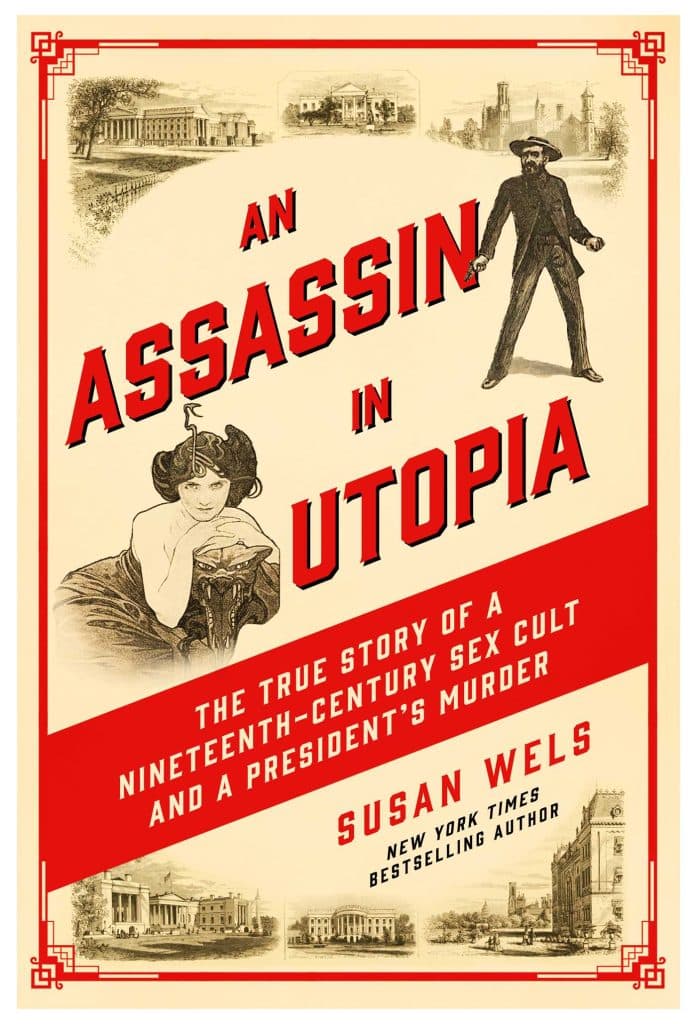
An Assassin in Utopia: The True Story of a Nineteenth-Century Sex Cult and a President’s Murder by Susan Wels is a true crime odyssey that explores a forgotten, astonishing chapter of American history, leading the reader from a free-love community in upstate New York to the shocking assassination of President James Garfield. I had read about this historical period in several other books, most recently Civil War by Other Means.

Susan Wels has written an excellent historical overview of a period we often overlook. I highly recommend An Assassin in Utopia: The True Story of a Nineteenth-Century Sex Cult and a President’s Murder.

The Oneida Community, even though it was the most successful utopian community, is often overlooked. Ms. Wels connects the dots and places the experiment in the center of a transitional period. It is not merely the connection between Charles Julius Guitea and his assassination of President James Garfield, albeit a brutal crime, that shook America to its core, but all of the other linkages. These include “John Humphrey Noyes; his idol, the eccentric newspaper publisher Horace Greeley (founder of the New Yorker and the New York Tribune).”

She also resurrects the importance of the Wormely Compromise and the African-American family that was an instrumental part of public society.

I have found fiction to be something I enjoy, but I knew it was time for a non-fiction book to balance my reading. The New York Times and other publications highly rated An Assassin in Utopia.

The Goodreads summary provides an overview,

It was heaven on earth—and, some whispered, the devil’s garden.

Thousands came by trains and carriages to see this new Eden, carved from hundreds of acres of wild woodland. They marveled at orchards bursting with fruit, thick herds of Ayrshire cattle and Cotswold sheep, and whizzing mills. They gaped at the people who lived in this place—especially the women, with their queer cropped hair and shamelessly short skirts. The men and women of this strange outpost worked and slept together—without sin, they claimed.

From 1848 to 1881, a small utopian colony in upstate New York—the Oneida Community—was known for its shocking sexual practices, from open marriage and free love to the sexual training of young boys by older women. And in 1881, a one-time member of the Oneida Community—Charles Julius Guiteau—assassinated President James Garfield in a brutal crime that shook America to its core.

An Assassin in Utopia is the first book that weaves together these explosive stories in a tale of utopian experiments, political machinations, and murder. This deeply researched narrative—by bestselling author Susan Wels—tells the true, interlocking stories of the Oneida Community and its radical founder, John Humphrey Noyes; his idol, the eccentric newspaper publisher Horace Greeley (founder of the New Yorker and the New York Tribune); and the gloomy, indecisive President James Garfield—who was assassinated after his first six months in office.

Juxtaposed to their stories is the odd tale of Garfield’s assassin, the demented Charles Julius Guiteau, who was connected to all of them in extraordinary, surprising ways.

Against a vivid backdrop of ambition, hucksterism, epidemics, and spectacle, the book’s interwoven stories fuse together in the climactic murder of President Garfield in 1881—at the same time as the Oneida Community collapsed.

Colorful and compelling, An Assassin in Utopia is a page-turning odyssey through America’s nineteenth-century cultural and political landscape.


The Jan Lilien Education Fund sponsors ongoing sustainability and environmental awareness programs. Gifts made this month; I will match dollar-for-dollar. All donations are tax-deductible.

Subscribe

Contact Us

I receive a commission when you buy a book or product using a link on this page. Thank you for supporting Sharing Jan’s Love blog.


×